Can Candy Canes Expire? Complete Shelf Life & Storage Guide
Candy canes don’t truly expire — their high sugar content acts as a natural preservative — but texture and flavor degrade noticeably after 1–2 years of storage.
You found a box of candy canes tucked behind last year’s ornaments. The “best by” date has come and gone. Are they safe to eat, or should they go straight to the bin?
The answer is more nuanced than a simple yes or no. Candy canes belong to the hard candy family — one of the longest-lasting confections on earth — but “technically edible” and “actually worth eating” are two different things. This guide covers what expiration really means for candy canes, how long they last under different conditions, what happens when you eat a stale one, and how professionals store candy in bulk to preserve quality for months on end.
What Does “Expire” Mean for Candy Canes?
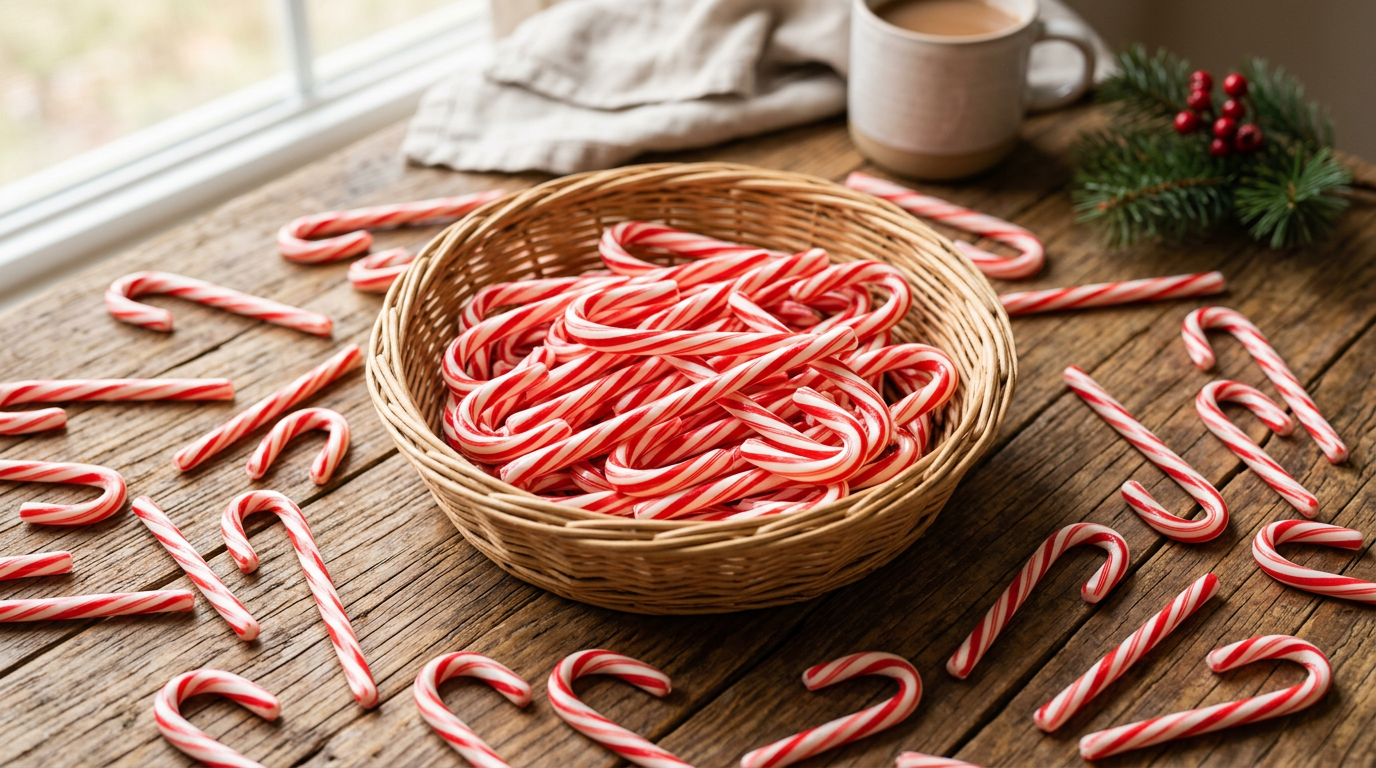
Candy canes do not expire in the way that dairy or meat does. The “best by” or “use by” date stamped on a box of candy canes is a quality guarantee, not a safety cutoff.
Understanding this distinction matters. According to the U.S. Food and Drug Administration’s guidance on food product dating, manufacturers use “best by” dates to indicate peak quality, not the point at which a food becomes unsafe. For high-sugar confections like candy canes, this is especially true — sugar at the concentrations used in hard candy is inherently hostile to microbial growth.
That said, quality genuinely does deteriorate. Here is what changes over time:
- Texture — Candy canes absorb ambient moisture and transition from brittle-glass to a sticky, soft, or gummy consistency.
- Flavor — Volatile peppermint compounds (primarily menthol and menthone) slowly evaporate, leaving a blander taste.
- Appearance — Exposed candy canes cloud over or develop a dull, whitish bloom from sugar recrystallization.
- Structural integrity — Canes become prone to crumbling rather than snapping cleanly.
None of these changes make candy canes dangerous. They make them unpleasant — which, depending on how much you value the experience, may be reason enough to discard them.
The Role of Sugar as a Natural Preservative
Sugar works as a preservative through a process called osmosis. At the concentrations found in hard candy (typically 95–99% sugar and glucose syrup combined), water activity is so low that bacteria and molds cannot absorb enough moisture to survive or reproduce.
Traditional candy cane manufacturing relies on this principle. In a commercial setting, candy is cooked to temperatures between 149–160°C (300–320°F), reducing moisture content to below 2%. At this level, microbial spoilage is essentially impossible without external moisture introduction. This is why candy canes found at the back of a dry pantry shelf two years later are almost always safe to taste — just rarely worth the experience.
The Exception: Added Ingredients That Do Expire
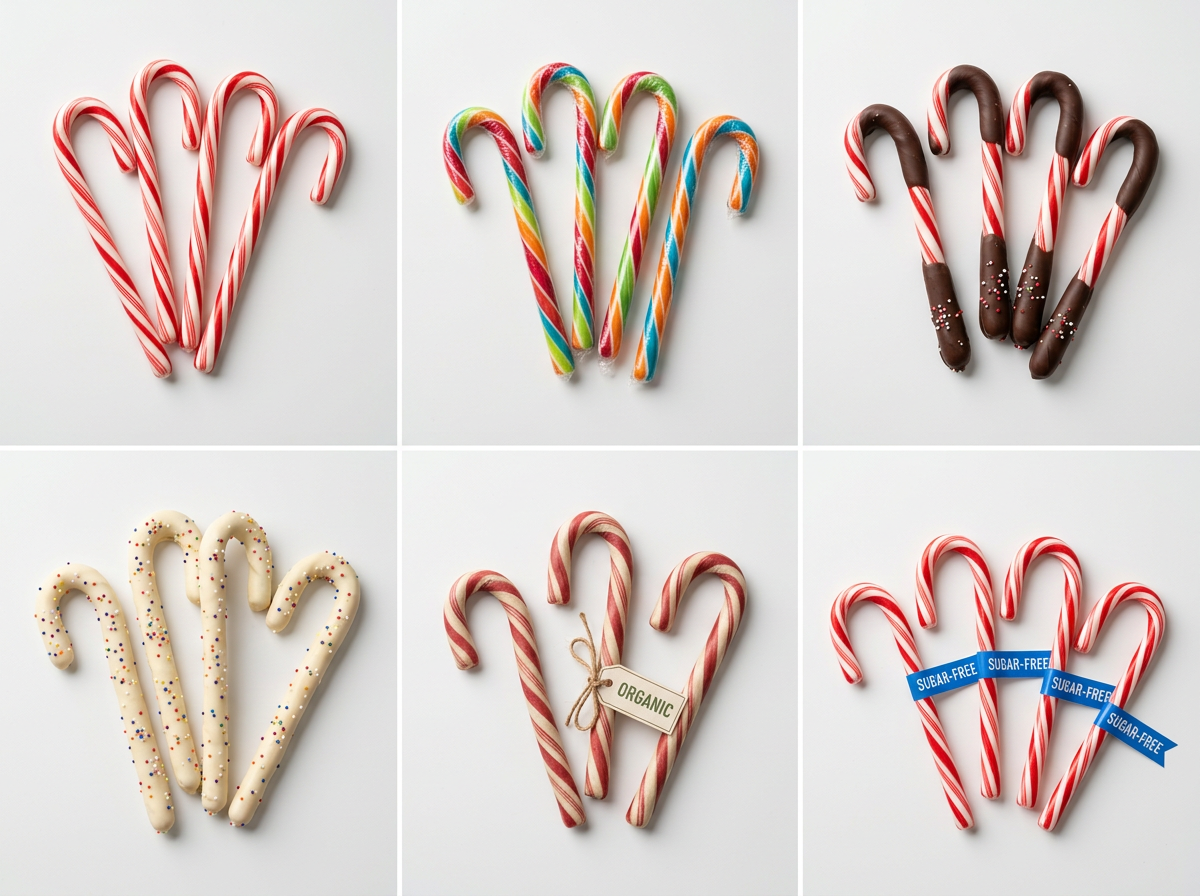
Not all candy canes are created equal. Modern variations include yogurt coatings, chocolate drizzle, cream fillings, or fruit-flavored gels. These additions introduce fats and proteins that can go rancid or support mold growth. A chocolate-dipped candy cane carries a much shorter shelf life than a classic peppermint hard candy cane — something we explore in more detail in the types section below.
How Long Do Candy Canes Last?
Shelf life depends heavily on whether the packaging is intact, what the storage environment looks like, and which variety of candy cane you have.
Unopened Candy Canes
When kept in their original sealed packaging and stored away from moisture and heat, candy canes remain at peak quality for the following periods:
| Candy Cane Type | Peak Quality (Unopened) | Still Edible (Quality Reduced) |
|---|---|---|
| Classic peppermint hard candy | 12–24 months | 2–3 years |
| Flavored hard candy canes (fruit, cinnamon) | 12–18 months | 2 years |
| Candy canes with chocolate coating | 6–9 months | Up to 12 months |
| Yogurt or cream-filled canes | 4–6 months | 6–8 months |
| Sugar-free candy canes | 12–18 months | 18–24 months |
The original factory-sealed packaging does more than hold the product — it creates a controlled moisture barrier. Once that seal is broken, the clock accelerates considerably.
Opened Candy Canes
An opened candy cane exposed to household air — even in a relatively dry climate — begins softening within days to weeks. The precise timeline depends on local humidity:
| Relative Humidity | Approximate Days Before Softening Begins |
|---|---|
| Below 30% (arid climate) | 14–30 days |
| 30–50% (typical home) | 5–14 days |
| 50–70% (humid climate) | 2–5 days |
| Above 70% | Within 24–48 hours |
This explains why candy canes left on a Christmas tree in a heated home often become sticky within a week — indoor heating during winter creates low relative humidity around the tree, but any fluctuation (windows opened, guests arriving) spikes moisture exposure.
Homemade Candy Canes
Artisan and home-cooked candy canes are typically less stable than commercial products because:
- Home equipment rarely achieves the precision temperature control of industrial candy machines
- Residual moisture content is often higher
- Preservative-grade packaging is unavailable
In practice, expect homemade candy canes to remain at their best for 4–8 weeks when individually wrapped in cellophane and stored in a cool, dry place.
Signs Your Candy Canes Have Gone Bad
Even without a visible expiry date, your senses give reliable signals. Here is how to assess a suspect candy cane:
Texture Test (Most Reliable)
Press a fingernail firmly into the cane. A fresh, high-quality hard candy cane resists the pressure completely — your nail leaves no impression. If the surface dents or your nail sinks in slightly, moisture has already compromised the texture. The candy is not harmful, but it will be chewy rather than crisp, and the mouthfeel is poor.
The bite test delivers the same information more dramatically. A good candy cane snaps with a clean crack. A compromised one bends or compresses before breaking — the texture of a candy that has absorbed humidity.
Visual Inspection
- White cloudiness or bloom — This is sugar recrystallization, not mold. Completely harmless, but indicates significant moisture exposure.
- Actual mold — Green, black, or fuzzy spots indicate that moisture has reached a level where microbial growth is possible. This is rare in pure hard candy but can happen on flavored or coated varieties. Discard immediately.
- Color fading or browning — Natural dyes (especially reds and pinks) fade over years. Browning around the edges can indicate oxidation of added fats in coated varieties.
Smell Test
Fresh candy canes carry a sharp, clean peppermint or fruit aroma. Old canes smell flat or faintly musty. If there is any off-odor — rancid, sour, or medicinal — discard the candy cane, particularly if it contains any dairy or fat-based coating.
How to Store Candy Canes to Maximize Shelf Life
Proper storage can double or triple the usable quality window for candy canes. The fundamentals are straightforward, but the details matter.
Temperature and Humidity: The Two Variables That Matter Most
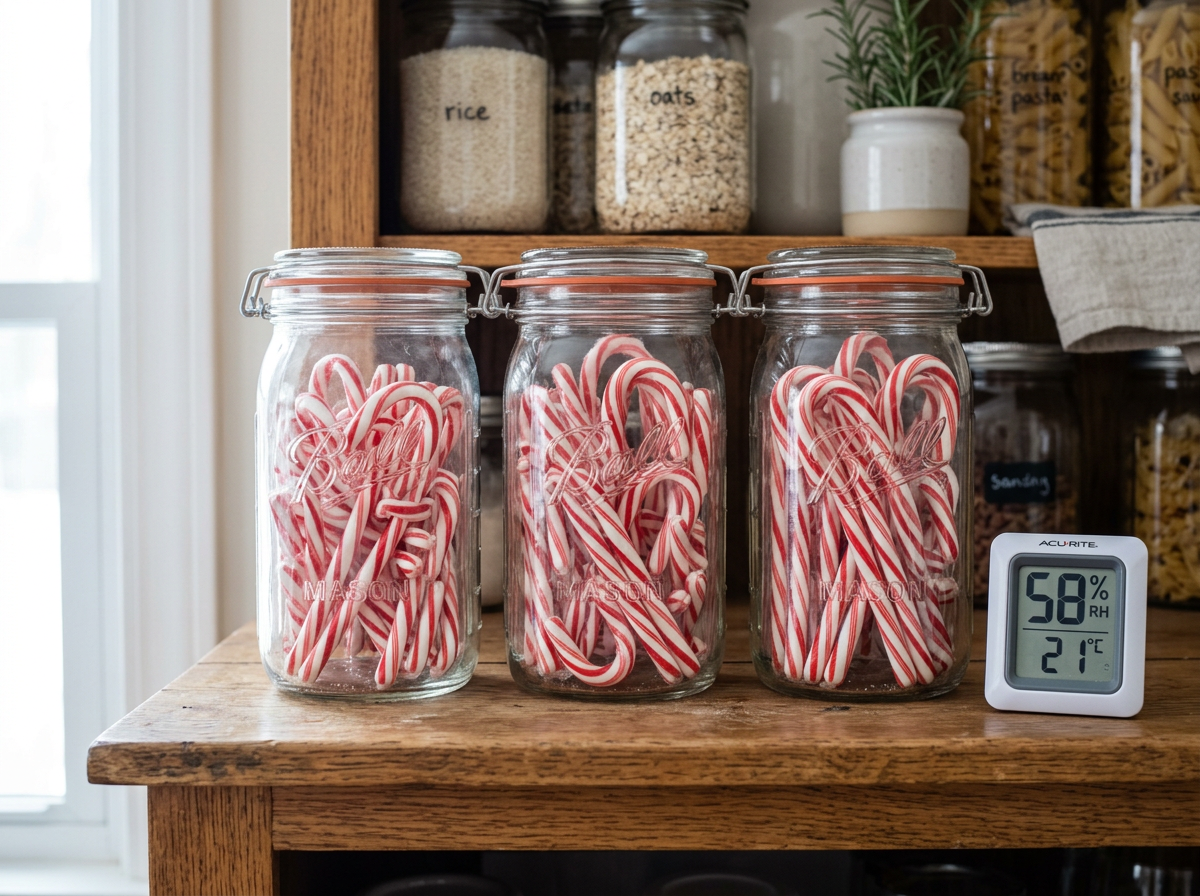
Target temperature: 15–21°C (59–70°F). Heat accelerates chemical degradation and — more importantly — raises the water activity of the candy itself, making it more susceptible to humidity absorption. Keep candy canes away from the stove, dishwasher, and any appliance that radiates heat.
Target relative humidity: Below 50%. This is the single most important variable. High-humidity environments are the primary cause of candy cane degradation. A cool room at 65% humidity will ruin candy canes faster than a slightly warmer room at 35% humidity.
In commercial candy manufacturing and distribution, candy products are stored in humidity-controlled warehouses — typically maintained at 45–50% RH — to preserve shelf life across months of inventory turnover. Understanding this principle applies equally at home.
The Best Storage Containers
| Container Type | Effectiveness | Notes |
|---|---|---|
| Airtight glass jar with rubber seal | Excellent | Best moisture barrier; no flavor absorption |
| Vacuum-sealed plastic bag | Excellent | Ideal for bulk storage; removes ambient air |
| Hard plastic food container (clip-lock) | Good | Check seal integrity over time |
| Zip-lock bag (double-sealed) | Moderate | Adequate for 1–3 months |
| Open bowl or plate | Poor | Exposure to air causes rapid degradation |
| Original cellophane wrap (intact) | Good | Factory cellophane is moisture-rated |
Never store candy canes in cardboard boxes after opening. Cardboard is hygroscopic — it absorbs and releases moisture — and transmits that to the candy.
Should You Refrigerate Candy Canes?
This is a common point of confusion. The short answer: refrigeration is usually counterproductive for pure hard candy canes.
Here is why. Refrigerators are cold, but unless you have a high-end model with humidity management, the interior can be humid — particularly when the door opens and closes repeatedly. More critically, when you take candy canes out of the refrigerator into room temperature air, condensation forms on the cold candy surface, directly depositing moisture on the candy. That moisture immediately begins degrading the texture.
If you do refrigerate, always:
– Use a completely airtight container
– Allow the candy to return to room temperature inside the sealed container before opening
– Accept that the risk of condensation damage is real
For long-term storage beyond 18 months, a chest freezer is actually more reliable than a refrigerator — temperatures below -10°C dramatically slow all chemical reactions, and a properly sealed container prevents condensation on retrieval (allow 30–60 minutes for the container to equalize before opening). This is overkill for most households but matters for commercial producers managing seasonal inventory.
Individual Wrapping: Why It Matters
Each candy cane that breaks its individual wrapper is now a vector for moisture to reach its neighbors. In a shared bag or tin, one compromised piece can accelerate degradation in adjacent pieces through localized humidity. Keep individually wrapped pieces separate, and discard any piece whose wrapper is cracked, torn, or missing.
What Happens If You Eat Expired Candy Canes?
For classic hard candy canes past their best-by date, the worst likely outcome is disappointment. Here is the realistic range:
Stale but edible (6 months–2 years past date): Texture is soft or chewy rather than crisp. Peppermint flavor is noticeably muted. No health risk. Many people eat these without issue.
Very stale (2–4 years past date): Significant texture and flavor degradation. Possibly sticky or gummy consistency. Still no meaningful food-safety risk for plain hard candy, but the eating experience is genuinely poor.
Coated or filled varieties past date: A chocolate-coated cane that smells rancid, or a cream-filled cane with any visible mold, represents a genuine food safety concern. Rancid fats can cause nausea, and mold spores — even on just one part of the candy — can be harmful in sufficient quantity. Discard without tasting.
Sugar-free candy canes: Sugar-free formulations use sugar alcohols (sorbitol, xylitol, maltitol) rather than sucrose. These compounds are less hygroscopic than sucrose but also provide less antimicrobial protection. Sugar-free candy canes have slightly shorter real-world shelf lives and are more susceptible to off-flavors developing over time.
Practical rule of thumb: If it smells fine and you can snap it cleanly, it is safe to eat. If it bends, smells off, or shows any visible surface growth, discard it.
The Science of Candy Cane Production and Why It Affects Shelf Life
Understanding how candy canes are manufactured explains why they last so long — and where vulnerabilities arise. This is territory that none of the generic shelf-life articles cover.
From Raw Sugar to Glass Candy: The Production Process
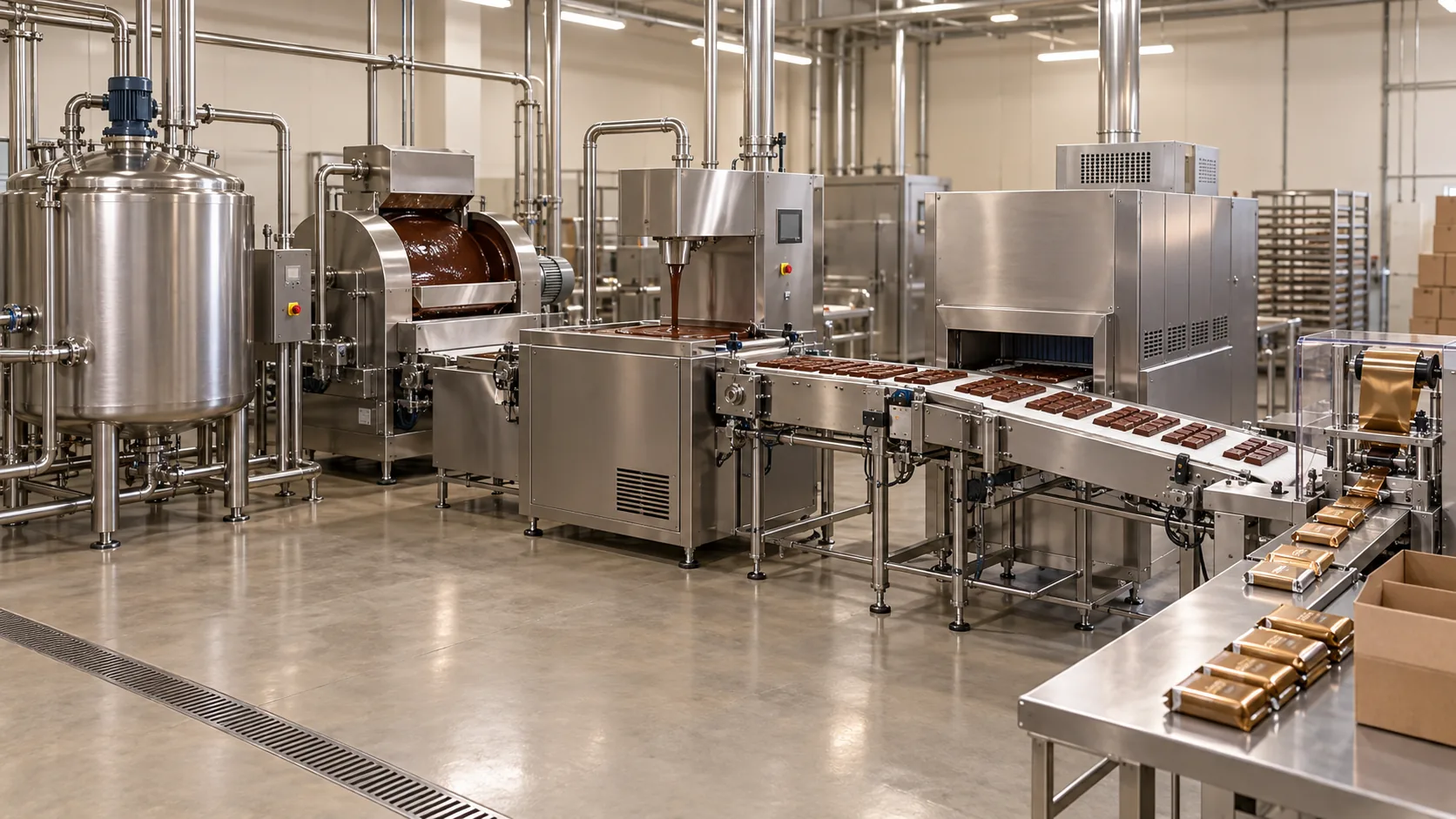
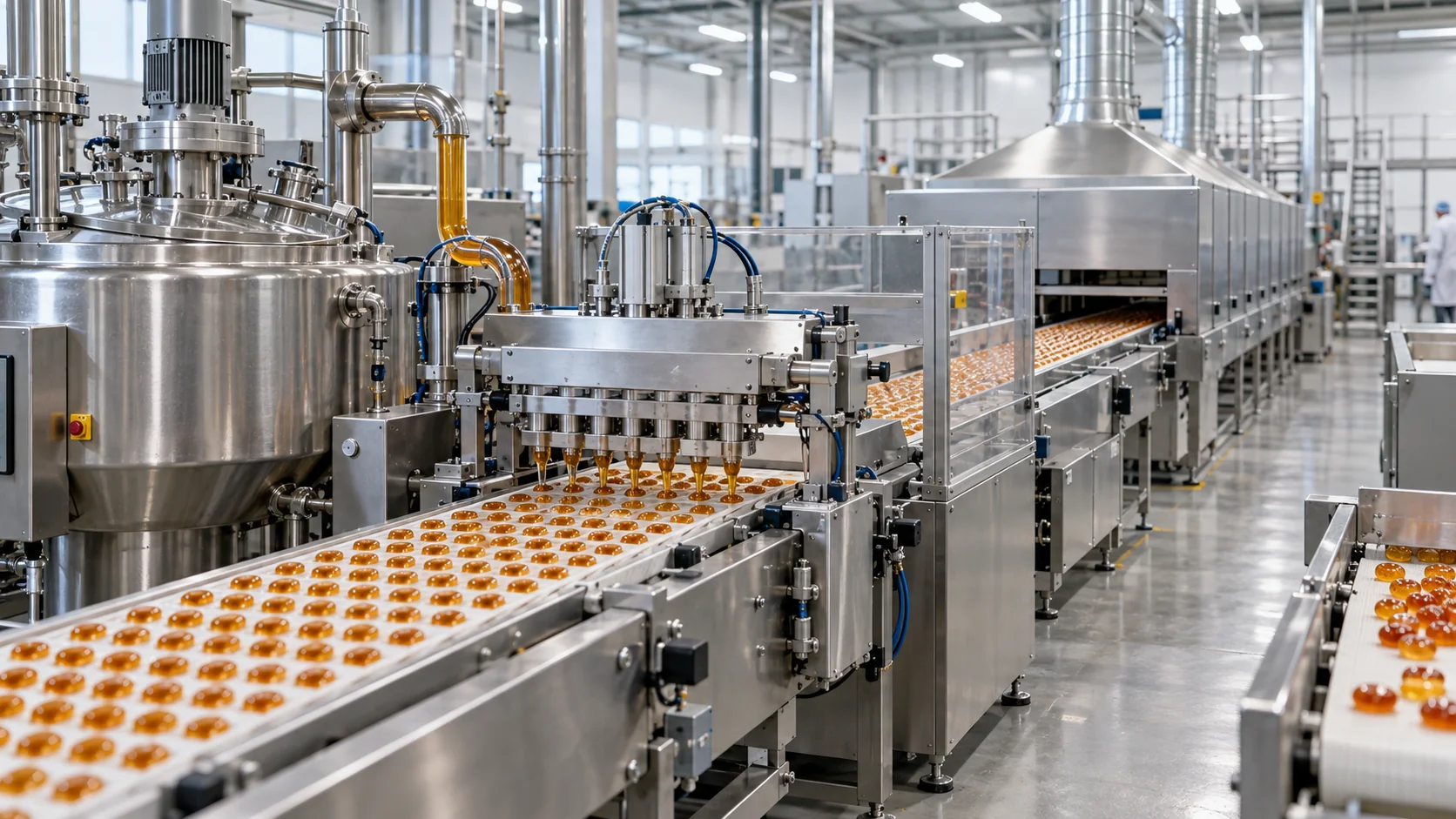
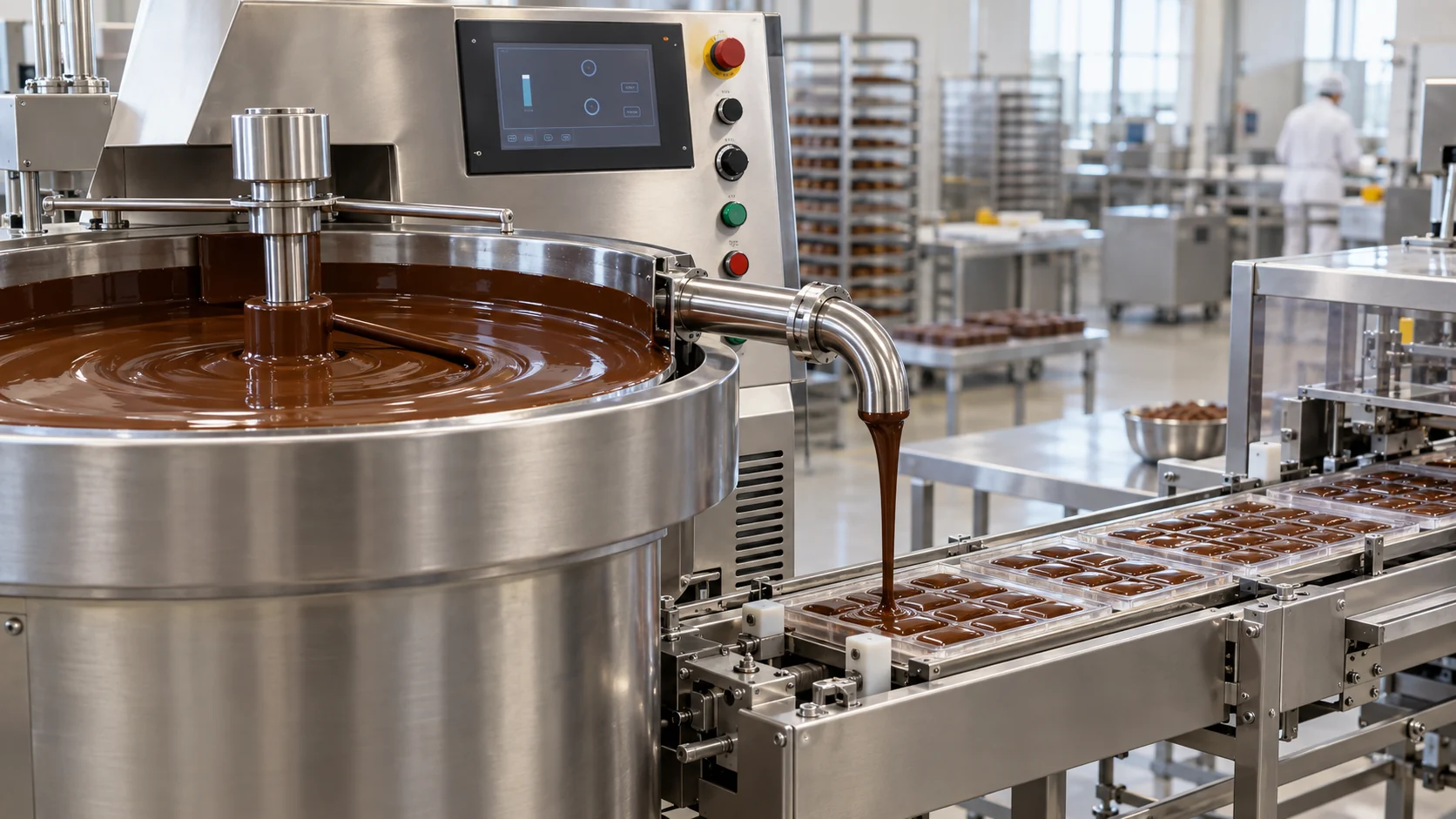
Commercial candy cane production starts with a cooked sugar slurry — typically granulated sucrose, glucose syrup, and water — brought to 149–160°C in a precision-controlled cooker. At this temperature, virtually all water evaporates from the mixture, leaving a supersaturated molten sugar glass with moisture content below 2%.
The molten mass is poured onto a cooled table, where peppermint oil (or other flavoring) and food coloring are folded in. The iconic red-and-white twisted appearance results from a batch-pulling process: a portion of the candy is pulled repeatedly on a machine hook, incorporating millions of tiny air bubbles that create the opaque white color and characteristic sheen. The two portions — pulled white and unpulled red — are then twisted and fed into a forming machine that cuts and bends each piece into the familiar hooked shape.
Modern candy cane machines achieve remarkable precision in controlling this process. Temperature consistency during cooking directly determines final moisture content, which in turn determines shelf life. A candy cane cooked even 5°C below target temperature retains excess moisture that compresses the shelf life significantly — sometimes by 50% or more. This is why the gap between artisanal and industrial candy cane shelf life is so large.
The Role of Peppermint Oil Concentration
Standard commercial candy canes use peppermint oil at concentrations of 0.5–1.5% by weight. Higher concentrations provide a stronger initial flavor but also accelerate volatilization — the essential oils evaporate through microscopic gaps in packaging over time.
This creates a measurable shelf life curve: peppermint intensity peaks at production, declines gradually through the first 12 months (the “fresh” zone), drops more steeply between 12–24 months, and reaches an “acceptably flavored” floor after that. By year three, most of the volatile top notes are gone and only the sweetness remains.
Glucose Syrup’s Stabilizing Function
Candy cane formulas include glucose syrup (corn syrup in American production) alongside pure sucrose for a specific technical reason: glucose syrup is an invert sugar that inhibits crystallization. Without it, the candy mass would crystallize (called “graining”) during cooling, producing a grainy, opaque texture rather than glassy clarity.
This anti-crystallization function also helps shelf stability. Pure sucrose hard candy is more prone to surface recrystallization (the white bloom) over time than a properly formulated sucrose-glucose blend.
Different Types of Candy Canes and Their Shelf Lives
The classic peppermint candy cane is just one format. Modern production includes dozens of varieties, each with distinct shelf life characteristics.
Classic Peppermint Hard Candy Canes
The benchmark product. Simple formula: sucrose, glucose syrup, peppermint oil, red food coloring. No fats, no proteins, no dairy. Shelf life: 12–24 months at peak quality, up to 3 years if sealed and stored properly.
Fruit-Flavored and Specialty Hard Canes
Watermelon, strawberry, blue raspberry, sour apple — these use synthetic or natural fruit flavors instead of peppermint oil. Shelf life is similar to classic canes when sealed, though some fruit-flavor compounds are more volatile than menthol and may fade faster. Expect peak flavor for 12–18 months.
Chocolate or Yogurt-Coated Candy Canes
A hard candy cane core dipped in chocolate or yogurt coating introduces fats that can oxidize (go rancid) over time. These varieties should be treated more like chocolate confections than hard candy. Check the coating for any whitish “fat bloom” (harmless but indicates age) and give the piece a sniff before eating. Peak quality: 3–6 months; discard if any rancid or sour smell is detectable.
Organic and Natural Candy Canes
Organic formulations often use natural colors (beet juice, spirulina, turmeric) instead of synthetic dyes. These colors fade faster than synthetic equivalents, so a 12-month-old organic candy cane may look significantly paler than a conventional one — but is equally edible. Natural peppermint oil is used, which behaves identically to conventional oil in terms of volatilization.
Sugar-Free Candy Canes
Formulated with isomalt, maltitol, or xylitol instead of sucrose and glucose. These compounds are less hygroscopic than sucrose in finished hard candy form, but the lack of the glucose-syrup anti-crystallization system means they can grain more readily over time. Xylitol-based canes are toxic to dogs — this is unrelated to human shelf life but worth flagging for households with pets.
Commercial and Bulk Storage: What Candy Manufacturers Know
For candy retailers, distributors, and manufacturers purchasing candy canes in bulk, the principles scale up significantly. Reddit threads from experienced candy retailers consistently confirm that properly stored hard candy outlasts its printed date — the industry operates on this understanding.
Commercial-grade storage follows these parameters:
- Temperature: 15–18°C (60–65°F) in climate-controlled warehouse space
- Humidity: 40–50% relative humidity, maintained by industrial dehumidifiers
- Packaging: Master cases remain sealed until point of distribution; broken cases are rewrapped in poly sheeting
- FIFO (First In, First Out): Inventory rotation ensures oldest stock ships first, preventing accumulation of long-aged product
Candy manufacturers producing seasonal inventory — such as Christmas candy canes manufactured in August and September for November distribution — rely on this storage infrastructure to deliver in-spec product. A product that reaches retail in December should still have 12+ months of shelf life remaining on the packaging, meaning the manufacturing date is typically 15–18 months before the printed best-by date.
This is why post-holiday clearance candy canes — marked down to pennies in late December — often have another year of usable life remaining. The date stamped on the box is conservative by design.
According to information on food preservation and water activity from the USDA, foods with water activity below 0.60 — which includes properly manufactured hard candy — are considered shelf-stable and not subject to microbial spoilage under normal conditions. Commercial hard candy typically measures water activity at 0.30 or below.
FAQ: Can Candy Canes Expire?
Q: Can you eat candy canes 2 years after the expiration date?
Yes, for plain hard peppermint candy canes. Sugar-based hard candy is shelf-stable for safety purposes well beyond the printed date. Expect diminished peppermint flavor and a softer or sticky texture by year two, but no health risk. For coated or filled varieties, 2 years past date warrants a careful sniff test before consuming.
Q: How long will candy canes last if stored correctly?
Unopened, sealed, classic hard candy canes stored below 21°C (70°F) and 50% relative humidity last 12–24 months at peak quality and up to 3 years in a degraded-but-edible state. Chocolate or cream-coated varieties: 3–6 months.
Q: Do candy canes run out of date?
The printed date is a best-quality guide, not a safety expiry. Candy canes don’t “run out of date” in the sense of becoming dangerous — they lose texture and flavor over time. Think of the date as the manufacturer’s quality guarantee, not a hard safety boundary.
Q: Can candy canes go moldy?
Rarely, and only under unusual conditions. Pure hard candy canes with water activity below 0.60 cannot support mold growth. However, if candy canes are stored in a genuinely humid environment, or if the surface coating includes dairy or fat, mold becomes possible over long periods. Any visible fuzzy or discolored growth means discard immediately.
Q: Can candy canes expire in the fridge?
Refrigeration doesn’t accelerate expiry, but it creates condensation risk. Moisture from repeated opening of the refrigerator can settle on cold candy, softening it faster than dry room-temperature storage would. If refrigerating, use a completely airtight container and allow the candy to come to room temperature inside the sealed container before opening.
Q: What happens if you eat expired candy canes?
For plain hard candy canes: nothing harmful. You’ll notice a softer texture and reduced peppermint flavor. For chocolate-coated varieties: rancid fat can cause mild digestive discomfort. For any candy showing visible mold: potential exposure to mycotoxins — discard without tasting.
Q: Do candy canes expire after one year?
The best-by date on most candy canes is set at 12–24 months. This is a quality recommendation, not a safety threshold. Many candy canes remain enjoyable past the one-year mark when properly stored. The decline is gradual, not sudden — there is no quality “cliff” at the one-year point.
Conclusion
Candy canes are among the most forgiving confections when it comes to longevity. Their high sugar concentration, low moisture content, and simple formulation make them naturally resistant to the bacterial and fungal spoilage that plagues most foods. The printed expiration date is a quality commitment from the manufacturer, not a safety boundary — and for plain hard peppermint canes, that quality holds up well beyond the date when storage conditions are right.
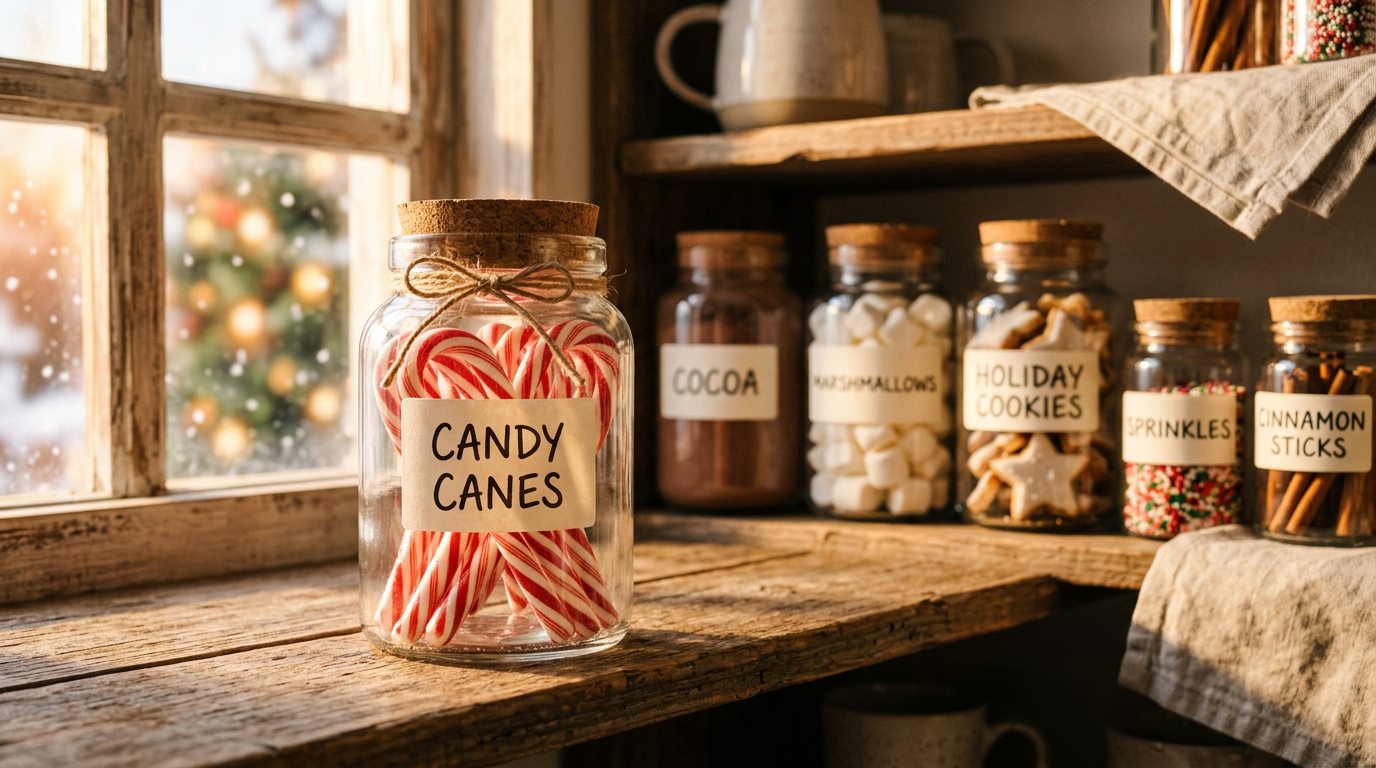
The key variables are always humidity and packaging integrity. A candy cane in a cracked wrapper in a humid kitchen will degrade in days. The same product in a sealed glass jar in a cool pantry remains excellent at the 18-month mark. Coated and filled varieties demand the same scrutiny as the dairy or chocolate they contain — treat those by the coating’s shelf life, not the hard candy core’s.
For candy manufacturers, retailers, and anyone purchasing bulk seasonal inventory, these principles matter at scale. Proper humidity-controlled storage isn’t just about preserving product — it’s about protecting margin on inventory that represents months of production planning. Understanding the science behind shelf life is the first step to managing it effectively.
Next time you find an old box of candy canes, reach for the snap test before the bin. More often than not, they are fine.
Related Articles
- Does Candy Ever Expire? Complete Guide to Candy Shelf Life
- Shelf Life Testing Explained: Principles, Methods & Best Practices 2025
- The Science of Sweetness: How Sugar Free Candy Canes Really Work
- What Makes Sour Candy Sour? The Acids, Chemistry, and Production Secrets
- Gummy Candy Production Line
- Food Packaging Machine
- Skittles Manufacturing Process: Inside the Factory