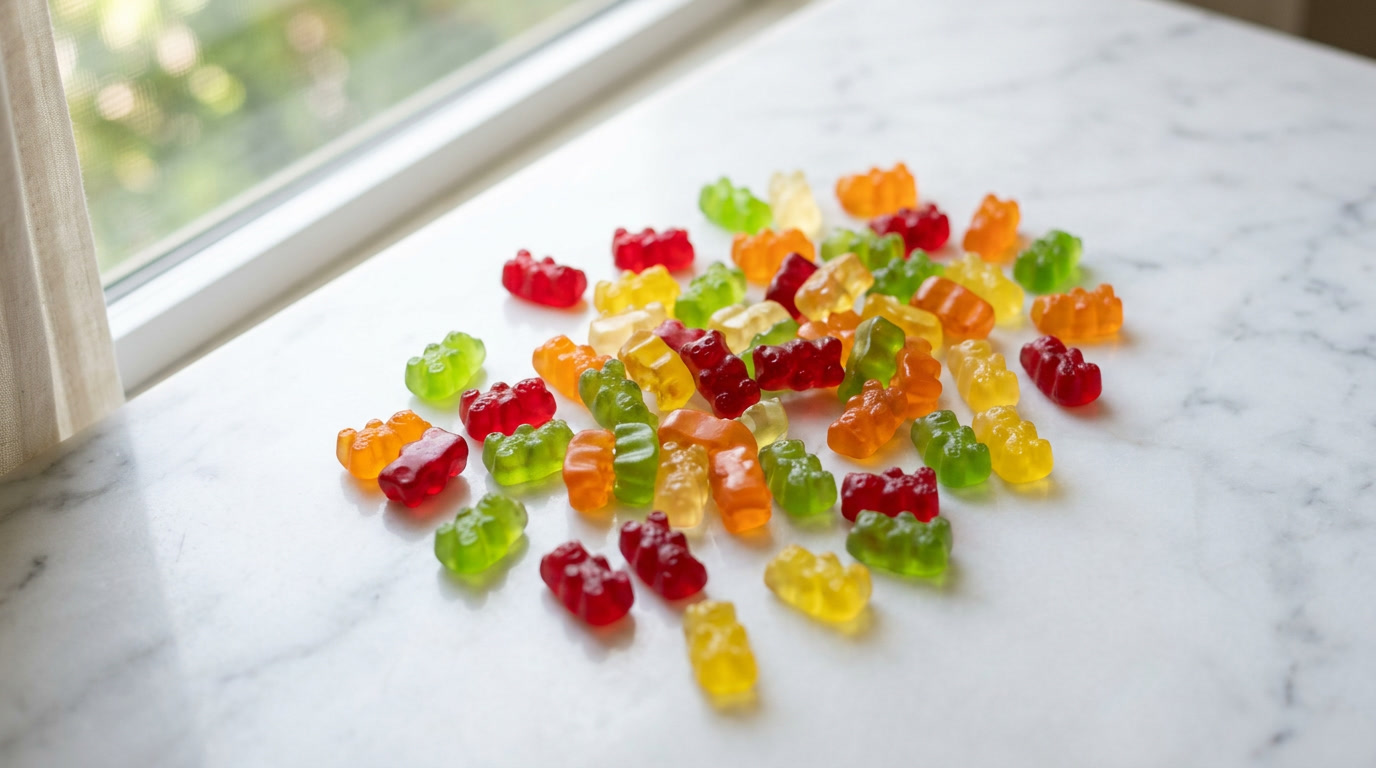
Vegan jelly bears are gelatin-free gummy candies made with plant-based gelling agents like pectin or agar, delivering the same chewy bite as traditional gummy bears without any animal-derived ingredients.
Walk into any specialty candy shop today and you will almost certainly find a shelf dedicated to plant-based confectionery. Vegan jelly bears have gone from a niche curiosity to a mainstream category — and the manufacturing side of that story is just as interesting as the product itself. Whether you are a confectionery entrepreneur evaluating ingredients, a candy buyer sourcing at scale, or a manufacturer looking to add a vegan line to your production floor, this guide covers everything: what goes into a vegan jelly bear, how different formulations behave on industrial equipment, and where the market is headed through 2026 and beyond.
What Are Vegan Jelly Bears?
Vegan jelly bears are gummy candies that replace animal-derived gelatin with plant-based alternatives, most commonly pectin, agar-agar, or carrageenan, while keeping the classic bear shape, translucent appearance, and elastic chew that consumers expect.
Standard gummy bears rely on gelatin — a protein extracted by boiling animal bones, hides, and connective tissue. Gelatin is highly effective: it sets firmly, produces a clean bite, and remelts predictably, which makes it easy to process on high-speed depositing lines. The problem is that it is inherently non-vegan, non-vegetarian, and non-halal — which excludes large and growing consumer segments worldwide.
Vegan jelly bears solve that problem by swapping the gelling agent while keeping everything else as similar as possible. Done well, the result is nearly indistinguishable to the average consumer. Done poorly — with the wrong gelling agent, the wrong pH, or the wrong processing temperatures — you end up with gummies that are either too firm, too soft, or that weep moisture within days of manufacture.
The Difference Between Vegan and Traditional Gummy Bears
The core structural difference is the gelling network. Gelatin forms a protein-based network that melts at body temperature, which is why traditional gummy bears have that characteristic “melt in the mouth then snap” texture. Plant-based gelling agents form polysaccharide networks — fundamentally different chemistry that melts at different temperatures and responds differently to acids, sugars, and heat.
In practice this means:
- Pectin gummies set at a higher Brix (sugar concentration) and are more sensitive to pH; they require citric acid to be added at the end of cooking to avoid premature gelling.
- Agar gummies set at lower temperatures but are more brittle and can feel rubbery if not properly formulated with a co-gellant.
- Carrageenan gummies interact with dairy proteins (irrelevant for vegan products) and require precise temperature management to avoid syneresis (liquid weeping).
The processing window for vegan formulas is tighter. A gelatin gummy can tolerate a ±5°C swing in depositing temperature without major quality loss. A pectin gummy deposited even 3°C too cool will start to gel in the lines.
Key Ingredients That Make Them Vegan
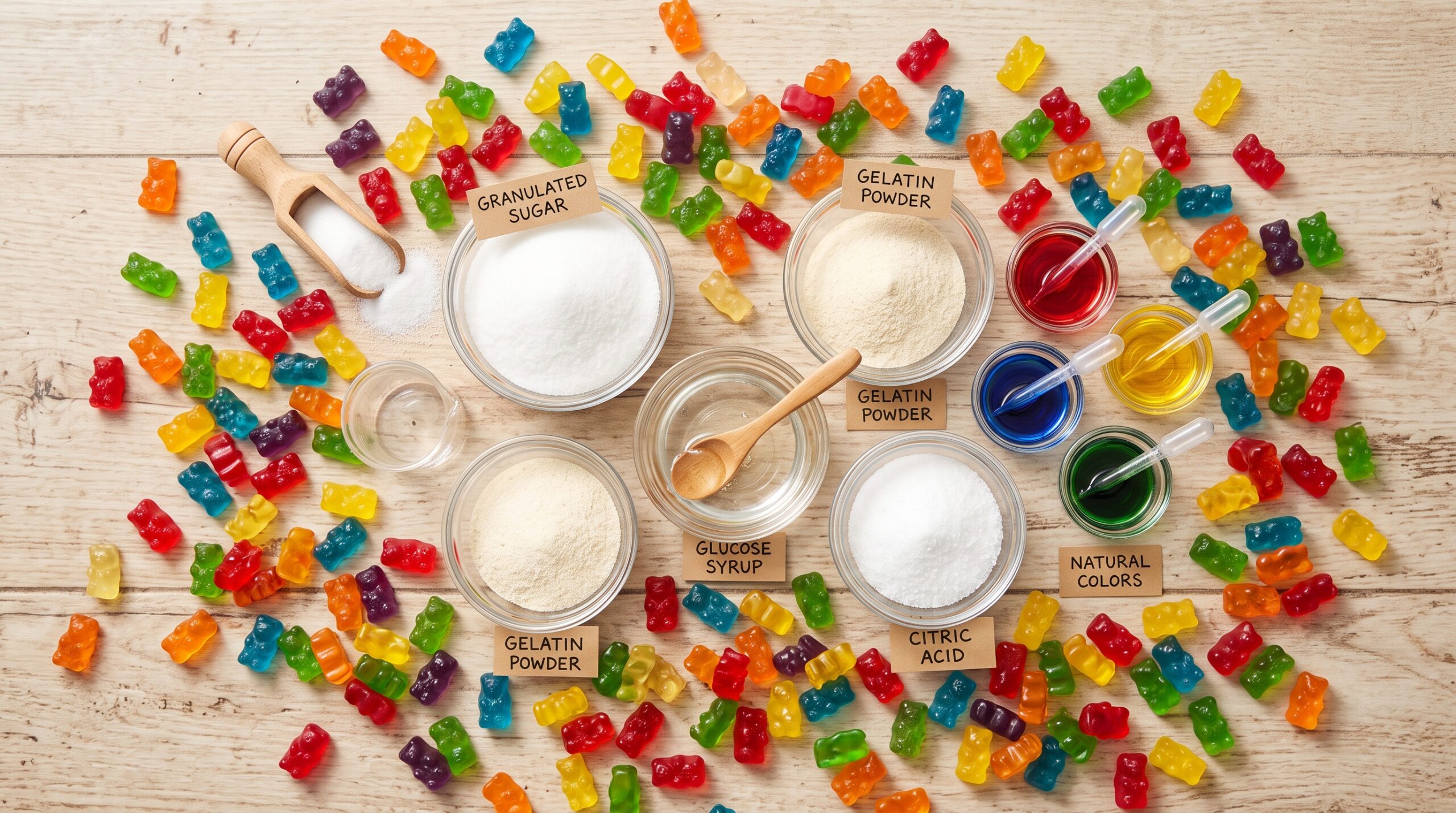
Every vegan jelly bear recipe shares a common backbone, even if the specifics vary by brand and target texture:
- Gelling agent — pectin (most common), agar-agar, carrageenan, or konjac
- Sweeteners — organic cane sugar, glucose syrup, tapioca syrup, or rice syrup (invert sugar is also vegan)
- Acidulant — citric acid or malic acid for flavor and pH control
- Natural flavors — fruit concentrates, essential oils, or natural flavor compounds
- Natural colorants — anthocyanins (purple/red), beta-carotene (orange/yellow), spirulina (blue/green), carmine-free red from radish or beet
- Humectant — often sorbitol or glycerin (plant-derived only for vegan certification)
- Coating — carnauba wax instead of beeswax for the glossy finish
| Ingredient | Traditional Gummy Bear | Vegan Jelly Bear |
|---|---|---|
| Gelling agent | Bovine/porcine gelatin | Pectin, agar, carrageenan, or konjac |
| Sweetener | Glucose syrup, sugar | Glucose syrup, organic cane sugar, tapioca syrup |
| Colorant | Synthetic FD&C or carmine | Anthocyanins, beta-carotene, spirulina |
| Glaze | Beeswax or carnauba | Carnauba wax only |
| Humectant | Gelatin contributes | Plant-derived glycerin or sorbitol |
| Typical Brix | 75–78° | 76–82° (pectin needs higher sugar) |
| Setting temp | 10–15°C | 15–25°C (varies by gellant) |
Types and Varieties of Vegan Jelly Bears
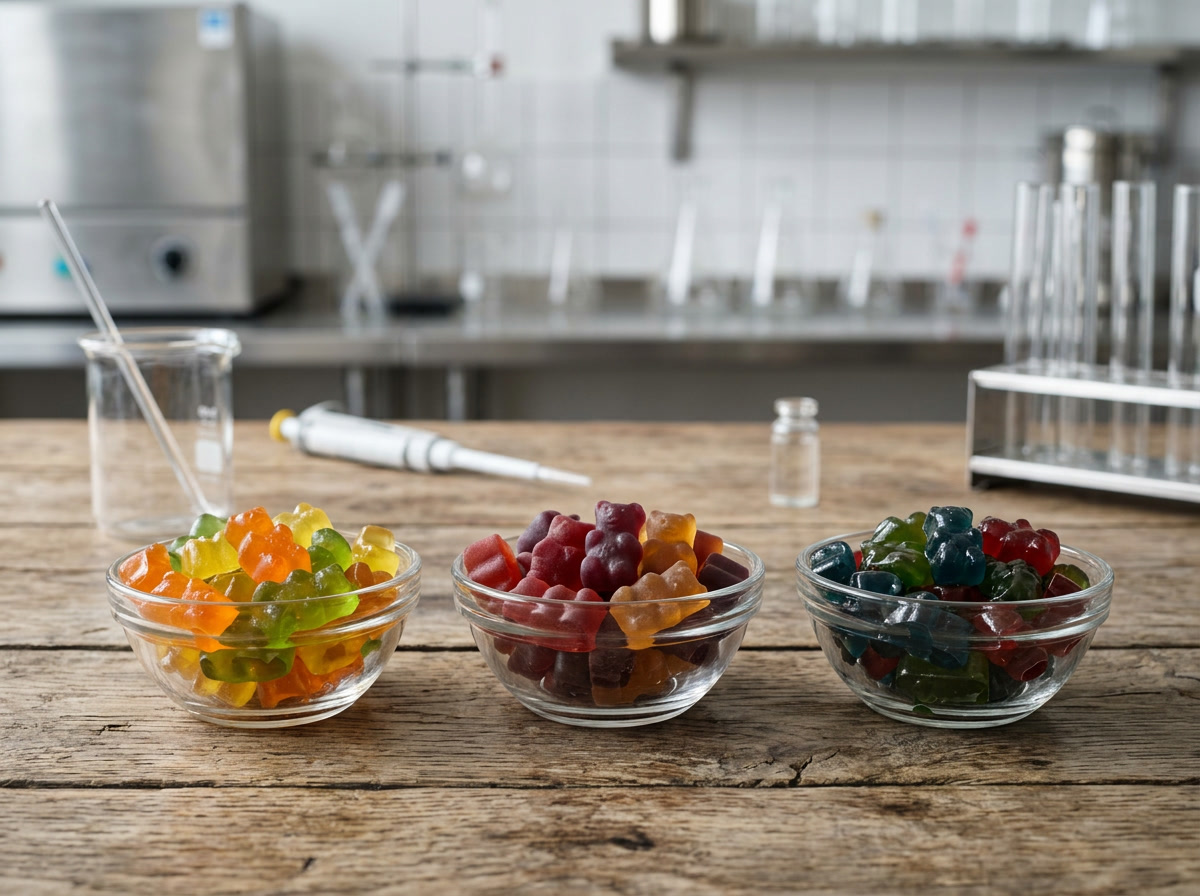
There are three main categories of vegan jelly bears, defined by their gelling agent — pectin-based, agar-based, and carrageenan-based — each with distinct texture profiles and manufacturing requirements.
Knowing which type you are producing (or purchasing) matters enormously. Each gelling system has different shelf-life behavior, different machine compatibility, and different consumer acceptance profiles. Getting it wrong at the formulation stage costs far more than getting it right from the start.
Pectin-Based Vegan Jelly Bears
Pectin is extracted from citrus peel or apple pomace — both byproducts of the juice industry, which makes it inherently low-waste and appealing for clean-label positioning. High-methoxyl (HM) pectin is the most common type in candy applications because it gels in the presence of high sugar concentrations and low pH, exactly the conditions found in a candy cook.
Pectin gummies have a slightly firmer, snappier bite compared to gelatin-based bears. Most consumers describe them as “fruitier” in texture — partly because pectin is itself derived from fruit. They tolerate fruit acids well, which makes high-flavor formulas (passion fruit, raspberry, citrus) particularly successful with pectin as the gelling backbone.
Manufacturing note: HM pectin is pH-sensitive. The standard practice is to prepare a hot pectin solution (85–90°C), cook the candy base separately, and combine them only after the base has cooled slightly. Citric acid is added last, just before depositing, because if introduced too early it triggers premature gelation in the lines. On continuous cooking lines, this typically means a two-tank system with inline acid injection immediately upstream of the depositor.
Agar-Based Vegan Jelly Bears
Agar-agar is a polysaccharide extracted from red seaweed, used in Asian cuisine for centuries and now appearing more frequently in Western confectionery. Agar sets at around 32–40°C and melts at roughly 85°C — a dramatically higher melting point than gelatin (30–35°C) or pectin (varies, but typically 50–60°C after setting).
That high melting point is both an advantage and a challenge. Advantage: agar gummies are more heat-stable, which matters in warm climates or for products displayed without refrigeration. Challenge: they do not melt in the mouth the way gelatin does, and the bite can feel rubbery or grainy if not combined with a secondary gelling agent or modified starch.
In practice, most successful agar-based vegan jelly bears use agar at low concentrations (0.3–0.8%) combined with locust bean gum or konjac to soften the texture and reduce syneresis. The result is a chewier, more substantial gummy that holds up well in hot warehouses — a real benefit for e-commerce brands shipping through summer.
Carrageenan-Based Vegan Jelly Bears
Carrageenan is extracted from red seaweed, like agar, but forms a distinctly different texture profile. Kappa carrageenan produces a firm, brittle gel; iota carrageenan produces a softer, more elastic gel. Most candy applications use iota carrageenan, or blends of kappa and iota, to achieve a gelatin-like elasticity.
The texture of carrageenan gummies is the closest to gelatin among the plant-based options. They have a good snap, decent elasticity, and reasonable melt-in-mouth behavior. The main concern with carrageenan is the ongoing consumer scrutiny around its safety — some advocacy groups have raised questions about degraded carrageenan, though food-grade carrageenan remains approved by regulatory bodies including the FDA, EFSA, and Codex Alimentarius.
For manufacturers, carrageenan gummies require careful temperature management during depositing (typically 70–75°C) and good humidity control during cooling to prevent surface tackiness.
| Gelling Agent | Texture | Heat Stability | Melt-in-Mouth | Typical Cost | pH Sensitivity |
|---|---|---|---|---|---|
| Pectin (HM) | Firm, snappy, fruity | Moderate | Moderate | Medium | High (pH 2.8–3.5 optimal) |
| Agar-agar | Firm, can be brittle | High | Low | Medium-High | Low |
| Carrageenan (iota) | Elastic, gelatin-like | Moderate | Good | Low-Medium | Moderate |
| Konjac (blend) | Very chewy, dense | High | Low | High | Low |
Industry Applications and Market Opportunities
The global vegan gummy candy market was valued at over $800 million in 2024 and is projected to grow at a compound annual rate above 12% through 2028, driven by expanding vegan demographics, halal certification requirements, and the clean-label movement.
According to Statista’s confectionery market analysis, plant-based candy now represents one of the fastest-growing segments in the broader confectionery space. The opportunity is not just for specialty brands — mainstream candy manufacturers are actively looking to add vegan SKUs to their portfolios without retooling entire production lines.
Retail and E-commerce Channels
The majority of vegan jelly bear volume moves through three retail channels: natural/specialty food stores (Whole Foods, Sprouts), mainstream grocery (increasingly, as vegan sections expand), and direct-to-consumer e-commerce. The DTC channel is particularly interesting because it tolerates premium pricing — consumers who seek out vegan gummies specifically are often willing to pay 30–50% more than the equivalent conventional product.
Brands like VegoBears have demonstrated that premium organic vegan jelly bears can find an audience willing to pay $15–20 for a 400g bag, a price point that would be unthinkable for conventional gummy bears. For manufacturers, this translates to better margin per unit even if volumes are smaller than mass-market runs.
Bulk Manufacturing for Private Labels
The fastest-growing B2B opportunity in vegan jelly bears is private-label manufacturing. Retailers from Amazon private brands to regional grocery chains want their own vegan gummy bear SKUs but lack the manufacturing expertise or equipment. This creates demand for contract manufacturers who can produce consistent, certified-vegan product at scale.
Private-label vegan jelly bears typically ship in 5–25 kg bulk bags for repackaging, or in pre-packaged retail units. Minimum order quantities for most contract manufacturers running dedicated vegan lines start around 500 kg — small enough to be accessible to mid-sized brands, large enough to make the setup costs worthwhile.
Key certification requirements for private-label buyers: Certified Vegan (Vegan Action), Non-GMO Project Verified, organic certification (USDA or EU), and halal certification for markets in Southeast Asia and the Middle East. Each certification adds audit costs but also unlocks new distribution channels.
Organic and Health-Focused Segments
The organic vegan jelly bear segment commands the highest prices and the most loyal consumer base. Organic certification requires that the sugar, glucose syrup, flavors, and colorants all come from certified organic sources — which limits sourcing options and increases raw material costs by 20–40% compared to conventional vegan formulations.
The payoff is positioning: organic vegan jelly bears can be merchandised in premium sections, marketed to health-conscious parents buying for children, and sold through health food retailers at retail prices that generate strong margin for both brand and retailer. Brands that hold organic + vegan + non-GMO certifications are in the strongest competitive position going into 2026.
How to Choose the Right Vegan Jelly Bear Manufacturing Equipment
The right machine for vegan jelly bear production must handle higher viscosities, tighter temperature windows, and more reactive formulas than a standard gelatin gummy line — without compromising output speed or product consistency.
This is where many candy startups and established manufacturers alike run into trouble. They assume they can run a pectin or agar formula through an existing gelatin gummy line with minimal adjustment. In practice, that assumption can lead to depositing failures, inconsistent weights, molded bears that stick or tear, and batches that are rejected at quality control. The machine matters almost as much as the formula.
Key Machine Features for Vegan Gummy Production
When evaluating equipment for vegan jelly bear production, look for these critical features:
1. Precision temperature control throughout the system. The cooking kettle, holding tank, piping, and depositor head all need independent, precise temperature control — typically ±1°C. Vegan formulas, especially pectin-based ones, begin to set as soon as they drop below their gelation temperature. Any cold spots in the piping will cause blockages or inconsistent depositing.
2. A two-tank cooking system or inline acid injection. For pectin formulas, you cannot cook citric acid with the candy base — it will trigger premature gelation. A two-tank system (one for the base syrup, one for the pectin solution) with a mixer just upstream of the depositor is the standard industrial approach. Some modern depositing lines incorporate inline acid injection via a peristaltic pump, which allows single-tank cooking and is a cleaner, more consistent solution.
3. Servo-driven depositing heads. Vegan gummy masses tend to be more viscous and more sensitive to pressure variations than gelatin-based masses. Servo-driven depositing systems maintain precise dosing control across different viscosities, reducing weight variation to under ±1 g per piece. Pneumatic systems, by contrast, can struggle with thicker masses and produce higher weight variation.
4. Starch or silicone mold compatibility. Most industrial gummy production uses starch moulding (Mogul) systems, where bears are deposited into starch trays that absorb excess moisture during setting. Vegan formulas — especially agar-based ones — can behave differently in starch because they set faster and do not release moisture the same way gelatin does. Some manufacturers prefer silicone molds for smaller vegan production runs, as they eliminate starch handling but require a separate conditioning step.
5. Controlled cooling tunnels. Vegan jelly bears typically need longer cooling times than gelatin bears because the polysaccharide gels take longer to fully develop their final texture. A cooling tunnel set to 15–18°C with good airflow is essential. Rushing the cooling step produces bears that are soft in the center, which fails quality inspection and creates sticking problems in tumbling drums.
Depositing vs. Starch Moulding Systems
The two dominant production architectures for gummy bears are continuous depositing lines (Mogul) and batch depositing into silicone molds. Each has a place in vegan jelly bear production depending on your volume targets.
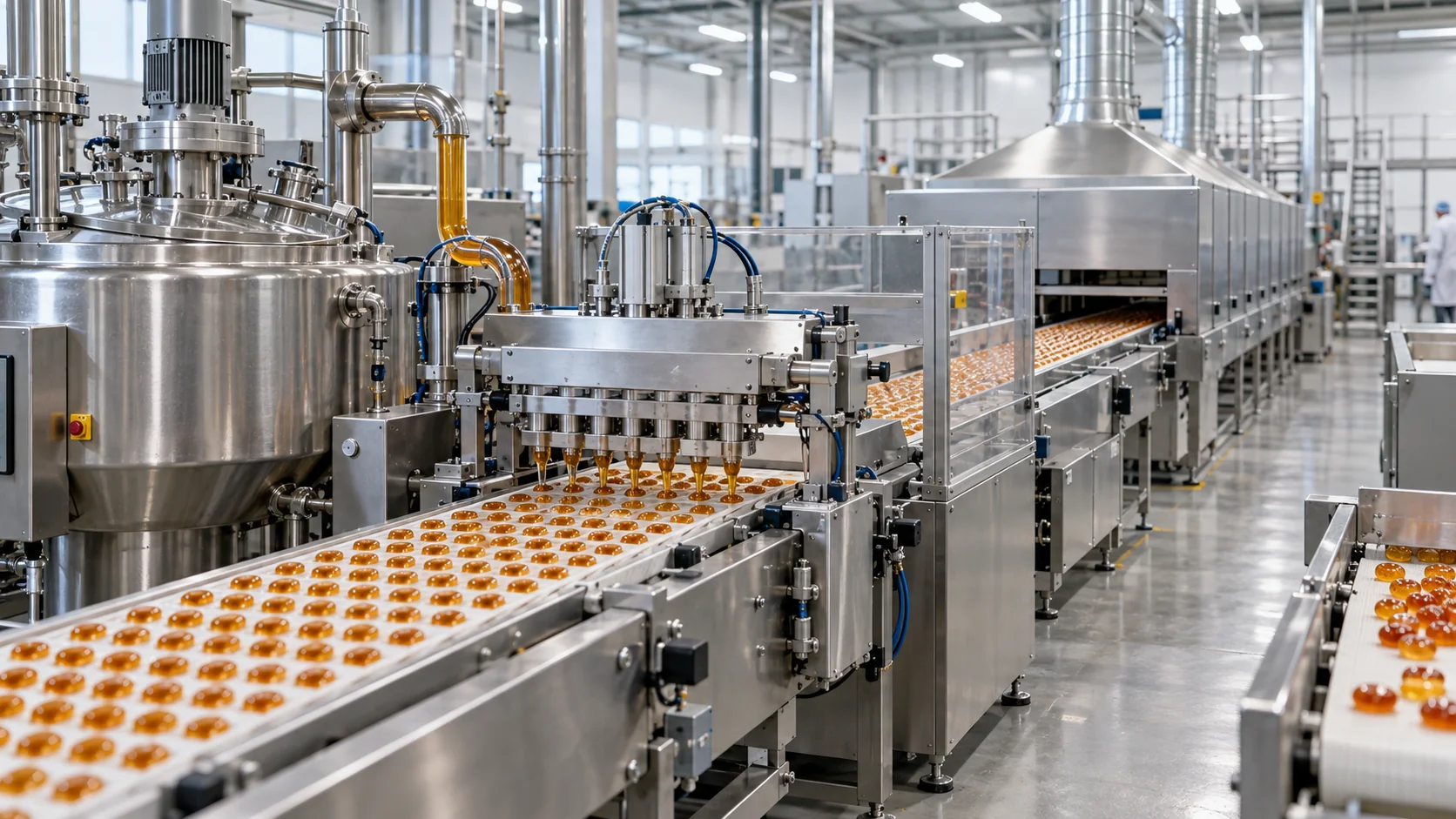
Mogul (starch moulding) systems are the standard for industrial-scale production — 200 kg/h to several tonnes per hour. Starch trays create the bear impression, candy mass is deposited into the starch, and the trays move through a temperature-controlled conditioning room for 12–24 hours before demolding and finishing. Mogul lines handle vegan formulas well if the depositing temperature and starch moisture content are dialed in for the specific gelling agent being used. In practice this means running the starch at slightly lower moisture for pectin formulas (starch moisture 5–7% rather than 7–9%) to compensate for the lower free moisture that pectin gummies release.
Silicone mold depositing lines are more common for artisan or mid-scale production (10–100 kg/h). They eliminate starch handling entirely, which reduces floor space requirements and simplifies cleaning. The trade-off is that silicone molds require a separate demolding and coating step and do not condition the gummy surface the way starch does — so surface tackiness can be a problem unless a proper coating (carnauba wax, beeswax substitute) is applied.
Common Production Mistakes to Avoid
In practice, these are the failure modes we see most often in new vegan gummy lines:
- Adding acid too early in pectin formulations — causes chunky, uneven gels in the cook tank before the mass ever reaches the depositor
- Underestimating viscosity — vegan masses are typically 20–30% more viscous than equivalent gelatin formulas at the same depositing temperature; this requires larger-bore piping and higher pump pressures
- Skipping the temper step for agar-based formulas — agar gels benefit from a 30-minute hold at just above the set temperature to allow full hydration and even gel network formation
- Inconsistent colorant dosing — natural colorants used in vegan gummies (anthocyanins especially) are pH-sensitive and can shift color during cooking if the pH changes; a buffer system or careful acid management is essential
- Insufficient coating — vegan gummy bears often need more carnauba wax coating than gelatin bears because they tend to be slightly tackier; under-coating leads to bears sticking together in packaging
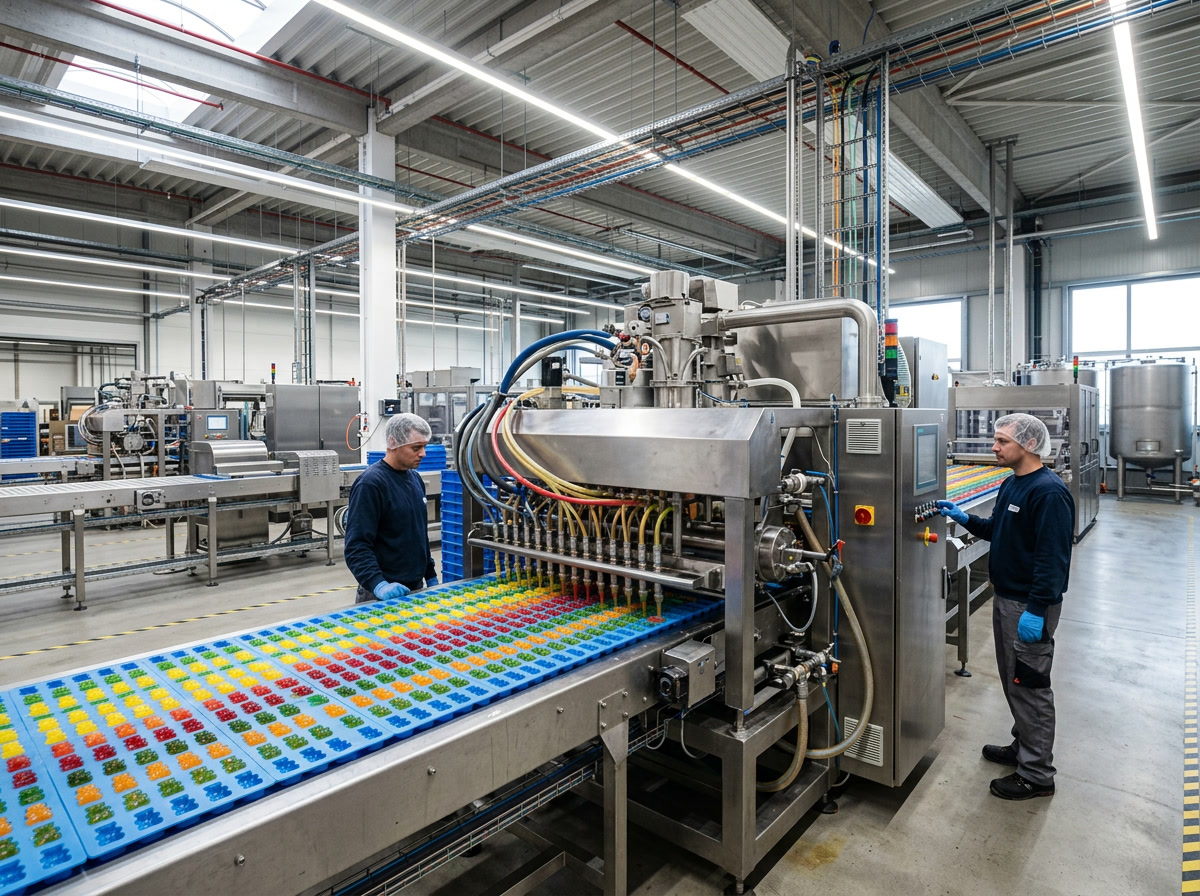
| Machine Type | Ideal Volume | Vegan Formula Compatibility | Startup Cost | Key Advantage |
|---|---|---|---|---|
| Mogul Starch Moulding Line | 500 kg/h+ | Excellent (with parameter tuning) | High | Maximum throughput |
| Continuous Depositing + Silicone Mold | 50–300 kg/h | Good | Medium | No starch handling |
| Semi-Automatic Batch Depositor | 10–50 kg/h | Good | Low | Flexibility, low MOQ |
| Lab-Scale R&D Depositor | <5 kg/h | Excellent | Low | Formula development |
Future Trends in Vegan Jelly Bear Production (2026+)
The next phase of vegan jelly bear innovation centers on two converging trends: functional ingredients and sustainability certification — both of which will reshape formulations and supply chains within the next two to three years.
The vanilla vegan gummy bear — sugar, pectin, fruit flavor, natural color — will remain the volume leader. But the margin leaders will be the functional and certified-sustainable variants that command premium price points.
Plant-Based Functional Gummies
The fusion of the gummy format with functional ingredients is already well underway in the supplement market. According to research published by the International Journal of Food Science, encapsulated plant-based actives in gummy matrices show bioavailability comparable to tablet-based supplements for many ingredient categories.
Vegan jelly bears are the logical vehicle. They are already gelatin-free (the biggest formulation challenge for functional gummies), they appeal to health-conscious consumers, and they are consumed daily as a treat rather than perceived as medicine. The leading functional ingredients appearing in vegan gummy bears in 2025–2026:
- Vitamin C and zinc — classic immune support, easily incorporated into pectin formulas at therapeutic doses
- Ashwagandha and adaptogens — stress support category, typically masked with strong fruit flavors (passion fruit, mango work well)
- Collagen alternatives — plant-sourced collagen boosters (amino acid complexes from legumes) positioned for beauty/skin applications
- Omega-3 from algae — DHA/EPA from algal oil, which avoids the fishy note of fish-derived omega-3 and is inherently vegan
- Probiotics — acid-tolerant bacterial strains encapsulated in a pectin matrix; technically challenging but commercially interesting
The challenge with functional vegan jelly bears is interaction between the active ingredient and the gelling system. Many botanical extracts are acidic or contain polyphenols that interfere with pectin gelation. Getting the formulation right requires a real R&D investment — but that investment creates a defensible product that competitors cannot easily copy.
Sustainability and Clean Label Demands
By 2026, “vegan” alone will no longer be sufficient differentiation in the premium gummy segment. Consumers — and the retail buyers who stock for them — will increasingly require:
- Organic certification for key ingredients (sugar, glucose syrup, flavoring)
- Packaging recyclability or compostability
- Traceability for pectin sources (specific citrus peel or apple pomace origins)
- Carbon footprint labeling — some EU markets are beginning to mandate or incentivize this for confectionery
- Fair Trade sourcing for sugar and tropical fruit flavors
Manufacturers who build vegan jelly bear lines that are certified organic, use sustainably sourced gelling agents, and can demonstrate a complete supply chain audit will have a significant advantage in retail placement negotiations from 2026 onward. Retailers are already telling suppliers that sustainability credentials will be as important as price and product quality in their buying decisions.
Frequently Asked Questions About Vegan Jelly Bears
What makes a jelly bear truly vegan?
A vegan jelly bear uses no animal-derived ingredients anywhere in its formula — the gelling agent must be plant-based (pectin, agar, carrageenan), colorants must be carmine-free, and any glaze coating must use carnauba wax rather than beeswax. Certification from an accredited body like Vegan Action or the Vegan Society provides third-party assurance.
Do vegan jelly bears contain gelatin?
No. This is the defining characteristic. Traditional gummy bears use gelatin derived from pork or beef bones and connective tissue. Vegan jelly bears replace gelatin entirely with plant-based gelling agents, most commonly pectin from citrus peel or apple pomace.
What do vegan jelly bears taste like compared to regular gummy bears?
Most consumers find pectin-based vegan jelly bears slightly fruitier and firmer than conventional gelatin gummy bears. The texture has a bit more snap and slightly less melt-in-mouth. High-quality formulations minimize this difference to the point where casual consumers often cannot tell the two apart in blind tastings.
Are vegan jelly bears suitable for people with halal dietary requirements?
Yes — if they are certified halal. Plant-based gelling agents are inherently halal (they contain no animal derivatives). However, the manufacturing facility must also meet halal processing standards, and the product must be certified by a recognized halal body. Many vegan jelly bear manufacturers pursue both vegan and halal certifications simultaneously.
How long do vegan jelly bears last compared to traditional ones?
Shelf life depends heavily on the gelling agent and packaging. Pectin-based vegan jelly bears typically have a 12–18 month shelf life in sealed packaging — comparable to gelatin-based products. Agar-based gummies tend to have slightly shorter shelf life due to their higher tendency toward moisture migration. Good packaging (nitrogen flushed, moisture-barrier film) can extend shelf life for any format.
Can vegan jelly bears be made organically?
Yes, and the organic segment is growing rapidly. Organic vegan jelly bears require organic certification for the sugar, glucose syrup, gelling agent, flavorings, and colorants. Pectin from organic citrus peel is available from multiple suppliers and is the most common choice. The cost premium over conventional is typically 25–40% on raw materials.
What equipment do I need to produce vegan jelly bears commercially?
At minimum, a precision cooking kettle, a temperature-controlled holding tank, and a depositing system (either starch moulding Mogul line or silicone mold depositor). For pectin formulas, inline acid injection or a two-tank system is essential. A cooling tunnel and a coating drum round out the basic production line. JY Machine Tech offers complete gummy production lines sized from 50 kg/h to 500 kg/h that are pre-validated for both gelatin and plant-based vegan formulas.
Conclusion
Vegan jelly bears have moved from specialty shelf to mainstream confectionery, and the production side of this shift is only getting more sophisticated. Whether you are formulating a new product, evaluating contract manufacturing partners, or upgrading your production line to handle plant-based gelling agents, the technical and commercial fundamentals covered here give you a solid foundation.
The key takeaways: choose your gelling agent based on target texture and manufacturing capabilities, not just on availability; invest in equipment that offers precise temperature control and, for pectin formulas, proper acid injection; and start building your sustainability and certification credentials now, because the retail environment in 2026 and beyond will reward manufacturers who can demonstrate the full story — vegan, organic, traceable, and sustainable.
If you are ready to explore what a dedicated vegan jelly bear production line looks like for your specific output targets, contact the JY Machine Tech team — we build and configure complete gummy production lines tailored to plant-based formulations, with validated process parameters for pectin, agar, and carrageenan-based vegan jelly bears.
Related Articles
- Gummy Snakes: The Complete Guide to Commercial Production and Market Trends
- The Ultimate Guide to Cactus Candy: Commercial Production, Ingredients, and Industry Trends
- Sugar Free Haribo Gummy Bears: Ingredients, Effects, and What Actually Happened
- Peelable Gummy Candy: Types, Ingredients, and Production Guide
- Gummy Candy Production Line
- Starch-Free Gummy Depositing Machine
- Are Skittles Gluten Free? Complete Guide 2026