What Are Gummy Bears Made Of? The Full Ingredient Breakdown
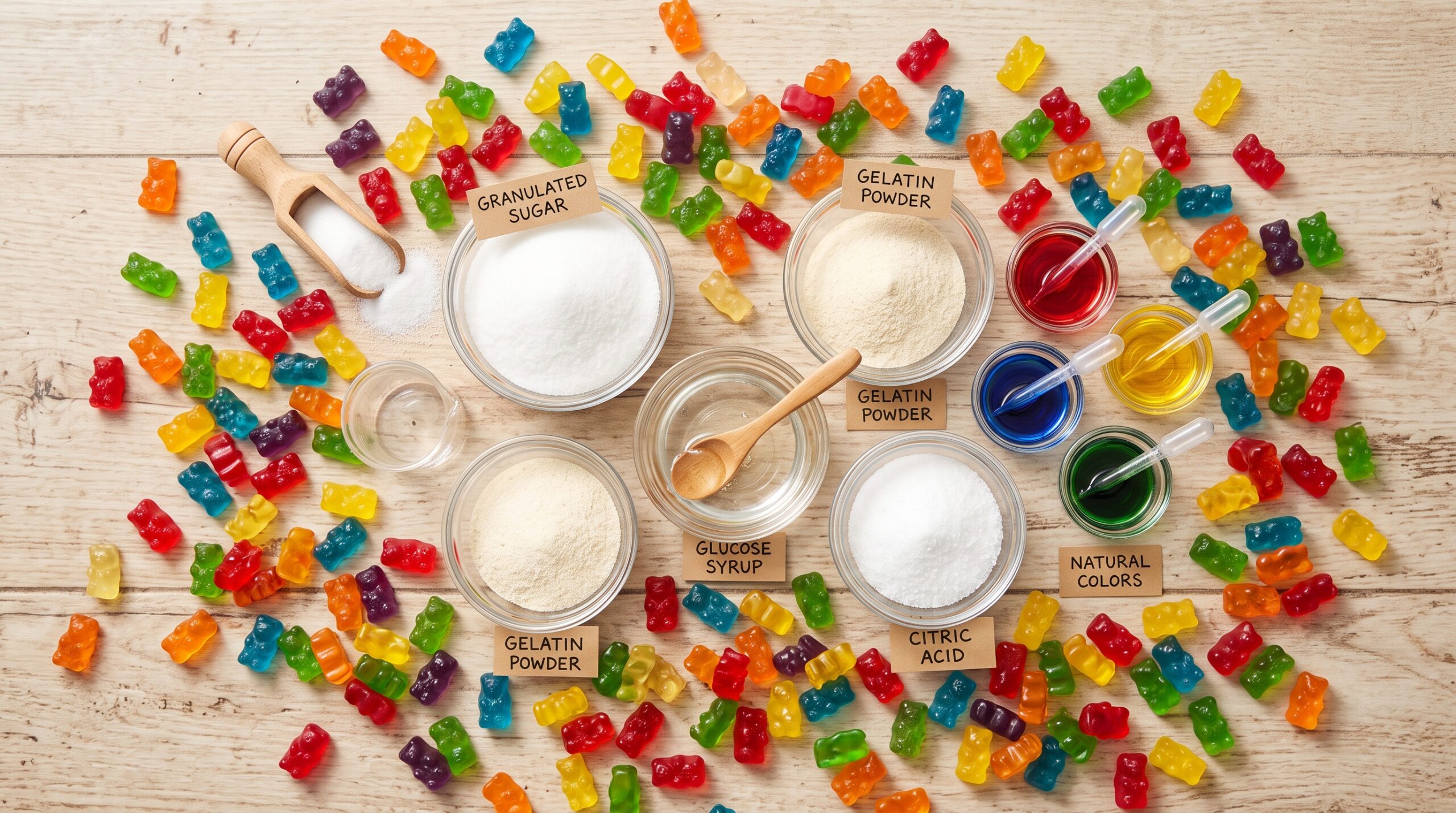
Gummy bears are made from gelatin, sugar, glucose syrup, starch, flavoring agents, food coloring, and citric acid — heated, blended, molded, and cooled into their signature chewy form.
Walk into any candy aisle, and you’ll spot them: those tiny, bear-shaped, jewel-colored confections that have been a global favorite since 1922. But have you ever stopped mid-chew and wondered what exactly gives gummy bears that unique bounce, that translucent sheen, and that addictive pull? Whether you’re a curious consumer, a candy professional exploring production scale-up, or a food equipment buyer evaluating a gummy production line, understanding what gummy bears are made of is the first step. We’ll break down every ingredient, every processing stage, and every industry consideration — going deeper than any sugar-coated overview.
What Are Gummy Bears Made Of? Core Ingredients Explained
Gummy bears consist of six to eight primary ingredients, each playing a precise functional role. The exact formula differs by brand and intended market (conventional, vegan, sugar-free), but the fundamental chemistry stays consistent.
The six core ingredients are:
| Ingredient | Typical Percentage | Primary Function |
|---|---|---|
| Gelatin (or vegan substitute) | 6–10% | Gelling agent — creates chewy texture |
| Sugar (sucrose) | 40–55% | Sweetness, body, structure |
| Glucose syrup | 25–35% | Prevents crystallization, adds smoothness |
| Water | 12–20% (most evaporates) | Solvent for dissolution and mixing |
| Flavoring agents | 0.1–2% | Aroma and taste profile |
| Food coloring | 0.01–0.5% | Visual identity by flavor |
| Citric acid | 0.5–2% | Tartness, mild preservation |
| Starch (as mold release) | Applied externally | Demolding — not in final product |
Gelatin: The Ingredient That Makes Gummy Bears “Gummy”
When people ask what gummy bears are made of, they’re really asking about gelatin. Gelatin is a colorless, odorless protein derived from collagen, most commonly sourced from pork skin, pork bones, or bovine hides. The manufacturing process involves boiling the animal connective tissue, extracting the collagen, and processing it into a powder or granule form.
In candy production, gelatin performs a structural miracle. When dissolved in hot water (above 50°C) and then cooled, it forms a three-dimensional protein network — the matrix that gives gummy bears their elastic, chewy texture. Gelatin concentration directly controls texture: lower percentages yield soft, jelly-like gummies; higher percentages (closer to 10%) produce firmer, more bite-resistant bears.
Gelatin bloom strength, measured in Bloom units, is another critical variable. Most gummy confections use gelatin with bloom values between 200 and 250. Higher bloom means a stronger, firmer gel; lower bloom results in a softer product. Premium gummy producers select bloom strength with precision — a difference of 20 bloom units can measurably change the consumer’s chewing experience.
Industry note: Porcine (pork) gelatin is the most commonly used globally due to its superior gel strength and cost-effectiveness. However, halal and kosher markets require bovine gelatin with certified slaughter practices, and vegan markets require plant-based alternatives entirely.
Sugar and Glucose Syrup: The Sweet Structural Backbone
Sugar (sucrose) and glucose syrup together constitute the largest share of gummy bear mass — often exceeding 70% of the dry formulation. They’re not interchangeable; each plays a distinct role.
Sucrose provides sweetness and body. Its crystalline structure contributes to a defined, clean bite. However, sucrose alone tends to recrystallize over time, making the product grainy and unappealing.
Glucose syrup (also called corn syrup in North America) prevents this recrystallization. Its long-chain glucose polymers interfere with sucrose crystal formation, keeping the gummy smooth and homogeneous throughout its shelf life. Glucose syrup also contributes to the characteristic gloss and slightly sticky surface of commercial gummy bears.
The glucose:sucrose ratio matters significantly in production. A higher glucose proportion produces softer, more pliable gummies that are better suited for warm climates where products may be exposed to elevated temperatures. Higher sucrose ratios yield firmer bears with a cleaner sugar flavor.
Flavoring Agents and Citric Acid: The Sensory Layer
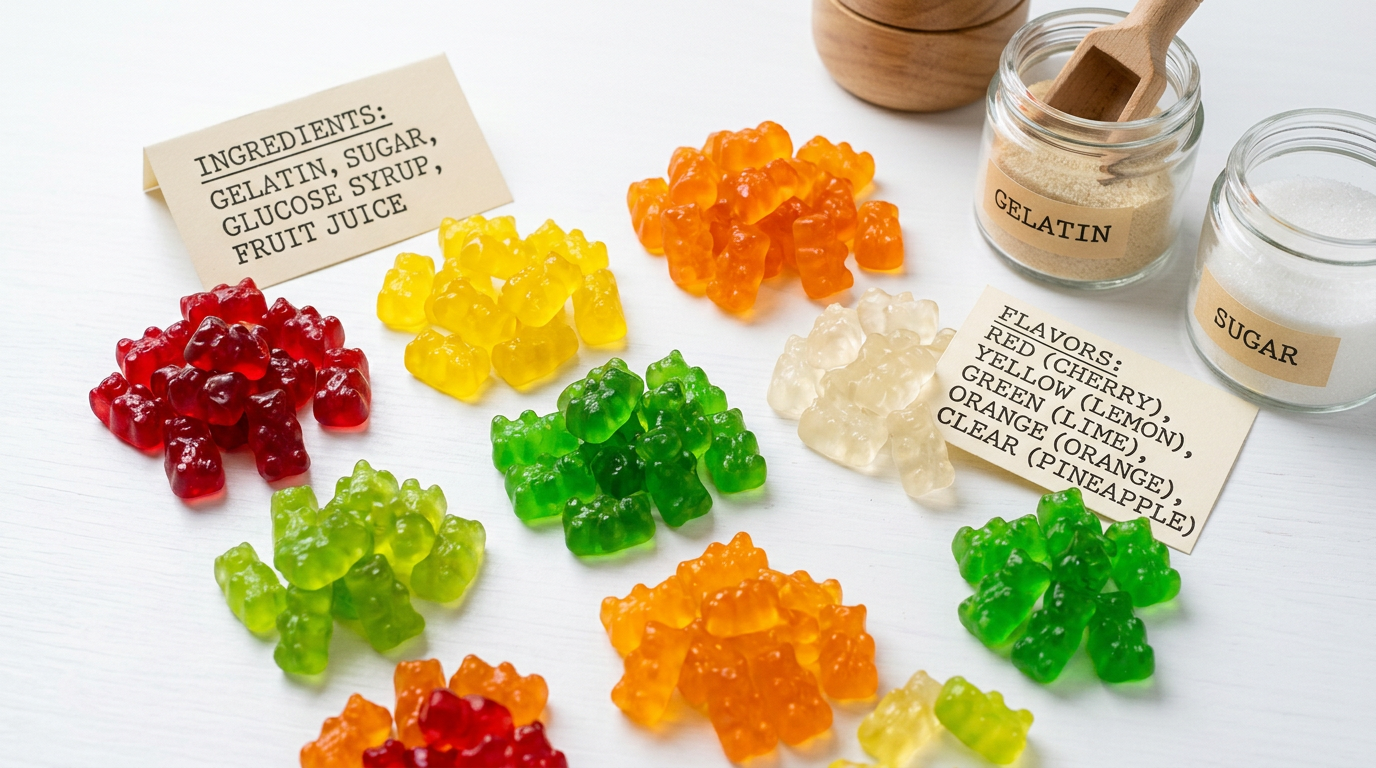
What are gummy bears made of, taste-wise? The color-to-flavor convention (red = raspberry/cherry, green = apple/lime, yellow = lemon, orange = orange, clear = pineapple) is mostly brand-specific rather than universal. Haribo, the original gummy bear maker founded in Bonn, Germany in 1922, uses natural and artificial flavors depending on the market.
Citric acid serves dual duty: it contributes tartness that balances sweetness, and it acts as a mild preservation agent by lowering pH slightly — discouraging microbial growth without noticeably changing the product’s flavor profile.
Food Coloring: Safety and Regulation
Food-grade colorings used in gummy bears vary by region. In the US, FD&C certified synthetic dyes (Red 40, Yellow 5, Blue 1) are standard. European markets show higher consumer preference for natural colorings — annatto, spirulina, beet extract, turmeric — though these add cost and may affect stability at high processing temperatures.
Types of Gummy Bears: How Formulation Differs by Product
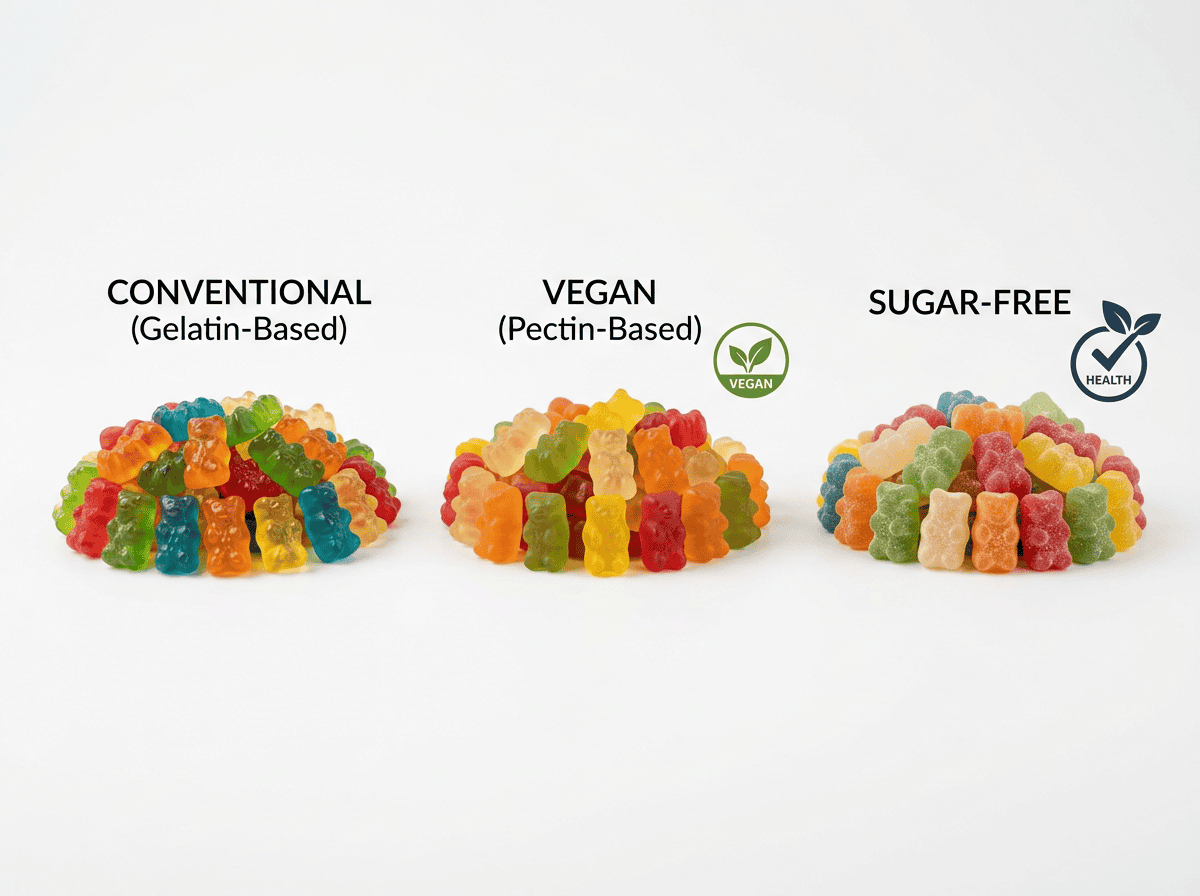
Not all gummy bears are created equal. The formulation varies substantially depending on market target, regulatory requirements, and consumer demand.
Conventional Gelatin-Based Gummy Bears
The original format. Uses porcine or bovine gelatin, sucrose, glucose syrup, and synthetic or natural flavors. This formula dominates global market share. Production cost is lower, texture is the most recognizable, and shelf life typically reaches 12–24 months under proper storage conditions.
Haribo Goldbären, the world’s best-selling gummy bear, falls in this category. According to Wikipedia’s detailed gummy bear history, gummy bears were originally created as a more affordable alternative to fruit bonbons, using the newly accessible gelatin supply post-World War I.
Vegan and Plant-Based Gummy Bears
Growing consumer awareness about animal-derived ingredients has driven strong demand for plant-based gummies. Rather than gelatin, vegan formulations use:
- Pectin: Derived from citrus peel or apple pomace. Produces softer, clearer gummies that dissolve faster on the palate. Pectin requires different processing parameters — it sets at higher sugar concentrations (typically above 60–65 Brix) and is sensitive to pH.
- Agar-agar: A seaweed-derived polysaccharide. Produces firmer, more brittle gummies compared to gelatin. Less commonly used in mainstream production due to its distinct mouthfeel.
- Carrageenan: Another seaweed extract. Used in some formulations for gelling and texture but subject to ongoing regulatory review in certain markets.
Pectin-based gummies now represent the fastest-growing segment of the gummy confectionery market, driven by vegan, halal, and kosher certifications and broader “clean label” consumer trends.
Sugar-Free Gummy Bears
Sugar-free versions replace sucrose and glucose syrup with sugar alcohols — primarily maltitol, sorbitol, xylitol, or isomalt — or high-intensity sweeteners like stevia or sucralose. These formulations require careful adjustment of:
- Water activity: Sugar alcohols absorb moisture differently, affecting shelf life and texture.
- Processing temperature: Some sugar alcohols have lower melting points.
- Dosage warnings: Overconsumption of certain sugar alcohols, particularly sorbitol, causes digestive distress due to poor absorption in the small intestine.
| Type | Gelling Agent | Sweetener | Key Characteristics |
|---|---|---|---|
| Conventional | Porcine/bovine gelatin | Sucrose + glucose syrup | Most common, lowest cost, longest shelf life |
| Vegan | Pectin or agar | Sucrose + glucose syrup | Plant-based certified, softer texture |
| Halal/Kosher | Bovine gelatin (certified) | Sucrose + glucose syrup | Certified slaughter, specific labeling required |
| Sugar-Free | Gelatin or pectin | Maltitol, xylitol, stevia | Lower caloric impact, careful dosage management |
| Functional | Gelatin + active compounds | Varies | Added vitamins, CBD, collagen — rapidly growing |
Functional and Fortified Gummy Bears
One of the fastest-growing segments in confectionery is functional gummies — products that deliver vitamins, minerals, CBD, melatonin, or collagen alongside the candy experience. The gummy format is increasingly preferred over pills because it improves compliance, especially among children and adults who dislike swallowing capsules.
This segment places unique demands on production equipment. Sensitive active ingredients like vitamins may degrade at high processing temperatures, requiring lower-temperature deposition systems. CBD and botanical extracts require precise dosing and homogeneity throughout each piece.
How Gummy Bears Are Made: The Industrial Production Process
Understanding what gummy bears are made of leads naturally to the next question: how are all those ingredients turned into millions of perfectly shaped, identically textured bears? The industrial gummy production process is a precisely controlled sequence of mixing, cooking, depositing, molding, cooling, and finishing.
Step 1: Ingredient Dissolution and Premixing
The process begins with dissolving gelatin in warm water (around 50–60°C). Separately, sugar and glucose syrup are combined and brought to a boil. Once the sugar solution reaches the target temperature and Brix (sugar concentration, typically 75–82 Brix), the gelatin solution is blended in.
At this stage, citric acid, flavoring, and colorings are added. The sequence matters: citric acid added too early can cause premature gelling; colorings and flavors added after the sugar cook preserve their sensory integrity.
Step 2: Cooking to Target Moisture
The blended mass is cooked further to drive off excess water. Final moisture content in the candy base is critical — typically targeting 16–20% for gummy bears. Higher moisture content produces softer gummies with shorter shelf life; lower moisture content yields firmer bears with extended shelf life. Industrial continuous cookers maintain precise temperature profiles (often 106–115°C) to achieve the target Brix without scorching.
Step 3: Starch Molding (Mogul Process)
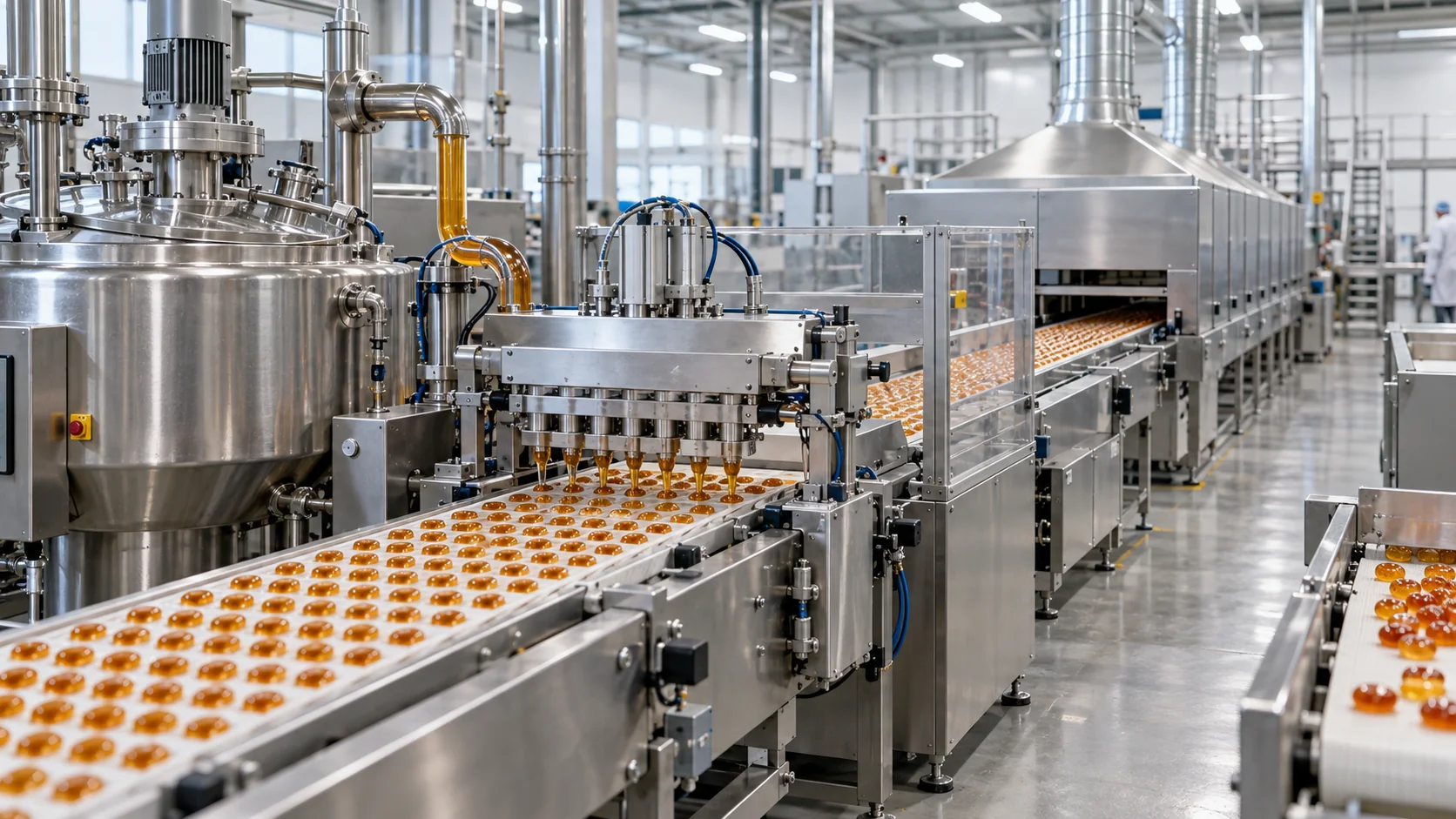
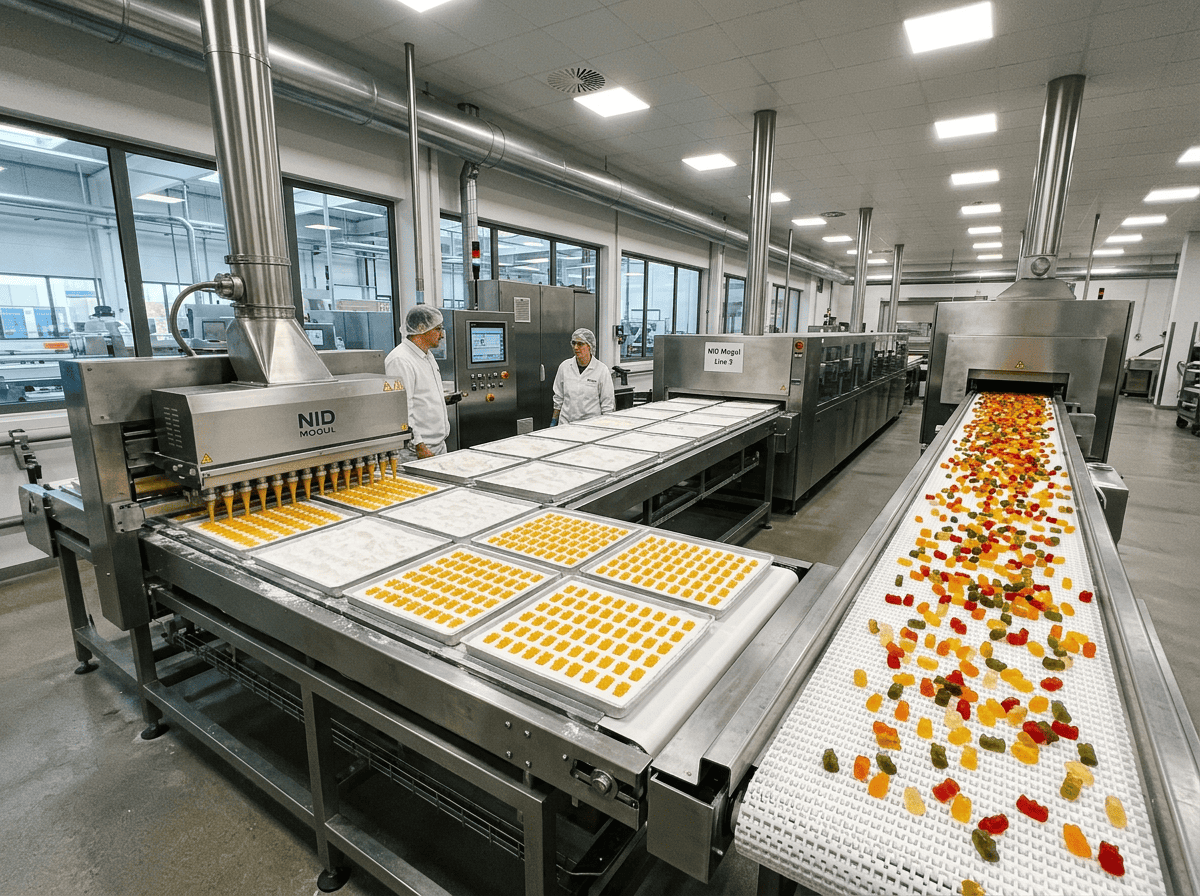
The most common industrial method for gummy bear production is the starch mogul process. Trays filled with food-grade corn starch (or wheat starch) have gummy bear cavities pressed into them using shape-engraved plungers called impression boards. The liquid candy mass is then deposited — or “cast” — into these starch molds using precision depositors.
The starch serves two purposes:
1. It wicks moisture from the gummy surface during cooling, accelerating setting.
2. It acts as a release agent so the formed candy can be cleanly removed from the cavity.
After depositing, trays stack into temperature- and humidity-controlled drying rooms for 24–48 hours. The candy firms as gelatin sets and moisture migrates into the starch.
Step 4: Demolding, Cleaning, and Finishing
Once set, trays pass through demolding machines that separate the bears from the starch. The starch is sieved, reconditioned, and recycled — a typical mogul production line recycles starch hundreds of times. The gummy bears then travel through brushing and blowing stations to remove residual starch from the surface.
Finishing treatments applied at this stage include:
– Oil coating: A light coating of vegetable or mineral oil gives gummies their glossy shine and prevents sticking.
– Wax coating: Carnauba wax creates a smooth, non-tacky surface.
– Sour coating: Citric acid blended with sugar creates the sour finish on popular varieties.
– Sugar sanding: Crystalline sugar applied to the surface creates a crunchy outer layer.
Step 5: Inspection, Weighing, and Packaging
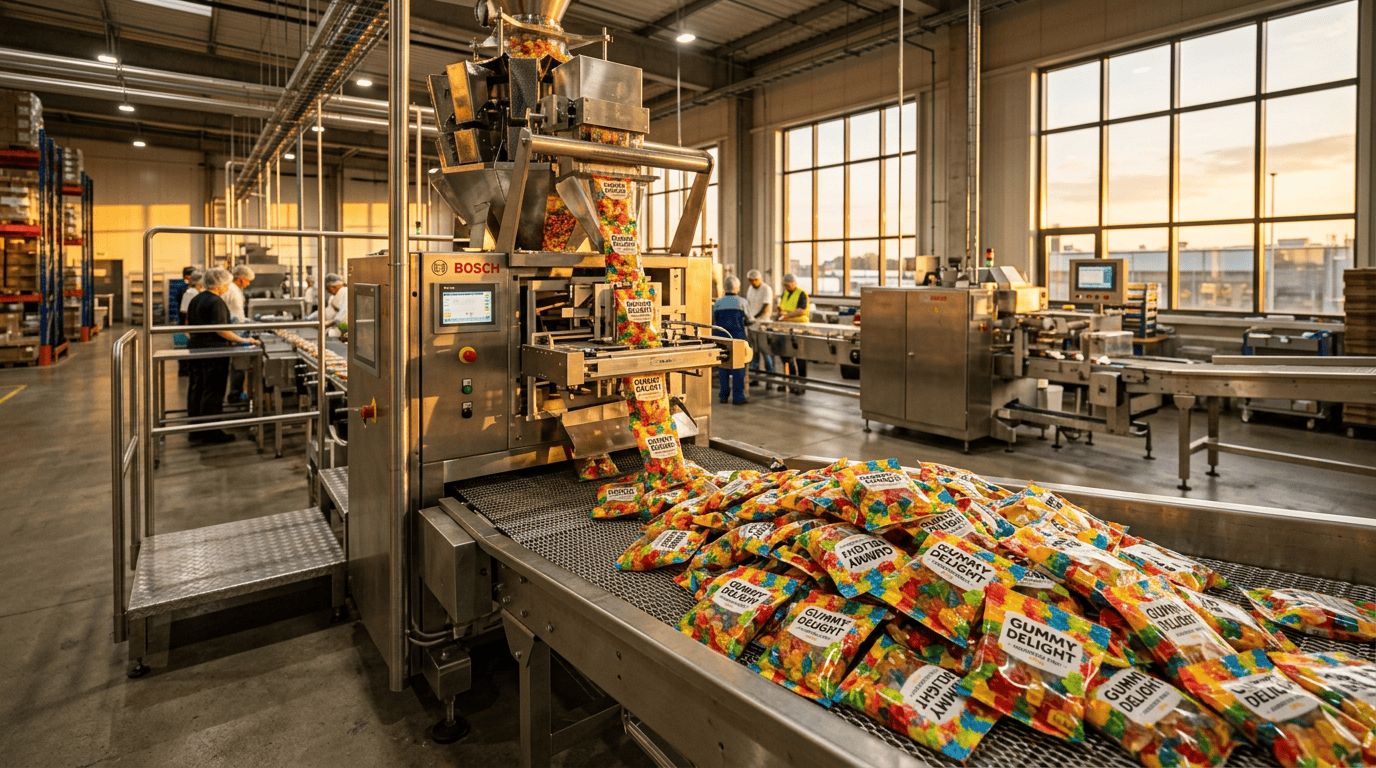
Final gummies pass through weight checkers and optical inspection systems before being portioned and sealed. High-speed production lines can produce hundreds of thousands of bears per hour. The efficiency of a complete gummy production line depends heavily on the precision and integration of each component — from the depositor’s volume consistency to the starch mogul’s mold quality.
Gelatin vs. Pectin vs. Agar: Choosing the Right Gelling Agent
One of the most consequential formulation decisions in modern gummy manufacturing is choosing between gelling agents. Gelatin has dominated historically, but the landscape has diversified significantly as plant-based demand grows.
| Property | Gelatin | Pectin | Agar-Agar |
|---|---|---|---|
| Source | Animal (pork/beef) | Citrus peel / apple | Red algae |
| Texture | Elastic, chewy, smooth | Soft, clear, dissolves quickly | Firm, slightly brittle |
| Set temperature | 10–15°C | Room temperature (with sugar) | 32–40°C |
| Melt temperature | ~35°C (near body temp) | Stable above 60°C | 80–85°C |
| pH tolerance | Degrades below pH 4 | Requires low pH (3–4) | Broad |
| Cost | Low–medium | Medium–high | High |
| Dietary status | Not vegan/vegetarian | Vegan / plant-based | Vegan / plant-based |
| Market trend | Stable | Growing rapidly | Niche |
The choice of gelling agent affects not just the final texture but the entire production setup. Pectin gummies require higher Brix solutions and different cooker temperatures. Equipment manufacturers like JY Machine engineer gummy production lines capable of processing both gelatin and pectin formulations, giving producers the flexibility to run conventional and vegan products on the same line with minimal changeover.
Industry Applications: Who Makes Gummy Bears and at What Scale?
Understanding what gummy bears are made of has practical implications across multiple industries.
Confectionery Manufacturers
Large confectionery companies run mogul lines at industrial scale — producing metric tons per day. Line capacity is measured in kilograms per hour of finished product. A mid-scale industrial gummy production line typically processes 200–800 kg/hour. High-output lines exceed 2,000 kg/hour.
Nutraceutical and Supplement Brands
Vitamin and supplement gummies are produced on smaller, more precise lines due to the requirement for accurate active ingredient dosing. According to the U.S. National Institutes of Health’s Office of Dietary Supplements, the gummy vitamin market has grown substantially, with formats now rivaling traditional tablet supplements in consumer preference.
Private Label and OEM Producers
Contract manufacturers produce gummy bears for retailers, brands, and start-ups without their own production facilities. These producers typically run flexible, multi-formula lines capable of shifting between gelatin, pectin, and sugar-free formulations.
Emerging Markets: CBD and Functional Gummies
CBD-infused gummies have created an entirely new manufacturing segment. These require pharmaceutical-grade precision in dosing, strict quality control, and third-party testing for active compound concentration. The gummy format is preferred because it masks the bitter taste of many botanical extracts.
Future Trends in Gummy Bear Production (2026 and Beyond)
The confectionery landscape is evolving. Several trends will reshape what gummy bears are made of and how they’re manufactured in the coming years.
| Trend | Driver | Production Impact |
|---|---|---|
| Plant-based gelling agents | Vegan/halal consumer demand | New pectin/agar processing lines |
| Functional/fortified formats | Health-conscious consumers | Precise dosing, lower-temp depositors |
| Reduced sugar formulations | Regulatory pressure, health trends | Reformulation with stevia, allulose |
| Sustainable packaging | ESG commitments | Biodegradable packaging line integration |
| AI-enabled quality control | Industry 4.0 | Automated vision inspection |
| Continuous production systems | Efficiency, cost reduction | Integrated mixing-cooking-depositing |
Gelatin demand is expected to remain stable despite plant-based growth, because gelatin continues to offer the best texture-cost ratio for the mainstream market. However, analysts project pectin-based gummies will capture 15–20% of the total gummy confectionery market by 2030, up from roughly 8% in 2024.
Modern gummy production lines are responding with:
– CIP (Clean-In-Place) systems for rapid sanitation between formula switches
– Recipe management software that stores and recalls formulation parameters automatically
– Inline Brix sensors that adjust cooking parameters in real time
FAQ: What Are Gummy Bears Made Of?
What part of the pig is used to make gummy bears?
Pork skin and bones are the most common raw materials. These by-products of pork processing are rich in collagen. After collection, they’re cleaned, treated with acid or alkali to extract the collagen protein, then dried and ground into gelatin powder or granules. Not all gummy bears use pork — bovine gelatin from cattle is a common alternative in halal and kosher markets.
What animal is in gummy bears?
Most conventional gummy bears contain gelatin from pigs or cattle. Haribo’s classic Goldbären uses pork gelatin. Some brands specify bovine gelatin for dietary certifications. Vegan gummy bears contain no animal products — they use plant-derived pectin or agar-agar instead of gelatin. Always check the ingredient list and certifications if dietary restrictions apply.
Are gummy bears made of cartilage?
No — gelatin does not come from cartilage. It comes primarily from skin and bones, which are rich in collagen (the protein that becomes gelatin when hydrolyzed). Cartilage contains chondroitin sulfate, a different structural protein that is not gelatin. The animal origin of gummy bear gelatin is real, but cartilage is not the source.
What is gelatin made from in gummy bears?
Gelatin is made by hydrolyzing collagen from pork skin, pork bones, or beef hides. The raw material is treated with acid or alkali, then slowly cooked in water to extract collagen as gelatin. The liquid is filtered, concentrated, dried, and ground into powder. In gummy production, this powder is dissolved in warm water to form a solution that sets into the chewy matrix when cooled.
Are gummy bears made from pig skin?
Yes — in many conventional gummy bears, pork skin is a primary source of gelatin. Pork skin is one of the most efficient sources of collagen because of its high surface-area-to-volume ratio. Consumers who avoid pork for religious or dietary reasons should look for gummies certified as kosher, halal, or vegan, which will use bovine gelatin or plant-based alternatives.
What makes gummy bears chewy instead of hard?
The elasticity comes from the gelatin protein network. When gelatin dissolves in hot water and cools, its protein chains form a flexible, three-dimensional mesh that traps water molecules. This hydrated mesh deforms and springs back — the chewing experience. The balance of gelatin percentage, residual moisture content, and glucose:sucrose ratio all determine specific chewiness. More gelatin produces firmer gummies; less moisture extends shelf life but may reduce softness.
Can gummy bears be made without sugar?
Yes, using sugar alcohols or high-intensity sweeteners. Sugar-free gummy bears replace sucrose and glucose syrup with maltitol, sorbitol, xylitol, erythritol, or sweetener blends containing stevia or sucralose. The technical challenge is that sugar alcohols behave differently in terms of water activity, crystallization tendency, and processing behavior. At high doses, sugar alcohols like sorbitol are incompletely absorbed in the digestive system, causing the digestive effects associated with some sugar-free confectionery products.
Conclusion: From Ingredients to Industrial Scale
Gummy bears are deceptively simple confections with surprisingly precise chemistry behind them. What are gummy bears made of, at core? A gelling protein (gelatin or a plant-based substitute), a carefully balanced sugar system, water, flavor, color, and acid — all processed through a tightly controlled sequence of dissolving, cooking, depositing, molding, drying, and finishing.
For consumers, understanding the ingredients helps navigate dietary preferences and restrictions. For confectionery professionals and food equipment buyers, the ingredient breakdown is the first chapter of a much longer story about process engineering, line selection, and quality control.
Whether you’re scaling from artisan batch production to industrial output, or adding a vegan or functional SKU to your existing line, the equipment and formulation choices are inseparable. A well-designed gummy production line can handle multiple formulations — gelatin, pectin, and sugar-free variants — with swift changeovers and consistent yield. If you’re evaluating production scale-up or looking at gummy bear equipment specifications, the chemistry covered here is the foundation for every equipment parameter: depositor precision, cooker temperature profiles, starch mogul specifications, and coating drum design all trace back to the ingredients we’ve examined.
JY Machine specializes in complete gummy candy production lines, including starch mogul systems, depositor-based lines, and continuous candy cooking systems for gelatin and pectin-based formulations. With over 30 years in food equipment manufacturing, we help confectionery producers scale from pilot to full industrial production.
Related Articles
- Gummy Bear: What Is It Made Of? Full Ingredient & Manufacturing Guide
- Haribo Gummy Bears Ingredients: Complete Breakdown & Manufacturing Guide
- Original Skittles Gluten Free: Full Ingredient & Celiac Guide 2026
- Sugar Free Haribo Gummy Bears: Ingredients, Effects, and What Actually Happened
- Gummy Candy Production Line
- Starch-Free Gummy Depositing Machine
- Are Skittles Gluten Free? Complete Guide 2026