A Technical Guide to Hardness Testing in Candy Production: Principles and Applications
Hardness testing plays a pivotal role even in food-process engineering, particularly for confectionery production. In the candy industry, hardness is not just a lab measurement — it is a critical quality control parameter that correlates with texture, shelf life, bite resistance, and consumer perception. By applying systematic hardness tests, engineers can ensure consistency, detect process drift, and control formulation or thermal treatment changes.
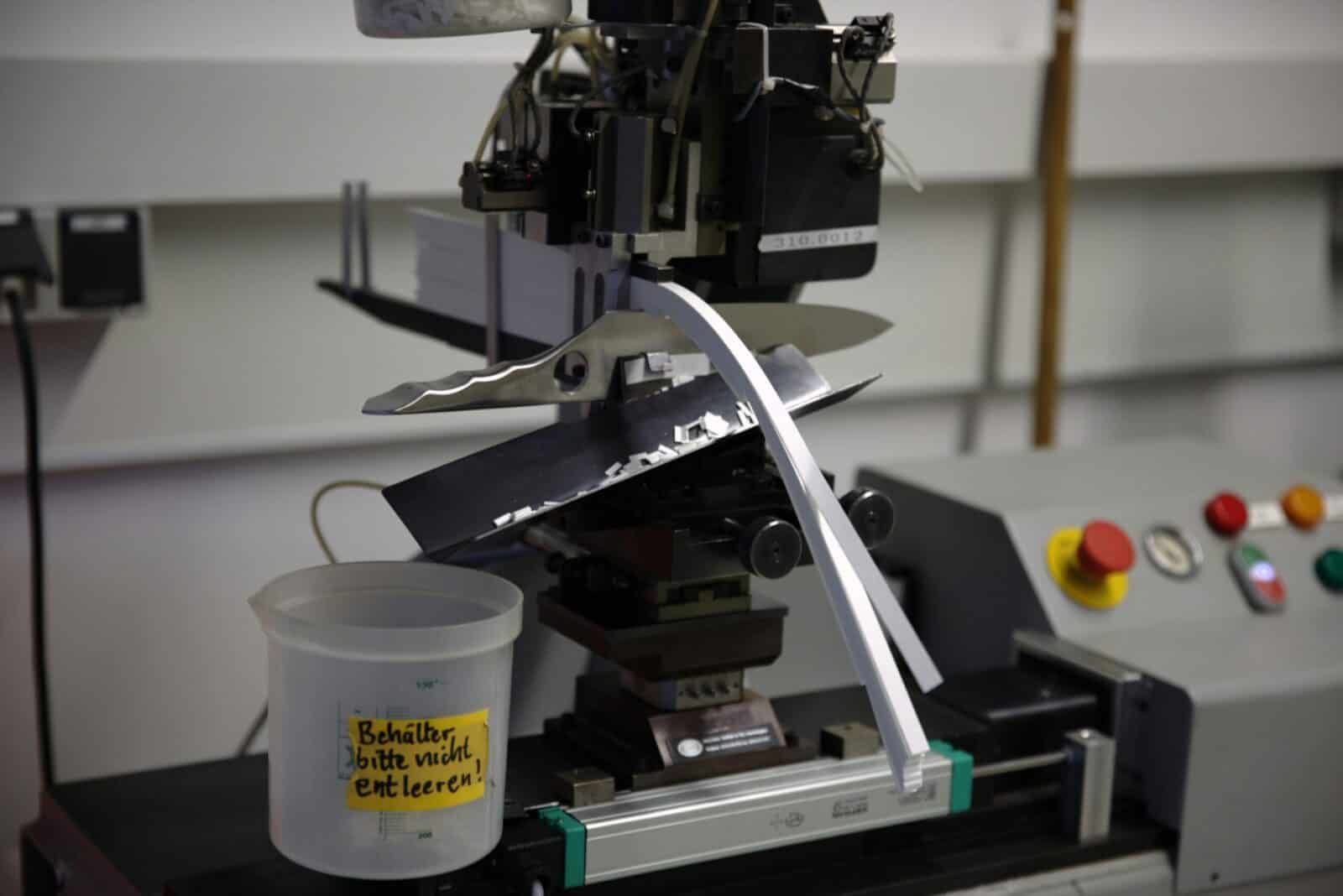
In this guide, we will:
Explain the scientific meaning of hardness in the context of candies (often viscoelastic, brittle or plastic depending on recipe),
Review major methods (indentation, puncture, compression) adapted to confectionery,
Show how to choose the right test method for different candy types (hard candy, chewy, coated confections),
Provide best practices in sample preparation, test execution, and interpreting results so you get meaningful, repeatable data.
Let’s dive in.
What Does “Hardness” Mean in the Candy Context?
In materials science, hardness is a measure of resistance to plastic (permanent) deformation under localized load. But candies and confections differ from metals and ceramics: they often behave as viscoelastic or brittle materials depending on sugar crystallinity, moisture content, glass transition, or composition (e.g. inclusion of fats, gums).
Thus hardness in a candy is more akin to its resistance to indentation, fracture, or penetration under a defined mechanical load.
When you press a probe into a candy, you may see:
An elastic recovery (if the material is springy),
A plastic or permanent indentation (if structure yields),
Cracking or fracture (if brittle),
Creep or time-dependent deformation (if viscoelastic).
In practice, we design tests to isolate the “initial resistance”—i.e. the load vs. penetration behavior before significant creep or fracture dominates.
In short: hardness in confectionery is a “functional” parameter — it reflects internal microstructure (crystal network, binding matrices, moisture content) and correlates to bite force, crunchiness, chewability, or breakage behavior.
Common Methods of Hardness Testing in Confectionery
Because candies are soft, brittle, or viscoelastic, the classic metallurgical indentation tests (Rockwell, Brinell, Vickers, Knoop) need adaptation or are often supplanted by methods more common in food science: puncture tests, compression tests, three-point bend, and indentation with small probes. But the underlying principle—measuring resistance to a known load vs. displacement—remains the same.
Here are typical methods used (or adapted) in candy / confection environments:
| Phương pháp | Nguyên lý | Best for Candy Type | Pros / Cons |
|---|---|---|---|
| Puncture / penetration test | Drive a sharp probe (e.g. needle, blade) into the sample, measure force-displacement | Soft candies (gummies, gels, fondant) | Simple, direct; but edge effects, probe geometry matter |
| Compression / Texture Analyzer (2-point platen) | Sandwich the candy between flat plates and compress at controlled rate | Hard candies, bars, chocolate centers | Good for force vs. deformation; but may cause global deformation |
| Three-point bend / flexural test | Support the sample at two points, apply load in center | Rigid bar candies, sugar glass pieces | cURL Too many subrequests. |
| cURL Too many subrequests. | cURL Too many subrequests. | cURL Too many subrequests. | cURL Too many subrequests. |
| cURL Too many subrequests. | cURL Too many subrequests. | cURL Too many subrequests. | cURL Too many subrequests. |
cURL Too many subrequests.
cURL Too many subrequests.cURL Too many subrequests.
cURL Too many subrequests. cURL Too many subrequests.
cURL Too many subrequests.cURL Too many subrequests.
cURL Too many subrequests.cURL Too many subrequests.
cURL Too many subrequests.cURL Too many subrequests.


cURL Too many subrequests.
cURL Too many subrequests.
cURL Too many subrequests.
cURL Too many subrequests. cURL Too many subrequests. cURL Too many subrequests.cURL Too many subrequests.
cURL Too many subrequests. cURL Too many subrequests.cURL Too many subrequests.
cURL Too many subrequests.cURL Too many subrequests.
cURL Too many subrequests.
cURL Too many subrequests.cURL Too many subrequests.
cURL Too many subrequests. cURL Too many subrequests. cURL Too many subrequests.cURL Too many subrequests.
cURL Too many subrequests.cURL Too many subrequests.
cURL Too many subrequests.
Best Practices in Sample Preparation and Execution
Even small errors in sample prep or execution can introduce large deviations in hardness/texture data. Below are guidelines to ensure reliable, repeatable results:
Sample Preparation
Cutting / Sectioning: Use methods that minimize heat generation or structural damage (sharp blades, cooled saws).
Surface flatness: For indentation or microtests, flatten or polish the surface. Use micro-planing or lapping with fine abrasives if needed (for sugar glass, etc.).
Mounting: For small or thin pieces, mount on a rigid backing or in a fixture that holds the sample without deformation.
Temperature equilibrium: Let the sample stabilize to test temperature (e.g. test in a temperature-controlled chamber) to avoid thermal softening effects.


Test Execution
Spacing / Edge Distance: Indents or penetrations should be far from edges or previous ones. A rule: at least 3× the greatest dimension (indentation, probe tip) from edge or neighbor test.
Loading profile: Use consistent loading (rate, dwell time). For viscoelastic materials, include a pre-load (minor force) and then main load to settle surface effects.
Instrument calibration / baseline checks: Use standard reference materials (e.g. polymer blocks with known modulus/hardness) to verify instrument response in the low force range.
Unloading curve / residual measurement: In instrumented tests, capture full load–unload curves to account for elastic recovery and compute a “pseudo-hardness” or indentation modulus.
Repeat measurements & statistical sampling: For non-uniform candies (air bubbles, inclusions), take multiple measurements and report average ± standard deviation.
Troubleshooting Common Issues in Candy Hardness Testing
| Problem / Observation | Nguyên nhân có thể | Remedy |
|---|---|---|
| High scatter between indent or penetration data points | Sample heterogeneity, bubbles, surface irregularity | Increase number of measurements, avoid defect zones, improve surface prep |
| Indentation shows “creep drift” (slow increase during dwell) | Viscoelastic flow or heat during loading | Shorten dwell, use loading-unloading methods, pre-creep compensation |
| Fracture / cracking during indentation | Load too high for brittle candy, stress concentration | Reduce load, use spherical tips or smoother probes, use rebound test instead |
| Force–displacement curves drift or baseline offset | Instrument drift, thermal drift, backing compliance | Re-zero baseline, warm up the instrument, use stiffer mounting, check probe alignment |
| Differences in hardness over time | cURL Too many subrequests. | cURL Too many subrequests. |
cURL Too many subrequests.
cURL Too many subrequests. cURL Too many subrequests.cURL Too many subrequests.
cURL Too many subrequests.cURL Too many subrequests.
cURL Too many subrequests.cURL Too many subrequests.
cURL Too many subrequests.cURL Too many subrequests.
cURL Too many subrequests.cURL Too many subrequests.
cURL Too many subrequests.cURL Too many subrequests.
- cURL Too many subrequests. https://www.astm.org/
- ISO – Tổ chức Tiêu chuẩn Quốc tế https://www.iso.org/
- cURL Too many subrequests. https://www.asminternational.org/
- NIST – Viện Tiêu Chuẩn và Công Nghệ Quốc Gia https://www.nist.gov/
- cURL Too many subrequests. https://www.sae.org/
- cURL Too many subrequests. https://www.asme.org/
- cURL Too many subrequests. https://www.tms.org/
- cURL Too many subrequests. https://www.sem.org/
- Hiệp hội Nghiên cứu Vật liệu (MRS) https://www.mrs.org/
- cURL Too many subrequests. https://www.ansi.org/
Bài viết liên quan
- Giải thích về kiểm tra hạn sử dụng: Nguyên tắc, phương pháp & Thực hành tốt nhất 2025
- Kiểm tra vi sinh vật: Nguyên tắc, Phương pháp & Giải thích dữ liệu 2025
- Hướng dẫn phương pháp và nguyên tắc kiểm tra hàm lượng đường chuyên nghiệp 2025
- Hướng dẫn kiểm tra thực phẩm thiết yếu: Ngăn ngừa ô nhiễm trong sản xuất bánh quy
- Dây Chuyền Sản Xuất Kẹo Dẻo
- Dây chuyền sản xuất bánh quy
- Skittles Có Gluten Không? Hướng Dẫn Toàn Diện 2026