The Engineer’s Guide to Color Inspection in Candy Production Lines: A Technical Perspective
Introduction: Why Color Matters in Candy Manufacturing
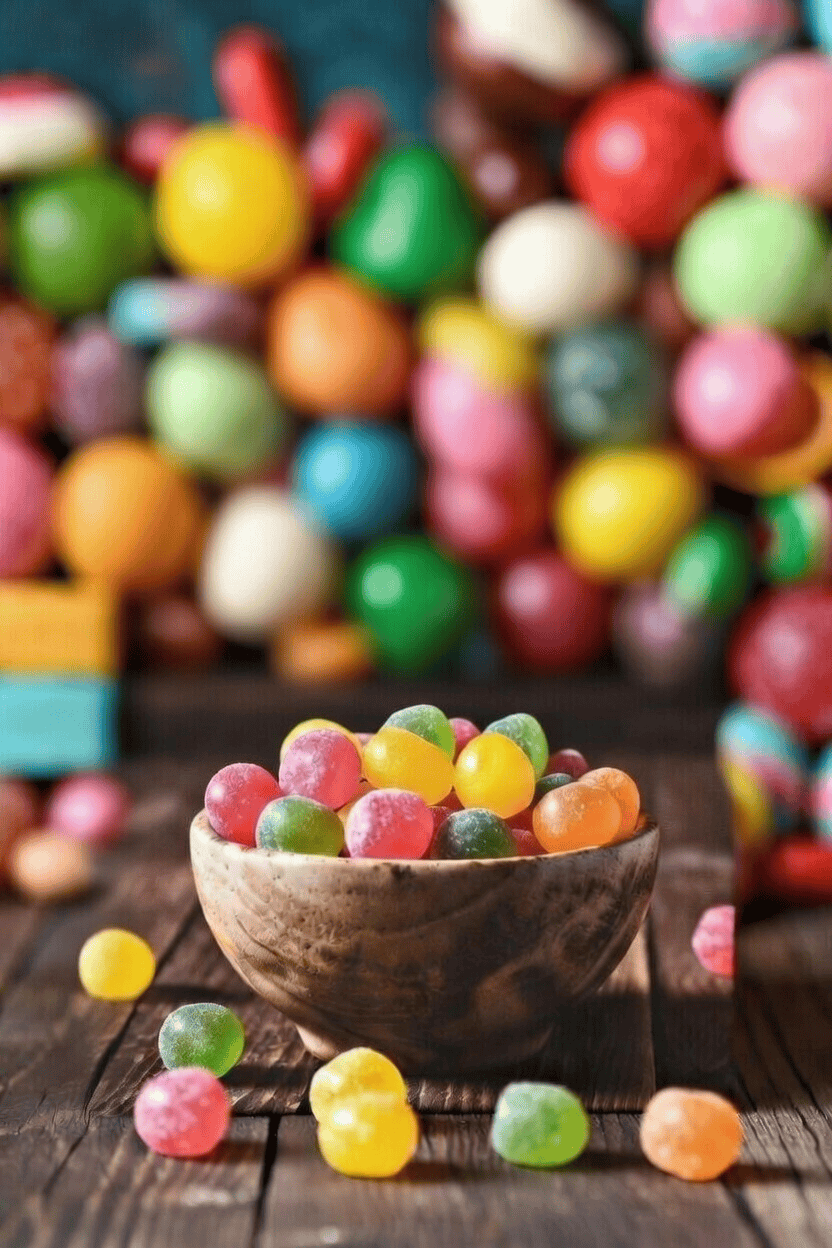
In the candy industry, color isn’t just aesthetic—it’s a quality and branding requirement. Consumers expect gummies to be vibrantly red, chocolates to have a rich brown shine, and hard candies to show uniform hues. Even slight deviations in color can trigger consumer complaints, product recalls, or brand trust issues.
Automated color inspection systems ensure consistency, detect defects, and safeguard quality in high-speed candy production lines. Unlike human inspection, which is subjective and inconsistent, machine vision systems measure color precisely and repeatably under standardized conditions.
This guide provides a technical engineering analysis of color inspection in candy manufacturing. We’ll explore the physics of light and color, hardware components, algorithms for quantifying differences, practical implementation on candy lines, and future trends like AI-powered inspection.
Foundations of Color in Candy Inspection
The Role of Illumination
Candy surfaces present unique optical challenges: glossy chocolates, translucent gummies, and coated hard candies all interact with light differently. Illumination is therefore the first critical step in accurate inspection.
-
Diffuse Axial Lighting: Minimizes glare on glossy chocolates and sugar-coated candies.
-
Dome Lighting: Ideal for gummies and irregularly shaped candies, eliminating shadows and ensuring uniform illumination.
-
Backlighting: Used when checking transparency or color density in gelatin-based or liquid-filled candies.
Following ISO 3664:2009 viewing standards ensures consistent measurement, regardless of the factory environment.
Color Spaces for Candy Production
For precise measurement, RGB values are not sufficient. Instead, candy manufacturers rely on CIELAB (L*a*b*):
-
L (Lightness): Brightness of the candy (e.g., milk chocolate vs. dark chocolate).
-
a (Green-Red Axis): Useful for ensuring gummy bears match their intended red or green hues.
-
b (Blue-Yellow Axis): Detects shifts in yellow candies (e.g., lemon-flavored gummies).
Because CIELAB is perceptually uniform, it enables engineers to set measurable, reliable tolerances for acceptable color variation in candies.
Anatomy of a Candy Color Inspection System
Optics and Lenses
Machine vision lenses must handle diverse candy textures: shiny coatings, sugar crystals, and semi-transparent gummies. Telecentric lenses are often used to minimize distortion and ensure true color measurement.
Sensors
-
Area Scan Cameras: Ideal for inspecting individual chocolate bars or wrapped candies.
-
Line Scan Cameras: Best for continuous processes, like sugar film sheets or conveyor belts filled with gummies.
CMOS sensors chiếm ưu thế dây chuyền sản xuất kẹo due to their high speed, low cost, and excellent modern color fidelity.
Measurement Algorithms in Candy Inspection
Calibration
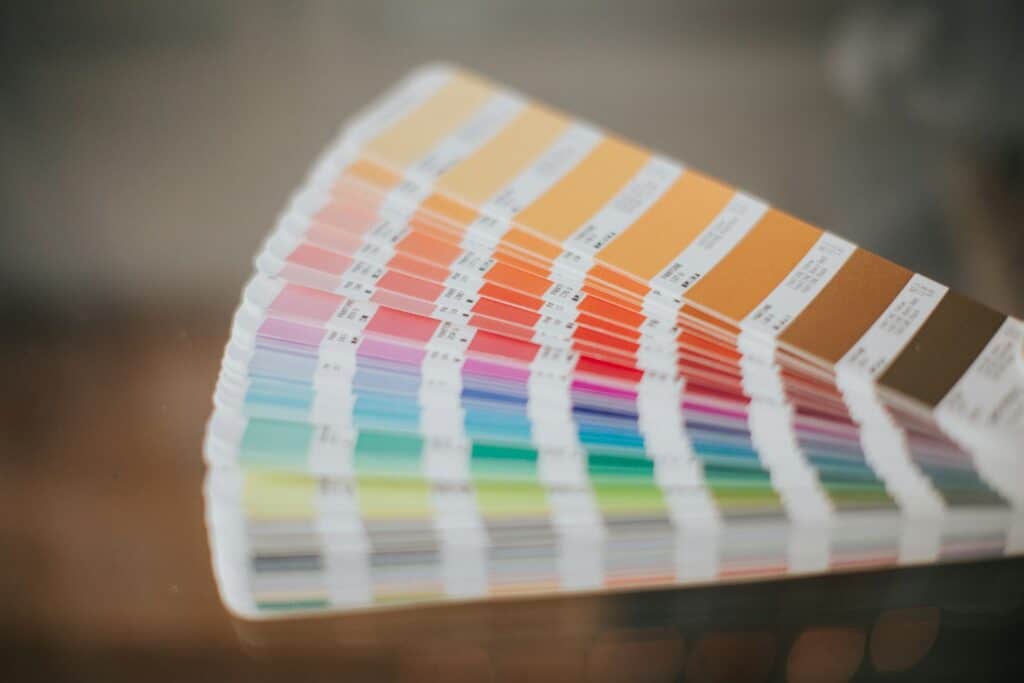
Candy factories use white balance calibration và color reference charts (e.g., X-Rite ColorChecker) to ensure stable results across batches. Without calibration, caramel coatings may appear inconsistent even when within spec.
Quantifying Color: Delta E
The most widely used metric is ΔE (Delta E), which measures the difference between a target color and a sample.
-
CIE76 (ΔE*ab): Simple but not accurate enough for candy.
-
CIE94: Better, but still limited.
-
CIEDE2000 (ΔE*00): The industry standard, ensuring even subtle differences in candy coatings are detected.
For candy production, ΔE*00 tolerances of ≤1.0–1.5 are typical for premium products (e.g., luxury chocolates) and ≤2.0–3.0 for mass-market gummies.
From Theory to Practice: Implementing Candy Color Inspection
Step-by-Step Deployment
-
Define Objective: Detect missing colors in gummy assortments, ensure chocolate gloss consistency, or verify coating uniformity.
-
Hardware Setup: Install stable LED dome lighting above conveyors carrying candies.
-
Calibration: Run daily calibration with certified targets, especially in humid production environments.
-
Golden Samples: Capture reference images of “perfect” candy batches.
-
Tolerance Setting: Establish pass/fail thresholds using CIEDE2000.
-
Validation: Test with both defective and correct candies to ensure reliability.
Example: Candy Production Troubleshooting
| Observation | Nguyên nhân có thể | Corrective Action |
|---|---|---|
| Gummy bears appear inconsistent in red hue | Variations in food dye concentration | Verify ingredient dosing system |
| Chocolates show “white patches” | Fat bloom or sugar bloom | Adjust tempering and humidity control |
| Coated candies show glare in inspection images | Improper lighting setup | Switch to dome or cross-polarized lighting |
| Incorrect pass/fail rejection | Poor calibration or tolerance too strict | Re-calibrate with certified targets |
Advanced Challenges in Candy Inspection
-
Gloss and Bloom: Chocolates often develop bloom, affecting color uniformity. Polarized lighting helps minimize false rejections.
-
Translucency: Gummies are semi-transparent, which complicates color measurement. Specialized backlighting and spectral imaging provide better accuracy.
-
Metamerism: Different batches of food dye may look identical under one light but vary under another. Using spectrophotometers alongside vision systems helps overcome this.
The Future: AI and Deep Learning in Candy Inspection
Traditional rule-based color inspection works well for simple pass/fail checks, but candies often have natural variation (e.g., sugar crystals, marbling). AI-based vision systems can learn acceptable variations from thousands of images.
-
AI Models: Detect subtle defects like uneven chocolate coating or inconsistent gummy coloring.
-
IoT Integration: Data from inspection systems connects to MES/ERP systems for real-time process feedback.
-
Predictive Analytics: Detect trends that indicate future failures, such as gradual misdosing of colorants.
Kết luận

In candy production, color inspection is both science and branding protection. From the physics of illumination to advanced AI-based inspection, success requires precise engineering and rigorous implementation.
Every factor—light, lenses, sensors, algorithms, and calibration—plays a role in achieving consistency. By applying CIELAB models, CIEDE2000 tolerances, and AI-driven analysis, candy manufacturers can guarantee their products look as good as they taste, ensuring consumer trust and maintaining brand identity in a competitive market.
- CIE – International Commission on Illumination https://cie.co.at/
- ASTM International – Color & Appearance Testing Standards https://www.astm.org/
- ISO – Tổ chức Tiêu chuẩn Quốc tế https://www.iso.org/
- Automated Imaging Association (AIA) https://www.visiononline.org/
- Society for Imaging Science and Technology (IS&T) https://www.imaging.org/
- NIST – Viện Tiêu Chuẩn và Công Nghệ Quốc Gia https://www.nist.gov/
- IEEE – Institute of Electrical and Electronics Engineers https://www.ieee.org/
- X-Rite (Color Measurement Authority) https://www.xrite.com/
- ANSI – American National Standards Institute https://www.ansi.org/
- Photonics Media (Optics & Imaging) https://www.photonics.com/