The Engineering Behind the Perfect Batch: A Technical Analysis of Automatic Cookie Cutters
This article goes beyond a basic description of an automatic cookie cutter. We provide an in-depth technical analysis of how these machines work at an engineering level. This guide is designed for owners, managers, and technicians who operate and maintain them.
We will break down the core systems that transform a mass of dough into thousands of perfectly uniform products. This analysis covers the critical relationship between:
- Dough handling and preparation
- Cutting mechanisms and drive technologies
- Control systems and sensor integration
- Material science and hygienic design

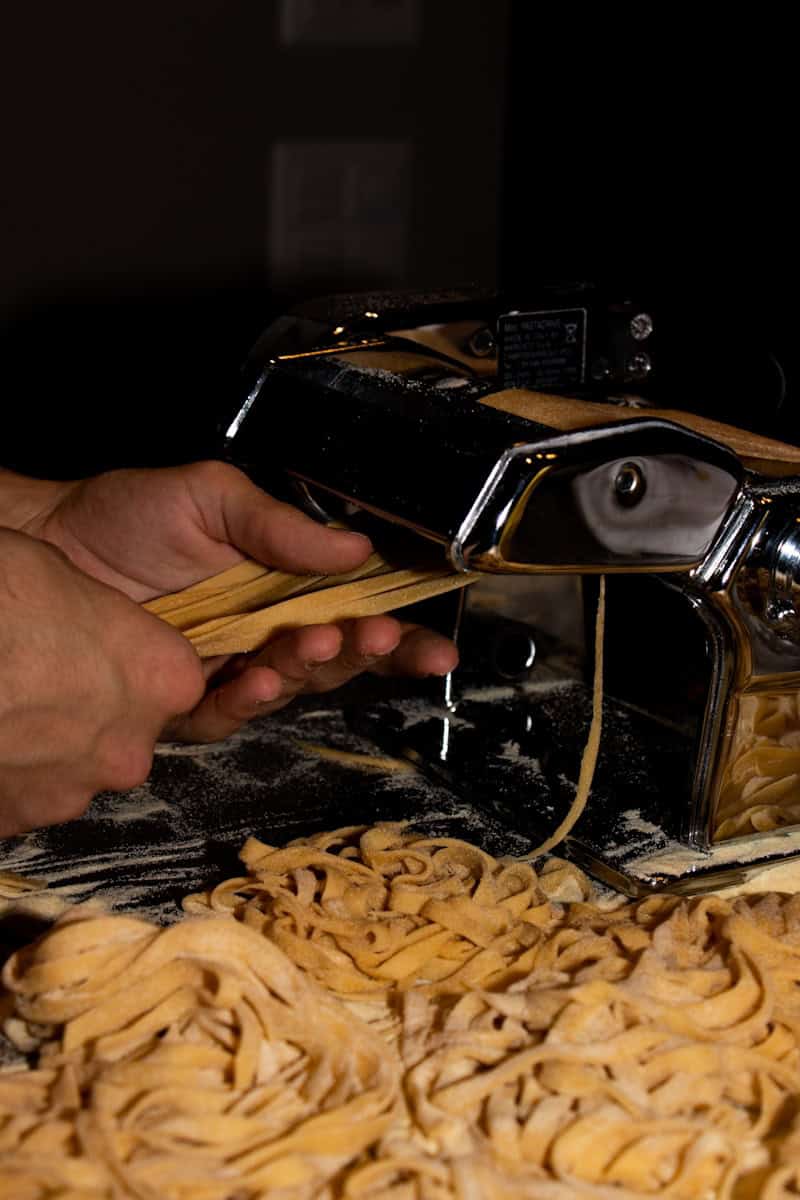
Anatomy of a System
To understand the engineering details, we must first look at the machine’s main components. These sub-systems work together in a precise, synchronized sequence. This ensures consistent output.
The Process Flow
The journey from raw dough to a cut product follows a linear and highly controlled path. Each stage is critical in the production chain.
[For visualization, we recommend a simple flowchart illustrating the following stages.]
- Dough Loading: A hopper receives large batches of prepared dough. It often has its own feeding mechanism.
- Dough Sheeting: A series of gauging rollers progressively thins the dough. This creates a continuous sheet of exact, uniform thickness.
- Cutting Station: The cutter head assembly stamps out the cookie shapes from the dough sheet. It’s equipped with the desired die.
- Scrap Dough Removal: A lattice conveyor or vacuum system carefully lifts away the unused dough. This dough surrounds the cut shapes and goes for reprocessing.
- Conveyor Discharge: The perfectly cut cookies continue on a conveyor. They move to the next stage of production, such as an oven loader or packaging line.
Key Sub-systems Glance
Several core mechanical and electronic systems enable the physical process. The following sections will dive deep into the engineering of the Infeed System, the Cutting Head Assembly, the Conveyor System, and the Control Panel. The Control Panel houses the PLC and HMI.
Dough Handling and Preparation
The foundation of a consistent final product is laid long before the cutting action. The quality, weight, and uniformity of every cookie depend entirely on the precision of the dough handling and preparation stage.
Dough Sheeting and Gauging
The heart of dough preparation lies in the gauging rollers. These are not simple cylinders. They are precision-engineered components.
Roller diameter is a critical factor. Larger diameters reduce the compression angle on the dough, minimizing stress.
Roller surfaces are typically stainless steel or coated with a non-stick polymer like Teflon. This prevents dough adhesion.
The gap between these rollers is controlled by micrometer adjustments. This allows for precise, repeatable settings down to fractions of a millimeter. Any inconsistency in this dough sheet thickness directly translates to variance in baking times and final product weight.
From an engineering perspective, we often see a progression from two-roller to three-roller sheeting systems. A two-roller system provides basic thickness reduction. Advanced three-roller systems use the first two rollers to gently work the dough. The final roller achieves the target thickness, which significantly reduces internal stress on the gluten structure.
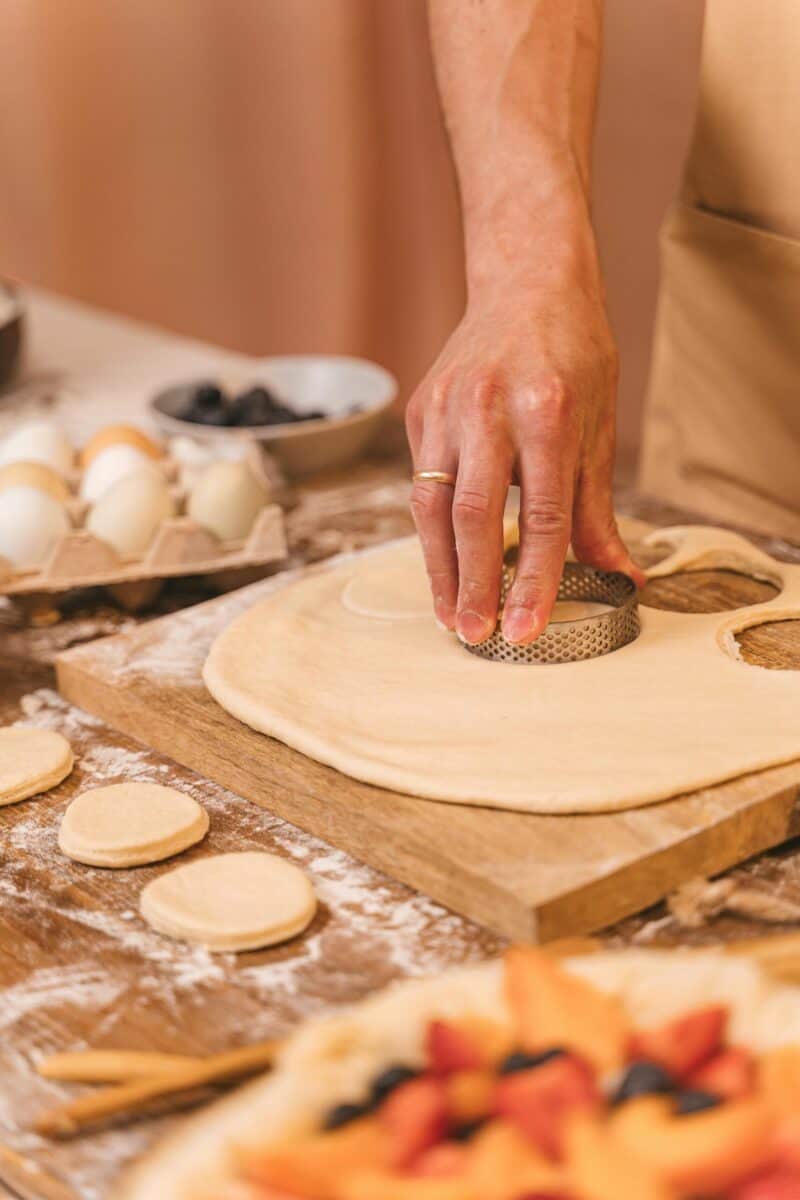
Dough Stress and Relaxation
When a gluten-rich dough is sheeted, it is put under tension. A common phenomenon is “snap-back.” The dough sheet shrinks slightly after passing through the final rollers.
If the dough is cut immediately, this shrinkage can result in misshapen or undersized cookies.
cURL Too many subrequests.
cURL Too many subrequests.
cURL Too many subrequests.
cURL Too many subrequests.
cURL Too many subrequests.
cURL Too many subrequests.
cURL Too many subrequests.
cURL Too many subrequests.
cURL Too many subrequests.
cURL Too many subrequests.
Özellik | cURL Too many subrequests. | cURL Too many subrequests. |
Kesinlik | cURL Too many subrequests. | cURL Too many subrequests. |
Hız | cURL Too many subrequests. | cURL Too many subrequests. |
cURL Too many subrequests. | cURL Too many subrequests. | cURL Too many subrequests. |
cURL Too many subrequests. | cURL Too many subrequests. | cURL Too many subrequests. |
cURL Too many subrequests. | cURL Too many subrequests. | Düşük |
cURL Too many subrequests. | cURL Too many subrequests. | cURL Too many subrequests. |

cURL Too many subrequests.
cURL Too many subrequests.
cURL Too many subrequests.
cURL Too many subrequests.
cURL Too many subrequests.
cURL Too many subrequests.
cURL Too many subrequests.
cURL Too many subrequests.
cURL Too many subrequests.
cURL Too many subrequests.
cURL Too many subrequests.
cURL Too many subrequests.
cURL Too many subrequests.
cURL Too many subrequests.
cURL Too many subrequests.

Material Science and Design
The mechanical and electronic systems must be housed within a structure that is both durable and compliant with stringent food safety standards. The choice of materials and the principles of hygienic design are non-negotiable aspects of a quality automatic cookie cutter.
Food-Grade Materials
The term “stainless steel” is not specific enough in a food production context. The materials used are carefully selected for their specific properties.
Frames and structural components are typically made from 304 or 316 stainless steel. These offer high corrosion resistance against water and cleaning agents.
Cutting dies and dough scrapers are often machined from food-grade polymers like Acetal (Delrin) or Ultra-High-Molecular-Weight Polyethylene (UHMW-PE). These materials are durable and offer excellent non-stick properties. They are gentle on conveyor belts and will not chip or fragment like brittle plastics.
Conveyor belts are made from Polyurethane or PVC compounds. These resist the oils and fats found in dough and comply with direct food contact regulations.
Authoritative bodies set the standards for these materials. Compliance with regulations such as those from the FDA (Food and Drug Administration) in the US, NSF International, or EU 1935/2004 in Europe is a hallmark of a professionally engineered machine.
Principles of Hygienic Design
A machine’s design must facilitate easy, fast, and thorough cleaning to prevent microbial contamination. This is achieved through specific engineering choices.
- Surfaces are smooth, and welds are polished. All corners have generous radii to eliminate crevices where food particles and bacteria can become trapped.
- Key components, such as conveyor belts, cutter heads, and scrapers, are designed for tool-less disassembly. This allows maintenance staff to quickly remove them for cleaning.
- Components like motors and bearings are mounted on standoffs. This creates a visible gap between the component and the machine frame. It allows for cleaning behind and underneath them.
- Electronic enclosures and motors in the washdown zone will carry an IP (Ingress Protection) rating of IP65 or higher. This indicates they are protected against dust ingress and low-pressure water jets from any direction.
Conclusion: Synthesizing Technology
The performance of an automatic cookie cutter is not defined by a single metric like speed. It is the result of a complex and deliberate synthesis of technology. The final product quality is a direct function of the interplay between the mechanical precision of the drive system, the intelligent feedback of the PLC and sensor network, and the fundamental integrity of its material construction and hygienic design. Understanding these core engineering principles empowers a facility to make better purchasing decisions. It enables them to implement more effective operational procedures and execute more efficient troubleshooting. This ultimately leads to a more profitable and reliable production line.
Referans Bağlantıları:
- https://ieeexplore.ieee.org/xpl/RecentIssue.jsp?punumber=8856
- https://www.rockwellautomation.com/en-us/industries/food-beverage.html
- https://www.foodengineeringmag.com/
- https://www.ieee-ras.org/publications/t-ase
- https://www.jrautomation.com/industries/food-beverage
- https://shapeprocessautomation.com/industries/food/
- https://fortififoodsolutions.com/
- https://premierautomation.com/who-we-help/industries/food-beverage-industry/
- https://www.industrialautomation.us/industries/food-processing/
- https://www.shambaugh.com/services/national-food-plants/food-process
İlgili Makaleler
- Kurabiye Makinesini Parçalarına Ayırmak: Mühendislik ve Otomasyon Rehberi 2025
- Cookie OEM Manufacturing: Expert Guide to Scale Your Cookie Business
- Temel Gıda Test Rehberi: Kurabiye Üretiminde Kontaminasyonu Önleme
- Sırlar Açığa Çıktı: Elit Bisküvi Tedarik Zinciri Ustalarının Kurabiye Endüstrisini Nasıl Hâkim Olduğu
- Bisküvi Üretim Hattı
- Gelişmiş Otomatik Bisküvi ve Kraker Makinesi
- Orijinal Skittles Glutensiz: Çölyak Güvenlik Rehberi