The Enduring Allure of the Gummy Bear: A Confectionery Chronicle
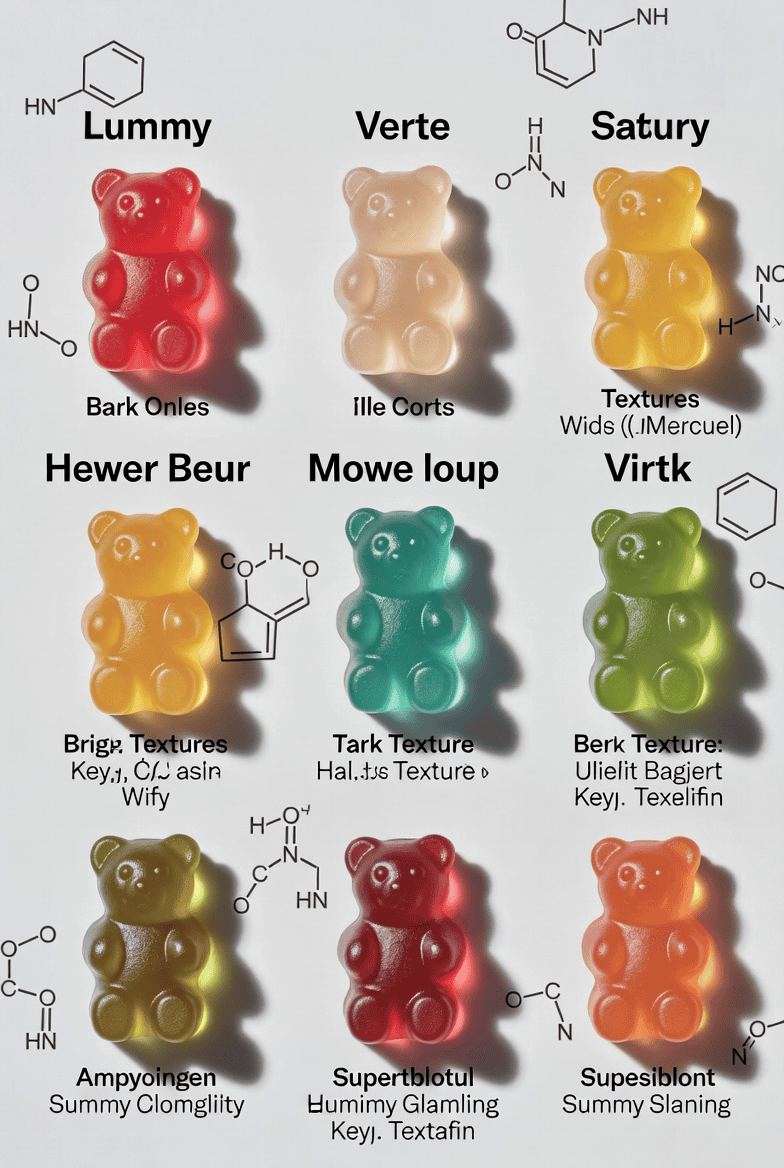
To comprehend the contemporary landscape of gummy bear brands, one must first appreciate the confection’s humble yet profound origins. The story is not merely one of sugar and gelatin; it is a narrative of innovation, cultural diffusion, and the human capacity to find joy in simple forms. The gummy bear as we know it was born in 1922 in a small backyard laundry-kitchen in Bonn, Germany. There, a confectioner named Hans Riegel, Sr., founded his company, Haribo—an acronym derived from his name and home city (HAns RIegel, BOnn). Frustrated with the hard, often flavorless candies of the era, Riegel sought to create something different: a soft, chewy, fruit-flavored treat.
His inspiration came not from other candies but from the trained dancing bears that were a common sight at European street festivals and markets well into the 19th century. These bears, while a source of entertainment, embodied a certain playful spirit that Riegel wished to capture. His initial creation, the Tanzbär or “Dancing Bear,” was larger and slimmer than the modern gummy bear, yet it contained the genetic blueprint for all that would follow. The key innovation was the use of gum arabic, later replaced by gelatin, as a gelling agent. The substance gave the candy a uniquely satisfying chewiness that stood in stark contrast to brittle hard candies or soft caramels.
The success of the Tanzbär was not immediate, but it was steady. Following the disruptions of World War II, Riegel’s sons, Hans Jr. and Paul, rebuilt the company. Hans Riegel Jr., a man of considerable marketing acumen, refined the product in 1960, creating the smaller, more compact “Goldbear” that would become a global icon. The decision to produce the bears in a rainbow of distinct colors and flavors—strawberry, lemon, orange, pineapple, and raspberry—was a masterstroke. It transformed the act of eating a gummy bear into a small ritual of choice and preference. Do you eat the red one first? Or save the best for last? Such simple questions foster a personal connection to the product.
The global expansion of gummy bear brands from the 1960s onward speaks to a universal appeal. The texture, a pleasing resistance that yields to a soft chew, engages the senses in a way few other confections do. There is a tactile satisfaction in its springy resilience. The flavors, often bright and evocative of real fruit, offer a burst of sweetness. The form itself—a miniature bear—is inherently playful, tapping into childhood associations with comfort and imagination. It is a candy that does not take itself seriously, inviting a moment of lighthearted indulgence. As we explore the leading gummy bear brands of 2026, we see this foundational legacy interpreted and reimagined in countless ways, yet the core appeal forged by Hans Riegel over a century ago remains remarkably intact.
The Gummy Bear as a Cultural Object
The journey of the gummy bear from a German novelty to a global phenomenon is a fascinating case study in cultural transmission. When Haribo Goldbears first arrived in the United States in 1982, they entered a market dominated by chocolate bars and hard candies. The introduction of this new texture and format required a form of consumer education. American companies, such as Trolli (then part of Mederer GmbH), quickly saw the potential and introduced their own versions, often with slight variations in texture or flavor profiles to suit local palates. Trolli’s introduction of the gummy worm in 1981, for instance, demonstrated that the “gummy” concept was a platform for endless creativity, not just a single product.

The candy’s integration into popular culture further solidified its status. Disney’s 1985 animated series, Adventures of the Gummi Bears, though not directly affiliated with any single brand, cemented the idea of magical, bouncing bears into the minds of a generation of children. The show’s theme song, with its memorable refrain about “bouncing here and there and everywhere,” inadvertently became the perfect marketing jingle for the confection itself. The gummy bear became more than a candy; it became a character, a story, a piece of shared cultural memory.
Examining the evolution of gummy bear brands reveals a constant dialogue between tradition and innovation. The original Haribo Goldbear remains a benchmark for texture—a firm, substantial chew that many purists defend with vigor. Yet, other brands have found success by deliberately deviating from this standard. Some offer a softer, juicier bite, while others experiment with sour coatings, liquid centers, or novel flavor combinations. The expansion into the “functional foods” category, with gummies delivering vitamins, supplements, or CBD, represents the latest chapter in this story. The familiar, friendly form of the gummy bear is now a delivery vehicle for wellness, demonstrating its remarkable adaptability. The simple bear shape has proven to be a versatile canvas upon which a century of confectionery history has been painted.
The Anatomy of a Perfect Gummy: From Gelatin to Gelification
Understanding what separates exceptional gummy bear brands from mediocre ones requires a journey into the heart of their creation—the science of gelification. The characteristic chew of a gummy bear is not an accident; it is the result of a carefully controlled chemical process. At the center of this process is the gelling agent, a substance that can transform a liquid mixture into a semi-solid, elastic state. The choice of gelling agent is perhaps the single most important decision a manufacturer makes, as it dictates the final texture, clarity, and even flavor release of the candy.
For most of the gummy bear’s history, the undisputed king of gelling agents has been gelatin. Derived from collagen, a protein found in animal tissues, gelatin is a hydrocolloid. Imagine long, tangled protein chains suspended in a hot sugar syrup. As the mixture cools, these chains unwind and link together, forming a three-dimensional network that traps the liquid within its structure. The process is akin to weaving a microscopic net that holds the water and sugar in place. The result is the firm, springy, and resilient texture that defines a classic gummy bear. The strength of this gel network can be precisely controlled by the concentration of gelatin used, allowing manufacturers to dial in a specific level of chewiness. One of the signature properties of gelatin is its melt-in-the-mouth quality. Gelatin gels melt at a temperature very close to human body temperature (around 37°C or 98.6°F), which leads to a smooth mouthfeel and a rapid release of flavor as the candy dissolves.
However, the growing consumer demand for vegetarian and vegan products has spurred innovation in plant-based gelling agents. The most common alternative is pectin, a complex carbohydrate found in the cell walls of plants, particularly fruits like apples and citrus peels. Pectin also forms a gel network, but its texture is fundamentally different from gelatin’s. A pectin-based gummy tends to be softer, more tender, and has a “shorter” bite—it breaks apart more cleanly when chewed, rather than offering prolonged resistance. Think of the texture of a fruit jelly or jam. Pectin requires the presence of acid and a high concentration of sugar to set properly, which influences the formulation of the candy. Other plant-based options include corn starch, which creates a more opaque and often chewier gummy, and carrageenan, derived from seaweed, which can produce a range of textures from soft to firm. The table below offers a comparison of these primary gelling agents, illustrating the trade-offs manufacturers consider.
| Gelling Agent | Source | Typical Texture | Melting Point | Key Characteristics |
|---|---|---|---|---|
| Gelatin | Animal Collagen | Firm, Chewy, Elastic | Near Body Temp | Excellent clarity; melts in the mouth for superior flavor release. Not vegetarian/vegan. |
| Pectin | Fruits (Apples, Citrus) | Soft, Tender, Short Bite | High | Sets quickly; provides a “clean” break. Vegan. Requires sugar and acid to gel. |
| Corn Starch | Corn | Chewy, Dense | High | Opaque appearance; can have a lingering starchy feel. Vegan. Often used in “starch gummies”. |
| Agar-Agar | Seaweed | Firm, Brittle | Very High | Strongest gelling power; texture can be less elastic and more brittle than gelatin. Vegan. |
The Symphony of Ingredients and Process
Beyond the gelling agent, a gummy bear is a symphony of other ingredients working in concert. Sugars—typically a combination of sucrose (table sugar) and glucose syrup (corn syrup)—provide sweetness, but just as importantly, they control water activity. By binding to water molecules, sugars prevent the growth of microbes, ensuring the candy is shelf-stable. They also inhibit crystallization, keeping the texture smooth rather than grainy. The ratio of sucrose to glucose syrup is critical; too much sucrose can lead to a brittle, crystalline candy, while too much glucose syrup can make it sticky and overly soft.
Acids, such as citric acid (from citrus fruits) or malic acid (from apples), serve a dual purpose. They provide a bright, tart flavor that balances the sweetness and enhances the perception of fruitiness. In pectin-based gummies, acid is also a necessary component for the gel to form. Flavors and colors are the final artistic touches. Historically, these were artificial, but the modern trend among premium and health-conscious gummy bear brands is a firm move toward natural sources. Flavors are derived from fruit concentrates and essences, while colors come from plant-based sources like beet juice (red), turmeric (yellow), and spirulina (blue/green).
The transformation of these ingredients from a liquid slurry into a perfectly formed bear is a feat of manufacturing precision. As experts in food production machinery, companies like Junyu understand that the equipment is as vital as the recipe (). The process begins with cooking. The ingredients are mixed and heated in large kettles to an exact temperature and moisture content. This step is crucial for dissolving the sugars and activating the gelling agent. The hot syrup is then deposited into molds. Traditionally, these molds are impressions made in trays filled with fine corn starch, a method known as the starch mogul process. The starch absorbs excess moisture from the surface of the gummies as they set, preventing them from sticking. After depositing, the trays of gummies are moved to temperature- and humidity-controlled rooms to cure. This drying period, which can last 24 hours or longer, is where the final texture develops. For a brand like Haribo, a longer curing time is part of what creates its signature dense chew. Finally, the gummies are tumbled out of the starch molds, cleaned of any residual starch, and often lightly coated with oil or carnauba wax to prevent sticking in the bag and to give them an appealing gloss. The complexity of this process highlights why consistent quality is a hallmark of the best gummy bear brands.
Criteria for Selection: How We Ranked the Top Gummy Bear Brands of 2026
Choosing the top twelve gummy bear brands for 2026 was a multifaceted endeavor, moving beyond simple taste tests to a more holistic evaluation. In a market saturated with options, true leadership is demonstrated through a combination of classic virtues and forward-thinking adaptation. Our methodology was grounded in four primary pillars: Ingredient Quality and Sourcing, Flavor Profile and Innovation, Textural Integrity, and Brand Ethos and Market Adaptation. Each brand was scrutinized through these lenses to form a comprehensive picture of its place in the current confectionery hierarchy.
First, Ingredient Quality and Sourcing formed the bedrock of our assessment. In 2026, consumer consciousness regarding what goes into their food is at an all-time high. We prioritized brands that demonstrate a commitment to high-quality, transparently sourced ingredients. This includes the use of natural fruit juices and concentrates for flavor, plant-based sources for color, and a clear indication of the type and origin of their gelling agent. Brands using organic, non-GMO, and allergy-friendly ingredients scored particularly well. The distinction between a brand using “natural flavors” as a catch-all term and one that specifies “flavored with real raspberry and pineapple juice” is significant.
Second, Flavor Profile and Innovation was examined. While the classic five or six fruit flavors remain the standard, leading gummy bear brands are now pushing the boundaries of taste. We looked for brands that not only perfect the classics but also offer unique, sophisticated, or adventurous flavor combinations. This could range from gourmet pairings like blood orange and hibiscus to single-origin fruit flavors. The quality of the flavor is paramount—does it taste authentic and bright, or artificial and muted? Innovation also includes the expansion into different flavor sensations, such as the nuanced application of sour coatings or the development of spicy-sweet profiles.
Third, Textural Integrity was critically evaluated. As discussed, texture is the soul of a gummy bear. There is no single “correct” texture; rather, we looked for intentionality and consistency. Does a brand known for a firm chew, like Haribo, deliver that experience reliably in every bag? Does a brand promising a soft, juicy bite, like Albanese, achieve that without being mushy or sticky? We considered the bite, the chew, the elasticity, and the mouthfeel. A great gummy should have a pleasing resistance that is satisfying, not a workout for the jaw, and it should not leave a waxy or gritty residue. The ability to maintain this textural quality across different product lines and batches is a sign of superior production control.
Finally, Brand Ethos and Market Adaptation provided the context for the other criteria. A brand is more than its product; it is the story it tells and the values it represents. We considered how different gummy bear brands have responded to the major market shifts of the 2020s. This includes the development of robust vegan and plant-based lines, the successful formulation of low-sugar or zero-sugar options that do not compromise on taste or texture, and the integration of functional ingredients like vitamins or botanicals. Brands that have successfully navigated these trends while maintaining their core identity demonstrate a dynamism that is essential for leadership in 2026. The following table provides a summary overview of how our top selections perform across these key dimensions.
| Brand | Primary Strength | Texture Profile | Key Innovation Area | Target Audience |
|---|---|---|---|---|
| Haribo | Tradition & Texture | Very Firm, Dense | Consistency | Purists, Global Market |
| Albanese | Flavor Variety | Soft, Juicy | 12-Flavor Mix | Flavor Enthusiasts |
| Black Forest | Organic Ingredients | Moderately Firm | USDA Organic | Health-Conscious Families |
| SmartSweets | Low Sugar | Chewy, Varies by Product | Stevia/Allulose Formulation | Health & Fitness Community |
| YumEarth | Allergy-Friendly | Soft, Tender | Free-From Ingredients | Consumers with Allergies |
| Katjes | Vegan Formulation | Soft, Pectin-Based | Gelatin-Free Since Inception | Vegetarians/Vegans |
| Project 7 | Gourmet Flavors | Soft to Medium | Unique Flavor Pairings | Socially Conscious Millennials |
| Olly | Functional Benefits | Soft, Easy to Chew | Vitamin/Supplement Infusion | Wellness Consumers |
| Surf Sweets | Conscious Sourcing | Soft, Pectin-Based | Organic & Allergy-Friendly | Eco/Health-Conscious |
| Sugarfina | Luxury Positioning | Varies (Curated) | Adult Flavor Profiles | Gifting & Luxury Market |
| Squish | Artisanal Craft | Varies (Creative) | Small-Batch, Unique Shapes | Gourmet Foodies |
| Trader Joe’s | Value & Quality | Soft, Chewy | Unique Shapes/Flavors | Budget-Conscious Gourmands |
1. Haribo: The Uncontested Original
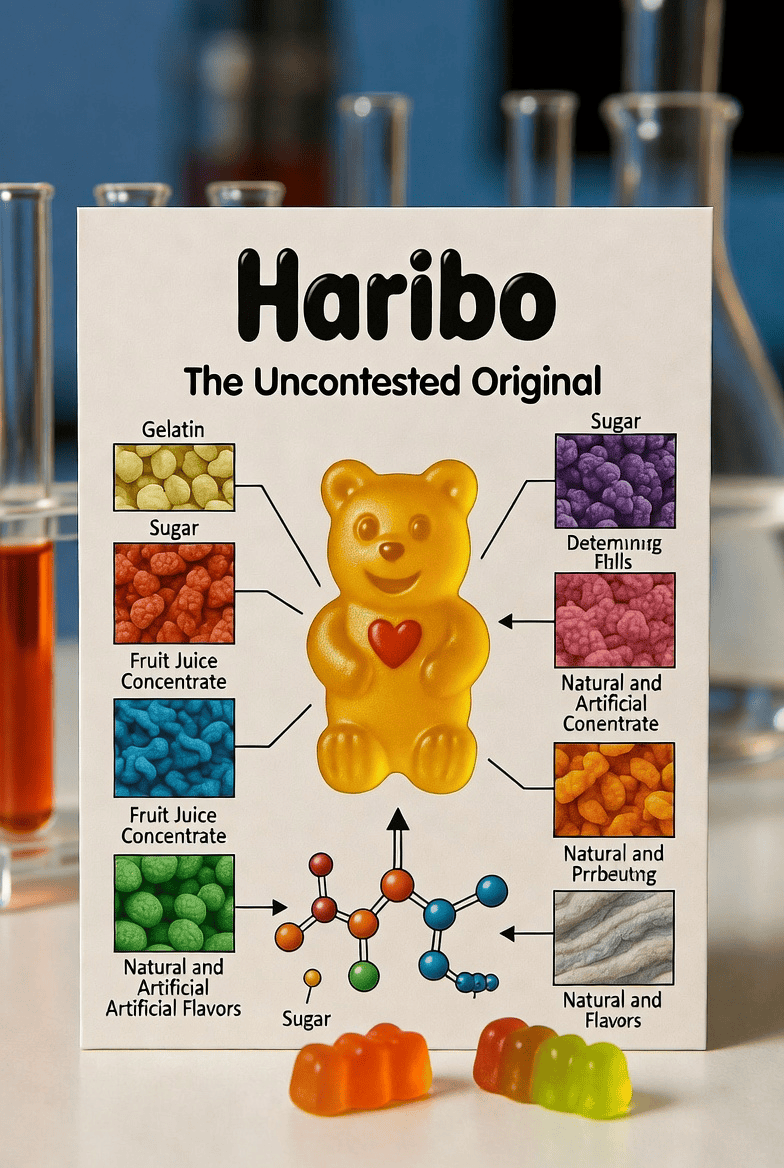
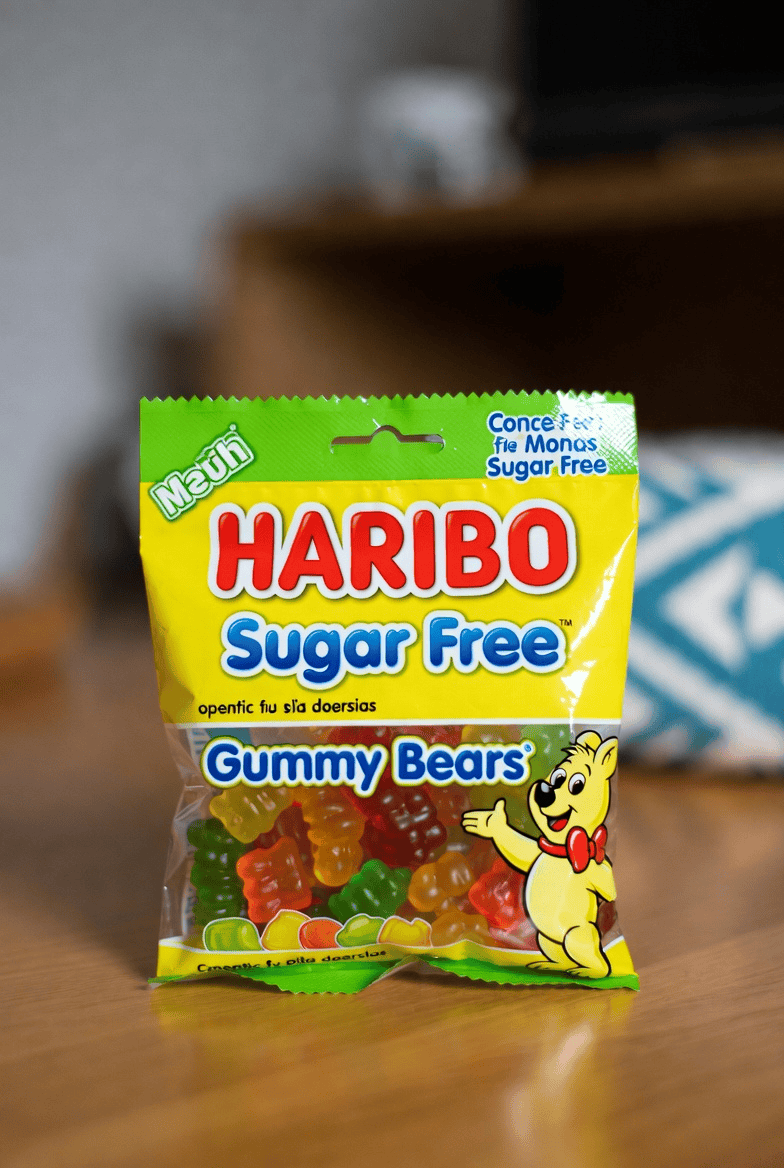
When discussing the world of gummy bear brands, all roads inevitably lead back to Haribo. To call Haribo a brand is almost an understatement; it is the archetype, the Platonic ideal from which all other gummy bears are judged. Holding the title of the original creator gives Haribo a legacy and an authority that no competitor can replicate. Their Goldbears are not just candy; they are a cultural touchstone, a consistent presence on store shelves for generations. The brand’s famous slogan, “Kids and grown-ups love it so, the happy world of Haribo,” is one of the most recognizable in the confectionery world, a testament to its multigenerational appeal.
A Legacy Forged in Bonn
The story of Haribo is the story of the gummy bear itself, beginning with Hans Riegel’s vision in 1922. What is remarkable about the company is its steadfast commitment to that original vision. While other brands have pivoted and chased trends, Haribo has, for the most part, focused on perfecting and protecting its core product. The recipe for Goldbears has undergone refinements over the decades—the shape was modernized in 1960, and a sixth flavor (apple) was added in 2007—but the fundamental experience remains unchanged. This consistency is Haribo’s greatest strength. When you open a bag of Haribo Goldbears, you know exactly what you are getting: the familiar rainbow of colors, the subtle fruit scents, and, most importantly, the signature chew.
The Signature Chew: A Matter of Starch and Time
The defining characteristic of a Haribo Goldbear is its texture. It is unequivocally firm, dense, and requires a determined chew. This is not the soft, yielding texture of many of its American counterparts. For newcomers, the texture can be surprising, even off-putting. But for devotees, it is the entire point. The firm bite forces you to slow down and savor the candy, and the prolonged chew allows the flavor to develop gradually in the mouth. This texture is a direct result of Haribo’s manufacturing process. They use a specific blend of gelatin and a longer-than-average curing time in starch-lined trays. This extended period in a controlled-humidity environment allows more moisture to evaporate from the gummy, resulting in a denser, more concentrated product. It is a testament to the principle that sometimes, the best results require patience.
Navigating the Modern Palate in 2026
Despite its traditionalist approach, Haribo has not been entirely immune to the pressures of the modern market. The company has made concessions, particularly in its international product lines. For instance, the Goldbears produced in Germany and sold in Europe often use natural colorants derived from fruit and plant extracts, a response to stricter EU regulations and consumer preferences. The American-made Goldbears have historically used artificial colors, although the company has been gradually transitioning. Haribo has also expanded its portfolio to include a vast array of other gummy shapes, sour varieties like the popular Sour S’ghetti, and even some softer-textured products. However, they have been notably slow to enter the vegan or low-sugar spaces in a significant way, preferring to protect the integrity of their flagship product. In 2026, Haribo’s position is that of a revered elder statesman. It may not be the most innovative of the gummy bear brands, but its unwavering commitment to quality and its iconic textural profile ensure it remains the benchmark against which all others are measured.
2. Albanese Confectionery: The Champion of Flavor

If Haribo is the stoic German traditionalist of the gummy world, Albanese Confectionery is its exuberant American cousin, bursting with flavor and a softer, more approachable personality. Based in Merrillville, Indiana, Albanese has, since its founding in 1983, carved out a significant niche for itself by focusing obsessively on two things: flavor intensity and a distinctly tender texture. For many American consumers, Albanese represents the perfection of the “soft gummy” style, a direct and delicious counterpoint to Haribo’s firmness.
The “World’s Best” Claim and the 12-Flavor Advantage
Albanese is not shy about its ambitions, boldly branding its products with the tagline “World’s Best.” While such claims are often marketing hyperbole, in the case of Albanese, there is a strong argument to be made, particularly on the dimension of flavor. Their signature innovation is the 12-Flavor Gummi Bears. While the standard is five or six flavors, Albanese doubled down, creating a mix that includes classics like Cherry and Orange alongside more unique offerings like Blue Raspberry, Pink Grapefruit, and Mango. This variety transforms a handful of gummies from a simple treat into a flavor-discovery experience. Crucially, the flavors are remarkably distinct and vibrant. An Albanese pineapple gummy tastes recognizably of pineapple, not just a generic “yellow” fruit flavor. This flavor fidelity is a result of using high-quality flavor concentrates and a production process that preserves their intensity.
A Softer, Juicier Bite
The textural contrast with Haribo could not be more pronounced. An Albanese gummy is soft, yielding, and juicy. The bite is clean, without the prolonged, rubbery chew of its German counterpart. This texture is achieved through a different formulation, likely involving a different grade or concentration of gelatin and a shorter curing time. The result is a gummy that feels immediately satisfying and releases its flavor in a sudden, intense burst. This softer texture has proven immensely popular, particularly in the North American market, where it aligns more closely with consumer expectations for a “gummy” candy. The company also uses a special process to ensure their gummies are less sticky, a common complaint with softer formulations. The “A” stamped on the belly of each bear is not just branding; it is a mark of this specific style of gummy craftsmanship.
Innovation Beyond the Bear
While their 12-Flavor Gummi Bears are the flagship, Albanese has demonstrated a restless innovative spirit. They have applied their flavor-forward philosophy to a staggering array of shapes, from butterflies and army men to various sea creatures. They were also early to market with large, single-flavor packs, catering to consumers who wanted a whole bag of just their favorite Pink Grapefruit or Blue Raspberry. In recent years, they have made strides in the “better-for-you” space, introducing a line of “Ultimate” 8-Flavor Gummi Bears that uses natural flavors and colors from fruit and vegetable sources. While they have yet to make a major push into the vegan or low-sugar categories, their mastery of flavor and their perfection of the soft gummy texture solidify their position as one of the most beloved and influential gummy bear brands in 2026.
3. Black Forest: An Organic and Juicy Contender
In the evolving conversation around food, the word “organic” has become a powerful signifier of quality, purity, and a commitment to more sustainable agricultural practices. In the world of gummy bear brands, Black Forest has successfully claimed this territory as its own. Positioned as a “better-for-you” candy that does not sacrifice taste, Black Forest has built a loyal following among parents and health-conscious consumers who want to provide a treat they can feel good about. Their tagline, “So Juicy, So Good,” speaks directly to their dual focus on deliciousness and wholesome ingredients.
The USDA Organic Promise
The cornerstone of the Black Forest brand is its commitment to organic ingredients. Their gummy bears are among the few in the mainstream market to carry the official USDA Organic seal. This is not a trivial distinction. To earn this certification, the brand must ensure that its ingredients—from the sugar and corn syrup to the fruit juices used for flavor and color—are grown without synthetic pesticides, herbicides, or genetically modified organisms (GMOs). For many consumers, this seal is a shortcut to trust. It provides an assurance of quality and purity that vague terms like “natural” cannot match. Black Forest leans heavily into this identity, with packaging that emphasizes green foliage and images of fresh fruit, reinforcing the connection between their candy and the natural world.
Crafting a “Juicy” Texture
Black Forest gummies are known for their distinctly juicy quality. The texture sits in a pleasant middle ground between the firmness of Haribo and the softness of Albanese. They have a satisfying chew but are not overly tough, and they possess a moistness that makes them feel fresh. This is likely achieved through a combination of their gelling agent (a mix of gelatin and modified corn starch in some products) and the prominent use of fruit juice concentrate in their recipes. By using real juice as a primary flavoring component, they not only achieve a more authentic taste but also contribute to the overall moist, juicy mouthfeel. Their flavors are classic and crowd-pleasing—cherry, orange, apple, lemon, and pineapple—but rendered with a brightness that speaks to the quality of their organic ingredients.
Expanding the Forest
Black Forest has been strategic in expanding its product line while staying true to its core ethos. They offer classic gummy bears and worms, but have also ventured into fruit snacks, which further blurs the line between candy and a more acceptable “snack.” Their commitment to organic extends across the portfolio. They have also made efforts to cater to other dietary preferences, for example, by offering gluten-free products. While their classic line uses gelatin, the brand has been responsive to market trends, though a widespread vegan option has been slower to materialize compared to more specialized brands. In 2026, Black Forest occupies a crucial and highly successful position in the market. It serves as a bridge for consumers who are moving away from conventional candy but are not yet ready to leap to the more extreme formulations of low-sugar or functional gummy bear brands. It proves that an organic, more thoughtfully made candy can be just as joyful and delicious as its conventional counterparts.
4. SmartSweets: The Low-Sugar Revolution
Few brands have disrupted the confectionery aisle in the 2020s as dramatically as SmartSweets. Founded by Tara Bosch in her kitchen with a mission to “kick sugar,” SmartSweets pioneered the category of ultra-low-sugar candy that actually tastes like candy. Their success tapped into a massive, underserved market of consumers who loved sweets but were increasingly wary of the health consequences of excessive sugar consumption. SmartSweets did not just offer a slightly better option; it offered a radical reformulation, turning a high-sugar treat into a high-fiber, low-calorie snack that could fit into diabetic, ketogenic, and generally health-conscious lifestyles.
The Science of Sweetness Without Sugar
The genius of SmartSweets lies in its innovative use of alternative sweeteners and fibers. To achieve sweetness without sucrose, the brand employs a blend of allulose and stevia leaf extract. Allulose is a “rare sugar” found naturally in figs and raisins. It has the taste and texture of sugar but contains virtually no calories and does not impact blood glucose levels. Stevia is a high-intensity, zero-calorie sweetener derived from the stevia plant. By combining them, SmartSweets avoids the bitter aftertaste that can plague products sweetened with stevia alone. To replace the bulk and texture that sugar provides, they use soluble corn fiber and chicory root fiber. These ingredients not only build the body of the gummy but also contribute significantly to the product’s fiber content, often packing more fiber into a single bag than is found in some servings of vegetables. The result is a product that can claim as little as 3 grams of sugar per bag, a staggering reduction from the 20-30 grams found in a comparable serving of traditional gummies.
The Textural Challenge of “Healthy” Gummies
Creating a satisfying gummy texture without the chemical properties of sugar is an immense technical challenge. Sugar does more than sweeten; it controls moisture and provides structure. The early iterations of SmartSweets products were often criticized for their texture—some found them overly tough, while others found them sticky and prone to melting. This highlights the difficulty of re-engineering a classic confection from the ground up. However, the brand has shown a remarkable commitment to iterative improvement. Through successive reformulations, they have significantly improved the chew and mouthfeel of their products. In 2026, their gummies, which use a gelatin base, offer a firm, satisfying chew that, while distinct from a traditional gummy, is no longer a significant drawback for most consumers. They have learned to balance the properties of fiber and non-sugar sweeteners to create a stable and enjoyable product, making them one of the most technically interesting gummy bear brands on the market.
From “Fruity Gummy Bears” to a Candy Empire
SmartSweets began with their “Fruity Gummy Bears” but has since expanded into a full-fledged candy company, replicating their low-sugar formula across a wide range of classic candy formats: “Sweet Fish” (their take on Swedish Fish), “Sour Blast Buddies,” peach rings, and even caramels. This expansion demonstrates the power and flexibility of their core concept. They have effectively created a parallel candy universe for the health-conscious consumer. While the price point is significantly higher than traditional candy, their dedicated fan base is more than willing to pay a premium for a guilt-free indulgence. SmartSweets’ success has sent shockwaves through the industry, forcing legacy brands to take the low-sugar trend seriously and spawning a host of competitors. In 2026, they remain the undisputed leader of the low-sugar candy movement they created.
5. YumEarth: Allergy-Friendly and Organic Purit
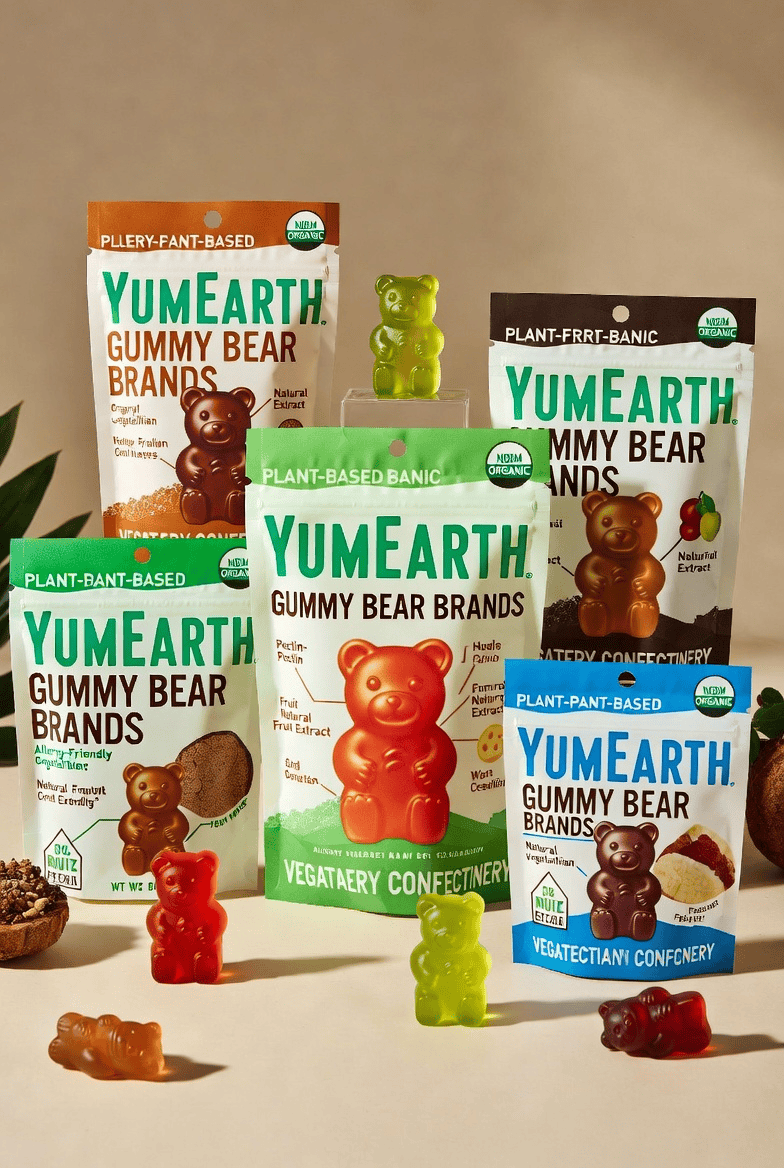
In a world where food allergies are a growing concern for millions of families, the need for safe, trustworthy treats has never been greater. YumEarth was founded on this very principle. The company was started by two fathers who wanted to create delicious candy for their children, who had their own dietary restrictions. This personal mission evolved into a brand dedicated to making treats that are not only tasty but also free from the most common allergens. YumEarth’s philosophy is one of inclusive indulgence, ensuring that children and adults with sensitivities can still enjoy the simple pleasure of a good piece of candy.
The “Free-From” Philosophy
YumEarth’s primary selling proposition is its commitment to being “free-from.” Their products are USDA Organic, non-GMO, gluten-free, and, most importantly, free from the top major allergens, including peanuts, tree nuts, dairy, soy, egg, and fish. Many of their products are also vegan. This extensive list of exclusions makes them a go-to brand for school parties, halloween, and any situation where the dietary needs of a group are unknown. The packaging clearly advertises these attributes, providing peace of mind to parents and consumers who must diligently read labels. This focus on safety and inclusivity has built a level of trust that is a powerful market differentiator.
A Pectin-Based Approach to Texture and Flavor
To ensure their products are accessible to the widest possible audience, YumEarth’s gummy bears are typically vegan, using pectin as the gelling agent instead of gelatin. As a result, the texture is distinct from many mainstream gummy bear brands. YumEarth gummies have a soft, tender bite that is characteristic of pectin gels. They lack the springy elasticity of a gelatin gummy, breaking more cleanly when chewed. The flavors are derived exclusively from real fruit extracts, and the colors from natural sources like carrot juice, blackcurrant, and annatto. Their signature “Pomegranate Pucker” flavor is a standout, offering a tartness and depth not found in standard candy assortments. The flavor profile is generally bright and authentic, aligning with their organic and natural positioning.
More Than Just Gummy Bears
While their gummy bears are a staple, YumEarth has applied its allergy-friendly philosophy to a broad portfolio of confectionery products. They produce organic lollipops, fruit snacks, licorice, and hard candies, all adhering to the same strict ingredient standards. This makes them a one-stop shop for consumers seeking allergy-friendly sweets. Their commitment to simple, recognizable ingredients is a core part of their identity. A typical YumEarth ingredient list is short and easy to understand, featuring items like organic rice syrup, organic cane sugar, and fruit concentrates. In 2026, YumEarth’s role in the market is clear and vital. They are not trying to replicate the texture of a Haribo bear or the extreme low-sugar content of SmartSweets. Instead, they lead the charge for safe, clean, and inclusive treating, proving that dietary restrictions do not have to mean flavor restrictions.
6. Katjes: European Vegetarian Innovation
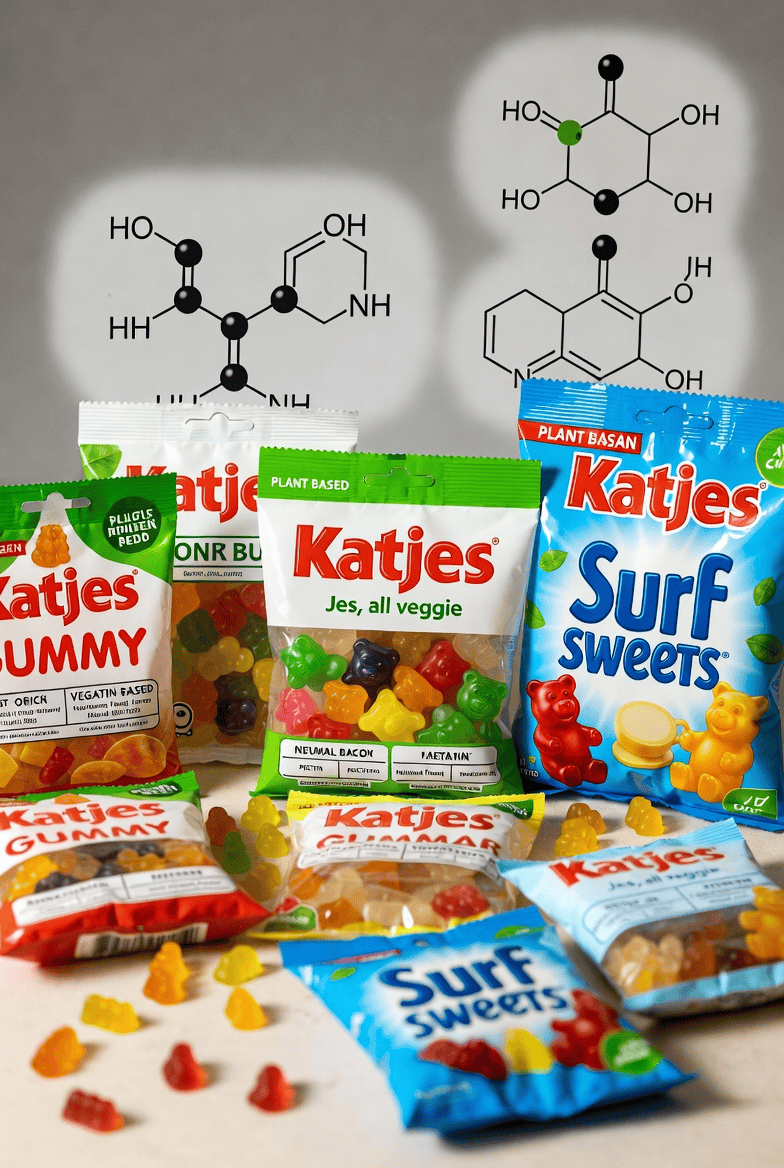
While the push for vegan and vegetarian candy has been a major trend in North America in the 2020s, the German brand Katjes has been a pioneer in this space for decades. Since the late 1980s, Katjes has been committed to producing gelatin-free gummies, making them one of the original and most established vegetarian gummy bear brands in the world. Their long history of innovation in plant-based formulations gives them a level of expertise and product refinement that many newcomers are still striving to achieve. Their tagline, “Jes, all veggie,” is a simple, confident declaration of their core identity.
Mastering the Pectin and Starch Gel
Having forgone gelatin for so long, Katjes has become a master of alternative gelling agents. Their gummies typically use a sophisticated blend of pectin and various starches to achieve a unique and satisfying texture. The texture of a Katjes gummy is difficult to categorize. It is not as overtly soft and tender as a typical American pectin gummy, nor is it as dense as a Haribo gelatin gummy. It possesses a pleasant, toothsome chew with a smooth, non-sticky finish. This proprietary texture is a testament to their decades of research and development in gelatin-free technology. It demonstrates that a vegetarian gummy does not have to be a textural compromise. Katjes has proven that plant-based ingredients can be used to create a confection that is satisfying in its own right, not just as a substitute.
Playful Shapes and Natural Flavors
Katjes is famous for its creative and whimsical shapes. While they do produce bears, they are perhaps better known for products like their “Katzen Pfötchen” (cat paws) and “Yoghurt-Gums.” A particularly popular product in their international portfolio is the “Katjes Magic Candy Factory” concept, which includes rainbow-maned unicorns and fairies. This playful approach to product design makes the brand highly appealing to both children and adults. In line with their “all veggie” philosophy, Katjes was an early adopter of natural flavors and colors. They use fruit and vegetable concentrates to achieve their vibrant hues and authentic tastes. In 2020, the company took its commitment a step further by becoming completely carbon neutral, adding a layer of environmental responsibility to its brand ethos.
A Leader in the European Market
In its home market of Germany and across Europe, Katjes is a confectionery giant, often competing directly with Haribo. Their success demonstrates that a mainstream, large-scale candy company can be built on a fully vegetarian platform. While their presence in North America is still growing, they are often found in specialty import shops and are gaining traction among consumers specifically seeking high-quality vegetarian gummies. For those in the know, Katjes represents the gold standard for gelatin-free confections. In 2026, as more global consumers prioritize plant-based diets, Katjes’ long-standing expertise and commitment to quality position them for continued growth and influence, making them a crucial benchmark for all vegetarian gummy bear brands.
7. Project 7: Gourmet Flavors with a Mission
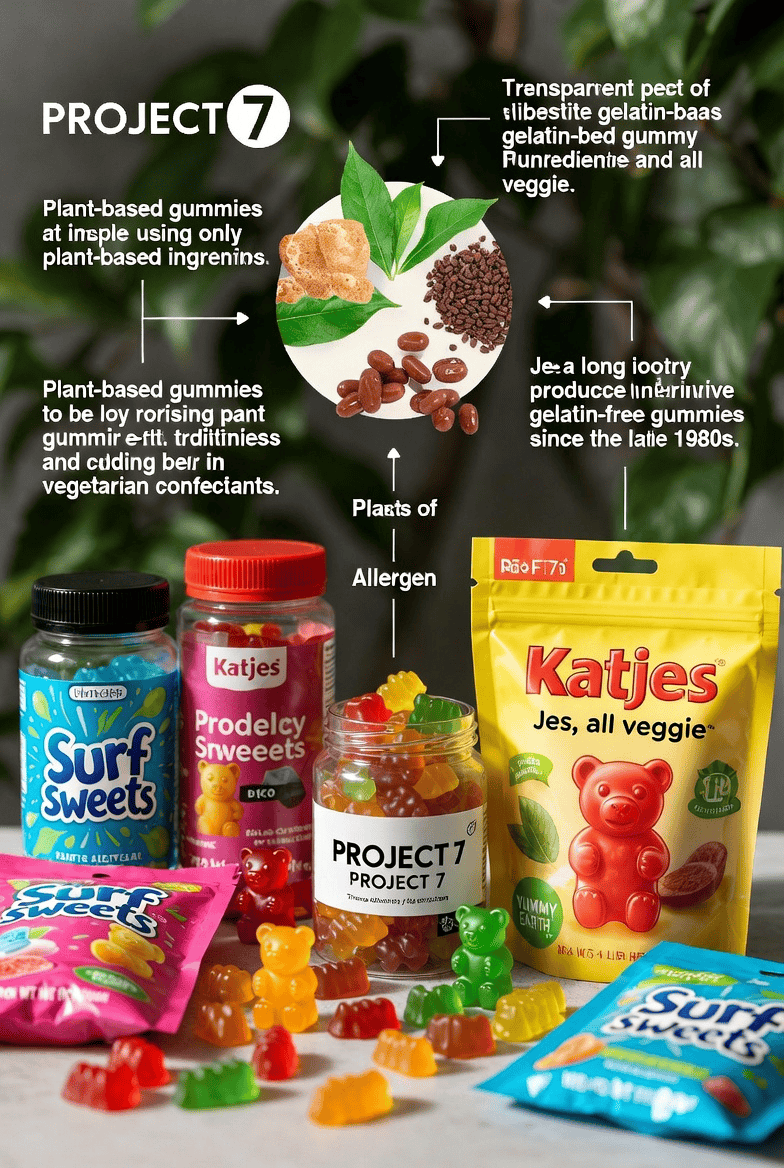
Project 7 stands out in the crowded confectionery market by blending gourmet, chef-inspired flavors with a strong social mission. The brand was founded on the principle of “products for good,” with a portion of profits from every purchase donated to seven areas of critical need, including housing, clean water, and education. This philanthropic model resonates deeply with socially conscious consumers, particularly millennials and Gen Z, who increasingly expect brands to have a positive impact on the world. But Project 7 is not just about charity; it is also about creating exceptionally delicious and unique candy.
Low Sugar Meets Gourmet Taste
Similar to SmartSweets, Project 7 has carved out a niche in the low-sugar candy space. Their “Golly Lolli’s” and gummy bears are low in sugar and calories, appealing to the same health-conscious demographic. However, where Project 7 differentiates itself is in the sophistication of its flavor profiles. Instead of sticking to standard fruit flavors, they offer imaginative, multi-layered combinations that sound like they belong on a dessert menu. Flavors like “Rainbow Ice,” “Birthday Cake,” and “Cotton Candy” evoke a sense of nostalgic indulgence, while still fitting within a low-sugar framework. They have successfully bridged the gap between health food and fun food.
A Focus on a Plant-Based Future
Project 7 has made a clear commitment to plant-based ingredients. Their gummies are vegan, using pectin as the gelling agent, which contributes to their characteristically soft and tender texture. This decision aligns both with the growing market demand for vegan products and with the brand’s overall ethos of creating products that are “good” in every sense—good for the consumer, good for the community, and good for the planet. Their use of natural flavors and colors is a given, fitting their premium, gourmet positioning. The brand’s ability to deliver these complex, dessert-like flavors using only plant-based, low-sugar ingredients is a significant technical achievement.
Building a Brand on Values
The success of Project 7 demonstrates the power of brand storytelling. Consumers are not just buying a bag of gummy bears; they are buying into a mission. The packaging clearly communicates the social good aspect, allowing consumers to feel that their small act of indulgence is contributing to a larger positive outcome. This emotional connection builds a level of brand loyalty that taste alone cannot achieve. In 2026, Project 7 represents the future of consumer packaged goods, where a high-quality product, innovative formulation (low-sugar, vegan), and a genuine social mission combine to create a powerful and compelling brand. They prove that you can create one of the most interesting gummy bear brands on the market while also making a difference.
8. Olly: The Functional Gummy Ascendant
The rise of the functional gummy represents one of the most significant shifts in the confectionery and wellness industries. Olly is arguably the brand that brought the vitamin gummy from the niche health food store into the mainstream supermarket and pharmacy aisle. With its sleek, minimalist packaging and playful product names, Olly transformed the daily chore of taking vitamins into a delightful, treat-like ritual. They successfully merged the efficacy of a supplement with the sensory pleasure of a candy, creating a category that continues to explode in popularity.
Wellness as an Indulgence
The core insight behind Olly’s success is that people are more likely to stick with a wellness routine if they enjoy it. By packaging vitamins, minerals, and botanical supplements in the form of a delicious gummy, they removed the “pill fatigue” associated with traditional supplements. Their product line is extensive and targeted, with names that speak directly to a desired benefit: “Goodbye Stress,” “Hello Happy,” “Sleep,” and “Undeniable Beauty.” Each formulation contains specific active ingredients—melatonin and L-Theanine in “Sleep,” biotin and keratin in “Undeniable Beauty”—designed to deliver a particular wellness outcome. The flavors are sophisticated and well-balanced, like “Blackberry Zen” or “Strawberry & Dandelion,” making the experience feel more like a gourmet treat than a health product.
Texture in Service of Function
The texture of an Olly gummy is carefully engineered for its purpose. It is very soft, easy to chew, and dissolves quickly. This is intentional. Unlike a recreational gummy where a long chew might be desirable, a functional gummy needs to be consumed quickly and easily as part of a daily routine. The soft, pectin-based texture ensures that it is palatable for a wide range of adults and does not feel like a chore to eat. The brand uses natural flavors and colors, and many of their products are gluten-free, aligning with the expectations of the wellness consumer. While they are not a “candy” in the traditional sense—and are regulated as dietary supplements—their form, flavor, and texture place them squarely in the conversation about gummy innovation.
Shaping the Nutraceutical Landscape
Olly’s impact on the market cannot be overstated. They demonstrated the immense commercial potential of functional confections and paved the way for countless other brands to enter the space. The familiar shape of a gummy bear (or in Olly’s case, often a cube or dome) has become a trusted delivery system for everything from multivitamins to collagen to apple cider vinegar. While they are not strictly one of the recreational gummy bear brands, their influence on gummy production technology, flavor development, and consumer perception is profound. In 2026, Olly remains a leader in the nutraceutical space, constantly innovating with new ingredients and formulations, and fundamentally changing the way we think about the intersection of health and candy.
9. Surf Sweets: A Commitment to Conscious Snacking
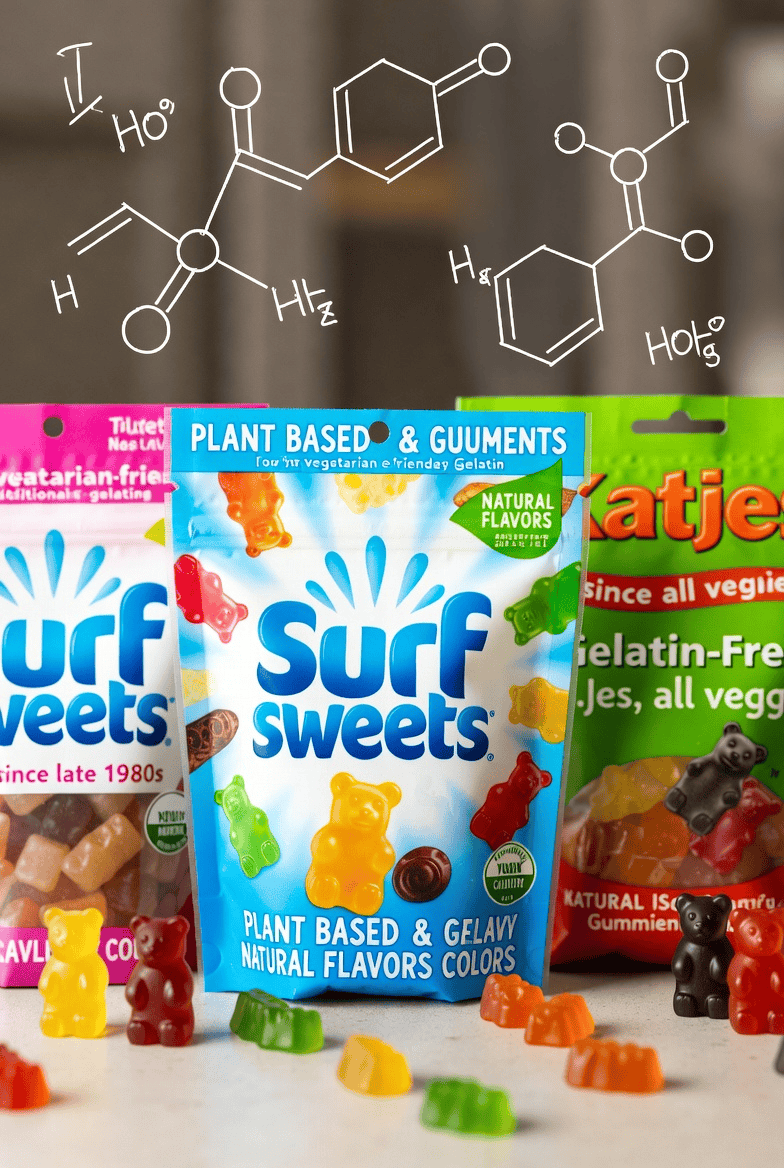
Surf Sweets, now part of the Wholesome brand family, emerged from a desire to create a candy that was not only better for people but also better for the planet. The brand is built on a foundation of “conscious snacking,” which encompasses organic ingredients, allergy-friendly formulations, and a commitment to ethical sourcing. Like YumEarth, Surf Sweets caters to the allergy-aware consumer, but with an added emphasis on environmental stewardship and a slightly different textural and flavor profile.
Organic, Vegan, and Ethically Sourced
Surf Sweets’ products are USDA Organic and Non-GMO Project Verified. Their gummies are vegan, using plant-based pectin for their gel, and are free from the top allergens. Where they take their commitment a step further is in their sourcing practices. As part of Wholesome, they are dedicated to Fair Trade principles, particularly for ingredients like their cane sugar. This ensures that the farmers who grow their raw materials receive fair wages and work in safe conditions. This commitment to the entire supply chain appeals to a deeply engaged consumer who thinks not just about the final product, but about its entire journey from farm to bag.
A “Snappy” Pectin Texture
The texture of a Surf Sweets gummy is a point of distinction. While they use pectin, their formulation results in a texture that is often described as having more of a “snap” than other soft gummies. It is still a tender bite, but there is a slight firmness and a cleaner break than, for example, a YumEarth gummy. This unique texture has won it a dedicated following. Their flavors are derived from organic fruit juice and are bright and authentic. The brand offers classic gummy bears, as well as fun, thematic shapes like “Spooky Spiders” and “Fruity Hearts,” tying into seasonal and holiday treating occasions.
A Niche but Important Player
While not as large as some of the other gummy bear brands on this list, Surf Sweets plays an important role in the market. They represent the synthesis of several key trends: organic ingredients, vegan formulations, allergy-friendliness, and ethical sourcing. They are a brand for the consumer who wants it all—a treat that is delicious, safe for their family, and produced in a way that aligns with their values. In 2026, as consumer demand for transparency and corporate responsibility continues to grow, brands like Surf Sweets are poised for continued relevance and success. They prove that a small brand with a strong conscience can make a big impact.
10. Sugarfina: The Luxury Gummy Experience
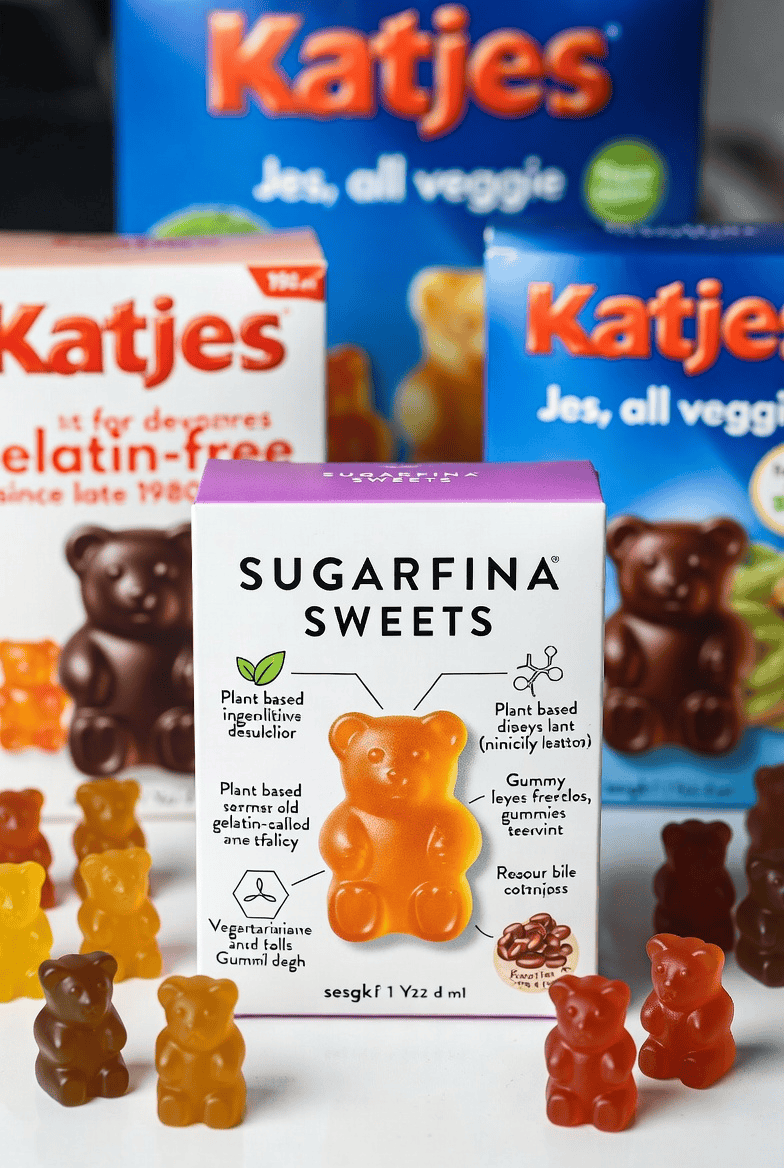
Sugarfina is not just a candy brand; it is a luxury lifestyle brand that happens to sell candy. Founded with the vision of creating a “candy store for grown-ups,” Sugarfina completely redefined the concept of premium confectionery. Their chic, minimalist boutiques, signature blue Bento Boxes, and curated selection of unique, internationally sourced sweets transformed the act of buying gummies from a casual purchase into a high-end gifting experience. Sugarfina’s products are not meant for everyday snacking; they are for celebrating, gifting, and savoring.
Curation Over Creation
Unlike other brands on this list that manufacture their own products, Sugarfina’s primary role is that of a curator and designer. They travel the world to find the best, most interesting candies—many of which are gummy-based—and then package them under their own sophisticated branding. Their most iconic product, the Champagne Bears®, are made in Germany with real Dom Pérignon Vintage Champagne. This single product perfectly encapsulates their brand identity: taking a familiar, playful form (the gummy bear) and infusing it with an unexpected, adult-luxury ingredient.
Adult Flavors and Elegant Presentation
The flavor profiles of Sugarfina’s gummies are decidedly adult. Alongside the Champagne Bears®, you will find offerings like Rosé All Day® Bears, Bourbon Bears®, and sophisticated fruit flavors like Blood Orange Fruttini. The focus is on nuanced, complex tastes that appeal to a developed palate. The presentation is as important as the product itself. The clear plastic cubes that display the candy like jewels, the customizable Bento Boxes, and the elegant, Tiffany-blue branding all contribute to an experience of affordable luxury. Buying Sugarfina feels special, which is why it has become a go-to for corporate gifts, wedding favors, and personal celebrations.
The Future of Luxe Candy
Sugarfina’s journey has included massive growth, financial challenges, and a subsequent brand refresh, but its core concept remains powerful. It demonstrated that there is a significant market for premium, adult-oriented candy. While they are not a manufacturer in the traditional sense, their influence on the market is undeniable. They elevated the perception of what a gummy bear could be, inspiring a wave of gourmet and artisanal gummy bear brands. In 2026, Sugarfina continues to represent the pinnacle of candy as a luxury good, proving that even a simple gummy bear can be transformed into an object of desire through masterful branding, unique flavors, and impeccable presentation.
11. Squish Candies: The Art of Gourmet Gummy Crafting

Hailing from Montreal, Canada, Squish Candies brings an artisanal, almost scientific approach to the world of gourmet gummies. Squish positions itself as a candy company for true connoisseurs, focusing on unique flavor combinations, creative shapes, and a commitment to using the highest quality ingredients possible. They operate on the belief that candy can be both fun and sophisticated, and their product line reflects this dual identity.
A Laboratory of Flavor
What sets Squish apart is its adventurous and experimental approach to flavor. Their development team works like chefs in a test kitchen, creating combinations that are both surprising and delightful. They offer gummies with complex profiles like “Prosecco Bears,” “Vegan Gin & Tonic,” and “Ice Cider Bears,” often using real alcohol extracts for authentic taste. They also excel at fruit flavors, offering nuanced options like “Wild Cherry” and “Intense Blackberry.” The brand heavily emphasizes its use of real fruit pieces and natural ingredients, which contributes to the authenticity and depth of their flavors. This dedication to flavor craft makes them a destination for foodies and those with adventurous palates.
A Diverse Textural Portfolio
Squish understands that texture is a crucial part of the gummy experience, and they offer a diverse range of options. They clearly label their products as “soft,” “chewy,” or “firm,” allowing consumers to select their preferred textural profile. A significant portion of their line is vegan, using various plant-based gelling systems to create satisfying textures without gelatin. This transparency and variety empower the consumer and show a deep understanding of the nuances of confectionery. Their shapes are as creative as their flavors, ranging from aliens and sharks to seasonal specialties, all rendered with impressive detail.
Community and Customization
Squish has built a strong community around its brand through its vibrant store designs and engaging online presence. They offer services like custom candy bags and gift boxes, allowing customers to create their own perfect mix. This element of personalization fosters a strong connection to the brand. While smaller than the global giants, Squish’s influence is significant. They represent the artisanal end of the gummy spectrum, pushing the boundaries of what is possible in terms of flavor and craft. In 2026, Squish is a leader among the new wave of gourmet gummy bear brands that treat candy-making as a culinary art form.
12. Trader Joe’s Scandinavian Swimmers: The Private Label Powerhouse
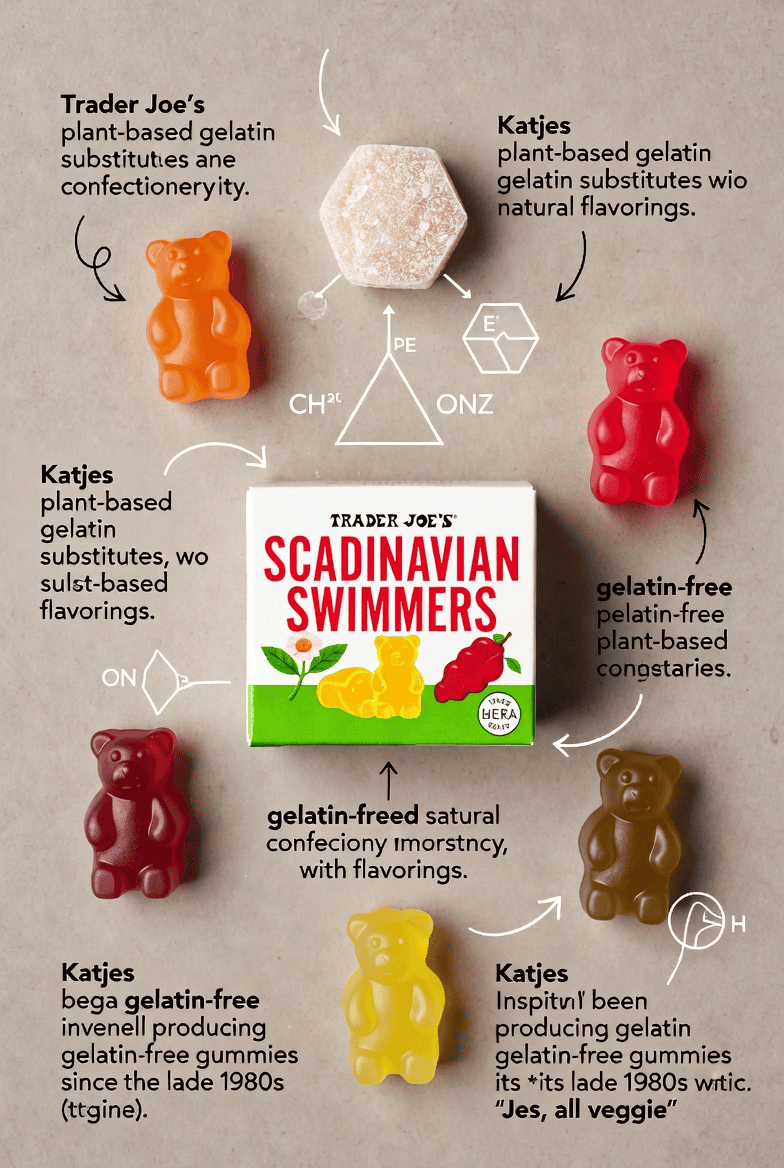
In any discussion of leading brands, it is a mistake to overlook the immense power and influence of high-quality private labels. Trader Joe’s, the beloved American grocery chain, has long been a master of creating store-brand products that not only compete with but often surpass their national brand equivalents in quality and value. Their “Scandinavian Swimmers” are a perfect case study. While not bears, these sea creature-shaped gummies are the store’s flagship gummy product and have garnered a cult-like following that rivals any major brand.
Quality and Value Proposition
The success of the Scandinavian Swimmers lies in their ability to deliver on the qualities of a premium gummy at an unbeatable price. Made for Trader Joe’s by a third-party manufacturer (a common practice for private labels), the gummies are colored and flavored with natural fruit and vegetable extracts. The ingredient list is clean and straightforward, free from artificial additives that many consumers seek to avoid. The texture is a crowd-pleasing soft chew—not as firm as Haribo, but with more substance than the softest pectin gummies. It hits a textural sweet spot that appeals to a broad audience.
Unique Flavors and Shapes
Instead of standard bears, Trader Joe’s opted for whimsical sea creature shapes: seahorses, dolphins, lobsters, and rockfish. This simple change gives the product a unique identity. The flavors are also slightly different from the standard mix, with the orange rockfish, yellow seahorse, red lobster, and blue dolphin each having a distinct and bright taste. The brand has also been adept at releasing seasonal variations, like the “Super Sour Scandinavian Swimmers,” which add a tangy coating to the beloved shapes, creating excitement and driving repeat purchases.
The Power of the Private Label
The Scandinavian Swimmers demonstrate the disruptive potential of private label brands in the confectionery space. By leveraging their direct relationship with the consumer and their control over the retail environment, stores like Trader Joe’s can develop products that are perfectly tailored to their customers’ preferences. They can ensure quality, control the price, and build a brand that is exclusive to their ecosystem. In 2026, the success of products like Scandinavian Swimmers serves as a powerful reminder that innovation and market leadership are not limited to traditional manufacturers. The best private label gummy bear brands are now formidable competitors, raising the bar for quality and value across the entire industry.
The Manufacturing Heartbeat: Inside a Modern Gummy Production Line
To truly appreciate the differences among the top gummy bear brands, we must look beyond the colorful packaging and venture into the factory where they are born. The modern gummy production line is a marvel of food engineering, a place where culinary art meets industrial precision. Every step of the process is meticulously controlled to ensure that each of the millions of gummies produced is a perfect replica of the last. The choice of equipment, such as the advanced production lines designed by specialists like Junyu, has a profound impact on the final product’s quality, consistency, and even its fundamental characteristics ().
From Kitchen to Continuous Cooking
The process begins with the “candy kitchen,” though on an industrial scale, it’s less a kitchen and more a complex system of tanks, pipes, and cookers. Here, the primary ingredients—sugar, glucose syrup, water, and the gelling agent—are precisely weighed and mixed. This slurry is then pumped into a continuous cooker. The cooker rapidly heats the mixture to a specific temperature, dissolving the solids and, crucially, reducing the moisture content to a precise level (typically around 20-25%). This step is critical; too much moisture and the gummy will be overly soft and sticky, too little and it will be hard and brittle. Advanced systems use vacuum chambers to help boil off water at lower temperatures, which can help preserve the delicate flavors and colors.
The Art of Depositing: Starch Moguls vs. Starchless Lines
Once cooked, the hot syrup is blended with the flavors, colors, and acids. The mixture must be kept at an elevated temperature to prevent it from gelling prematurely. Then comes the most visually impressive step: depositing. The method of depositing is a key differentiator in gummy production.
The traditional method is the Starch Mogul Line. This massive machine consists of a continuous loop of shallow trays filled with food-grade corn starch. The machine first stamps impressions of the desired shape (like a bear) into the smooth starch beds. Then, a depositor with numerous nozzles passes over the trays, squirting a precise amount of the hot gummy syrup into each impression. The starch serves three purposes: it holds the shape of the liquid gummy as it cools, it draws a small amount of moisture from the surface to form a “skin,” and it prevents the gummies from sticking. After depositing, the trays are stacked and moved into climate-controlled curing rooms for 24 to 48 hours. This is where the gel network fully forms and the gummy develops its final texture. After curing, the mogul line automatically tips the trays, separating the gummies from the starch, which is then sieved, dried, and recycled. This process is the secret behind the classic, firm chew of brands like Haribo.
A more modern alternative is the Starchless Depositing Line. As the name implies, this method eliminates the need for starch-filled trays. Instead, the gummy mass is deposited directly into permanent molds, which can be made of silicone or metal. These molds then travel through long cooling tunnels to rapidly set the gummies. Starchless lines are cleaner, require less space, and are ideal for producing gummies with very clear finishes or for formulations that are sensitive to the drying effects of starch (Brose, 2021). They are often favored for producing pectin-based or functional gummies. The choice between a starch mogul and a starchless line, a key consideration for any manufacturer, is a fundamental decision that shapes the character of the final product. Companies specializing in this machinery, like Junyu, offer both types of systems, tailoring the solution to the specific needs of the candy being produced .
Finishing Touches: Polishing and Packaging
After being de-molded, the gummies are not yet ready for the bag. They often pass through a polishing drum. This is a large, rotating cylinder where a polishing agent, such as a light mineral oil or carnauba wax (from a palm tree), is applied. This coating serves two functions: it gives the gummies an attractive sheen and, more importantly, it prevents them from sticking together in the package. Finally, the finished gummies are conveyed to high-speed weighing and bagging machines, which portion them out and seal them, ready for their journey to store shelves and, eventually, into the hands of a happy consumer. The entire process, from raw ingredients to sealed bag, is a testament to the incredible synergy of food science and mechanical engineering.
The Future of Chewy Candy: Trends Shaping the 2027 Gummy Market
The world of gummy bear brands is anything but static. As we look toward 2027 and beyond, several powerful trends are poised to reshape the market, pushing the boundaries of flavor, function, and form. The forces that brought us organic, vegan, and low-sugar options are not abating; they are accelerating and branching into new, exciting territories. The future of the gummy is one of increased personalization, deeper functional benefits, and a greater emphasis on sustainability, all enabled by advancements in production technology.
Hyper-Personalization and Bespoke Gummies
The “one-size-fits-all” model of candy is beginning to give way to a desire for personalized products. Imagine being able to create your own perfect gummy mix online: selecting your desired texture (soft, medium, or firm), choosing from a vast library of gourmet flavors, and even specifying the shapes. Some boutique brands are already offering basic customization, but advancements in manufacturing could take this mainstream. Flexible, small-batch production lines and even 3D food printing could one day allow for on-demand gummy creation. A consumer might upload a design or logo to be printed as a gummy, or create a unique flavor combination for a special event. This trend moves beyond simple product choice to active co-creation between the consumer and the brand.
The Next Frontier of Functional Ingredients
The success of vitamin gummies has opened the floodgates for a new wave of functional confections. The next frontier is the integration of more sophisticated, targeted ingredients. We are already seeing the emergence of gummies containing:
- Nootropics: Ingredients like L-Theanine, Lion’s Mane mushroom, and Bacopa Monnieri, which are believed to support cognitive functions like focus, memory, and clarity.
- Adaptogens: Botanical substances like Ashwagandha, Rhodiola, and Ginseng that are thought to help the body manage stress and maintain balance.
- Beauty and Skincare Ingredients: Beyond biotin, we will see more gummies with collagen, hyaluronic acid, and other compounds associated with skin health.
- Gut Health Support: Gummies containing prebiotics (like fiber) and probiotics are becoming increasingly common, positioning candy as a vehicle for digestive wellness.
The challenge for these products will be “flavor masking”—effectively hiding the often bitter or earthy taste of these active ingredients—and ensuring their stability and bioavailability in a candy matrix. This is a significant area of research and development for leading gummy bear brands.
Sustainability as a Core Value
Consumer concern for the environment is extending to every aisle of the grocery store, including the candy aisle. In the coming years, sustainability will become a non-negotiable aspect of a premium brand’s identity. This will manifest in several ways. Firstly, there will be greater scrutiny of ingredient sourcing. Brands will be expected to use sustainably farmed sugar, ethically sourced gelatin or plant-based alternatives, and traceable fruit concentrates. Secondly, packaging will be a major battleground. The industry’s reliance on single-use plastic bags is becoming increasingly untenable. We will see a rapid shift toward compostable, biodegradable, or recycled-content packaging materials. Brands that lead this transition will be rewarded by environmentally-conscious consumers. Finally, manufacturing processes will also be optimized for sustainability, focusing on reducing water usage, minimizing energy consumption, and achieving carbon-neutral production, as pioneered by brands like Katjes. The ability to tell a compelling sustainability story will be as important as having a delicious product.
Frequently Asked Questions
What actually makes a gummy bear “vegan”?
A gummy bear is considered vegan if it contains no ingredients derived from animals. The primary ingredient of concern is gelatin, which is made from animal collagen. To make a vegan gummy, manufacturers replace gelatin with a plant-based gelling agent. The most common alternatives are pectin (derived from fruit), agar-agar (from seaweed), and various food starches (like corn or potato starch). Additionally, a truly vegan gummy must ensure that all other ingredients, such as colors and flavors, are from non-animal sources and that the sugar used was not processed using bone char.
Why are some gummy bears so much harder to chew than others?
The texture of a gummy bear is determined by two main factors: the recipe and the curing process. A gummy made with a high concentration of gelatin will naturally be firmer than one with less. The brand most famous for its firm texture, Haribo, also uses a long curing process. After the gummies are deposited into starch molds, they are left in climate-controlled rooms for an extended period. This allows more moisture to evaporate, resulting in a denser, chewier final product. Softer gummies, like those from Albanese, use a different recipe and likely have a shorter curing time, retaining more moisture for a tender bite.
Is it possible to make professional-quality gummy bears at home?
While you can certainly make delicious gummy bears at home, achieving the exact texture and shelf-life of a commercial product is very difficult without specialized equipment. Commercial producers use precise cookers to achieve an exact moisture content and depositors for uniform shapes. The biggest challenge at home is controlling the water content. Most home recipes result in a softer, more jello-like candy that needs to be refrigerated. Replicating the dense, chewy, shelf-stable texture of a brand like Haribo requires a level of process control that is nearly impossible in a home kitchen.
What is the main difference between gelatin and pectin in gummies?
Gelatin and pectin create fundamentally different textual experiences. Gelatin, an animal protein, creates a gel that is elastic, springy, and chewy. It also has a unique melting point near body temperature, which gives it a smooth “melt-in-your-mouth” quality and excellent flavor release. Pectin, a plant-based carbohydrate, creates a gel that is more tender and has a “short” texture—it breaks cleanly when you bite it, rather than stretching. Think of the difference between a gummy bear and a fruit jelly. Neither is inherently better; they simply produce different, distinct types of candy.
Are sugar-free gummy bears a healthy choice?
“Healthy” is a relative term. Sugar-free gummy bears, like those from SmartSweets, are certainly a healthier alternative to traditional gummies for those looking to reduce their sugar intake, manage blood sugar, or follow a ketogenic diet. They replace sugar with zero-calorie sweeteners and often add a significant amount of fiber. However, it is important to be aware of the ingredients. Some sugar-free candies use sugar alcohols (like maltitol or sorbitol), which can cause digestive distress in some people if consumed in large quantities. It is always wise to read the ingredient label and consume them in moderation.
How do manufacturers get the gummy bears out of the molds without them sticking?
In the traditional starch mogul process, the corn starch itself prevents sticking by absorbing moisture from the surface of the gummy. After curing, the entire tray of starch and gummies is tipped over a sieve, and the gummies are shaken or vibrated free from the starch. In modern starchless production, the gummies are deposited into highly polished silicone or metal molds. These molds are often treated with a release agent, and the formulation of the gummy itself is designed to set cleanly. After passing through a cooling tunnel, the gummies are firm enough to be pushed or popped out of the flexible molds automatically.
Why do some gummy bears have a shiny coating?
The shiny coating on most gummy bears is a final finishing step called polishing or oiling. After the gummies are made, they are tumbled in a large drum with a small amount of a polishing agent. This is typically a food-grade mineral oil, carnauba wax (a wax from the leaves of a palm tree), or beeswax. This coating serves two important purposes: it gives the gummies an appealing gloss, and, more practically, it prevents them from sticking to each other in the bag.
A Final Reflection on the Chewy Candy Landscape
The universe of gummy bear brands in 2026 is a rich tapestry woven from threads of history, science, and shifting cultural values. The journey from Hans Riegel’s simple Tanzbär to the complex, functional, and gourmet creations of today reflects a broader evolution in our relationship with food. The gummy bear has proven to be a remarkably resilient and adaptable form, capable of carrying not only flavor and sweetness but also our aspirations for health, our desire for novelty, and our commitment to ethical principles.
The enduring presence of a traditionalist like Haribo demonstrates a deep-seated appreciation for consistency and the power of a well-perfected classic. At the same time, the meteoric rise of innovators like SmartSweets and Olly shows a powerful consumer demand for products that align with modern wellness goals. The success of brands like Black Forest and YumEarth speaks to a growing consciousness about ingredients and inclusivity, while the artistry of Sugarfina and Squish elevates the humble gummy to a culinary experience.
What this diverse landscape reveals is that there is no longer a single definition of the “best” gummy bear. The ideal choice is a matter of personal philosophy as much as personal taste. It depends on what an individual values most: the firm chew of tradition, the intense burst of flavor, the purity of organic ingredients, the promise of low-sugar indulgence, or the comfort of a safe, allergy-friendly treat. The continued innovation in this space, driven by both creative confectioners and the precise machinery that brings their visions to life, ensures that the story of the gummy bear is far from over. It will continue to evolve, delight, and surprise us for generations to come.
References
Brose, K. (2021). Starchless moulding for gummy and jelly production. WDS. https://www.w-d-s.de/en/news-media/articles-publications/starchless-moulding-for-gummy-and-jelly-production
Hartel, R. W., von Elbe, J. H., & Hofberger, R. (2018). Confectionery science and technology. Springer.
Junyu. (2025a). About us. JY Machine.
Junyu. (2025b). The most popular gummy candy production line series. Gummymaking.com.
Richardson, T. (2002). Sweets: A history of candy. Bloomsbury Publishing.
Saha, D., & Bhattacharya, S. (2010). Hydrocolloids as thickening and gelling agents in food: A critical review. Journal of Food Science and Technology, 47(6), 587–597.
Sloan, A. E. (2022). What’s trending in the confectionery market? Food Technology Magazine, 76(5).
Tari, A., & Singhal, R. S. (2005). Starch-based gels: A review of their structure, rheological and textural properties. Starch – Stärke, 57(8), 355–374. https://doi.org/10.1002/star.200400388