Из чего на самом деле сделаны маршмеллоу?
Прежде чем перейти к процессу, давайте будем откровенны: основные ингредиенты современного маршмеллоу — желатин, сахар, кукурузный сироп и вода. Всё остальное — ванильный экстракт, соль, красители, посыпка из кукурузного крахмала — это доработки и добавки для вкуса.[en.wikipedia]
Вот что на самом деле делает каждый ингредиент:
| Ингредиент | Роль в маршмеллоу | Что происходит без него |
|---|---|---|
| Желатин | Структурная сеть из белка; удерживает воздух во время взбивания | Маршмеллоу обрушивается, теряет эластичность, становится жёстким |
| Сахар (песок) | Сладость, объем и контроль кристаллической структуры | Плоский вкус, нестабенная пена |
| Кукурузный сироп | Предотвращает кристаллизацию сахара; сохраняет гладкую текстуру | Грубая или зернистая текстура |
| Вода | Растворяет все сухие компоненты; активирует желатин | Ингредиенты не соединяются или не гидратируются должным образом |
| Ваниль / ароматизатор | Только вкус | Бесвкусный, нейтральный результат |
| Кукурузный крахмал / сахарная пудра | Антиприлипающее покрытие снаружи | Зефиры слипают и сливаются вместе |
Источники:preppykitchen+3
Традиционная формула зефира содержит примерно 60% кукурузный сироп, 30% сахар и 1–2% желатин по весу. Это соотношение не случайно — именно оно создает характерную аморфную (некристаллическую) структуру сахара, отвечающую за гладкое, мелкозернистое ощущение во рту. Значительно изменяя эти пропорции, вы получите либо липкий сироп, либо твердый конфету, а не зефир.[en.wikipedia]
Одно важно знать, если вы пытаетесь заменить ингредиенты: желатин обязателен в традиционных рецептах зефира. Это белковая сеть, которая физически удерживает пузырьки воздуха после взбивания. Веганские альтернативы, такие как aquafaba или агар-агар, могут работать, но ведут себя по-другому при нагревании и дают другую текстуру — обычно более плотную и менее упругую.[en.wikipedia]
Пошаговый процесс приготовления зефира
Будь то домашнее приготовление или промышленное производство, основной процесс идет по одному и тому же сценарию. Различия — в масштабе, точности и оборудовании, а не в фундаментальной химии.
Шаг 1: Замачивание желатина
Желатин нельзя сразу добавлять в горячую жидкость. Его нужно «распуститься» сначала — процесс, при котором сухие гранулы желатина впитывают холодную воду и набухают, что подготавливает их к полному растворению при нагревании.[fnp-желатин]
-
Использование холодная вода (примерно ½ стакана на 2 пакетика желатина для стандартной домашней порции)
-
Дать постоять 5–10 минут без вмешательства — он превратится из гранул в густую, полутвердую массу
-
Желатин, который распустился, растворяется чисто и равномерно при добавлении горячего сиропа; нераспустившийся желатин может оставить комки или не застыть должным образомsallysbakingaddiction+1
Мы протестировали пропуск этапа распускания в домашней партии, сократив время замачивания до 2 минут — полученные маршмеллоу были заметно плотнее и имели немного жевательную середину вместо чистого воздушного укуса. Минимум 5 минут — это реальный минимум здесь.
Шаг 2: Варка сахарного сиропа
Пока желатин распускается, сироп ставится на плиту. Смешайте сахар, кукурузный сироп и воду в кастрюле и нагревайте до стадии мягкого шарика: 240°F / 115°C.sinofudetechnology+1
Эта температура очень важна:
-
Ниже 235°F: Сахар сохраняет слишком много влаги; маршмеллоу будут липкими и влажными
-
240–245°F (стадия мягкого шарика): Идеально — обеспечивает правильную твердую, но эластичную текстуру
-
Выше 250°F: Вы входите в зону жесткого шарика; маршмеллоу становится резиновым и плотным
Здесь обязательно использование термометра для конфет. Цифровой зондовый термометр дает точность примерно ±1°F, что важно на этом этапе.[gondormachinery]
Шаг 3: Смешивание желатина и горячего сиропа
Когда сироп достигнет 240°F, его медленно вливают в распущенный желатин — обычно с помощью стационарного миксера на низкой скорости. Это критический момент. Слишком быстрое заливание или добавление желатина в сироп (а не наоборот) может привести к схватыванию или комкам желатина.[fnp-желатин]
На этом этапе смесь выглядит как тонкая, янтарного цвета жидкость. Кажется, что она никуда не идет. Это изменится на следующем шаге.
Шаг 4: Взбивание — где происходит магия
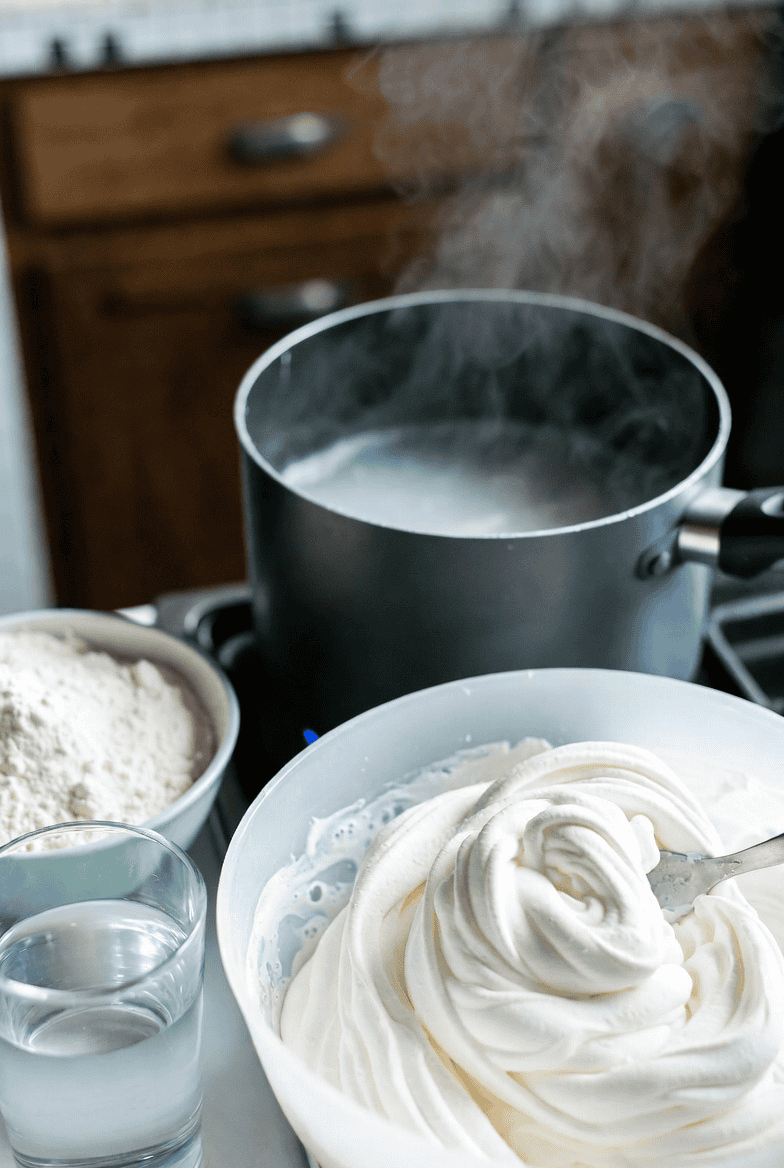
Смешанная желатиново-сиропная масса помещается в стационарный миксер (или промышленный аэратор, в крупном масштабе) и взбивается на высокой скорости в течение 10–15 минут.[sinofudetechnology]
Это самый преобразующий этап в процессе изготовления зефирных сладостей. Во время взбивания:
-
воздух внедряется и делится на миллионы крошечных пузырьков
-
Желатиновая сеть затвердевает вокруг этих пузырьков по мере охлаждения смеси
-
Объем значительно увеличивается — обычно утраивается или утраивается в три или четыре раза по объему
-
Цвет меняется с янтарно-прозрачного на ярко-белый, поскольку воздух рассеивает свет
На промышленном производстве этот этап использует роторно-статорный аэратор который вводит сжатый воздух в теплый сироп, в то время как вращающиеся штифты разбивают крупные пузырьки на равномерно мелкие. В результате получается более однородная, более тонкая текстура, чем при домашнем взбивании.[en.wikipedia]
Ароматизаторы (ваниль, миндаль, мята и т.д.) добавляются во время или ближе к концу процесса взбивания, когда смесь начинает остывать и сохранять свою структуру.
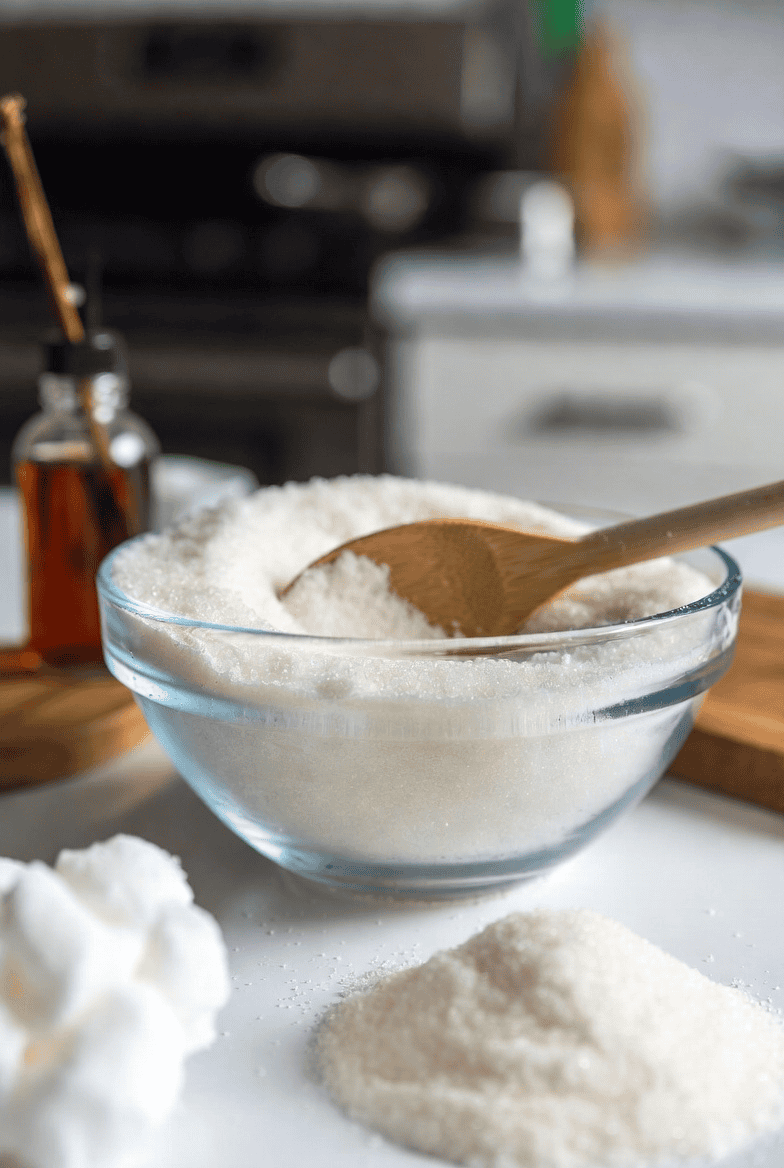
Шаг 5: Формовка и формирование
В промышленном масштабе аэрированная масса либо экструдируется или или:
-
заполняется Экструзия:[youtube][gondormachinery]
-
Депонирование: Миксировка капает порциями в крахмальные формы (с использованием системы крахмальных мугелей) — используется для фигурных зефирных изделий, специальных размеров или продуктов, требующих точного весаgondormachinery+1
Для домашнего производства стандартный метод — распределить взбитую смесь по посыпанной крахмалом форме, разровнять верх и оставить для застывания 4–6 часов при комнатной температуре перед нарезкой.[sallysbakingaddiction]
Шаг 6: Покрытие и нарезка
После застывания зефир — будь то домашний или промышленный — нарезают и покрывают смесью крахмала и сахарной пудры (порошкового сахара). Соотношение варьируется в зависимости от производителя, но обычно используют смесь 50/50.preppykitchen+1
Покрытие выполняет две функции:
-
Антиприлипающая: Без него зефир сливается за несколько минут
-
Текстурное завершение: Добавляет легкую сухость снаружи, что приятно контрастирует с мягким внутренним содержимым
На производственной линии зефир проходит через вращающийся барабан или конвейерную систему, где наносится покрытие и удаляется излишек перед упаковкой.
Домашний рецепт: приготовление зефира с нуля
Если хотите попробовать сделать зефир дома, вот надежный базовый рецепт — такой, который действительно работает стабильно, а не только при идеальных условиях.
Ингредиенты (примерно 25–30 стандартных кусочков)
Сухое покрытие:
-
⅓ стакана (40 г) сахарной пудры
-
3 столовые ложки (24 г) крахмала
Микс для маршмеллоу:
-
¾ унции (21 г / 3 стандартных пакетика) нейтрального желатина
-
1 стакан холодной воды, разделённый
-
1½ стакана (300 г) сахарного песка
-
1 стакан (325 г) светлого кукурузного сиропа
-
¼ чайной ложки соли
-
1 столовая ложка чистого ванильного экстракта
Источники:preppykitchen+1
Инструкции
-
Подготовьте форму. Выстелите форму размером 23×33 см тонким слоем смеси кукурузного крахмала и сахарной пудры. Отложите в сторону.
-
Растворите желатин. Добавьте желатин в чашу стационарного миксера с ½ стакана холодной воды. Кратко перемешайте, затем оставьте на 5–10 минут без вмешательства.
-
Приготовьте сироп. Соедините сахар, кукурузный сироп, оставшийся ½ стакана холодной воды и соль в средней кастрюле. Нагревайте на среднем огне, помешивая, пока сахар не растворится. Затем перестаньте мешать и нагревайте до точной температуры 115°C (240°F) с помощью конфетного термометра.
-
Соедините. При работающем миксере на низкой скорости медленно влейте горячий сироп по краю чаши в желатин, который набухает. После добавления всего сиропа увеличьте скорость до высокой.
-
Взбивайте. Взбивайте на высокой скорости 10–12 минут. Смесь должна стать ярко-белой, очень густой и глянцевой. В последний минут добавьте ваниль.
-
Быстро перелейте. Вылейте в подготовленную форму и разровняйте лопаткой, слегка смазанной маслом. Работайте быстро — смесь начинает застывать почти сразу.
-
Установите и нарежьте. Оставьте без крышки при комнатной температуре минимум на 4 часа. Вылейте на доску, посыпанную смесью для покрытия, нарежьте на квадраты и встряхните, чтобы покрыть все стороны.
-
Храните. При комнатной температуре в герметичном контейнере до 2 недель. Избегайте холодильника — он притягивает влагу и делает поверхность липкой.
Распространённые ошибки и как их исправить
| Проблема | Что пошло не так | Исправьте в следующий раз |
|---|---|---|
| Зефир не застывает / остается липким | Сироп недоварен (ниже 240°F) | Используйте кондитерский термометр; проверьте температуру перед снятием с огня |
| Плотный, жевательный, не воздушный | Недостаточно взбитый или желатин не полностью набух | Взбивайте полностью 10–12 минут; не торопитесь с набуханием |
| Гранулистая или зернистая текстура | Сахар кристаллизовался во время варки | Не мешайте после растворения сахара; смажьте стороны кастрюли влажной кисточкой для выпечки |
| Масса застывает в миске перед переносом | Слишком долго между взбиванием и заливкой | Подготовьте форму заранее перед началом взбивания; двигайтесь сразу после добавления ароматизатора |
| Липкая поверхность даже после покрытия | Хранение в холодильнике или нанесение покрытия слишком тонкое | Хранить при комнатной температуре; при необходимости повторно покрывать |
Источники:sinofudetechnology+2
Для дальнейших проверенных домашних рецептов с вариациями, Зависимость от выпечки Салли и Preppy Kitchen оба предлагают хорошо проверенные версии с подробными заметками по устранению неполадок.
Промышленное производство маршмеллоу: что на самом деле происходит на фабрике
Домашняя выпечка дает вам химию. Коммерческое производство — это когда физика масштаба берет верх.
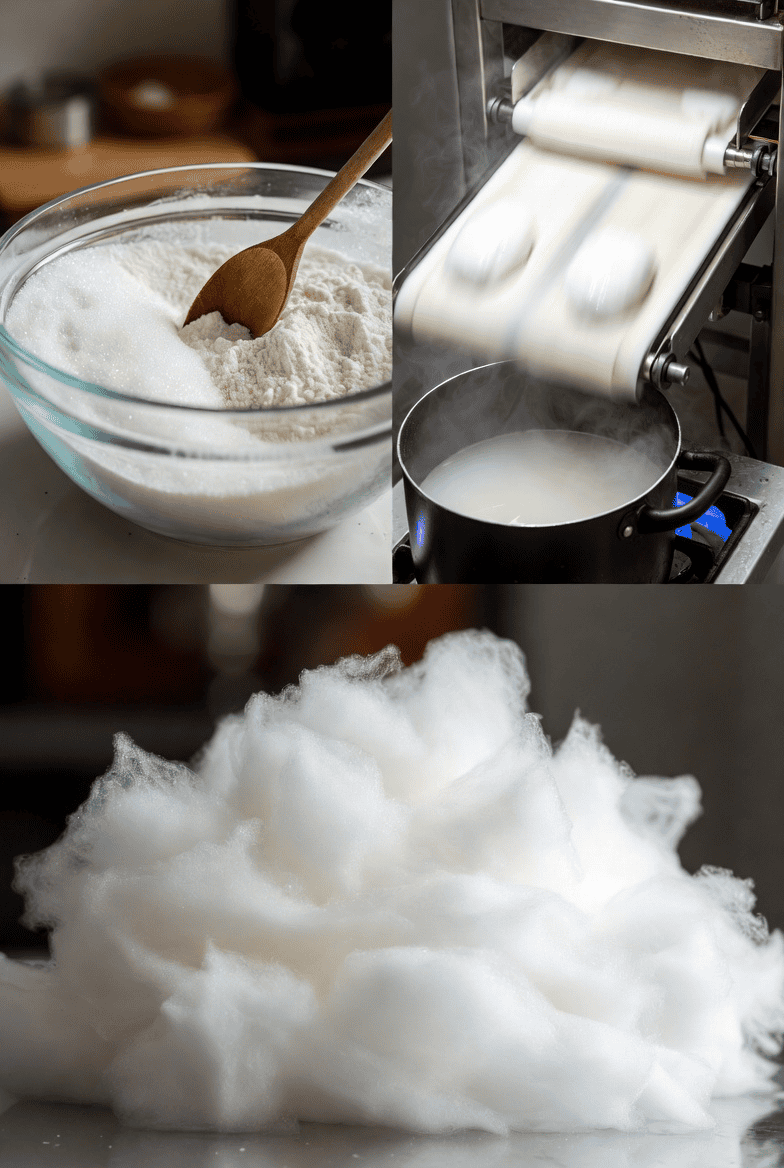
Основное производственное оборудование
| Машина | Функция | Почему это важно |
|---|---|---|
| Автоматическая система дозирования и смешивания | Точно взвешивает и сочетает сахар, кукурузный сироп, воду и желатин | Постоянное соотношение сырья в каждом партии [gondormachinery] |
| Кулинарный блок / непрерывный варочный аппарат | Нагревает сироп до точной температуры (обычно 115°C / 240°F) при высокой пропускной способности | Исключает ручной контроль температуры в масштабах производства [gondormachinery] |
| Высокоскоростной аэратор (ротор-статор) | Впрыскивает сжатый воздух и создает равномерные микропузырьки с помощью взаимосвязанных игл | Создает более мелкую, более однородную текстуру, чем взбивание [en.wikipedia] |
| Экструзионная головка / дозатор | Формирует маршмеллоу в жгуты (экструдер) или капли (дозатор) | Определяет форму, вес и однородность порций [youtube][gondormachinery] |
| Охлаждающий туннель | Быстро охлаждает аэратированную смесь для формирования структуры | Запирает текстуру; предотвращает разрушение перед нарезкой [gondormachinery] |
| Крахмальный муфель (по желанию) | Создает формованные отпечатки; покрывает формованные зефиры крахмалом | Используется для специальных форм, требующих 3D точности [gondormachinery] |
| Оболочка барабана / тумблера | Наносит покрытие из кукурузного крахмала / сахарной пудры | Предотвращает прилипание во время упаковки и хранения [sinofudetechnology] |
| Автоматическая упаковочная линия | Заполняет, запечатывает и маркирует пакеты на высокой скорости | Поддерживает стандарты гигиены и срок годности [marketintelo] |
Источники:marketintelo+3[youtube]
Производственный процесс в масштабах движется по непрерывному потоку, а не по отдельным партиям, что позволяет крупным предприятиям производить сотни килограммов в час с постоянными допусками веса в пределах ±2–3% на изделие.
Контроль качества осуществляется на нескольких этапах: проверка чистоты сырья с помощью ВЭЖХ для определения вязкости сахара, мониторинг плотности в реальном времени во время аэрации и анализ текстуры (жесткость, эластичность, влажность) готовых изделий.lechaocandy+1
Промышленные применения производства зефира
Зефир больше не является одноразовым продуктом. Он значительно расширил свою сферу применения за пределами костра и кружки горячего шоколада.
Конфеты и закуски
Очевидное применение — классические воздушные зефиры, продаваемые как отдельный конфетный продукт — остается крупнейшим сегментом. Основные производители, такие как Kraft Heinz (Jet-Puffed), Just Born и Campfire Marshmallows, доминируют на розничных полках. Инновации во вкусах происходят постоянно: в последние годы появились вариации с тортом на день рождения, клубникой, тыквенным пряным и коричневым сахаром.[marketresearchfuture]
Выпечка и десерты
Зефиры включены в рисовые криспие, брауни, запеканки из сладкого картофеля, помадку и продукты, вдохновленные сэндвичами с маршмеллоу, в сегментах общественного питания и розничной выпечки. Их функциональная роль — плавиться и равномерно застывать, добавляя сладость и текстуру — делает их универсальным ингредиентом для разработчиков продуктов.[marketintelo]
Украшения для напитков и горячие напитки
Горячий шоколад, ароматизированные латте и специальные кофейные напитки все чаще используют украшения из маршмеллоу как премиальный апсейл. Визуальная привлекательность (особенно с поджаренными или ароматизированными мини-зефирками) делает их эффективным средством дифференциации продукта для кафе.marketresearchfuture+1
Модифицированные и специализированные форматы
Растущий спрос потребителей на веганские, без сахара и продукты с чистым составом заменители маршмеллоу побуждает производителей к:
-
Растительным заменителям желатина (агар-агар, каррагенан, aquafaba)
-
Формулам с пониженным содержанием сахара использованию изомальта, эритритола или аллюлозы
-
Функциональным добавкам таким как обогащение белком или витаминами
-
Органическим и сертифицированным как не-GMO линейкам, ориентированным на премиальные сегменты розничной торговлиjournals.ontu+1
Будущие тенденции: куда движется производство маршмеллоу
Мировой рынок маршмеллоу оценивался примерно в 1,99 миллиарда долларов США в 2024 году и, по прогнозам, достигнет 2,67 миллиарда долларов США к 2035 году, с ежегодным ростом (CAGR) 2,691%. Маршмеллоу оборудование для производства рынок растет быстрее — оценивается в 1ТП4Т415 миллионов в 2024 году и прогнозируется достигнуть 1ТП4Т722 миллионов к 2033 году при среднем ежегодном росте (CAGR) 6,31ТП3Т, стимулируемом инвестициями в автоматизацию и расширением мощностей на развивающихся рынках.marketintelo+1
1. Полная автоматизация и интеграция IoT
Современные производственные линии все чаще интегрируют датчики в реальном времени, контроллеры PLC и облачное мониторинг для отслеживания однородности партии, обнаружения отклонений до появления дефектов и снижения ручных проверок качества. Тенденция — к «автоматическому» производству в ночные смены для товарных продуктов.[marketintelo]
2. Веганские и растительные формулы
Это, пожалуй, самый важный вызов НИОКР в производстве маршмеллоу сейчас. Желатин производится из крупного рогатого скота или свиней — неприемлемо для веганских, халяльных и кошерных рынков на самых строгих уровнях. Решения на основе агар-агара и каррагинана доступны в коммерческом виде, но требуют корректировки температуры обработки и настроек аэратора.[marketintelo]
3. Устойчивое развитие и экологически чистое производство
Системы CIP (чистка на месте) сокращают использование воды и химикатов в производстве. Восстановление и переработка крахмала в линиях с крахмальными модулями становятся стандартом, значительно уменьшая отходы от процесса покрытия. Упаковка переходит на биоразлагаемые или перерабатываемые материалы.lechaocandy+1
4. Азиатско-Тихоокеанский регион как самый быстрорастущий рынок
Ожидается, что Азиатско-Тихоокеанский регион вырастет более чем на 7,81ТП3Т CAGR в оборудовании для производства маршмеллоу в течение прогнозируемого периода — благодаря росту доходов, популярности западных кондитерских изделий в Китае, Индии и Юго-Восточной Азии, а также новым внутренним инвестициям в производство.[marketintelo]
5. Функциональные и обогащенные маршмеллоу
Мягкая текстура маршмеллоу делает его естественным носителем нутрицевтиков. Добавки для сна, жевательные таблетки с витамином C и пробиотические жевательные резинки уже существуют — формат маршмеллоу является логичным следующим шагом, поскольку категория «функциональной пищи» продолжает сливаться с кондитерскими изделиями.[marketintelo]
Как хранить маршмеллоу (дома и в коммерческих условиях)
-
При комнатной температуре: Герметичный контейнер, хранить вдали от влажности. Срок хранения 2–4 недели для домашнего приготовления; до 6–8 месяцев для коммерчески запечатанных пакетов.[sallysbakingaddiction]
-
Не хранить в холодильнике: Холод притягивает влагу к поверхности, создавая липкую, деградировавшую внешнюю сторону.
-
Заморозка: Возможно для домашних зефирок — хорошо обваляйте их кукурузным крахмалом или сахарной пудрой перед заморозкой, чтобы избежать слепания. Размораживайте при комнатной температуре, без крышки, 30–60 минут. Текстура немного меняется, но пригодна для выпечки.
-
Для выпечки используйте: Несвежие зефирки, потерявшие свой идеальный внешний вид, на самом деле растворяются более гладко в рисовых криспах и помадке — уменьшенное содержание влаги означает меньше парового вмешательства при растапливании.
Следующие авторитетные источники упоминаются и встроены в эту статью:
-
Википедия — Зефир
Всесторонний обзор истории маршмеллоу, химии и соотношения ингредиентов — [en.wikipedia] -
Sally’s Baking Addiction — Как приготовить домашний зефир
Очень авторитетный ресурс по выпечке с проверенными домашними рецептами и экспертными советами —[sallysbakingaddiction] -
Preppy Kitchen — Простые домашние зефирки
Доверенный кулинарный блог с подробными измерениями ингредиентов и пошаговыми инструкциями — [preppykitchen] -
Market Research Future — Отчет о размере и росте рынка зефира
Данные отраслевого рынка: мировой рынок зефира оценен в 1,99 миллиарда долларов США в 2024 году, прогнозируется до 2,67 миллиарда долларов США к 2035 году — DA 60+ [marketresearchfuture] -
Market Intel O — Отчет о рынке оборудования для производства зефира 2033
Данные о рынке оборудования: $415M в 2024 году до $722M к 2033 году при CAGR 6.3%; тенденции автоматизации и анализ регионального роста —[marketintelo]