How Modern Biscuit Factories Work: A Simple Guide to Making Cookies and Crackers
From your local bakery to grocery store shelves, the simple biscuit takes an amazing journey that’s far from simple. Behind every perfectly shaped, evenly baked cracker or cookie is an incredible example of modern engineering: the biscuit production line. The numbers are mind-blowing – major factories produce millions of biscuits every single day. This isn’t just baking; it’s high-tech manufacturing.
This article takes you on a complete tour of a modern linea di produzione di biscotti. We’ll break down each step of the biscuit manufacturing process, from storing raw ingredients to boxing finished products ready for shipping. We’ll look at the important machines that make each step work and explore the smart strategies used to make everything run faster, smoother, and with better quality. This is your complete guide to understanding how industrial biscuit production really works.
What Is a Modern Biscuit Factory?
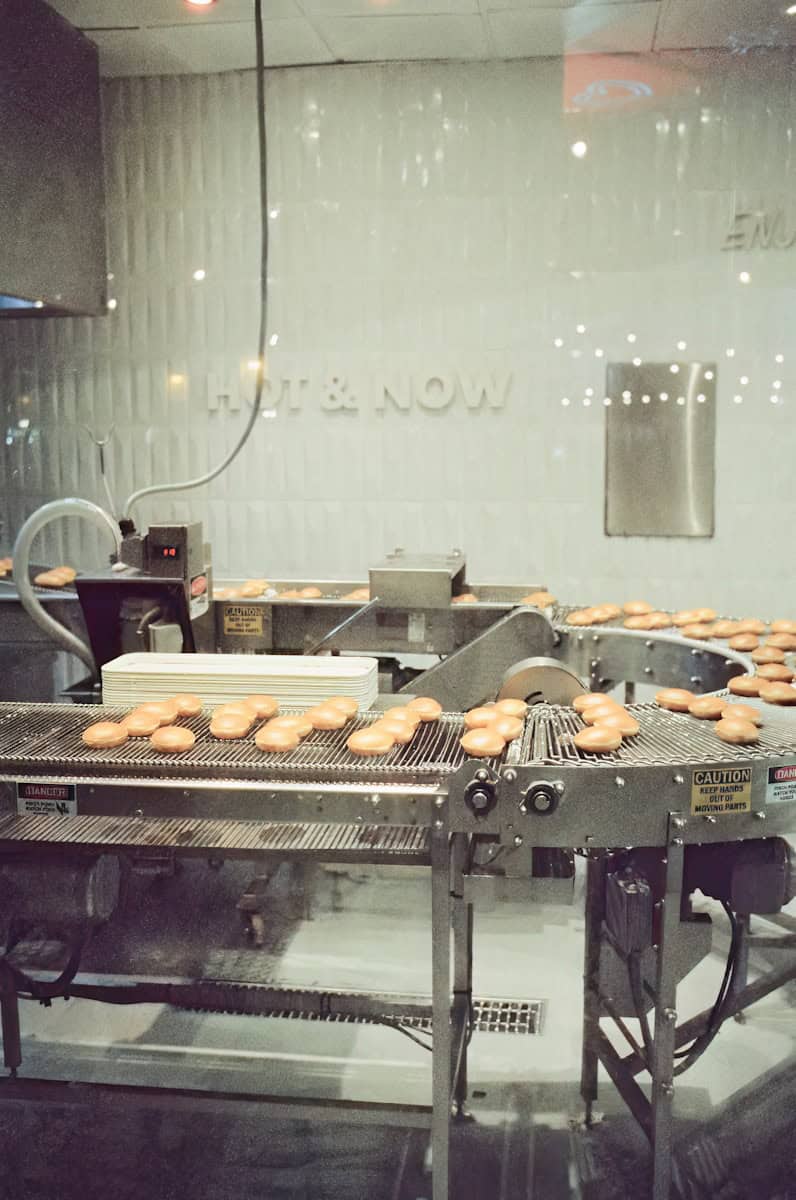
At its heart, a linea di produzione di biscotti is a highly connected and automated system of machines designed to turn raw ingredients into finished, packaged biscuits with very little human help. It’s a huge step up from traditional baking methods, focusing on consistency, speed, and large-scale production. The entire operation breaks down into a series of main stages that flow smoothly from one to the next:
- Ingredient Handling
- Mixing
- Forming
- Baking
- Cooling
- cURL Too many subrequests.
While the basic ideas of baking stay the same, today’s high-volume systems rely on automation, computer control, and incredible efficiency, allowing factories to make thousands of biscuits per minute.
The Step-by-Step Process
Getting Ingredients Ready
This is where consistent products begin. Precise measurements are absolutely critical – even small mistakes in ingredient amounts can mess up the dough and ruin the final product quality. In a modern factory, this process is completely automated. Large ingredients like flour and sugar are stored in huge outdoor containers and moved through pipes using air pressure to holding bins above the mixers. Liquids like water, oils, and syrups are kept in temperature-controlled tanks and measured out with highly accurate meters.
Before reaching the mixer, dry ingredients usually go through sifters and magnetic separators to remove unwanted particles and make the flour lighter. An important but often forgotten part is temperature control. The temperature of ingredients like water and fat directly affects the final dough temperature, which controls how the gluten develops and how easy the dough is to work with. Chilled water systems are common to make sure the dough doesn’t get too hot during the high-energy mixing stage.
Making the Dough
The mixer is the heart of the operation, where separate ingredients become a smooth, workable dough. The type of mixer chosen depends entirely on what kind of dough is needed for the final product.
- Vertical Spindle Mixers are often used for soft doughs where adding air is important.
- Horizontal Mixers are the workhorses of the industry. Regular horizontal mixers work for hard, semi-sweet doughs, while high-speed mixers are essential for developing the strong gluten network needed for crackers.
The mixing process carefully balances time, speed, and temperature. These factors determine how much the gluten develops. For shortbread, minimal mixing is wanted to keep the texture “short” and crumbly. For crackers, lots of mixing is needed to develop a strong, stretchy gluten sheet. A common production problem is incorrect mixing – over-mixed dough can become tough and hard to work with, while under-mixed dough may be weak and lead to uneven biscuit shapes and textures.
Shaping the Dough
This stage gives the biscuit its shape. The method used depends on how thick or thin the dough is. There are three main shaping techniques on a linea di produzione di biscotti.
- Laminating & Sheeting: This method works for crackers and hard dough biscuits. The dough goes through a series of rollers to form a continuous, thin sheet. For crackers, this sheet may be “laminated” by folding it over itself multiple times to create distinct flaky layers. A cutter then cuts the final shapes from the dough sheet before it enters the oven.
- Rotary Molding: Perfect for soft, non-stretchy doughs like shortcakes or sandwich biscuits. The dough is forced into patterns carved on a rotating cylinder. A rubber-coated roller presses the dough sheet against the mold, and the shaped dough pieces are removed onto the oven belt.
- Wire-Cutting & Depositing: This is the preferred method for high-fat, soft doughs like cookies. The dough is squeezed through a shaped opening onto the oven belt, and a moving wire or blade cuts each piece to a consistent weight and shape. Depositors can also be used to add fillings or create complex shapes.
The Baking Stage
Baking is a complex process of heat transfer and controlled moisture removal that sets the biscuit’s structure, color, and final texture. Industrial baking happens in massive tunnel ovens, which can be over 300 feet long. These ovens are typically divided into multiple “baking zones,” each with independent temperature and humidity controls.
The type of oven used depends on the product.
- Direct Gas Fired (DGF) ovens, where the flame is in the same space as the product, provide intense, direct heat perfect for developing the structure of crackers.
- Indirect or Convection ovens circulate heated air, providing gentler baking suitable for delicate cookies and soft biscuits.
This zone-based control allows for precise baking – for example, a high-heat starting zone to quickly “lift” the biscuit, followed by a lower-temperature zone for drying, and a final zone for browning. Baking can range from 3 to 15 minutes at temperatures between 350°F and 540°F, depending on the biscuit type, size, and moisture content.
Cooling and Stacking
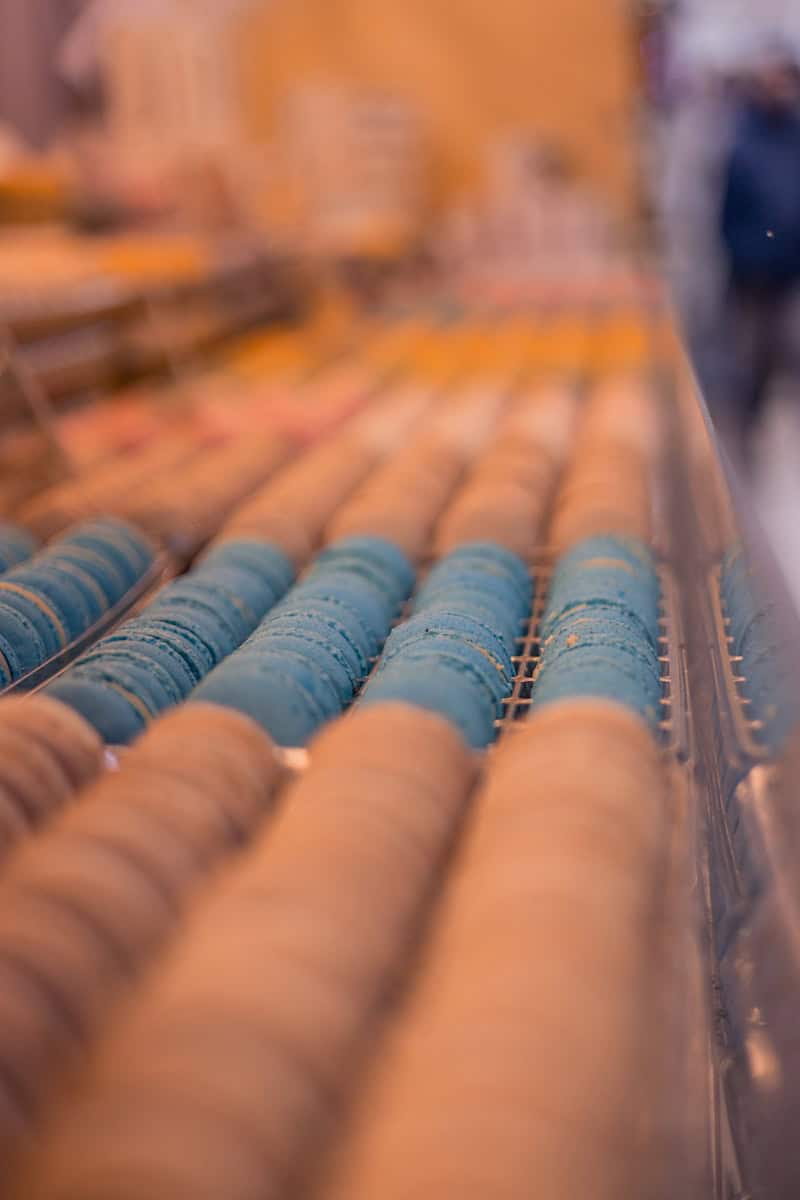
Controlled cooling is just as important as baking. As biscuits leave the oven, they are still soft and contain lots of leftover heat and steam. They move onto long, open-mesh cooling conveyors that allow air to flow freely around them. This cooling must be gradual. If biscuits are cooled too quickly, a problem called “checking” can happen, where internal stresses cause fine cracks to appear on the surface hours or even days later, leading to breakage.
While some production lines use room-temperature cooling, many use forced-air cooling tunnels for better control and faster processing. At the end of the cooling conveyor, which can be up to 1.5 times the length of the oven, the biscuits are firm and stable. Automated stacking systems then arrange the biscuits into neat piles of a predetermined count, ready for packaging.
cURL Too many subrequests.
The final stage of the biscuit manufacturing process is packaging. This protects the product from moisture and physical damage while preparing it for store sale. The first step is primary packaging, where automated flow-wrappers wrap the biscuit piles in printed film. These machines work at incredible speeds, wrapping hundreds of packs per minute.
cURL Too many subrequests. linea di produzione di biscotti.
cURL Too many subrequests.
cURL Too many subrequests.
cURL Too many subrequests. linea di produzione di biscotti cURL Too many subrequests.
cURL Too many subrequests.
cURL Too many subrequests.
- cURL Too many subrequests.
- cURL Too many subrequests.
- cURL Too many subrequests.
cURL Too many subrequests.
| cURL Too many subrequests. | cURL Too many subrequests. | cURL Too many subrequests. | cURL Too many subrequests. | cURL Too many subrequests. |
| cURL Too many subrequests. | Moderato | cURL Too many subrequests. | cURL Too many subrequests. | cURL Too many subrequests. |
| cURL Too many subrequests. | Alto | cURL Too many subrequests. | cURL Too many subrequests. | cURL Too many subrequests. |
| cURL Too many subrequests. | Molto alto | cURL Too many subrequests. | cURL Too many subrequests. | cURL Too many subrequests. |
cURL Too many subrequests.
cURL Too many subrequests.
- cURL Too many subrequests.
- cURL Too many subrequests.
- cURL Too many subrequests.
cURL Too many subrequests.
cURL Too many subrequests.
cURL Too many subrequests.
- cURL Too many subrequests.
- cURL Too many subrequests.
- cURL Too many subrequests.
cURL Too many subrequests.
| cURL Too many subrequests. | cURL Too many subrequests. | cURL Too many subrequests. | Estimated Annual Savings | Estimated ROI Period |
| Heat Recovery System for Oven | $50,000 – $150,000 | 10-15% reduction in gas consumption | $20,000 – $40,000 | 2.5 – 4 years |
| Automated Stacker | $30,000 – $80,000 | 2-3% reduction in post-baking breakage | $15,000 – $25,000 | 2 – 3.5 years |
| High-Speed Flow Wrapper | $80,000 – $200,000 | 20% increase in packaging speed; 0.5% waste reduction | $40,000 – $60,000 | 2 – 4 years |
The Smart Factory Revolution
Beyond Simple Automation
The modern biscuit manufacturing process is evolving beyond simple mechanization into the realm of the smart factory, or Industry 4.0. The difference is intelligence. While basic automation involves machines performing pre-programmed, repetitive tasks, intelligent automation involves a network of systems that can monitor, analyze, and even self-correct. The core components of this transformation are:
- PLC (Programmable Logic Controllers): The “brains” of individual machines, controlling their specific functions.
- SCADA (Supervisory Control and Data Acquisition): A system that sits above the PLCs, providing a central interface for operators to monitor and control the entire line.
- MES (Manufacturing Execution System): A software layer that connects the factory floor (SCADA) to the business’s planning systems, managing production schedules, recipes, and tracking data.
Internet of Things and Data Analytics
The true power of the smart factory comes from data. This is made possible by the Industrial Internet of Things (IIoT), a network of sensors placed throughout the biscuit production line. These sensors monitor hundreds of variables in real-time: dough temperature and thickness, oven humidity, biscuit moisture content, color, and size.
This constant stream of data is no longer just for operators to watch on a screen; it’s for advanced computer programs to act upon.
- Predictive Maintenance: By analyzing vibration and temperature data from a motor or bearing, a computer program can predict its likely failure well in advance. This allows maintenance to be scheduled during planned downtime, preventing major failures and costly unplanned stops.
- Process Self-Correction: This is where automation efficiency takes a giant leap. The system can close the feedback loop without human help. For example, a sensor after the oven can measure the color of every biscuit. If they start becoming too dark, the system can automatically lower the temperature in the final baking zone by a few degrees, ensuring consistent quality around the clock.
Robotics and Vision Systems
Robotics and artificial intelligence are revolutionizing the labor-intensive stages of production, particularly in handling and quality control.
- Pick-and-Place Robots: High-speed robots are now commonly used for packaging. They can gently pick up delicate biscuits and place them into trays or boxes at speeds far exceeding human capability, all while reducing product damage and improving cleanliness.
- AI-Powered Vision Systems: These are a game-changer for quality control. A camera system installed over the conveyor inspects 100% of the products passing underneath. Using AI programs, it can instantly identify and trigger a rejection mechanism for any biscuit that is broken, misshapen, over/under-baked, or has incorrect topping placement. This level of inspection is impossible to achieve with manual sampling and provides an unprecedented guarantee of quality. These systems also create a complete digital record of quality, which is invaluable for meeting strict food safety standards by providing full tracking and quality documentation.
Quality, Safety, and Problem-Solving


Building in Quality
In a modern facility, quality is not something that is checked at the end of the line; it is built into every stage of the biscuit manufacturing process. A strong quality control program involves establishing important control points and specifications for each step.
Key checkpoints include:
- Ingredient analysis when received to verify supplier specifications.
- Dough tests to measure thickness and stretchiness before forming.
- During-baking moisture checks to ensure the product is being dried correctly.
- Final product evaluation for size, weight, color, texture, and taste.
This entire process follows a framework of food safety rules. Good Manufacturing Practices (GMP) set the standards for cleanliness and plant operation, while a Hazard Analysis and Critical Control Points (HACCP) plan proactively identifies and controls potential food safety hazards throughout the production line.
Common Production Problems
Even in the most advanced facilities, problems happen. The key is to have a systematic approach to diagnosing and fixing them quickly. An experienced operator or engineer learns to read the signs and understand the cause-and-effect relationships within the line. This hands-on knowledge is invaluable for maintaining efficiency and product quality.
Table 3: A Practical Problem-Solving Guide for Biscuit Manufacturing
| Problema | Possibile(i) causa(e) | cURL Too many subrequests. |
| cURL Too many subrequests. | 1. Low fat/sugar content in recipe.<br>2. Over-baking (too long or too hot).<br>3. Over-developed gluten (over-mixing). | 1. Controllare l'accuratezza della ricetta.<br>2. Ridurre il tempo/temperatura di cottura; verificare la calibrazione del forno.<br>3. Ridurre il tempo o la velocità di miscelazione. |
| cURL Too many subrequests. | 1. Uneven heat distribution in the oven.<br>2. Inconsistent dough thickness.<br>3. Clogged or broken burners. | 1. Controllare/regolare i controlli del flusso d'aria del forno.<br>2. Calibrare i rulli sulla laminatrice.<br>3. Pulire e manutenere i bruciatori del forno. |
| cURL Too many subrequests. | 1. Biscuits cooled too rapidly.<br>2. Moisture difference is too steep (surface is too dry, inside is too moist). | 1. Allunga il nastro di raffreddamento o proteggilo da correnti d'aria.<br>2. Regola il profilo di cottura per garantire una rimozione dell'umidità più uniforme. |
| cURL Too many subrequests. | 1. Biscuits are too fragile.<br>2. Misaligned or rough transfer points between conveyors.<br>3. Incorrect settings on stacking/packaging machines. | 1. Regola la ricetta o il profilo di cottura.<br>2. Ispeziona e allinea tutti i trasferimenti del nastro trasportatore.<br>3. Calibra e regola le attrezzature di imballaggio per una manipolazione delicata. |
cURL Too many subrequests.
Key Takeaways
cURL Too many subrequests.
cURL Too many subrequests.
cURL Too many subrequests.
cURL Too many subrequests.
cURL Too many subrequests.
cURL Too many subrequests.
cURL Too many subrequests.
cURL Too many subrequests.
cURL Too many subrequests.
cURL Too many subrequests.
cURL Too many subrequests.
cURL Too many subrequests.
cURL Too many subrequests.
cURL Too many subrequests.
cURL Too many subrequests.
cURL Too many subrequests.
- cURL Too many subrequests.cURL Too many subrequests.
- cURL Too many subrequests.cURL Too many subrequests.
- cURL Too many subrequests.cURL Too many subrequests.
cURL Too many subrequests.
cURL Too many subrequests.
cURL Too many subrequests.
cURL Too many subrequests.
cURL Too many subrequests.
- cURL Too many subrequests.
- cURL Too many subrequests.
- cURL Too many subrequests.
- cURL Too many subrequests.
cURL Too many subrequests.
cURL Too many subrequests.
cURL Too many subrequests.
- cURL Too many subrequests.
- cURL Too many subrequests.
- Integrated quality control: Vision systems to verify date codes, labels, and seal integrity
- Intuitive HMI (Human-Machine Interface): Simplify operation and troubleshooting
- Servo-driven motors: Provide precision and reliability
- Data feedback & IIoT readiness: Support real-time performance monitoring and predictive maintenance
Q: What advantages do servo-driven systems have over traditional systems?
A: Compared to older mechanical or pneumatic systems, servo drives offer unparalleled precision, speed, reliability, and repeatability for all machine movements. This translates to more consistent packaging quality, faster run speeds, and less downtime.
Operations & Maintenance
Q: How many operators does an automated packaging line require?
A: According to the article’s case study, a fully automated system typically requires only 1 operator (at $60,000/year), while manual or semi-automated lines may need 4 operators (totaling $200,000/year). This represents annual labor savings of $140,000.
Q: How can I reduce product damage during packaging?
A: Automated systems protect products through:
- Custom-designed infeed systems
- Robotic pick-and-place arms with gentle handling
- Synchronized conveyor systems that move products smoothly and precisely, reducing shock and vibration
- Data shows well-implemented automated packaging lines can reduce product damage rates by up to 15% compared to manual processes
Investment Decisions
Q: Beyond the purchase price, what other costs should I consider?
A: A comprehensive ROI analysis should include:
- Direct labor savings
- Reduced material waste and product damage
- Increased capacity from improved Overall Equipment Effectiveness (OEE)
- Maintenance costs
- Training costs
- Energy cost changes
- Enhanced brand value and market competitiveness
Q: When should I upgrade my existing packaging line?
A: Consider upgrading when:
- Frequent packaging quality inconsistencies occur
- Product damage rates are high
- Excessive downtime impacts production
- New packaging formats are needed but current equipment cannot support them
- Consumers or retailers demand more sustainable packaging
- Competitors’ shelf appeal is noticeably superior to your products
Specialty Applications
Q: What machine is best for premium biscuit packaging?
A: Cartoning machines are ideal when shelf presence is a top priority. They automatically erect, load, and seal pre-wrapped slugs, bags, or trays into paperboard cartons. Cartons offer large, flat surfaces for high-impact graphics and branding, conveying quality and substance. They can handle various carton styles from simple tuck-end boxes to complex glue-sealed designs.
Q: Can automation handle delicate or decorated biscuits?
A: Yes. Robotic pick-and-place systems offer unmatched flexibility and gentle handling, making them ideal for delicate, decorated, or assorted biscuits. They can create variety packs and handle products that would be damaged by traditional mechanical handling systems.
Q: What is a biscuit-on-edge wrapper, and when should I use one?
A: Biscuit-on-edge wrappers are specialized machines for classic products like digestive biscuits or saltine crackers. They collate biscuits directly from the cooling conveyor into counted stacks or “slugs,” then tightly wrap them with a fin seal and folded ends. These systems are optimized for very high speeds and efficiency with uniform, hard biscuits.