There are two kinds of people who search for Haribo sugar free gummy bears reviews. The first group wants to know if they’re actually worth eating. The second group already ate too many and needs someone to tell them they’re not dying. Both groups deserve an honest answer — and that’s exactly what this guide delivers.
Whether you’re a diabetic looking for a lower-sugar treat, a keto snacker chasing something chewy without the carb spike, or simply someone who stumbled onto the legendary Amazon review section and wants to understand what actually happened, this is the most complete breakdown of Haribo sugar free gummy bears you’ll find anywhere.
What Are Haribo Sugar Free Gummy Bears, Exactly?
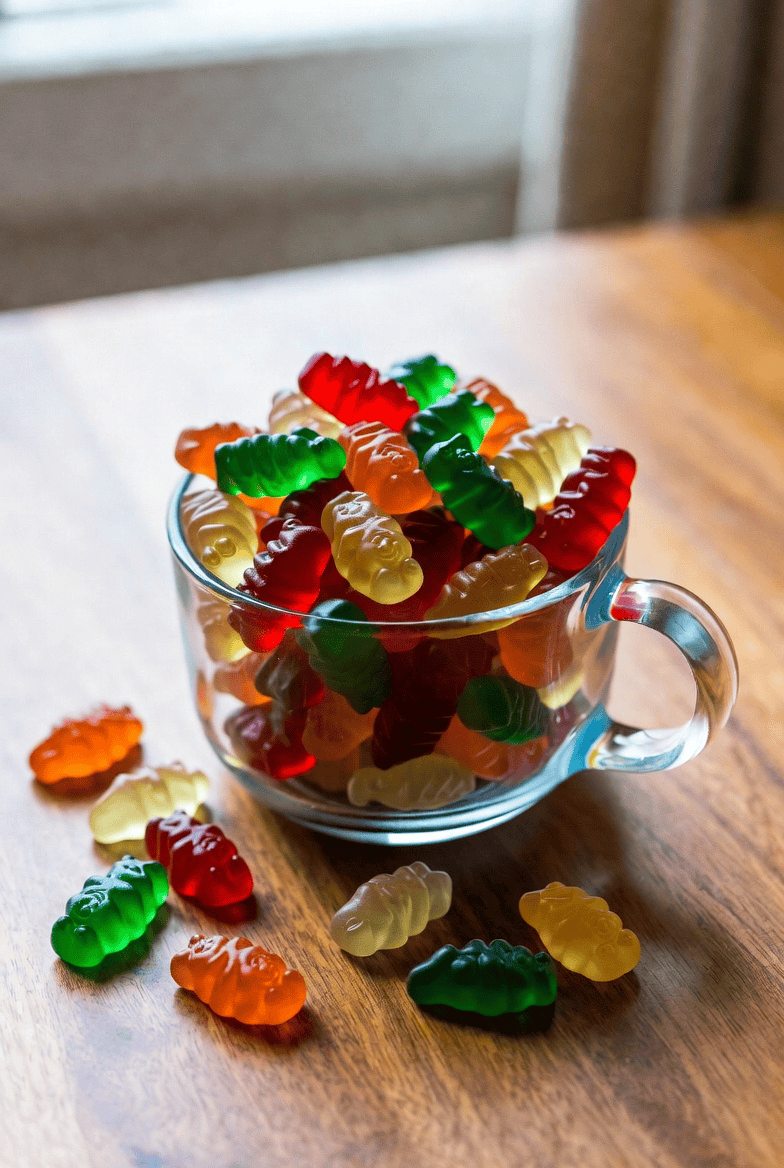
Haribo is one of the oldest and most recognized gummy candy brands in the world, founded in Bonn, Germany in 1920. Their classic Gold Bears have been a staple of candy aisles for over a century. So when the company launched a sugar free version — marketed toward health-conscious consumers and diabetics — it seemed like a smart move.[sinofudetechnology]
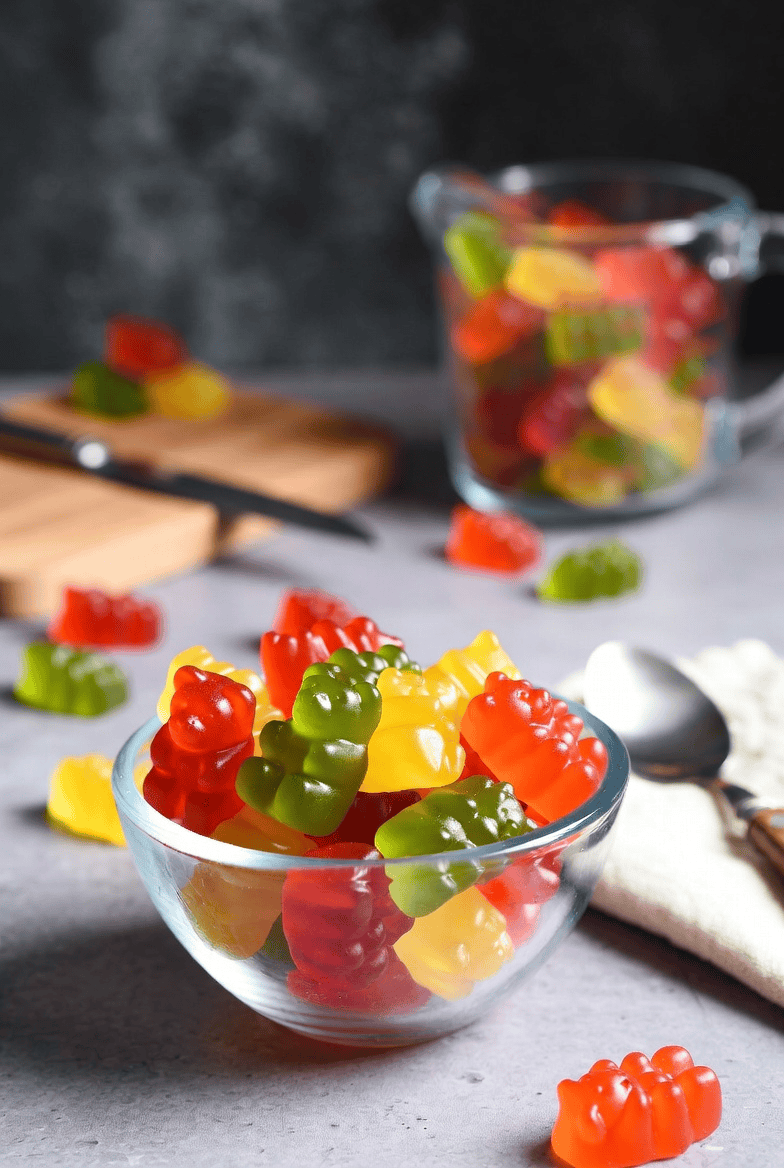
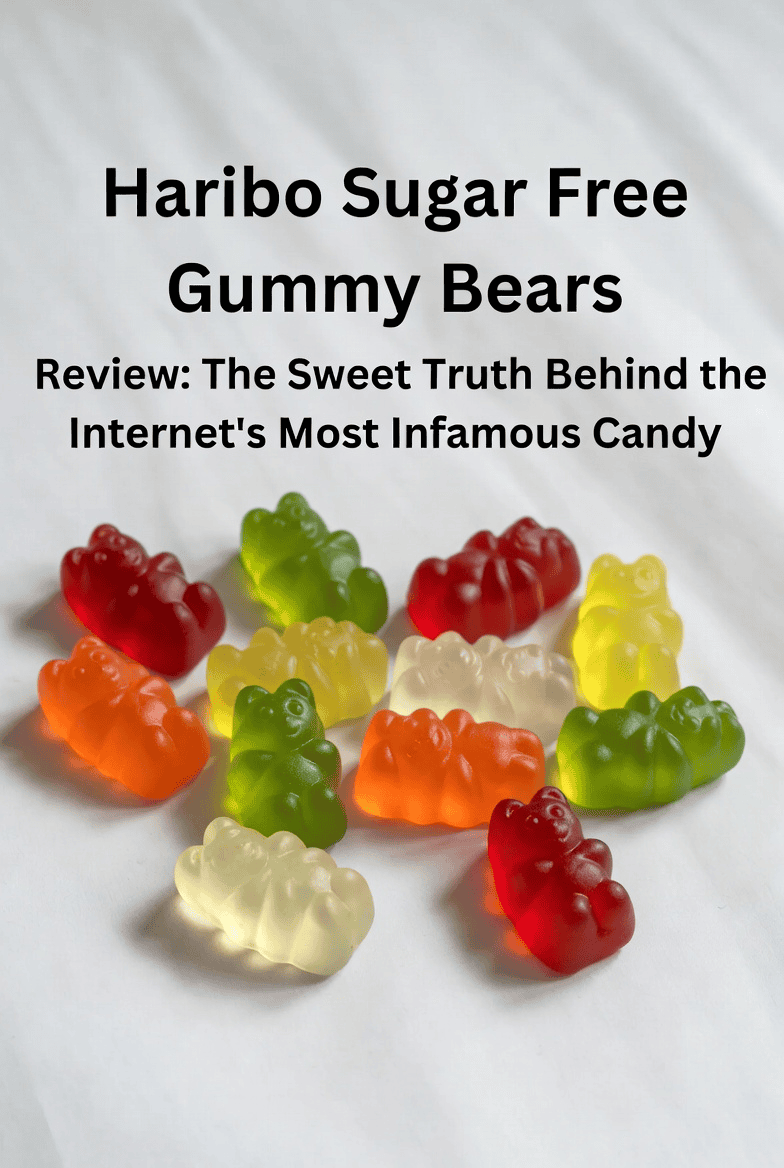
The sugar free gummy bears look identical to the original. Same bear shape, same bright colors, same five flavors (strawberry, raspberry, pineapple, lemon, orange). But the ingredient list tells a very different story.
The key difference: the sweetener.
Standard Haribo Gold Bears use glucose syrup and sugar. The sugar free version replaces those with lycasin — a hydrogenated glucose syrup whose primary component is maltitol, a sugar alcohol derived from plant starch.[theatlantic]
Maltitol is appealing to manufacturers for a few reasons:
-
It’s nearly as sweet as table sugar (about 90% as sweet)
-
It has roughly half the calories of sugar
-
It doesn’t cause tooth decay
-
It has a lower glycemic index than sucrose[medshun]
What Haribo didn’t adequately warn consumers about — or at least, didn’t warn them loudly enough — was what happens when the human digestive system encounters large quantities of maltitol.
The Science of the Laxative Effect: What Actually Happens in Your Gut
This is the part most reviews skip, or reduce to “it gives you diarrhea, don’t eat too many.” The reality is more specific, and understanding it helps you make a genuinely informed decision about whether sugar free gummy bears are right for you.
When you eat sugar, your small intestine absorbs it efficiently. Maltitol is structurally similar to sugar, but your gut handles it very differently — it absorbs only partially through the intestinal wall. The portion that doesn’t get absorbed moves into the large intestine intact, where it sits until gut bacteria begin fermenting it.[reddit]
That fermentation process produces:
-
Gas (hence the bloating and flatulence)
-
Osmotic pressure that draws water into the colon
-
The urgency — and sometimes violent urgency — that made Haribo sugar free gummy bears internet-famous[theatlantic]
According to a digestive tolerance study published on PubMed, diarrhea associated with maltitol consumption appeared primarily at very high doses — the mean tolerance dose was around 92g before significant symptoms appeared in test subjects. The problem, of course, is that a 5-pound bag of gummy bears contains a lot of lycasin, and gummy bears are not a food known for encouraging portion control.[pubmed.ncbi.nlm.nih]
The FDA classifies lycasin as a safe food additive and suggests a maximum of 100g per day. But the laxative threshold for maltitol is:[medshun]
-
25g for children
-
40g for adults[medshun]
That’s not a massive amount. About 15 to 20 sugar free gummy bears is enough to put some people uncomfortably close to that threshold — especially if they’re eating them as a snack rather than one at a time.[medshun]
| cURL Too many subrequests. | Digestive Impact | Laxative Threshold | cURL Too many subrequests. |
|---|---|---|---|
| Maltitol (lycasin) | Partial gut absorption; ferments in colon | ~40g for adults | ~90% |
| Sorbitol | Poor gut absorption; strong osmotic effect | ~20g | ~60% |
| cURL Too many subrequests. | Well-tolerated at low doses; nausea at high doses | ~50g+ | ~70% |
| Allulose | Minimal digestive impact | Not well-defined | ~70% |
| Stevia | No digestive impact | N/A | ~200–300× sweeter |
sinofudetechnology+2
The research from a peer-reviewed study in Nutrients also confirmed that sugar alcohol-sweetened gummy candies do produce measurable differences in glycemic response — which matters for the diabetic audience who often seeks them out.[mdpi]
A Real Look at Consumer Reviews: The Good, the Bad, and the Legendary
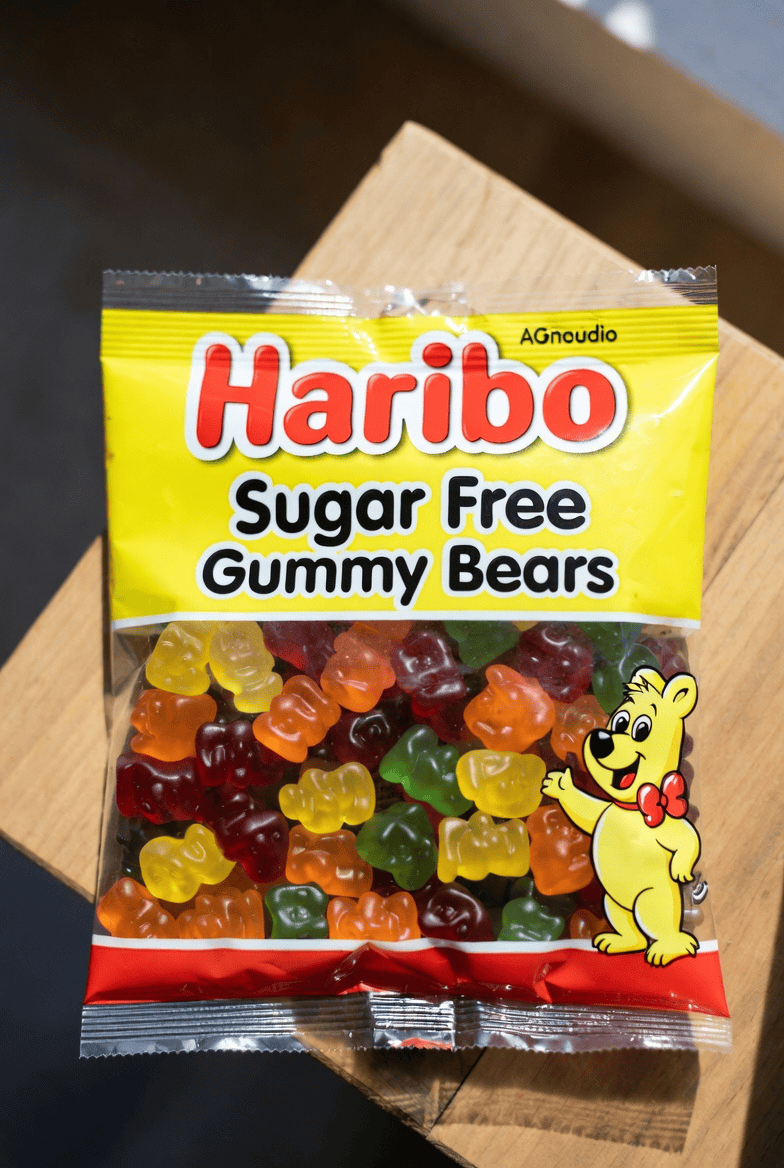
No review of Haribo sugar free gummy bears is complete without addressing the Amazon reviews directly. They became one of the most shared pieces of internet lore — not because people invented stories, but because the stories were real, detailed, and often genuinely harrowing.
What reviewers actually said
The positive minority agreed on a few things: the taste is excellent — almost indistinguishable from regular Haribo Gold Bears. The texture is right. The flavors are clean and fruity. If you ate three or four, you’d have a delicious, guiltless snack.[reddit]
The problem is that virtually nobody ate three or four.
Amazon reviewers described the aftermath in memorable terms. Words like “intestinal power washing”, “streams of fire”, “Dante’s Inferno”, e “Upside-down volcano” were used — not as hyperbole, but as sincere attempts to describe a physiological experience that caught them entirely off guard.[mashed]
One widely circulated review described the writer eating a serving during a work break, returning to their desk feeling fine, and then spending the better part of the afternoon in the nearest bathroom. Another described purchasing a 5-pound bag as a “smart diet choice” and regretting it within six hours.reddit+1
The reviews became so numerous, so detailed, and so darkly comedic that Forbes covered the phenomenon in 2016, and the product was featured across major media outlets. By that point, the damage to Haribo’s brand — at least in the US — was already done.[forbes]
The Amazon star distribution
Consumer feedback skewed heavily toward extreme ratings — either 5 stars (for taste) or 1 star (for digestive consequences). Most aggregate scores landed around 3 stars, which is a statistical average that almost no individual reviewer would actually endorse.[sinofudetechnology]
Why Haribo Discontinued Sugar Free Gummy Bears in the US
Haribo launched the sugar free gummy bears in the American market around 2013. Initial sales were strong — the bears filled a real gap in the market for low-sugar confectionery, and diabetics in particular were enthusiastic early adopters.[thedonutwhole]
The reviews started accumulating. Slowly at first, then in an avalanche. By 2014, the product had become as famous for its side effects as for its taste. The Atlantic covered the ingredient story in early 2014, bringing mainstream media attention to what had previously been a niche Amazon phenomenon.[theatlantic]
Haribo did include a warning label on the packaging noting that “excessive consumption may have a laxative effect” — a standard disclosure required for products with high sugar alcohol content. But the warning was small, and the serving size guidance was easy to ignore.[medshun]
Within months of the viral reviews, Haribo pulled the sugar free gummy bears from US and Canadian shelves. The company discontinued their entire sugar free line in North America.[thedonutwhole]
| Year | Event |
|---|---|
| 2013 | Haribo launches sugar free gummy bears in the US market |
| 2013–2014 | Amazon reviews begin accumulating, describing severe digestive side effects |
| January 2014 | The Atlantic publishes investigation into lycasin and maltitol |
| October 2016 | Forbes covers the review phenomenon |
| ~2014–2015 | Haribo discontinues sugar free line in the US and Canada |
| Post-2015 | Product remains available in select European markets |
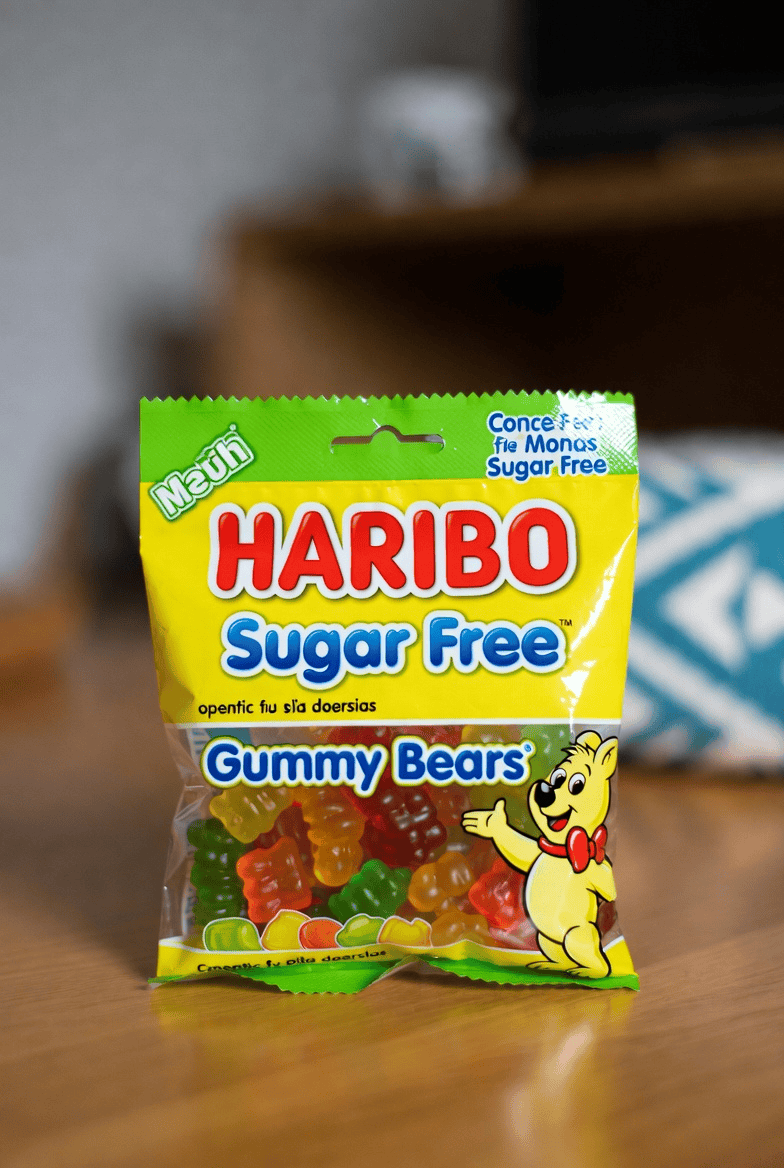
It’s worth noting: the decision was driven entirely by consumer and media pressure, not by a regulatory finding or safety recall. The FDA never classified the product as unsafe. The product simply generated more bad press than it was worth to continue selling.
Who Should (and Shouldn’t) Eat Sugar Free Gummy Bears
This is the part of the review that’s usually missing. Most articles either say “they’re bad for you, don’t eat them” or bury the nuance under a pile of affiliate product recommendations. The reality is more useful.
Sugar free gummy bears — whether Haribo’s or another brand’s — are appropriate for:
-
Diabetics who need to manage blood glucose response and want an occasional sweet treat. The lower glycemic impact is genuine, not marketing. Just respect the serving size.
-
Calorie-conscious consumers who want to reduce sugar intake. Maltitol has roughly half the calories of sugar — relevant if you’re tracking macros.
-
People on keto diets (with some caveats — maltitol does raise blood sugar more than other sugar alcohols, so it’s worth checking ketone levels personally).
Sugar free gummy bears are not appropriate for:
-
Anyone with Irritable Bowel Syndrome (IBS) or existing sensitivity to FODMAPs. Sugar alcohols are a known IBS trigger and can cause significant distress at quantities well below the general tolerance threshold.[pmc.ncbi.nlm.nih]
-
Children, where the laxative threshold is as low as 25g — very easy to reach.[medshun]
-
People who can’t reliably moderate their consumption. This isn’t a character flaw — gummy bears are engineered to be eaten in quantity, and the serving size warnings don’t match the way most people eat candy.
How Haribo Sugar Free Compare to Current Alternatives
Since Haribo’s sugar free line was pulled from the US market, a new generation of low-sugar and no-added-sugar gummy bears has emerged. Some use maltitol (same issue, different label). Others have developed genuinely better formulations.
| Marca | cURL Too many subrequests. | Sugar (per serving) | Gut-Friendly? | Vegan? |
|---|---|---|---|---|
| Haribo Sugar Free | Maltitol (lycasin) | 0g added sugar | Risky in quantity | No |
| SmartSweets | Allulose + monk fruit + stevia | 3g total sugar | Generally yes | Sì |
| Albanese Sugar Free | Maltitol | 0g added sugar | Moderate — same risk as Haribo | No |
| Project 7 Probiotic | Soluble corn fiber + stevia | Basso | Better tolerated | No |
sinofudetechnology+3
SmartSweets deserves particular attention here because it solved the core problem that sank Haribo’s sugar free line. By replacing sugar alcohols entirely with allulose, monk fruit extract, and stevia, SmartSweets delivers a gummy bear with about 3 grams of total sugar per bag — and no osmotic laxative effect. The texture is slightly firmer than classic gummy bears, but the ingredient trade-off is significant for anyone who had an experience with the Haribo version.[sinofudetechnology]
According to Supply Side Journal’s analysis of gelling agents for confectionery, the texture challenge in sugar free gummies comes partly from removing the structural contribution that sugar provides — it’s not just sweetness, it’s body and viscosity. That’s why many maltitol-free alternatives feel slightly different in the mouth.[supplysidesj]
For a deeper technical breakdown of sugar substitutes and their gastrointestinal effects, the peer-reviewed article Gastrointestinal Disturbances Associated with the Consumption of Sugar Alcohols (PMC) is worth reading in full.[pmc.ncbi.nlm.nih]
Industry Applications: Sugar Free Gummies Beyond the Candy Aisle
The Haribo story is a cautionary tale, but it didn’t slow down the broader sugar free confectionery market — if anything, it accelerated the push to develop better formulations. The commercial applications for low-sugar gummy formats have expanded significantly.
Pharmaceutical and nutraceutical delivery is perhaps the fastest-growing segment. Gummy vitamins, sleep gummies, probiotic gummies, and CBD gummies all use sugar free or reduced-sugar formats to serve health-conscious consumers who still want a palatable delivery mechanism. The challenge here is that some active ingredients — melatonin, for example — interact poorly with certain sweeteners at high temperatures, requiring careful formulation work.[summitrxusa]
Diabetic-friendly confectionery remains a significant market segment that Haribo’s failure didn’t eliminate — it redirected demand toward brands that had done the formulation work more carefully. The global gummy supplements market is projected to reach $35.56 billion by 2034, growing at a CAGR of 13.16%, with low-sugar and functional formats driving much of that growth.[fortunebusinessinsights]
Sports nutrition has also adopted reduced-sugar gummies for pre-workout carbohydrate delivery — though in this application, the goal is usually a moderate glycemic response rather than zero glycemic impact, which changes the sweetener calculus.
Future Trends: What’s Replacing Maltitol and Where the Market Is Going
The Haribo episode effectively served as a public stress test for maltitol-based products, and the market has been course-correcting ever since.
Allulose is emerging as the most promising replacement. It’s a rare sugar that occurs naturally in small quantities in figs and raisins, and it behaves like sugar in cooking and texture development — without being metabolized in the same way. The FDA has ruled that allulose does not need to be counted toward total or added sugar on nutrition labels in the US. Gut tolerance is dramatically better than maltitol at equivalent quantities.[sinofudetechnology]
Monk fruit extract and stevia blends are being refined to reduce the bitter aftertaste that plagued early generations of these sweeteners. Modern blending techniques can produce a cleaner sweetness profile that comes closer to matching sugar without the polyol laxative risk.
Fiber-based sweeteners — particularly soluble corn fiber and chicory root inulin — add sweetness, body, and prebiotic fiber content simultaneously. SmartSweets uses this approach, and several competitors are following the same direction. The appeal is obvious: you get texture, sweetness, and a functional health claim in one ingredient.[sinofudetechnology]
The broader research literature on functional gummy candies confirms this trajectory. A 2023 peer-reviewed study in Foods (available through MDPI’s current innovations in functional gummy candies) identifies natural sweetener combinations and fiber integration as the primary R&D focus for the confectionery category — a direct response to the consumer backlash against polyol-heavy formulations.[mdpi]
Sustainability in gelatin sourcing is also entering the conversation. As vegan and plant-based diets grow, pressure to replace animal-derived gelatin with pectin or starch is intensifying — and these alternatives often pair better with non-maltitol sweetener systems anyway.[futuremarketinsights]
FAQ: What People Actually Want to Know
Are Haribo sugar free gummy bears still available?
In the US and Canada, no. Haribo discontinued their sugar free line in North America due to the viral negative reviews and media coverage around 2014–2015. They remain available in some European markets, where the product never generated the same media firestorm.[thedonutwhole]
How many can you eat before experiencing side effects?
The laxative threshold for maltitol is approximately 40g for adults and 25g for children. Depending on the brand and formulation, this translates to roughly 15–25 gummy bears. Some individuals with gut sensitivity will experience effects at much lower quantities. The safest approach: don’t eat them on an empty stomach, and stop before you’ve finished a third of the bag.[medshun]
Are they safe for diabetics?
Maltitol has a lower glycemic index than sugar, but it still raises blood glucose — more than other sugar alcohols like erythritol or xylitol. For diabetics, the clinical study in Gels suggests sugar alcohol-based gummies do improve glycemic response compared to standard sugar candy. But maltitol is not zero-impact, and individual responses vary. Monitor your levels personally.[mdpi]
What are the best alternatives available now?
SmartSweets Fruity Gummy Bears are the most commonly recommended alternative for people avoiding both sugar and digestive disruption. Albanese sugar free gummies are widely available but still use maltitol. For the cleanest formulation with the lowest gut risk, SmartSweets or monk-fruit-sweetened alternatives are the current leaders.isitfree+1
Did Haribo issue a recall?
No. The product was voluntarily discontinued, not recalled. No regulatory action was taken.[thedonutwhole]
Authority Sources and Further Reading
For anyone researching this topic in depth — whether for dietary reasons, product development, or general curiosity — these are the most substantive sources available:
-
The Atlantic: What’s in Those Haribo Gummy Bears? — The original mainstream media investigation that brought the lycasin issue to a wide audience.[theatlantic]
-
Forbes: That Time Gummy Bears Gave Everyone Diarrhea — Detailed journalistic coverage of the Amazon review phenomenon and the science behind it. [forbes]
-
PubMed: A Digestive Tolerance Study of Maltitol After Occasional and Regular Consumption — Peer-reviewed clinical research establishing the tolerance thresholds for maltitol.[pubmed.ncbi.nlm.nih]
-
PMC: Gastrointestinal Disturbances Associated with Sugar Alcohol Consumption — Comprehensive academic review of how polyols affect the gut, including maltitol and sorbitol. [pmc.ncbi.nlm.nih]
-
MDPI: Current Innovations in the Development of Functional Gummy Candies — Peer-reviewed research on the next generation of gummy formulations, including natural sweeteners and fiber integration.[mdpi]
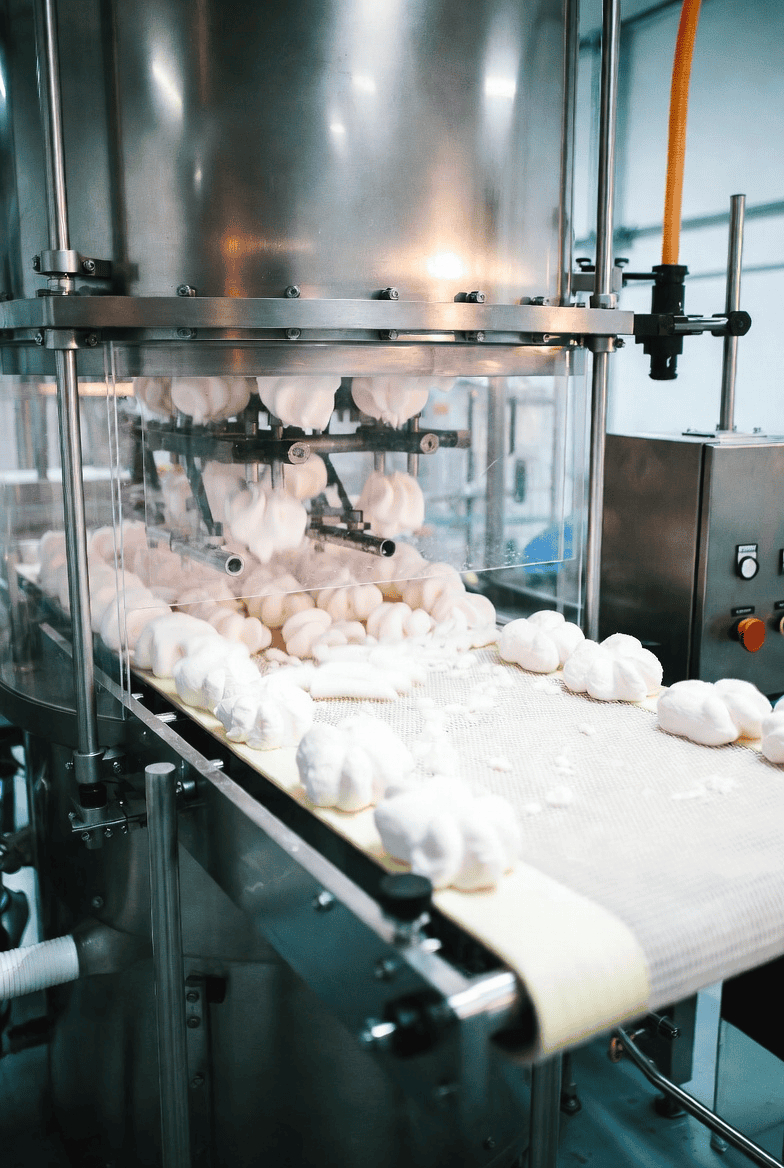
For commercial-scale production of sugar free or reduced-sugar gummy confectionery — including equipment designed for precise temperature control and alternative sweetener handling — the JY Machine Tech Gummy Candy Production Line offers integrated solutions from mixing to packaging, purpose-built for both standard and functional gummy formulations.