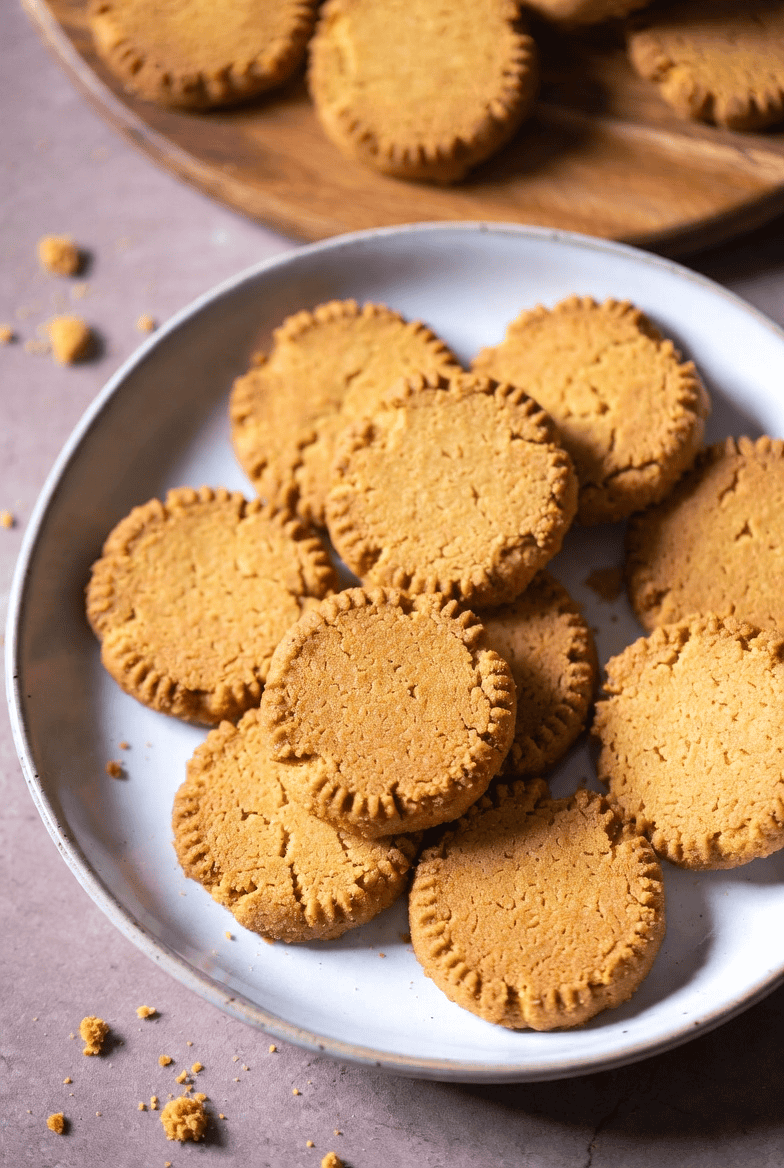
Decoding Precision: A Complete Guide to Depositing Machine Technology
Introduction: Going Beyond the Basics
A depositing machine does much more than just place product. It’s a precision system designed to handle fluids and mixtures. It doses exact amounts of product with incredible accuracy, over and over again. This performance forms the backbone of consistent products, cost control, and efficient production.
This guide goes deeper than basic definitions. We’ll break down the mechanical, electronic, and software principles that control how well a depositor works. Understanding these systems is essential for choosing, operating, and maintaining modern production equipment.
Our technical analysis covers these key areas:
-
The basic hardware and parts
-
A detailed comparison of core depositing methods
-
The control systems and servo technology that make precision possible
-
How product flow properties affect machine performance
Success in automated food production depends on mastering volume accuracy and repeatability. It also requires understanding the control systems that govern them. This guide provides the technical knowledge you need to achieve that mastery.
Core Machine Parts
To understand how a depositing machine achieves precision, we need to examine its hardware foundation. Each part handles a specific aspect of the product’s journey from storage tank to target. They work together as a synchronized, clean system.
Hopper and Mixing
The hopper stores the main product supply. Hopper design matters greatly. Cone shapes help gravity feed work consistently. Jacketed hoppers use heat transfer to warm or cool products, keeping viscosity at the right level.
Mixing systems inside the hopper keep the product uniform. A scraped-surface mixer prevents product from sticking to hopper walls. Paddle designs stop solids and liquids from separating. This ensures every deposit stays consistent.
Head and Manifold
The depositing head, or manifold, is the final distribution point before the nozzle. It’s made from materials like 316L stainless steel for strength and cleanliness. Its internal shape equalizes pressure, ensuring each nozzle gets identical product volume.
Clean design is crucial. Modern manifolds allow tool-free taking apart. This enables quick and thorough cleaning to prevent contamination and bacterial growth.

Nozzles and Cut-Off
Nozzles shape and direct product flow. The nozzle choice directly affects the final product’s shape. Options range from single-port to multi-port, ribbon, or injection styles.
Nozzle design also prevents problems like “tailing.” This happens when a string of product remains after the deposit. Clean cut-off mechanics are essential for a perfect finish.
Conveyor and Indexing
The conveyor and its indexing system provide motion control. They synchronize the container with the depositing head.
Indexing mechanisms include pin-stops or sensor-based systems. These ensure precise container placement. The depositor’s control system must perfectly time its cycle with conveyor movement. This guarantees on-target deposits every time.
Table 1: Key Machine Components
|
Componente
|
Common Materials & Design Notes
|
|
|
Hopper
|
Product reservoir. Principles: Gravity feed, maintaining product consistency. May be jacketed for heating/cooling (thermal transfer).
|
304/316L Stainless Steel. Sanitary welds, conical shape to promote flow.
|
|
Agitator
|
Maintains product homogeneity, prevents separation of solids/liquids. Principles: Shear mixing, vortex prevention.
|
Scraped-surface or paddle designs. Variable speed control.
|
|
Depositing Mechanism
|
The “heart” of the machine; responsible for volumetric accuracy. (e.g., Piston, Pump). Principles: Positive displacement, fluid dynamics.
|
Delrin, Stainless Steel, PEEK. Varies by mechanism type.
|
|
cURL Too many subrequests. cURL Too many subrequests.
|
cURL Too many subrequests.
|
cURL Too many subrequests.
|
|
cURL Too many subrequests.cURL Too many subrequests.cURL Too many subrequests.
|
cURL Too many subrequests.
|
cURL Too many subrequests.
|
|
cURL Too many subrequests. Conveyor
|
cURL Too many subrequests.
|
cURL Too many subrequests.
|
cURL Too many subrequests.
cURL Too many subrequests.
cURL Too many subrequests.
cURL Too many subrequests.
cURL Too many subrequests.
cURL Too many subrequests.
cURL Too many subrequests.
cURL Too many subrequests.
cURL Too many subrequests.
cURL Too many subrequests.
cURL Too many subrequests.
cURL Too many subrequests.
cURL Too many subrequests.
cURL Too many subrequests.
cURL Too many subrequests.
cURL Too many subrequests.
|
cURL Too many subrequests.
|
cURL Too many subrequests.
|
cURL Too many subrequests.
|
Precisione
|
cURL Too many subrequests.
|
cURL Too many subrequests.
|
Best For…
|
|
cURL Too many subrequests.
|
cURL Too many subrequests.
|
1 – 1,000,000+
|
cURL Too many subrequests.
|
cURL Too many subrequests.
|
cURL Too many subrequests.
|
cURL Too many subrequests.
|
|
cURL Too many subrequests.
|
cURL Too many subrequests.
|
100 – 200,000
|
cURL Too many subrequests.
|
cURL Too many subrequests.
|
Basso
|
Sauces, creams, gels, purees, chocolate.
|
|
Lobe Pump
|
Positive displacement via non-contacting lobes.
|
500 – 500,000
|
cURL Too many subrequests.
|
Good (soft solids)
|
Molto basso
|
Delicate products, fruit fillings, aerated creams, curds.
|
|
Time-Pressure
|
Timed flow from a pressurized vessel.
|
1 – 5,000
|
Moderate (±3-5%)
|
Very Poor (liquids only)
|
Variable
|
Water, oils, thin glazes, brines.
|
cURL Too many subrequests.
The mechanical parts provide the force. But modern electronics and software provide the intelligence. The combination of mechanics and control systems—called mechatronics—elevates a good depositor to a great one. This enables speed, flexibility, and unmatched precision.
The PLC’s Role
The Programmable Logic Controller (PLC) is the central processing unit of the depositor. It acts like the conductor of an orchestra. It executes pre-programmed logic to control every action in perfect sequence.
The PLC reads inputs from sensors (like container presence and safety guards). It sends output commands to motors, valves, and actuators. It ensures the conveyor, depositing mechanism, and nozzle cut-off are all perfectly synchronized for every cycle.
The HMI Dashboard
The Human-Machine Interface (HMI) is the operator’s dashboard. It’s typically a rugged touchscreen. This is where the power of the PLC becomes accessible.
Through the HMI, operators select recipes and create new ones. They can fine-tune critical settings like deposit volume and speed. A well-designed user interface is crucial for reducing operator error. It speeds up changeovers and provides clear diagnostic information and alarms.

The Servo Motor Revolution
The biggest leap in depositor performance came from widespread adoption of servo motors. Unlike a standard AC motor, a servo motor includes an encoder. This provides constant feedback to the controller, reporting its exact position, speed, and force.
This feedback loop enables control that’s impossible with simpler motors. In a depositing machine, a servo provides three critical advantages.
First is precise positioning. A servo can control the exact position of a piston or the precise start and stop angle of a pump. This directly translates to volume accuracy.
Second is speed and acceleration profiling. A servo can execute a complex “deposit profile.” It starts the deposit slowly to prevent splashing. It accelerates through the middle of the cycle for speed. Then it slows smoothly to ensure a clean cut-off without tailing.
Third is force control. A servo can maintain consistent force, even if the product thickness changes slightly. This ensures consistent flow rate and deposit volume.
The benefits of servo control are clear. You get higher accuracy, faster cycle speeds, and reduced stress on the product. You can also change recipes and deposit profiles instantly through the HMI.
System Integration and Industry 4.0
Modern depositors aren’t standalone units. They’re designed for integration into fully automated production lines. Using communication protocols like OPC-UA or Ethernet/IP, the depositor can communicate with upstream mixers and downstream ovens, freezers, or packaging machines. This data exchange is a cornerstone of Industry 4.0. It enables smarter, more responsive manufacturing.
cURL Too many subrequests.
A depositing machine is only as good as its ability to handle the specific product being run. Understanding rheology—the study of how matter flows—is essential. This connects machine technology to the scientific properties of the food product. This knowledge is key to diagnosing problems and choosing the correct machine setup.
Understanding Viscosity
Viscosity measures a fluid’s resistance to flow. A depositor designed for low-viscosity water will fail to move high-viscosity caramel. The product’s viscosity, measured in centipoise (cP), is the first and most critical factor in selecting the right depositing mechanism.
Challenges with Solid Pieces
Depositing products containing solids presents a significant mechanical challenge. Examples include fruit pieces, nuts, vegetable chunks, or chocolate chips. The passageways within the depositor must be large enough. They need to allow pieces to pass through without being crushed or causing blockage. This is where a piston depositor with large ports often outperforms a gear pump.
Shear Sensitivity
Some products are shear sensitive. This means their structure and texture can be permanently damaged by mechanical force. Whipped cream can collapse. Emulsions can break. Aerated batters can lose their volume if subjected to high shear action from certain pumps. For these applications, a very low-shear mechanism is required. Options like a lobe pump or a gently-acting piston preserve product quality.
Temperature Sensitivity
Many products must be held at a specific temperature to maintain their ideal depositing thickness. Chocolate, cheese sauces, and some fats will solidify if they cool down. Other gels may become too thin if they get warm. Jacketed hoppers, heated manifolds, and traced pipework are essential features. These manage temperature-sensitive cURL Too many subrequests.cURL Too many subrequests.
cURL Too many subrequests.
cURL Too many subrequests. cURL Too many subrequests. cURL Too many subrequests.
cURL Too many subrequests.
|
Sintomo / Guasto
|
cURL Too many subrequests.
|
cURL Too many subrequests.
|
|
cURL Too many subrequests.
|
1. Air pockets in the product hopper. <br> 2. Worn piston seals or pump components. <br> 3. Inconsistent product viscosity (temperature or mix fluctuations).
|
1. Check hopper level; ensure product is de-aerated. <br> 2. Perform maintenance check; replace worn seals/O-rings. <br> 3. Verify hopper temperature; check upstream mixing process.
|
|
cURL Too many subrequests.
|
1. La taglio dell'ugello non è pulito. <br> 2. Il prodotto è troppo viscoso o appiccicoso per il design dell'ugello. <br> 3. Il parametro di 'risucchio' del servo è impostato in modo errato.
|
1. Use a positive shut-off nozzle or a diaphragm cut-off. <br> 2. Test different nozzle designs; consider a heated nozzle. <br> 3. Adjust the suck-back/retract setting in the HMI to be slightly more aggressive.
|
|
cURL Too many subrequests.
|
1. Depositing mechanism is too high-shear (e.g., gear pump). <br> 2. Passageways (manifold, nozzle) are too narrow.
|
1. Use a low-shear mechanism like a piston or lobe pump. <br> 2. Specify a “full-bore” or large-aperture manifold and nozzle design.
|
|
cURL Too many subrequests.
|
1. L'indicizzazione del nastro trasportatore è fuori sync con la testa di deposito. <br> 2. Il sensore del contenitore è sporco o mal allineato. <br> 3. Le guide meccaniche sono mal allineate.
|
1. Re-teach the deposit position in the HMI. Verify PLC timing. <br> 2. Clean the photo-eye sensor and check its alignment. <br> 3. Check and adjust the physical conveyor guide rails.
|
cURL Too many subrequests.
cURL Too many subrequests.
cURL Too many subrequests.
cURL Too many subrequests.
- cURL Too many subrequests. https://www.sciencedirect.com/topics/engineering/piston-pump
- cURL Too many subrequests. https://apps.dtic.mil/sti/trecms/pdf/AD1169714.pdf
- cURL Too many subrequests. https://www.science.gov/topicpages/h/hydraulic+piston+pump.html
- cURL Too many subrequests. https://journals.plos.org/plosone/article?id=10.1371/journal.pone.0331371
- cURL Too many subrequests. https://www.researchgate.net/publication/228890741_Advanced_Control_of_Industrial_Pump_Systems
- cURL Too many subrequests. https://control.com/technical-articles/how-to-servo-motor-control-concepts-and-programming/
- cURL Too many subrequests. https://www.chemengonline.com/plc-equipped-pumping-system-enables-enhanced-control/
- cURL Too many subrequests. https://www.powermotiontech.com/sensors-software/controls-instrumentation/article/21887903/hydraulic-servo-control-using-a-plc-part-2
- cURL Too many subrequests. https://www.pumpsandsystems.com/what-consider-gear-pump-selection
- cURL Too many subrequests. https://www.plantautomation-technology.com/articles/innovations-in-food-processing-equipment