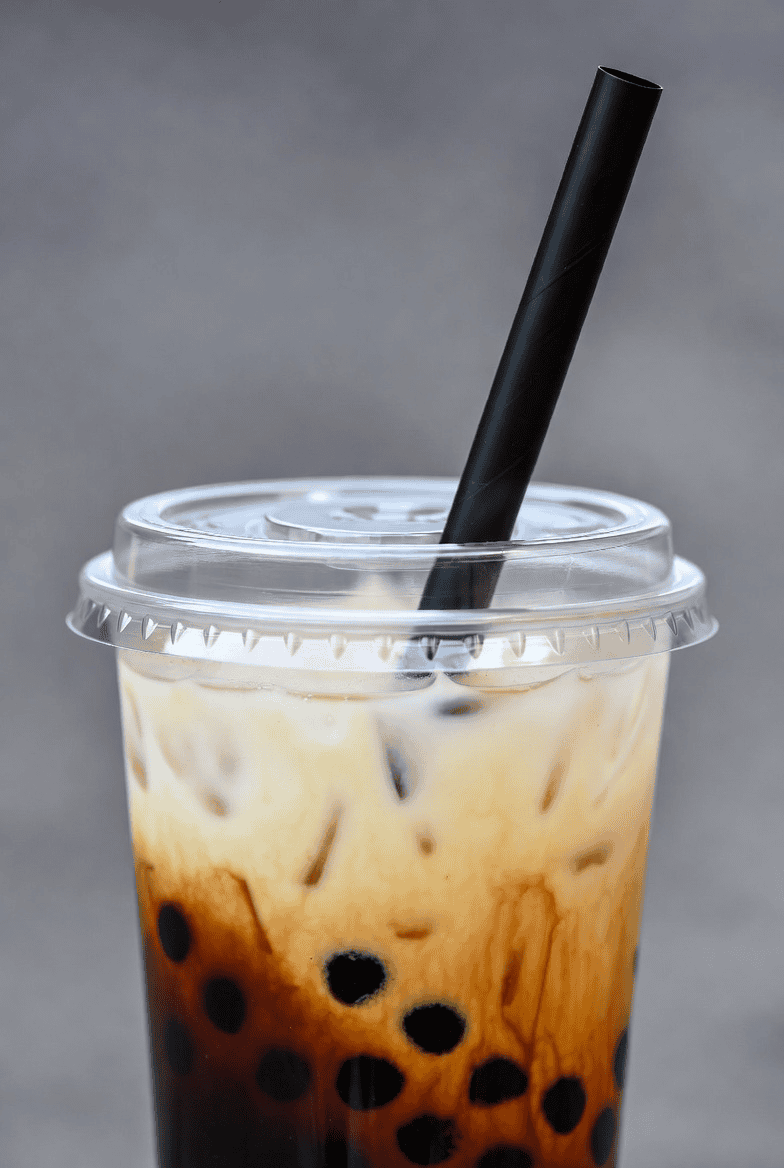
Si vous avez déjà commandé un thé aux perles et aperçu ces petites perles translucides et molles flottant à côté des plus foncées perles de tapioca, il y a de fortes chances que vous regardiez des agar boba. Elles ressemblent presque à de minuscules billes de verre — cristallines, légèrement fermes, et honnêtement assez hypnotisantes. Mais la plupart des gens ne savent pas ce qu’elles sont réellement, comment elles sont fabriquées, ou pourquoi elles deviennent discrètement l’un des toppings les plus populaires dans la scène des boissons mondiales.
Le présent le guide vous accompagne à travers tout. De la science de l’agar à une recette étape par étape que vous pouvez essayer chez vous ce soir, plus un aperçu de l’avenir du marché de l’agar boba et comment les cuisines commerciales l’adoptent à grande échelle.
Qu’est-ce que l’agar boba ? Comprendre les bases

L’agar boba — parfois appelée boba cristal ou perle blanche — est un type de perle de boba fabriquée à partir de cURL Too many subrequests., un agent gélifiant naturel dérivé des algues rouges (algues marines). Contrairement aux perles de tapioca traditionnelles, qui sont opaques, moelleuses et faites à partir de fécule de manioc, l’agar boba est translucide, légèrement plus ferme, et possède une texture que les scientifiques alimentaires décrivent comme un « claquement » net plutôt qu’une mastication dense.sinofudetechnology+1
Le nom « boba cristal » vient de son apparence vitrée, transparente. Lorsque vous en déposez quelques-unes dans un verre de thé aux fruits ou au lait ou de thé au lait, elles captent la lumière d’une manière que les perles de tapioca ne font tout simplement pas. C’est à la fois visuel et fonctionnel.
Voici une comparaison rapide pour vous aider à vous orienter :
| Fonctionnalité | Agar Boba | Tapioca Boba | Boba éclatant |
|---|---|---|---|
| Ingrédient de base | Agar-agar (algues marines) | Fécule de tapioca (manioc) | Alginate de sodium (algues marines) |
| Texture | Gelée ferme, claquement léger | Dense, moelleux, élastique | Membrane fine, centre liquide |
| Apparence | Translucide / cristal | Opaque, sombre (souvent enrobé de sucre brun) | Semi-transparent, coloré |
| Végétalien | ✅ Oui | ✅ Oui | ✅ Oui |
| Niveau de calories | Plus bas | Plus élevé | Modéré |
| Saveur | Neutre ou infusé | Léger / sucre brun | Explosion de saveur fruitée |
| Utilisation typique | Thé au lait, thé aux fruits, desserts | Thé à bulles classique | Desserts, salons de thé modernes |
Sources :oreateai+3
Ce qui rend le boba à l'agar vraiment intéressant, c'est que il est 100% à base de plantes. L'agar-agar est utilisé dans la cuisine asiatique depuis des siècles — pensez à la gelée kanten japonaise, aux desserts d'Asie du Sud-Est, aux plats proches de la gelée d'herbe taïwanaise. Le passage à son utilisation comme perle de boba est récent, mais l'ingrédient lui-même est ancien.chinasichuanfood+1
La science derrière l'agar : pourquoi il fait d'excellents boba
Comprendre comment l'agar se comporte vous aide à éviter les erreurs les plus courantes lors de la fabrication de boba à l'agar à la maison. Ce n’est pas un cours de chimie — mais quelques bases changeront vraiment la façon dont vos perles se présentent.
L'agar-agar est un polysaccharide extrait de certaines espèces d'algues rouges, principalement Gelidium et Gracilaria. Lorsqu'il se dissout dans de l'eau chaude et refroidit, il forme un gel. Cela, la plupart des gens le savent. Ce qui est moins évident, c'est que :
-
L'agar se solidifie à environ 32–40°C (90–104°F) mais ne fond pas à nouveau jusqu'à ce que la température dépasse 85–95°C. C'est complètement différent de la gélatine, qui devient molle à température corporelle.[sinofudetechnology]
-
le force de gélification de l'agar varie d'environ 600 à 1 200 g/cm², selon la qualité et la concentration. Un agar de meilleure qualité donne un gel plus ferme, plus clair et avec une meilleure transparence visuelle.[sinofudetechnology]
-
Parce que l'agar se solidifie si rapidement par rapport à la gélatine ou à la pectine, il réduit considérablement votre temps de préparation — les perles peuvent être prêtes en 15–20 minutes, contre plusieurs heures pour certaines alternatives à base de gélatine.[sinofudetechnology]
Note pratique : Ce comportement à prise rapide est idéal pour les cuisiniers amateurs mais nécessite de la vigilance. Une fois que votre mélange d'agar commence à refroidir en dessous d'environ 45°C, il commence à épaissir de manière notable. Versez-le rapidement dans des moules sinon vos perles auront une surface irrégulière.
Les propriétés de gélification expliquent aussi pourquoi l'agar boba résiste dans les boissons froides sans devenir mou ou pâteux — ce que vous apprécierez immédiatement si vous avez déjà laissé des desserts à la gélatine dans une voiture chaude.
Agar Boba vs. Boba traditionnel : une comparaison concrète
Les deux ont leur place. Aucun n'est strictement « meilleur » — cela dépend de ce que la boisson exige et de l'expérience que vous souhaitez offrir.
| Point de comparaison | Agar Boba | Boba de tapioca classique |
|---|---|---|
| Masticité | Croustillant léger, pas dense | Très moelleux, ressemblant à du gummy |
| Temps de préparation | ~15–20 minutes | 30–60 minutes (cuisson + repos) |
| Contenu calorique | Plus bas | Plus élevé |
| Adaptabilité diététique | Végétalien, sans gluten, faible en calories | Végétalien, sans gluten, plus riche en amidon |
| Absorption de la saveur | Excellent — absorbe bien les sirops | Modéré |
| Attractivité visuelle | Cristallin, personnalisable en couleur | Opaque, généralement brun foncé/noir |
| Durée de conservation en boisson | Reste ferme plus longtemps dans un liquide froid | Devient assez rapidement mou |
| Meilleur en | Thés aux fruits, thés au lait léger, boissons dessert | Thé au lait classique, boissons au sucre brun |
Sources :milkwoodrestaurant+3
En termes de texture, l'agar boba a ce que les chercheurs en alimentation appellent un rapport rigidité/densité plus élevé — ce qui signifie qu’il est ferme sans être lourd. Les perles de tapioca traditionnelles ont une densité d’énergie cohésive (DEC) beaucoup plus élevée, c’est pourquoi elles donnent l’impression de mâcher des bonbons gélifiés. Pour les personnes qui trouvent le boba de tapioca écrasant ou trop amidonné, le boba d’agar est souvent une révélation.[sinofudetechnology]
Pour les salons de bubble tea qui font beaucoup de personnalisations — multiples garnitures, bases de thé plus légères, menus axés sur la santé — le boba d’agar a tendance à être l’addition la plus intelligente. Il ne domine pas la boisson ; il la complète.
Comment faire du boba d’agar à la maison (recette étape par étape)
Faire du boba d’agar à la maison est vraiment accessible. Vous n’avez pas besoin d’équipement professionnel — juste une casserole, un petit moule en silicone (le type utilisé pour les petits bonbons au chocolat fonctionne parfaitement), et un peu de patience avec le timing.chinasichuanfood+1
Ingrédients
Pour une batch de base (~100–120 perles) :
-
500 ml de base liquide (eau, jus de fruits ou eau de coco — selon votre choix de saveur)
-
1–2 cuillères à soupe de poudre d’agar-agar (commencez avec 1 cuillère à soupe pour des perles plus molles, 2 cuillères à soupe pour des perles plus fermes)
-
2–3 cuillères à soupe de sucre ou de miel (optionnel, ajustez selon le goût)
-
Quelques gouttes de colorant alimentaire (optionnel)
-
1–2 g de lactate de calcium (optionnel — ajoute de la fermeté et une légère brillance)
Pour des variations aromatisées :
-
Boba d’agar au sucre brun : Remplacez le liquide par de l’eau + 2 cuillères à soupe de sucre brun instantané
-
Boba d’agar à la fraise : Utilisez du jus de fraise frais comme base liquide
-
Agar matcha boba : Ajoutez 1 cuillère à café de poudre de matcha à la liquide de base
msshiandmrhe+2
Liste de vérification de l'équipement
Avant de commencer :
-
✅ Petite casserole
-
✅ Fouet ou mixeur à main
-
✅ Moule en silicone rond mini (cavités de 5 à 8 mm)
-
✅ Spatule ou raclette
-
✅ Balance de cuisine (fortement recommandée plutôt que des tasses à mesurer pour la précision de l'agar)
-
✅ Bol d'eau glacée
-
✅ Passoire
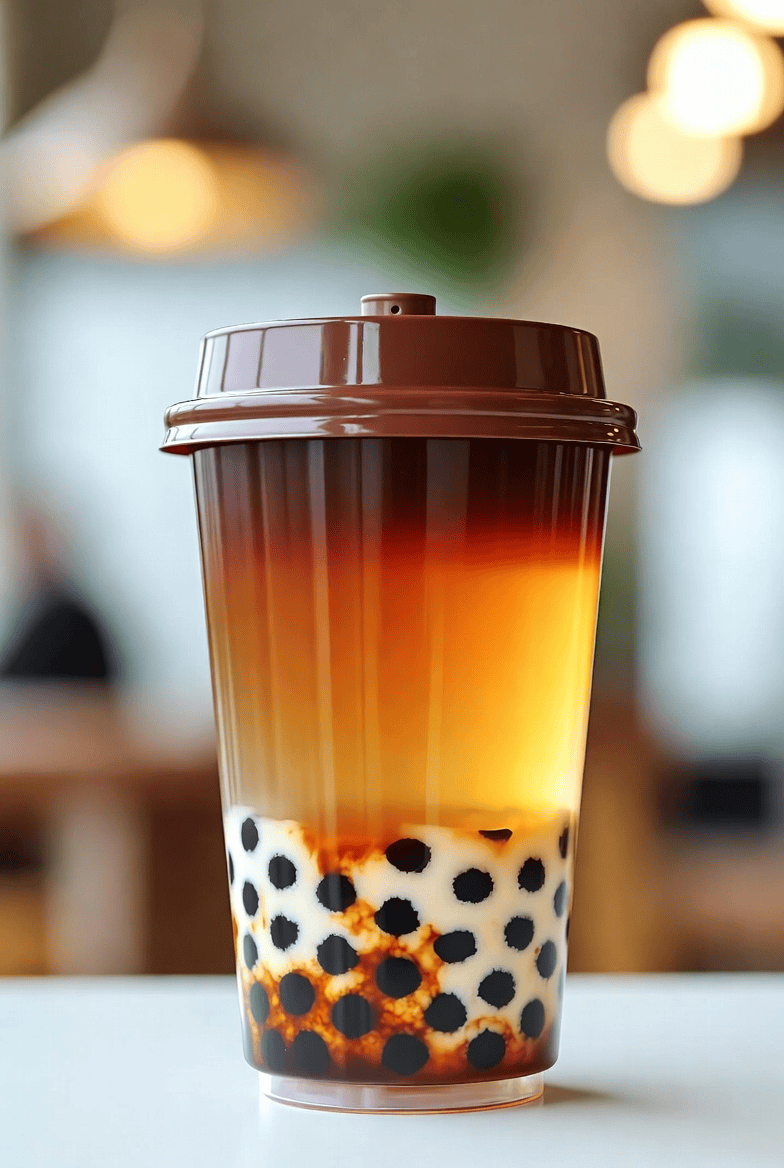
Conseil de température : Les fours et plaques de cuisson domestiques varient plus qu’on ne le pense. Utilisez un thermomètre de cuisine si vous en avez un — vous souhaitez confirmer que le mélange atteint un ébullition complète avant de verser. Nous avons testé cela sur différents types de plaques et avons constaté que les plaques à gaz à puissance moyenne à élevée atteignent la bonne température environ 30 secondes plus vite que les plaques électriques standard.
Instructions étape par étape
-
Combinez les ingrédients secs et humides. Dans votre casserole, fouettez ensemble la poudre d'agar-agar, le sucre (si vous en utilisez) et votre base liquide choisie. Faites cela avant de chauffer — l'agar sec forme de mauvais grumeaux s'il est ajouté à un liquide déjà chaud.
-
Chauffez jusqu'à ébullition complète. À feu moyen-élevé, portez le mélange à ébullition en remuant continuellement. C'est important : l'agar doit atteindre le point d'ébullition (100°C / 212°F) pour activer pleinement ses propriétés gélifiantes. L'agar mal dissous donne des perles faibles et friables.
-
Laissez mijoter pendant 3 à 5 minutes. Une fois l'ébullition atteinte, réduire à feu doux et continuer à remuer. Trois minutes est le minimum ; cinq minutes garantissent une hydratation complète de la poudre d'agar. Vous remarquerez que le liquide devient légèrement brillant.
-
Ajouter du lactate de calcium (si utilisé). Incorporer 1–2 g à ce stade pour plus de fermeté et de clarté visuelle. Bien mélanger.
-
Verser immédiatement dans des moules. Travailler rapidement — l'agar commence à prendre autour de 40°C. Utilisez votre spatule pour racler complètement le mélange dans chaque cavité du moule. Chaque petite poche d'air apparaîtra comme une imperfection dans vos perles d'agar finales.
-
Refroidir à température ambiante pendant 10–15 minutes. Ne pas précipiter ce processus dans le réfrigérateur — un refroidissement rapide peut provoquer des fissures à la surface. La prise à température ambiante donne une surface plus lisse et plus brillante.
-
Plonger les perles dans de l'eau glacée. Après 15 minutes, les perles devraient être prises. Pousser chaque perle vers le bas du moule et les déposer directement dans de l'eau glacée. Cela arrête le processus de prise et crée une surface propre et lisse.[chinasichuanfood]
-
Filtrer et tremper dans du sirop. Retirer de l'eau glacée, filtrer, et tremper dans votre sirop aromatisé pendant 30–60 minutes avant de servir. La saturation complète en sirop donne à l'agar boba sa saveur en couches.[sinofudetechnology]
Common Mistakes and How to Fix Them
| Problème | Cause probable | Comment le réparer la prochaine fois |
|---|---|---|
| Perles trop molles / qui se désagrègent | Concentration d'agar trop faible, ou pas complètement bouilli | Augmenter l'agar à 2 cuillères à soupe pour 500 ml ; assurer une ébullition complète |
| Perles trop dures / caoutchouteuses | Trop d'agar, ou trop cuit | Réduire l'agar de 0,5 cuillère à soupe ; mijoter à feu plus doux |
| Trouble, pas cristallin | Agar de qualité inférieure ou pas complètement dissous | Utilisez de l'agar alimentaire ; fouettez plus longtemps avant de chauffer |
| Les perles craquent à la surface | Refroidi trop rapidement (directement au réfrigérateur) | Laissez prendre à température ambiante avant de refroidir |
| Formes irrégulières | Le mélange a commencé à épaissir avant d'être complètement versé | Travaillez plus vite ; maintenez le mélange chaud à feu très doux pendant le versement |
| Aucun goût même après trempage | Temps de trempage trop court, ou sirop trop dilué | Trempez au minimum 45 minutes ; utilisez un sirop concentré |
Sources :msshiandmrhe+2
Bienfaits pour la santé et profil nutritionnel de l'agar boba
Une des raisons pour lesquelles l'agar boba a connu une croissance rapide parmi les consommateurs soucieux de leur santé est son profil nutritionnel véritablement différent par rapport au tapioca traditionnel.thedonutwhole+1
Voici ce que vous devez savoir :
-
Moins calorique. L'agar-agar apporte très peu de calories en soi — la majeure partie des calories dans l'agar boba provient du sucre ou du sirop ajoutés, et non de l'agar lui-même.[thedonutwhole]
-
Riche en fibres alimentaires. Les polysaccharides d'agar fonctionnent comme des fibres solubles, soutenant la digestion et la santé du microbiome intestinal. Ils ralentissent également l'absorption du sucre, ce qui est pertinent pour la gestion de la glycémie.[thedonutwhole]
-
Contient des minéraux. L'agar boba fournit des quantités mesurables de calcium et de fer, ainsi que des antioxydants appelés phycocolloïdes qui sont absents dans les alternatives à base de tapioca.[thedonutwhole]
-
Sans gluten et végétalien. L'agar est entièrement dérivé des algues, ce qui le rend adapté aux consommateurs végétaliens, végétariens et intolérants au gluten sans modification.[milkwoodrestaurant]
-
Certaines recherches suggèrent que l'agar pourrait aider à réduire le cholestérol LDL et la pression artérielle, bien que la plupart de ces études soient préliminaires et ne doivent pas être utilisées comme guidance médicale.[thedonutwhole]
L'avertissement honnête : Le boba d'agar vendu dans les boutiques de bubble tea est généralement trempé dans un sirop sucré, ce qui ajoute une quantité importante de sucre. L'agar lui-même est sain ; l'écosystème des garnitures qui l'entoure mérite la même attention que tout autre boisson sucrée. La modération et la conscience du sirop importent plus que la perle de boba d'agar elle-même.[sinofudetechnology]
Applications industrielles : où le boba d'agar est utilisé à grande échelle
Le boba d'agar n'est plus seulement une nouveauté de recette maison ou une caractéristique des boutiques de bubble tea artisanales. Il passe à la production commerciale dans plusieurs catégories alimentaires et de boissons.
Boutiques de bubble tea et de thé au lait
C'est le marché principal et l'histoire de croissance la plus claire. Le marché mondial du bubble tea était évalué à environ 2,81 milliards de dollars US en 2024 cURL Too many subrequests. 4,21 milliards de dollars US d'ici 2030, avec un taux de croissance annuel composé d'environ 8,11 %. Sur ce marché, les variantes de boba d'agar et de boba cristal gagnent des parts, notamment dans les offres orientées santé et haut de gamme.[marknteladvisors]
Les boutiques utilisent le boba d'agar de trois manières principales :
-
Garniture autonome — proposée comme alternative au tapioca pour les clients recherchant des options plus légères ou moins caloriques
-
Boissons en couches — intégrées dans des boissons à dégradé visuel où la translucidité du cristal ajoute une valeur esthétique
-
Saveurs saisonnières ou limitées — le sucre brun, le litchi, le matcha et l'agar à la passion sont des rotations saisonnières courantes
Cafés et Bars à Desserts
Au-delà des salons de thé, l'agar boba apparaît dans les desserts de glace pilée, les parfaits au yaourt, les salades de fruits et les décorations de gâteaux. La saveur de base neutre et la polyvalence visuelle le rendent attrayant pour les chefs pâtissiers recherchant un topping qui améliore plutôt que de concurrencer leur plat principal.sinofudetechnology+1
Crèmes glacées et desserts glacés
L'agar boba s'intègre naturellement dans les bars de yaourt glacé et les boutiques de glaces spécialisées. Contrairement aux perles de tapioca (qui deviennent dures et désagréables lorsqu'elles sont congelées), l'agar boba conserve une texture plus stable à basse température, ce qui en fait un topping viable pour les formats glacés.[fudemachinery]
Équipements de production commerciale
À l'échelle commerciale, les lignes de production automatisées peuvent produire de l'agar boba à 150–1 000 kg/heure, en utilisant des systèmes de contrôle PLC/SERVO pour maintenir une taille, un poids et une apparence cohérents des perles. Le Ligne de production automatique de Crystal Boba CBZ50A de Sinofude, par exemple, gère à la fois le popping boba et l'agar boba cristal dans une ligne reconfigurable unique — une efficacité que les petites chaînes de thé et les fabricants sous contrat adoptent de plus en plus.sinofudetechnology+1
Tendances futures : où se dirige le marché de l'agar boba
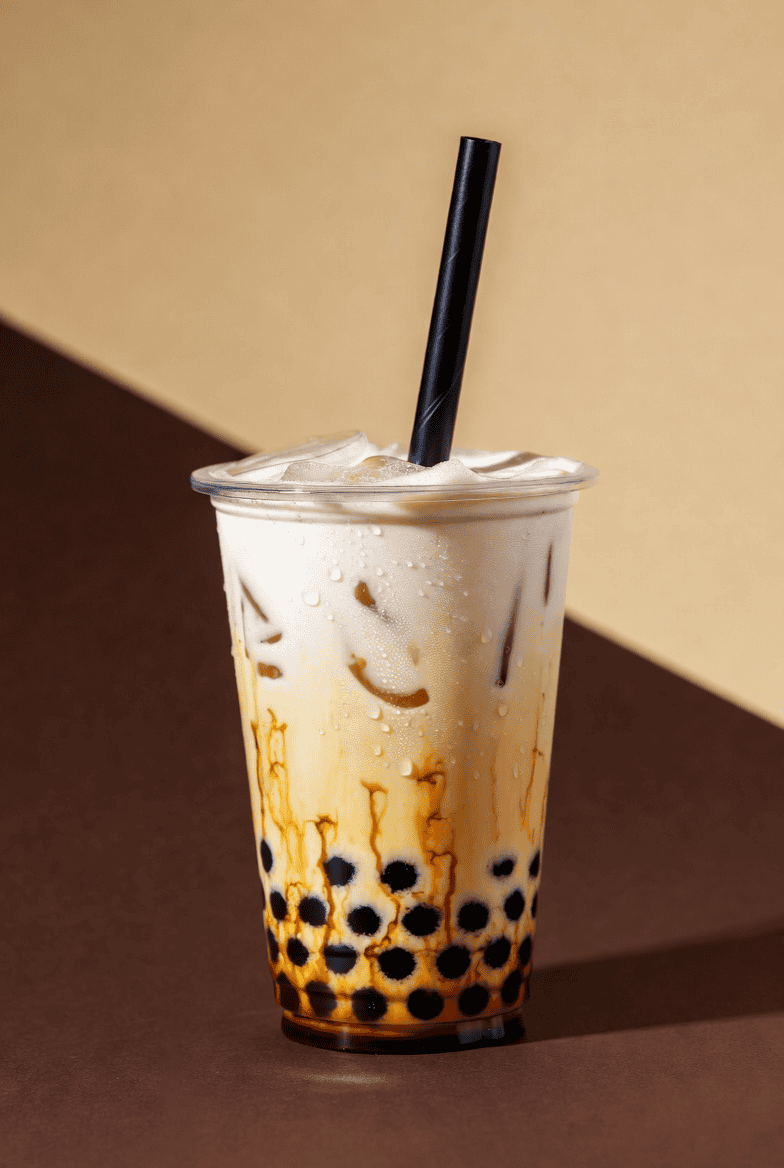
Les données ici sont vraiment intéressantes — et pas seulement du battage médiatique.
le le marché mondial de l'agar boba a atteint 799,2 millions USD en 2024 et devrait croître jusqu'à environ 1,5 milliard USD d'ici 2035, avec un taux de croissance annuel composé d'environ 5,91 %. Une analyse de marché distincte estimait le marché à 550 millions USD en 2025, avec une projection de 950 millions USD d'ici 2033 à un TCAC de 11,51 % — la gamme reflète différentes méthodologies, mais le consensus directionnel est le même : ce marché est en croissance.industrytoday+1
Plusieurs forces sont à l'origine de cette croissance :
1. Évolution des consommateurs soucieux de leur santé
La demande pour des options alimentaires et de boissons à base de plantes, moins caloriques et à étiquette propre s'accélère à l'échelle mondiale. Le boba d'agar en bénéficie directement — il est dérivé d'algues, végétalien, sans gluten et moins calorique que son homologue au tapioca. Alors que de plus en plus de marques s'empressent de reformuler des boissons pour un positionnement axé sur la santé, le boba d'agar sera une réponse récurrente.linkedin+1
2. Innovation en matière de saveur et de format
Le « blanc uni boba de cristal » est déjà remplacé par des variantes au sucre roux, infusées aux fruits, au matcha, au taro et saisonnières. Certains producteurs développent du boba d'agar fonctionnel — des perles avec des protéines, des probiotiques ou des plantes ajoutées. Cela est parallèle à l'évolution du marché des barres protéinées : commencer par le format, puis ajouter la fonction.datainsightsmarket+1
3. Expansion géographique
L'Asie-Pacifique domine actuellement la production et la consommation de boba d'agar. Mais l'Amérique du Nord et l'Europe sont les régions à la croissance la plus rapide, tirées par la généralisation de la culture du bubble tea et l'intérêt croissant pour les formats alimentaires asiatiques. Les marchés d'Amérique latine et du Moyen-Orient émergent également.datainsightsmarket+1
4. Accent sur la durabilité
L'agar-agar est récolté à partir d'algues cultivées ou sauvages — une empreinte agricole à moindre impact que l'amidon de manioc. À mesure que la durabilité alimentaire devient une considération plus importante pour les consommateurs, l'origine du boba d'agar dérivée d'algues devient un atout narratif plutôt qu'une simple spécification technique.[datainsightsmarket]
5. Médias sociaux et culture visuelle de la consommation d'alcool
Agar boba est, franchement, photogénique. La clarté cristalline, les possibilités de personnalisation des couleurs et le contraste visuel dans les boissons en font un ingrédient prêt pour les réseaux sociaux. Des plateformes comme TikTok et Instagram ont déjà accéléré la visibilité du bubble tea en tant que catégorie — et les propriétés visuelles de l'agar boba offrent aux boutiques un outil simple pour se différencier.[bobaempire]
Comment stocker, aromatiser et servir l'agar boba
Une fois que vous avez préparé une batch d'agar boba, la question suivante est comment la conserver au mieux.
Stockage à court terme (même jour jusqu'à 24 heures) :
-
Conservez l'agar boba immergé dans un sirop sucré à température ambiante si vous le servez dans quelques heures
-
Jusqu'à 24 heures, réfrigérez dans le sirop — cela maintient la saturation en saveur et empêche le dessèchement
-
Évitez le stockage dans de l'eau plate ; cela dilue la saveur et adoucit la texture
Congélation :
-
L'agar boba peut être congelé, mais la texture change lors de la décongélation — les perles deviennent légèrement plus cassantes et perdent un peu de leur croquant net
-
Si la congélation est nécessaire, congelez avant de tremper dans le sirop, puis décongelez et trempez à nouveau avant de servir
Conseils pour l'infusion de saveur :
-
Infusion minimale : 30 minutes
-
Infusion optimale : 45–60 minutes pour une saveur prononcée
-
Utilisez des sirops concentrés plutôt que dilués — l'agar boba absorbe ce qu'on lui donne ; un sirop faible signifie une saveur faible
-
Pour des profils de saveurs en couches, faites tremper dans un sirop, puis secouez brièvement dans un second avant de servir
Meilleures utilisations en service :
-
Thé au lait au sucre brun classique
-
Thé au jasmin ou vert fruité
-
Coupes de yaourt et bols de smoothie
-
Desserts de glace pilée (kakigōri, bingsoo)
-
Mocktails spéciaux et eaux infusées
Les sources d'autorité à haute autorité de domaine pertinentes pour l'agar boba, les données de l'industrie du bubble tea et la science alimentaire — appropriées pour citation et référence dans ce contenu :
-
Mordor Intelligence — Rapport sur la taille et la part de marché du bubble tea
Données du marché mondial du bubble tea, prévisions jusqu'en 2030, et analyse des tendances de consommation — [mordorintelligence] -
China Sichuan Food — Guide de recette d'agar boba
Guide détaillé de recettes maison avec plusieurs variations d'agar boba ; site d'autorité culinaire établi — [chinasichuanfood] -
Milkwood Restaurant — Agar Boba vs Boba classique : lequel est le plus sain ?
Comparaison nutritionnelle de l'agar boba et du boba à la tapioca avec données de santé sourcées — [milkwoodrestaurant] -
Future Market Insights — Rapport sur le marché du bubble tea
Marché du bubble tea prévu passant de 3,96 milliards USD en 2025 à 9,72 milliards USD en 2035 avec un TCAC de 9,51 % — [futuremarketinsights] -
PubMed Central / NIH — Revue complète du thé et des boissons à base de plantes
Recherche académique évaluée par des pairs sur la dynamique du marché mondial des boissons à base de thé, les bienfaits pour la santé et les tendances futures —[pmc.ncbi.nlm.nih]