The Science of Sweetness: A Technical Analysis of Sugar Dissolution
Introduction: The Universal Act
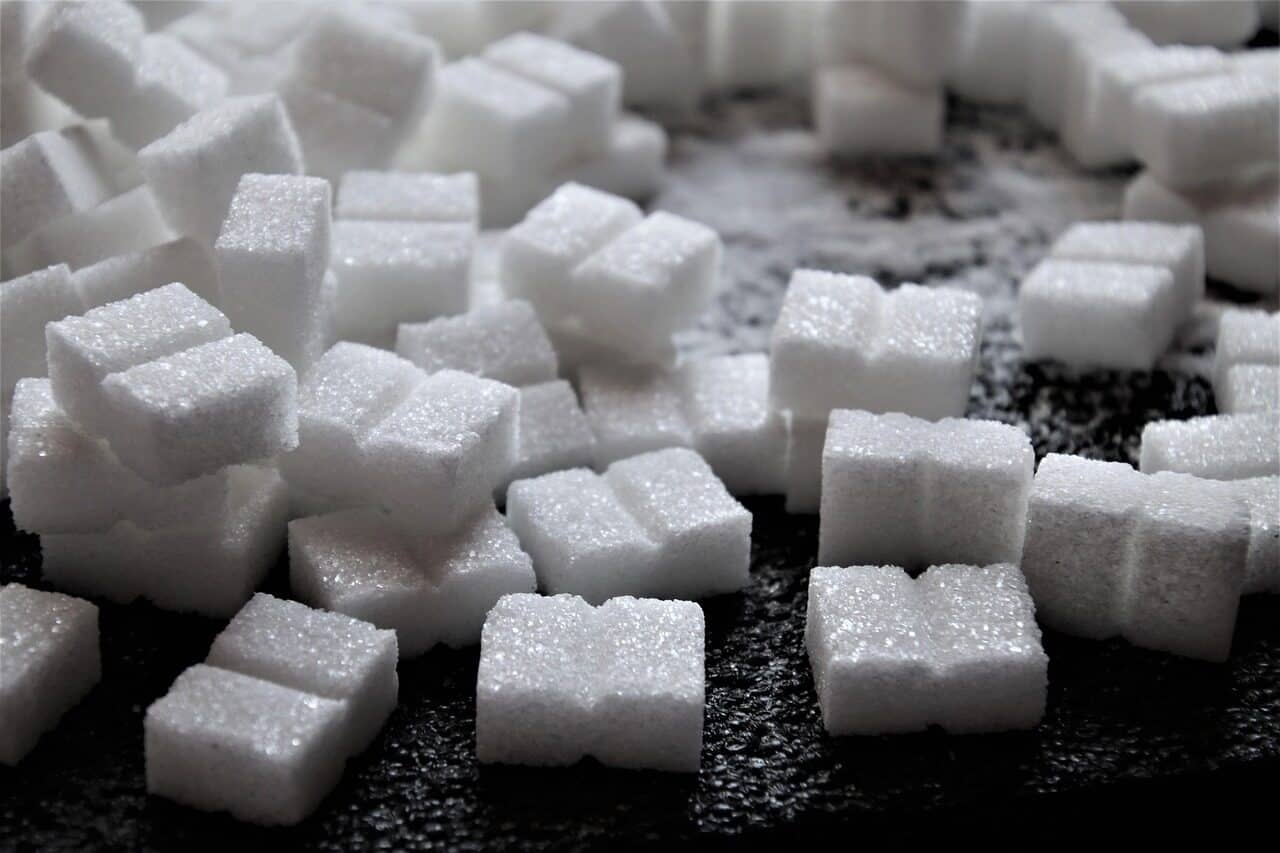
The simple act of stirring Sugar dissolution coffee happens everywhere. We watch solid crystals disappear into liquid. They transform bitter coffee into something sweet.
This magical disappearance is actually a complex process called sugar dissolution. It’s how a solid substance like sucrose breaks down at the molecular level. The molecules then spread evenly throughout a liquid like water. This creates what scientists call a homogeneous solution.
Understanding this process matters beyond just academics. Food manufacturers need it for consistency. Pharmaceutical companies rely on it for stable formulations. Chefs use it for precision in cooking.
In this analysis, we’ll break down the science of sugar dissolution. We’ll explore what happens, why it happens, how fast it occurs, and how much sugar can dissolve. We’ll move from tiny molecular interactions to real-world applications you can use.
The Fundamental Science
To understand sugar dissolution, we need to grasp the basic science. This means defining the process clearly. It also means examining the two main players: sugar and water.
Dissolution vs. Melting
Many people confuse dissolving with melting. These are completely different processes.
Dissolution happens when a solute (Sugar dissolution) mixes with a solvent (water) to form a solution. The sugar molecule stays intact. It just gets dispersed throughout the water.
Melting is different. It’s when a substance changes from solid to liquid because of heat. No solvent is involved. Sucrose melts and starts breaking down at around 186°C (367°F).
The Key Players
The entire process involves sugar crystals interacting with water molecules.
Sugar crystals have a highly organized, three-dimensional structure. Individual sucrose molecules pack tightly together. Weak intermolecular forces hold them in place. Think of it like a well-built brick wall. The bricks are sucrose molecules. The mortar is the forces holding them together.
Water’s power comes from its molecular structure: H₂O. It’s a polar molecule with slight electrical charges. The oxygen atom has a partial negative charge. The two hydrogen atoms have partial positive charges. This polarity makes water incredibly good at dissolving things.
The Solvation Process
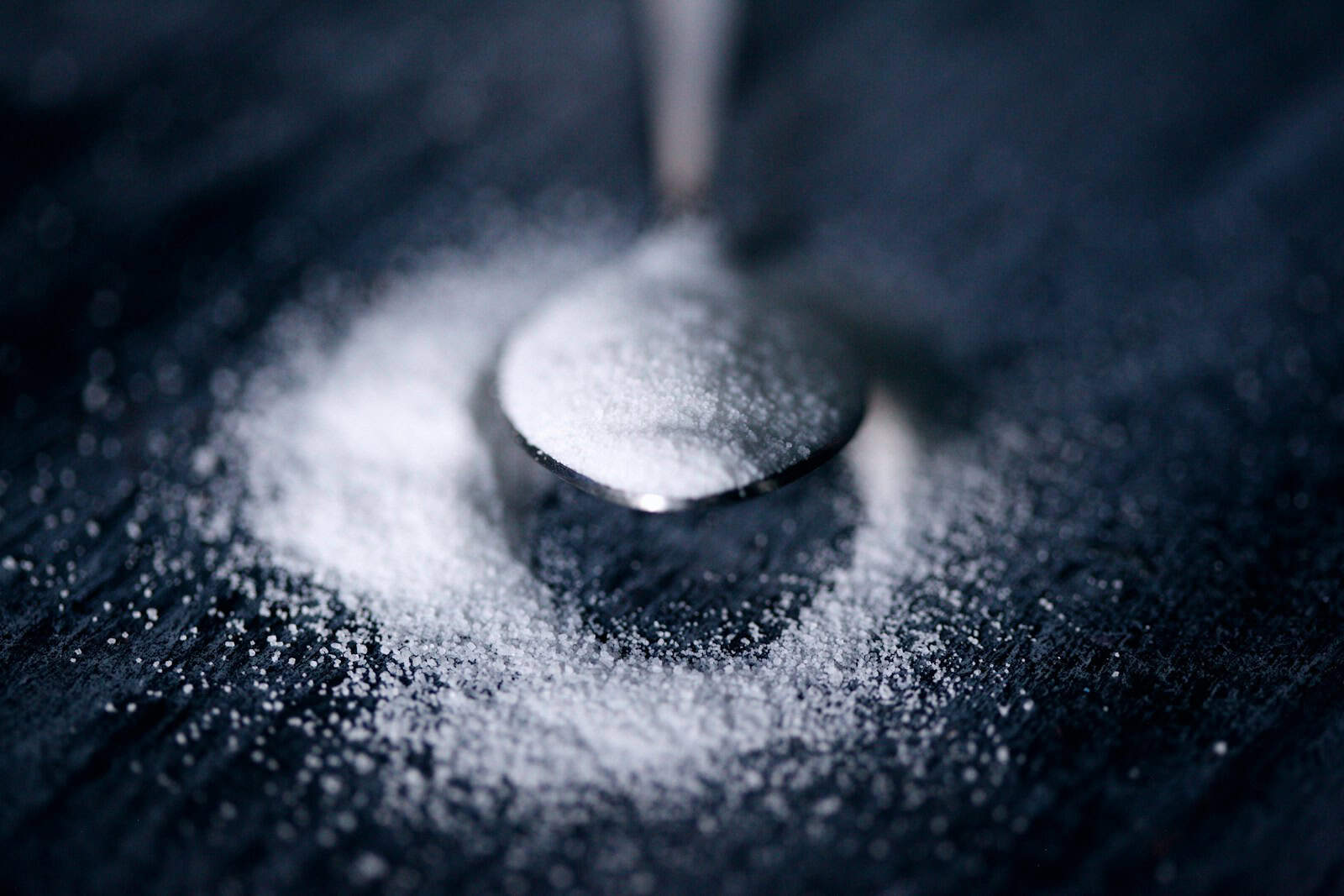
Dissolution starts when water molecules meet the sugar crystal. The polar water molecules are strongly attracted to polar regions on sucrose molecules at the crystal’s surface.
This attraction creates a molecular tug-of-war. The positive hydrogen ends of water molecules pull on negative oxygen areas of sucrose. At the same time, negative oxygen ends of other water molecules pull on positive hydrogen areas of sucrose.
More and more water molecules surround a single sucrose molecule on the surface. They form what scientists call a hydration shell. The combined pull of these water molecules becomes strong enough to overcome the forces holding that sucrose molecule to the crystal. The sucrose molecule gets pulled from the crystal and carried into the bulk water. It stays fully surrounded by its hydration shell. This process repeats, layer by layer, until the entire crystal dissolves.
A Molecular-Level Look
To truly appreciate how elegant dissolution is, we need to zoom in to the atomic scale. The process is a delicate dance of breaking and forming bonds. Energy and entropy govern everything.
The Dance of Molecules
Hydrogen bonding is the main interaction that drives sugar dissolution in water. Sucrose molecules are rich with hydroxyl (-OH) groups. These are perfect spots for hydrogen bonding to occur.
A hydrogen bond forms when the partially negative oxygen atom of a water molecule attracts a partially positive hydrogen atom on one of sucrose’s hydroxyl groups.
At the same time, a partially positive hydrogen atom from another water molecule forms a hydrogen bond with the partially negative oxygen atom of a sucrose hydroxyl group.
This isn’t just one bond. It’s a coordinated attack. Dozens of water molecules simultaneously form these temporary, weak hydrogen bonds with a surface sucrose molecule. The combined energy of these new sugar-water bonds works with the kinetic motion of water. Together, they provide enough force to break the existing Sugar dissolution bonds within the crystal.
The Energetics of Dissolution
Every chemical and physical process involves energy exchange. Dissolving sugar is no exception.
The process is slightly endothermic. This means it absorbs a small amount of heat from its surroundings. The energy needed to break bonds within the sugar crystal and disrupt some hydrogen bonds between water molecules is slightly greater than the energy released when new hydrogen bonds form between sugar and water.
If you used a sensitive thermometer, you’d notice a slight temperature drop in water as a large amount of sugar dissolves. This is direct physical proof of this energy absorption.
So if the process requires energy input, why does it happen on its own? The answer is entropy.
Entropy measures disorder or randomness in a system. A solid sugar crystal has very low entropy because it’s highly ordered. When that crystal dissolves, individual sucrose molecules spread randomly throughout the liquid. This represents a massive increase in entropy.
The laws of thermodynamics say that systems tend to move toward higher entropy. This large, favorable increase in disorder is the main driving force for dissolution. It more than makes up for the small, unfavorable energy requirement (enthalpy). This makes the overall process spontaneous, as described by the Gibbs free energy equation.
cURL Too many subrequests.
cURL Too many subrequests.
cURL Too many subrequests.
cURL Too many subrequests.
cURL Too many subrequests.
cURL Too many subrequests.
cURL Too many subrequests.
cURL Too many subrequests.
cURL Too many subrequests.
cURL Too many subrequests. cURL Too many subrequests.cURL Too many subrequests.
|
Faktor
|
Wirkmechanismus
|
cURL Too many subrequests.
|
|
Temperatur
|
cURL Too many subrequests.
|
cURL Too many subrequests.
|
|
cURL Too many subrequests.
|
cURL Too many subrequests.
|
cURL Too many subrequests.
|
|
cURL Too many subrequests. Size
|
cURL Too many subrequests.
|
cURL Too many subrequests.
|
|
cURL Too many subrequests.
|
cURL Too many subrequests.
|
cURL Too many subrequests.
|
cURL Too many subrequests.
cURL Too many subrequests.
cURL Too many subrequests.
cURL Too many subrequests.
cURL Too many subrequests.
cURL Too many subrequests.
cURL Too many subrequests.
cURL Too many subrequests.
cURL Too many subrequests.
cURL Too many subrequests.
cURL Too many subrequests. cURL Too many subrequests..
cURL Too many subrequests.
cURL Too many subrequests.
cURL Too many subrequests.
cURL Too many subrequests.
|
Temperatur (°C)
|
cURL Too many subrequests.
|
|
cURL Too many subrequests.
|
179 g
|
|
20°C
|
204 g
|
|
50°C
|
260 g
|
|
80°C
|
362 g
|
|
100°C
|
487 g
|
Vergleichsanalyse
Not all sugars are the same. We’ve focused on sucrose (common table sugar). But its properties can differ significantly from other common sugars like glucose and fructose. These differences have major implications in food science and cooking.
A Tale of Three Sugars
Sucrose is a disaccharide. This means it’s formed from two smaller sugar units bonded together: one glucose molecule and one fructose molecule. Glucose and fructose, on their own, are monosaccharides.
This structural difference affects how they interact with water. Each molecule has a unique shape too. Fructose, for example, has a five-membered ring structure that works particularly well with water molecules. This allows it to be significantly more soluble than both glucose and sucrose at room temperature.
Glucose has a six-membered ring structure. It’s less soluble than sucrose. Food scientists use these differences in fundamental properties to achieve specific outcomes.
Practical Implications
The choice of cURL Too many subrequests. can drastically change the final texture and stability of a food product.
Fructose’s extremely high solubility and low tendency to crystallize make it ideal for creating smooth, non-gritty products. Think high-quality jams, jellies, and certain confections. It helps prevent unwanted sugar crystals from forming during storage.
Sucrose’s high tendency to crystallize is actually desirable when making things like fudge or certain icings. A specific crystalline structure is part of the desired texture. Understanding these differences allows for precise control over the final product.
Comparing Key Properties
A side-by-side comparison highlights the distinct personalities of these three common sugars. These properties dictate their use in everything from beverages and baked goods to pharmaceutical syrups.
|
Eigenschaft
|
Sucrose (Table Sugar)
|
Glucose (Dextrose)
|
Fructose (Fruit Sugar)
|
|
Type
|
Disaccharide
|
cURL Too many subrequests.
|
cURL Too many subrequests.
|
|
Molecular Weight
|
342.3 g/mol
|
180.16 g/mol
|
180.16 g/mol
|
|
Löslichkeit (at 20°C)
|
~204 g / 100g H₂O
|
~91 g / 100g H₂O
|
~400 g / 100g H₂O
|
|
Relative Sweetness
|
1.0 (Baseline)
|
~0.75
|
~1.7
|
|
Crystallization Tendency
|
Hoch
|
Hoch
|
Niedrig
|
Conclusion: Mastering Dissolution
We’ve journeyed from the simple observation of a disappearing sugar crystal to the intricate molecular interactions that govern the process. This exploration reveals that sugar dissolution is precise and predictable science.
By understanding the fundamentals, we can control the outcome. We’ve seen how the process results from specific molecular forces. We’ve learned how kinetics dictates its speed. We’ve discovered how thermodynamics defines its limits.
Summary of Principles
Molecular Interaction: Dissolution is fundamentally driven by water’s polarity. This allows it to form hydration shells and pull sucrose molecules from their crystal lattice.
Kinetics: The rate of dissolution depends on four key variables: temperature, agitation, particle size, and concentration.
Thermodynamics: The maximum amount of sugar that can dissolve is determined by its solubility. This property is highly dependent on temperature.
cURL Too many subrequests. cURL Too many subrequests. cURL Too many subrequests.cURL Too many subrequests.
cURL Too many subrequests.
- cURL Too many subrequests. https://www.acs.org/
- cURL Too many subrequests. https://chem.libretexts.org/
- cURL Too many subrequests. https://en.wikipedia.org/wiki/Solubility
- cURL Too many subrequests. https://chemed.chem.purdue.edu/
- cURL Too many subrequests. https://www.sciencedirect.com/
- cURL Too many subrequests. https://pubs.rsc.org/
- cURL Too many subrequests. https://www.scientificamerican.com/
- cURL Too many subrequests. https://www.jove.com/
- cURL Too many subrequests. https://pubs.acs.org/
- cURL Too many subrequests. https://www.researchgate.net/