Step 1: Foundational Formulation – The Science of the Jelly Base
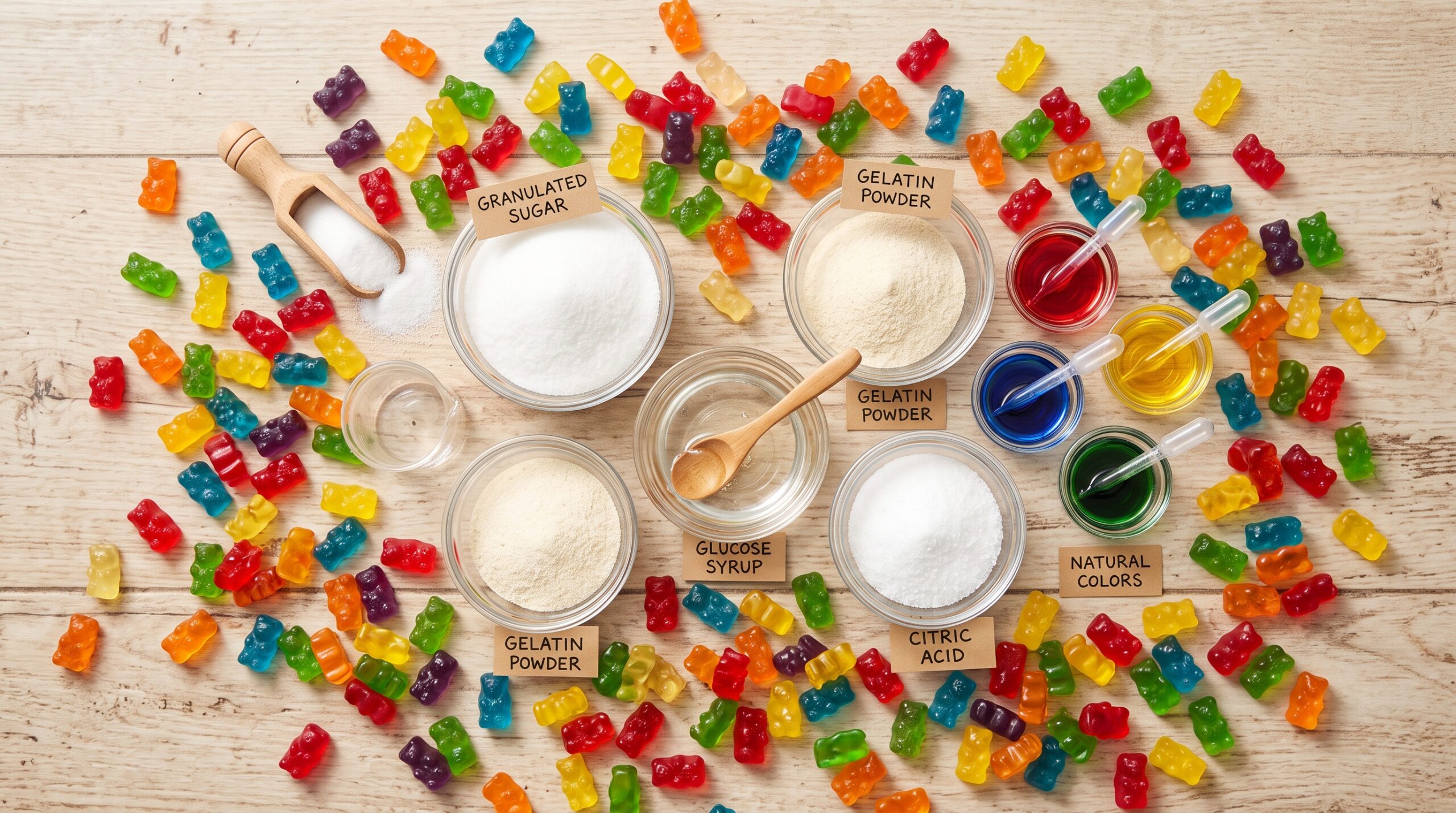
Before a single tube is extruded or a crystal of sour sugar is applied, the heart of the sour tube candy must be conceived. This is the jelly base, the very foundation upon which all subsequent layers of flavor, texture, and sensation are built. To the consumer, it is a simple, chewy delight. To the confectioner, it is a complex colloidal system, a carefully balanced interplay of water, sugars, and long-chain polymers known as gelling agents or hydrocolloids. Achieving the perfect jelly base is not an act of guesswork; it is an exercise in applied food science. The final product’s chewiness, its clarity, its ability to hold a shape, plus its capacity to carry flavor are all predetermined here, in the cooking kettle. This initial stage requires a deep appreciation for the molecular behavior of your ingredients. Misunderstanding these fundamentals can lead to a cascade of problems downstream, from a product that is too tough or too soft, to one that weeps moisture and has a drastically shortened shelf life. Let us, therefore, approach this foundational step with the care and precision of a chemist, exploring the critical components that form the soul of our candy.
Choosing Your Gelling Agent: Gelatin, Pectin, or Starch?
The defining characteristic of any jelly candy is its texture, and the primary architect of that texture is the gelling agent. These are substances that, when hydrated, form a three-dimensional network capable of trapping water, creating a semi-solid structure we perceive as a gel. The three most common gelling agents in confectionery are gelatin, pectin, and starch. Each brings a unique personality to the final product, and the choice among them is one of the most significant decisions a product developer will make. It is not merely a question of availability or cost; it is a question of identity. Do you envision a candy with a slow, satisfying melt and a tender, elastic chew? Or perhaps a formulation with a short, clean bite and a quick flavor release? Your answer will point you toward a specific hydrocolloid. Let’s examine the unique capabilities and limitations of each candidate.
Gelatin, a protein derived from animal collagen, is perhaps the most classic choice for gummy and jelly candies. Its signature is an elastic, tender chew that is beloved by consumers. A gelatin gel is thermoreversible, meaning it melts at a temperature close to that of the human body. This property is responsible for its exceptional flavor release; as the candy melts in the mouth, it floods the palate with its intended taste. The texture can be precisely controlled by adjusting the gelatin’s “bloom strength,” a measure of its gelling power. A higher bloom strength gelatin will produce a firmer, more resilient gel at a lower concentration. However, gelatin is not without its considerations. Its animal origin makes it unsuitable for vegetarian, vegan, halal, or kosher certifications, which can be a significant market limitation. It is also sensitive to certain enzymes, like the bromelain found in fresh pineapple, which can break down the protein network and prevent a gel from forming.
Pectin, in contrast, is a plant-based polysaccharide extracted primarily from citrus peels and apple pomace. This makes it an excellent choice for vegan and vegetarian-friendly products. Pectin creates a gel with a distinctly different texture from gelatin. It has a “shorter” bite, meaning it breaks cleanly when chewed rather than stretching. The flavor release is often perceived as quicker and brighter. Pectins are categorized based on their “degree of esterification” into high-methoxyl (HM) and low-methoxyl (LM) types. HM pectins, the more common type in confectionery, require a high concentration of sugar (typically >55% soluble solids) and a low pH (around 3.0-3.5) to form a gel. This makes them naturally well-suited for sour candy production, where both high sugar content and acidity are inherent. LM pectins, on the other hand, gel in the presence of calcium ions and are less dependent on sugar or acid, offering a different set of formulation possibilities.
Modified food starch is another plant-based alternative, usually derived from corn, tapioca, or potato. Starches produce an opaque or cloudy gel, unlike the clear gels typically formed by gelatin or pectin. The texture is often described as a “long” or stringy chew, which can be desirable in certain types of licorice-style tube candies. Starch-based jellies are generally less sensitive to pH than pectin, offering more flexibility in formulation. They are also quite economical. The gelling process for starch, known as gelatinization, requires heating the starch in water to a specific temperature, where the granules swell and burst, releasing long polymer chains that form the gel network upon cooling. The final texture is highly dependent on the type of starch used (e.g., acid-thinned starch, high-amylose starch) and the processing conditions.
The selection is a balancing act, weighing textural goals against market positioning, cost, and processing capabilities. For a classic chewy sour tube candy, gelatin might be the first thought. For a vegan product with a clean bite, pectin is the superior choice. For an opaque, licorice-style product, starch is the frontrunner.
| Feature | Gelatin | Pectin (High-Methoxyl) | Modified Starch |
|---|---|---|---|
| Origin | Animal (Collagen) | Plant (Citrus/Apple) | Plant (Corn/Tapioca/Potato) |
| Texture Profile | Elastic, tender, chewy | Short, clean bite, brittle | Long, chewy, sometimes stringy |
| Mouthfeel | Slow melt-in-the-mouth | Quick, clean break | Dense, slower to dissolve |
| Clarity | Excellent (very clear) | Good (clear to slightly hazy) | Poor (opaque) |
| Setting Conditions | Temperature-dependent | Requires high sugar (>55%) and low pH (3.0-3.5) | Requires heat (gelatinization) and cooling |
| Melting Behavior | Thermoreversible (melts near body temp) | Thermostable (does not melt in mouth) | Thermostable |
| Dietary Suitability | Not suitable for vegan/vegetarian | Vegan/Vegetarian friendly | Vegan/Vegetarian friendly |
| Key Advantage | Unmatched elastic texture and flavor release | Excellent for vegan products; clean bite | Economical; stable across wide pH range |
| Key Disadvantage | Animal source; enzymatic degradation | Narrow setting window (pH/sugar) | Opaque appearance; can have a starchy taste |
The Role of Sugars and Syrups in Texture and Shelf Life
While the gelling agent forms the skeleton of our candy, sugars and syrups are the flesh. They do far more than simply provide sweetness; they are functional ingredients that profoundly influence texture, control moisture, and ensure the product remains stable and palatable for months. The term “sugar” in confectionery rarely refers to just one substance. It is almost always a carefully calibrated blend of different types of sweeteners, each contributing a specific property to the final system. A failure to understand this synergy is a common source of production failure.
The primary sugar is typically sucrose, the familiar white crystalline sugar from cane or beets. Sucrose provides a clean, pure sweetness and contributes significantly to the body and structure of the candy. However, using sucrose alone is problematic. Its strong tendency to recrystallize would turn a chewy jelly into a grainy, unpleasant confection over time. Imagine making a simple sugar syrup and finding it has turned into rock candy in the pantry; this is the phenomenon we must prevent.
To combat crystallization, confectioners introduce “doctoring agents,” which are most often glucose syrups (also known as corn syrups in the US). Glucose syrups are made by the hydrolysis of starch and consist of a mixture of glucose, maltose, and other larger sugar molecules. They are characterized by their Dextrose Equivalent (DE), which measures the syrup’s reducing sugar content. A high DE syrup is sweeter and has a lower viscosity, while a low DE syrup is less sweet, more viscous, and a more powerful inhibitor of crystallization. For a chewy sour tube candy, a confectioner might choose a 42 DE glucose syrup. Its larger molecules physically interfere with the sucrose molecules, preventing them from aligning into crystals. This not only preserves the smooth texture but also helps control the final chewiness of the product. A higher ratio of glucose syrup to sucrose generally results in a chewier, less brittle candy.
Another powerful doctoring agent is invert sugar. Invert sugar is a syrup containing an equal mixture of glucose and fructose, created by breaking down sucrose with heat and an acid or an enzyme. It is sweeter than sucrose and is hygroscopic, meaning it attracts and holds onto water. This property is incredibly useful in jelly candies. A small amount of invert sugar in the formula helps to keep the candy soft and moist, preventing it from drying out and becoming hard over its shelf life. Its presence contributes to a tender bite.
The art of the formulator lies in creating the perfect “sugar spectrum.” This involves balancing the intense sweetness and structure from sucrose with the crystallization control and chewiness from a specific DE glucose syrup, plus the moisture retention and tenderness from invert sugar. This balance is not static; it must be adjusted based on the gelling agent used, the desired final texture, and the climatic conditions where the product will be sold. A candy destined for a humid environment like the Amazon rainforest needs a different sugar blend than one destined for the arid climate of Arizona.
Water Activity Control: The Unsung Hero of Candy Making
We have discussed the solids in our formulation—the gelling agents and sugars. Now we must turn our attention to the solvent: water. More specifically, we must concern ourselves with the concept of water activity (aw), one of the most vital parameters in confectionery science. Water activity is not the same as water content. Water content measures the total amount of water in a product, while water activity measures the amount of “free” or “available” water that can be used by microorganisms or participate in chemical reactions. It is measured on a scale from 0 (completely dry) to 1.0 (pure water).
Why is this so important? First and foremost, for food safety. Most bacteria cannot grow below a water activity of 0.91, and most molds are inhibited below 0.80. By formulating a candy to have a low water activity, typically in the range of 0.65 to 0.75 for a jelly candy, we create an environment where microbial spoilage is impossible. This is the fundamental principle behind why candy is shelf-stable for months without refrigeration. It is a form of preservation as old as civilization itself—preservation by dehydration, albeit a very specific, controlled form of it.
Second, water activity dictates the texture and stability of the sour tube candy. The free water in the system acts as a plasticizer. Higher water activity results in a softer, more tender candy. Lower water activity results in a firmer, tougher chew. The goal is to hit the precise target that delivers the desired texture. Furthermore, water activity governs moisture migration. If a candy has a high water activity and is placed in a dry environment, it will lose water and become hard. Conversely, if a low water activity candy is placed in a humid environment, it will absorb water from the air, potentially becoming sticky and losing its sour sanding. The sour coating itself is highly hygroscopic, making this management even more delicate.
So, how do we control water activity? The primary tools are the sugars we just discussed. Sugars are solutes that are exceptionally good at binding water. When sucrose, glucose syrup, and other sugars are dissolved, their molecules form hydrogen bonds with water molecules, effectively “locking them up” and reducing the amount of free water available. A higher concentration of dissolved solids leads to a lower water activity. This is why the cooking process is so vital. When we cook the candy slurry, we are not just dissolving ingredients; we are boiling off excess water to concentrate the sugars and achieve our target soluble solids level (measured in °Brix). A typical jelly candy might be cooked to 78-80 °Brix, which corresponds to the desired water activity range. Precise control of this final cooking temperature, often using modern equipment from suppliers like , is non-negotiable for a consistent product.
Incorporating Buffering Agents for pH Stability
In the world of sour candy, pH is king. The entire sensory experience hinges on a controlled level of acidity. We will delve deeper into the acids themselves in a later section, but here, in the foundational formulation stage, we must address how to manage the pH of the jelly base itself. This is particularly relevant when using pH-sensitive gelling agents like pectin.
As we learned, HM pectin requires a narrow pH window, typically 3.0 to 3.5, to form a proper gel. If the pH is too high, the gel will be weak or fail to form at all. If the pH is too low, the gel can set too rapidly and prematurely in the production line, a catastrophic event known as “pre-gelling” that can clog pipes and depositors. This would cause significant downtime and product loss.
To prevent such issues and maintain a stable pH throughout the cooking and depositing process, confectioners use buffering agents. A buffer is a chemical system that resists changes in pH when an acid or a base is added. In confectionery, the most common buffering agent is sodium citrate. It is the salt of a weak acid (citric acid). When added to the candy slurry, it creates a buffer system. If the pH starts to drop too quickly as the main food acid is added, the citrate ions will absorb some of the excess hydrogen ions, preventing a drastic pH swing. This allows the confectioner to add the necessary amount of acid for the sour taste without risking the integrity of the pectin gel.
Think of a buffering agent as a shock absorber for your formulation’s pH. It provides control and predictability. The amount of sodium citrate needed depends on the type of pectin, the target final pH, and the amount of acid in the recipe. It allows for the production of a consistently textured pectin-based sour tube candy, batch after batch. Even in gelatin-based formulas, where pH is less critical for the gel structure itself, buffers can be used to control the rate of gelatin hydrolysis during cooking and to standardize the final perceived sourness, ensuring the flavor profile remains consistent. This level of control is a hallmark of professional candy production, separating artisanal methods from industrial-scale reliability.
Step 2: The Art of Extrusion – Shaping the Perfect Tube
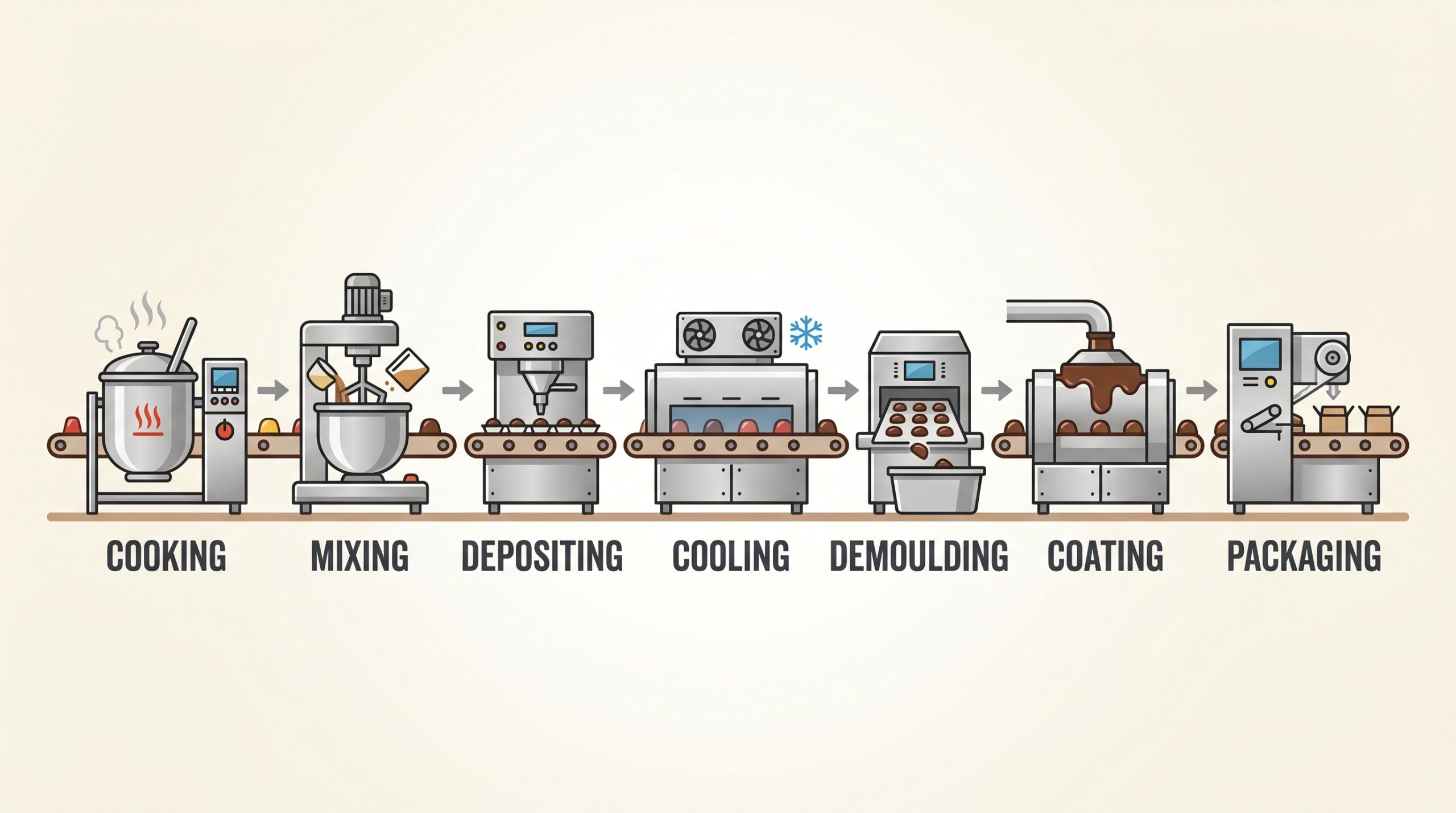
Once our meticulously formulated jelly mass has been cooked to the perfect solids concentration and pH, it exists as a hot, viscous liquid. The next challenge is to transform this molten candy into its final, familiar form: the tube. This transformation is accomplished through a process called extrusion. At its core, extrusion is the process of forcing a material through a shaped opening, known as a die, to create a continuous profile. It is a technique used to make everything from pasta and plastic pipes to breakfast cereals and, of course, sour tube candy. In confectionery, extrusion is both a science of fluid dynamics and an art of textural manipulation. The parameters used during this stage will have a profound impact on the final product’s appearance, density, and even its chew. A well-executed extrusion process yields a uniform, perfectly formed tube; a poorly controlled one can result in a misshapen, inconsistent product that is impossible to process further.
Understanding the Mechanics of a Candy Extruder
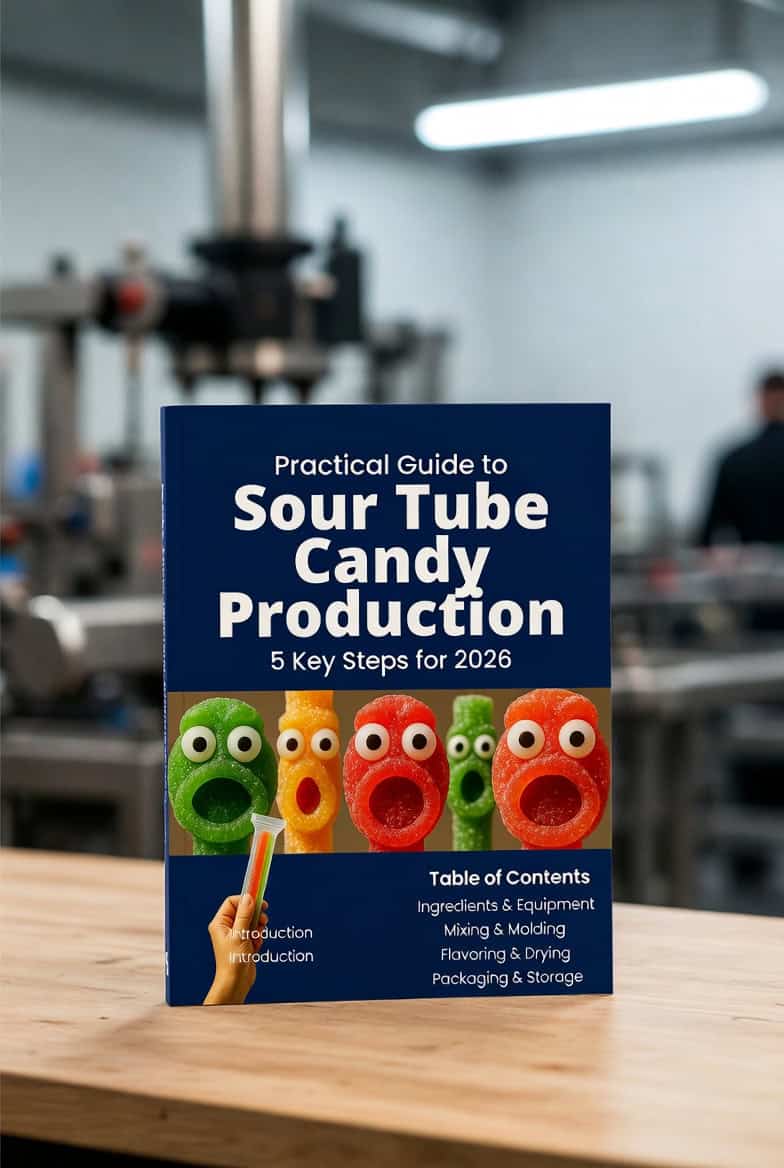
To appreciate the process, we must first understand the machine at its heart: the candy extruder. While designs vary, a typical extruder for jelly candy consists of several key components. The process begins at the hopper, where the hot candy mass is held, ready for processing. From the hopper, the mass is fed into a long, heated barrel. Inside this barrel turns one or, in some cases, two large screws. This is the core of the machine.
The screw’s function is threefold. First, it acts as a pump, conveying the candy mass from the hopper toward the die. The design of the screw flights is engineered to move the viscous material forward efficiently. Second, it works to homogenize the mass, ensuring that the temperature and consistency are uniform throughout. Any “cold spots” or lumps would result in imperfections in the final product. Third, the screw builds up the necessary pressure to force the mass through the die. This is a delicate balance; too little pressure results in a slow, uneven flow, while too much pressure can generate excessive shear and heat, potentially damaging the gelling agent’s structure.
The barrel surrounding the screw is typically jacketed, allowing for precise temperature control via circulating water or oil. This is not a passive component. The temperature profile along the barrel can be managed in zones, allowing the confectioner to heat or cool the candy mass as it travels. This control is vital for managing the viscosity of the mass just before it reaches the die. A mass that is too hot will be too fluid, leading to a “runny” extrusion that doesn’t hold its shape. A mass that is too cold will be too viscous, requiring immense pressure to extrude and potentially causing defects. Advanced production lines, like those seen from specialists such as , offer sophisticated control over these screw speed and temperature parameters.
Finally, at the end of the barrel, is the die plate. This is the simple yet critical component that gives the candy its shape. For a basic sour tube candy, the die might be a plate with an array of small, circular holes. As the pressurized candy mass is forced through these holes, it emerges as continuous strands or “ropes” of jelly. The diameter of these ropes is determined by the size of the holes in the die.
Temperature and Pressure: The Twin Pillars of Texture
The relationship between temperature and pressure within the extruder is the key to mastering the extrusion process. These two variables are inextricably linked and must be managed in concert to achieve the desired outcome. Let’s think about what is happening to our candy mass at a molecular level.
The temperature of the mass directly dictates its viscosity. As we discussed, a hotter mass is more fluid (lower viscosity), and a cooler mass is stiffer (higher viscosity). The ideal extrusion temperature is a “sweet spot” where the mass is fluid enough to be pumped and forced through the die without excessive pressure, yet viscous enough to hold its shape immediately upon exiting the die. For a pectin-based jelly, this temperature must be carefully managed to stay above the gel’s setting temperature until after it has been shaped. If it cools too much inside the barrel, it will begin to set, leading to a lumpy extrusion and potential blockages. For a gelatin-based candy, the considerations are different but no less important. Excessive heat in the extruder can degrade the gelatin protein, weakening the final gel.
Pressure is the force that makes the entire process happen. It is generated by the resistance the candy mass presents to the forward motion of the screw. This resistance is a function of the mass’s viscosity and the geometry of the die. A more viscous mass or a die with smaller, more numerous holes will require more pressure to achieve the same flow rate. This pressure is not just a motive force; it also imparts shear stress on the candy mass. A certain amount of shear can be beneficial, helping to align the polymer molecules of the gelling agent, which can contribute to a smoother final texture. However, excessive shear, generated by very high screw speeds or pressures, can be destructive. It can physically break the long polymer chains of the gelling agent, permanently damaging the gel network and resulting in a weak, pasty final product.
The operator of the extrusion line is constantly balancing these forces. They will adjust the screw speed to control the flow rate (output) of the candy. They will adjust the temperature zones in the barrel to fine-tune the viscosity of the mass. The goal is a steady, stable state where the pressure gauge is constant, and the candy ropes emerge from the die smoothly and uniformly. This requires not only a well-designed machine but also a deep understanding of the specific rheology—the flow behavior—of the candy formulation being run.
Die Design: From Simple Tubes to Filled Cores
The die is the final gatekeeper of the candy’s form. In its simplest incarnation for a sour tube candy, it is a thick metal plate drilled with a pattern of circular holes. The diameter of these holes, along with a phenomenon known as “die swell” (the tendency of the extruded material to expand slightly after exiting the die), determines the final diameter of the candy tube.
However, die design can be far more sophisticated, opening up a world of product innovation. One of the most popular variations for tube candies is co-extrusion, the process of extruding two or more different materials simultaneously to create a single, multi-component product. This is how filled sour tube candies are made.
A co-extrusion die for a filled tube is a marvel of engineering. It consists of two concentric openings. The outer, ring-shaped opening forms the outer jelly tube, while the inner, circular opening simultaneously extrudes a different material into the center. This center-fill material is typically a soft, un-gelled paste or a low-viscosity liquid. It could be a sweet fruit jam, a contrasting sour paste, or a creamy filling.
The challenge of co-extrusion is one of rheological compatibility. The outer jelly mass and the inner filling must have compatible flow properties at the extrusion temperature. If the filling is too fluid compared to the outer jelly, it will burst through the wall. If it is too viscous, it will fail to flow properly, leaving voids in the center. The pressures of the two material streams must be carefully balanced. This often requires two separate extruders or a specialized dual-port extruder feeding the single co-extrusion die. Companies specializing in confectionery machinery offer these advanced systems, enabling brands to create exciting new textures and flavor combinations, like a strawberry jelly tube with a super-sour lime-flavored center. The possibilities are limited only by the formulator’s imagination and their understanding of fluid dynamics.
Cooling Tunnels: Setting the Structure Post-Extrusion
As the glistening ropes of hot jelly candy emerge from the extruder, they are still fragile. Their structure is not yet fully set. The final step in the shaping process is to cool them down in a controlled manner, allowing the gelling agent’s network to form completely and lock the shape in place. This is accomplished in a cooling tunnel.
A cooling tunnel is essentially a long, enclosed conveyor belt that transports the candy ropes through a refrigerated environment. The design of these tunnels is critical for producing a high-quality product. The cooling cannot be too aggressive. If the surface of the candy rope is shock-cooled too quickly, it can create a hard, rubbery “skin” while the inside remains molten. This can lead to stress within the candy, causing it to crack or deform later. It can also trap moisture, leading to stability issues.
Therefore, modern cooling tunnels utilize zoned cooling. The initial zone might have gentle, ambient air circulation to allow the ropes to stabilize slightly. Subsequent zones will then gradually decrease the temperature, perhaps using chilled air that is carefully controlled for both its temperature and humidity. The speed of the conveyor belt is precisely calibrated to ensure the candy ropes have sufficient residence time in the tunnel to be fully set by the time they exit. The length of the tunnel can be substantial, often many meters long, to accommodate the required cooling time for a high-speed production line.
By the time the candy ropes emerge from the far end of the cooling tunnel, they are firm, cool to the touch, and stable enough to be handled by the next stage of the process: cutting and sour sanding. The smooth, continuous operation from the hot, liquid state in the cooker, through the high-pressure shaping in the extruder, to the final, solid form from the cooling tunnel is a testament to the precision of modern candy production. It is a seamless flow that transforms a simple mixture of sugar and water into a perfectly formed confection, ready for its signature sour coating.
Step 3: Mastering the Sour Sensation – Acid Application
We now arrive at the step that gives our candy its name and its defining characteristic: the sourness. The application of acid is what elevates a simple jelly tube into a thrilling sour tube candy. This is where the candy gains its personality, its punch, its ability to make you wince and smile at the same time. This process, however, is fraught with chemical and physical challenges. The acids used are highly hygroscopic, meaning they have a powerful attraction to water. If not handled correctly, they can pull moisture from the air or from the candy itself, turning a beautifully sanded product into a sticky, weeping mess. Mastering this stage is the difference between a successful, shelf-stable product and a costly failure. It requires a knowledge of chemistry, an understanding of physical processing, and a respect for the power of humidity.
The Chemistry of Sour: Citric, Malic, Tartaric, and Fumaric Acids
The sensation of “sour” is our tongue’s way of detecting acidity, specifically the presence of hydrogen ions (H+). In food production, we use weak organic acids to provide this sensation. While all acids are sour, they are not created equal. Each has a unique flavor profile, a different intensity, and distinct physical properties that make it more or less suitable for a particular application. The art of the sour candy formulator is to select and blend these acids to create a specific sour experience.
Citric acid is the workhorse of the sour candy world. It is naturally found in citrus fruits and provides a bright, sharp, and immediate sour burst. It is highly soluble in water, which contributes to its fast flavor release. However, it is also quite hygroscopic, making it prone to causing stickiness if not used carefully.
Malic acid, found naturally in apples and other fruits, offers a different kind of sourness. It is often described as a smoother, more persistent, or lingering sour taste that builds more slowly than citric acid. Many formulators find that malic acid provides a more “natural” fruit flavor profile. Blending citric acid with malic acid is a very common technique. The citric acid provides the initial “zing,” while the malic acid carries the sour sensation through the chew.
Tartaric acid, primarily associated with grapes, delivers a very strong, sharp, almost metallic sour taste. It is more intensely sour than citric or malic acid. It is often used in smaller quantities in blends to add an extra layer of intensity and complexity to the sour profile.
Fumaric acid is the most intensely sour of the common food acids, but it has a major drawback: very low solubility in water. This means its sourness is very slow to release, as it has to dissolve in saliva first. However, its major advantage is that it is the least hygroscopic of all the food acids. This property makes it incredibly useful in sour sanding applications. While it may not be the primary source of sourness due to its slow release, adding a small amount of fumaric acid to a sanding sugar blend can significantly improve the product’s stability and resistance to moisture absorption.
The choice of acid is a strategic one. For a sour tube candy, a blend is almost always superior to a single acid. A common starting point might be a 50/50 blend of citric and malic acid to get both an initial impact and a lingering sourness that complements fruit flavors. The ratio can then be tweaked to achieve the exact profile desired.
| Acid Name | Relative Sourness | Flavor Profile | Key Properties | Common Use in Sour Sanding |
|---|---|---|---|---|
| Citric Acid | 100 (Baseline) | Bright, sharp, immediate burst | High solubility; very hygroscopic | The most common acid for initial sour impact. |
| Malic Acid | 120 | Smooth, lingering, “juicy” sour | Good solubility; hygroscopic | Blended with citric acid to prolong the sour sensation. |
| Tartaric Acid | 130 | Very strong, sharp, slightly metallic | Moderate solubility; hygroscopic | Used in small amounts to add intensity and complexity. |
| Fumaric Acid | 150-180 | Very strong, but slow release | Very low solubility; non-hygroscopic | Added to blends to improve stability and prevent stickiness. |
The Sour Sanding Process: Achieving an Even, Dry Coat
Once the cooled candy ropes have been cut into their final, bite-sized lengths, they are ready for the sour coating. The most common method for applying this is “sour sanding.” The process involves tumbling the candy pieces in a mixture of sugar and powdered food acid.
The equipment used for this is typically a large, rotating drum or pan, often called a “sanding drum” or a “panner.” The cut candy pieces are loaded into the pan. As the pan rotates, the pieces tumble over one another. The sanding mixture—a blend of fine granulated sugar and powdered acid(s)—is then slowly added.
To get the sanding mixture to adhere to the surface of the candy, a binding agent is needed. Often, the candy pieces are first lightly steamed or misted with a fine spray of water or a simple syrup solution just before entering the sanding drum. This creates a slightly sticky surface for the sour sugar to cling to. The amount of moisture added here is miniscule and must be precisely controlled. Too much moisture will dissolve the sugar and acid, creating a syrup instead of a dry coating. Too little, and the sanding will not adhere properly.
As the candy tumbles in the rotating pan, the sour sugar mixture is gradually sprinkled in. The tumbling action ensures that all surfaces of each candy piece are evenly coated. The fine sugar crystals provide a bit of texture and sweetness to balance the intense sourness of the acids. After the desired amount of coating has been applied, the candy may be passed over a vibrating screen to shake off any excess, loose sanding sugar, ensuring a clean and professional appearance. The entire process, from steaming to final screening, can be automated in large-scale candy production lines.
Common Pitfalls: Hygroscopicity and ‘Sweating’ Candy
The single greatest challenge in producing sanded sour tube candy is managing moisture. This issue stems from the hygroscopic nature of both the sugars and, especially, the acids used in the coating. As we’ve noted, these ingredients love to attract water. If the relative humidity in the production or packaging room is too high, the sour coating will begin to pull moisture directly from the air.
This leads to a phenomenon confectioners call “sweating” or “weeping.” The dry, crystalline coating begins to dissolve, forming a sticky, wet syrup on the surface of the candy. This is a catastrophic failure. The product is visually unappealing, it clumps together in the package, and the texture is ruined. The intense sourness, once a delightful feature, becomes an aggressive, syrupy mess.
Preventing this requires a multi-pronged approach. First, the formulation of the sanding sugar itself is a key defense. As mentioned, incorporating a non-hygroscopic acid like fumaric acid into the blend can significantly increase the coating’s resistance to moisture. Some suppliers also offer encapsulated acids, where the acid particles are coated with a microscopic layer of fat or maltodextrin that acts as a moisture barrier. This coating dissolves in the mouth, releasing the acid, but protects it from the atmosphere in the meantime.
Second, and most importantly, is environmental control. A sour sanding and packaging room must be a fortress against humidity. The room must be air-conditioned and, critically, dehumidified to maintain a low relative humidity, often below 40%. This is a non-negotiable requirement for any serious producer of sour sanded candy. Without this environmental control, product failures due to moisture are not a risk; they are a certainty.
Third, the water activity of the jelly candy base itself plays a role. If the candy’s internal water activity is too high, moisture can migrate from the inside of the candy to the surface, dissolving the coating from within. This underscores the importance of getting the formulation and cooking process right in Step 1. The candy core and the sour coating must be in equilibrium with each other and with the controlled environment in which they are packaged.
Liquid vs. Powdered Acids: A Strategic Choice
While sour sanding is the most common method for coating, it is not the only one. An alternative approach involves using a liquid solution of acids. In this process, the candy pieces might be sprayed with or briefly dipped into a concentrated, low-moisture syrup containing a high level of dissolved acids. This is sometimes called a “sour slurry” application.
This method has some potential advantages. It can create a very smooth, glossy sour coating rather than a crystalline one, which may be desirable for a different product aesthetic. It can also offer more uniform coverage, as a liquid can flow into every nook and cranny. However, the challenges are also significant. The formulation of the sour slurry is complex; it must be highly concentrated to avoid adding too much water to the product, yet remain fluid enough to be applied. It often involves specialized ingredients like polyols or specific starches to control viscosity and prevent crystallization. The drying or setting of this liquid coating is also a critical step that requires careful control of temperature and airflow to avoid stickiness.
For most sour tube candy products, the traditional dry sanding method remains the industry standard. It is a more robust process and, when done correctly, produces the classic crystalline sour coating that consumers expect. The choice between a liquid or powdered application depends on the desired final product characteristics, the available equipment, and the formulator’s expertise in managing the unique challenges each method presents. The equipment available from industrial suppliers like often includes options for both panning and spraying, giving manufacturers flexibility in their product development.
Step 4: Flavor and Color Infusion – A Sensory Symphony
A sour tube candy is more than just a textural and sour experience; it is a full-sensory event. The bright, eye-catching color and the burst of identifiable fruit flavor are what complete the picture and create a memorable product. The integration of color and flavor is not as simple as just pouring them into the mix. The highly acidic and high-temperature environment of candy production presents a hostile environment for many of these delicate compounds. Success requires choosing the right types of colors and flavors and adding them at the correct stage of the process to ensure their survival and stability. This stage is about creating a harmonious blend where the sourness enhances the fruit flavor rather than overpowering it, and the color remains vibrant from the day the candy is made until the day it is eaten.
The Science of Flavor Perception: How Sourness Enhances Fruit Profiles
Flavor is a complex perception that combines taste (sweet, sour, salty, bitter, umami) from the tongue with aroma, which is detected by the olfactory system at the back of the nasal cavity. What we colloquially call the “flavor” of a strawberry is actually the combination of its sweetness, its slight acidity, and its unique aromatic compounds.
In sour candy, the relationship between the added acid and the added flavor is synergistic. The sourness does not just exist alongside the fruit flavor; it modifies and enhances it. Think about a fresh lemonade. The sourness from the lemons makes the drink taste brighter and more “refreshing.” In the same way, the citric and malic acid in a sour tube candy can heighten the perception of fruitiness. Malic acid, in particular, is known for its ability to round out and prolong fruit flavors, making a green apple flavor taste more authentically like a crisp Granny Smith apple.
This enhancement is a key principle for formulators. The goal is not to have a sour taste and a fruit taste, but to create a singular, unified “sour apple” or “sour cherry” flavor experience. This means the level of acidity must be balanced with the intensity of the flavor. Too much acid with too little flavor will just taste sour and chemical. Too much flavor with not enough acid will taste flat and overly perfumed. The ideal combination creates a “flavor pop” where the sourness amplifies the characteristic notes of the fruit aroma, resulting in a sensation that is greater than the sum of its parts. This is why flavor houses that supply the confectionery industry often develop flavors specifically designed for high-acid applications, ensuring the aromatic compounds they use are not only stable but are also known to work well in concert with specific acids.
Choosing Stable Colors and Flavors for Acidic Environments
The candy-making process is tough on colors and flavors. First, they must survive the high temperatures of the cooking stage. Then, they must remain stable for months in a highly acidic, low-water-activity matrix. Many compounds that produce beautiful colors or flavors under normal conditions will break down or change under these stresses.
For flavors, the choice is between natural flavors, natural-identical flavors, and artificial flavors. Natural flavors are extracted directly from the source (e.g., strawberry extract). While they offer the most authentic taste and a “clean label,” they can also be the most delicate and expensive. Artificial flavors are synthesized compounds that mimic natural aromas. They are often more potent, less expensive, and significantly more stable to heat and acid than their natural counterparts. For a high-acid product like sour tube candy, robust artificial flavors or specially processed natural flavors (often encapsulated) are generally required to ensure the flavor profile doesn’t fade or distort over the product’s shelf life. The flavor must be soluble in the candy mass and should not react with the acids or other ingredients.
For colors, the challenges are similar. The vibrant hues consumers expect from candy must be stable. Many natural colorants derived from fruits and vegetables (anthocyanins from berries, for example) are highly sensitive to pH. They might be a beautiful red at one pH but turn a purplish-blue or even colorless at another. This makes them very tricky to work with in a high-acid system. While progress is being made in stabilizing natural colors, the most reliable options for intense, stable shades in sour candy have traditionally been certified synthetic colors (e.g., FD&C Red 40, Yellow 5, Blue 1 in the United States). These dyes are specifically designed to be highly soluble, potent, and stable across a wide range of temperatures and pH levels. However, with growing consumer demand for natural ingredients, there is a strong push towards finding and stabilizing natural color sources that can withstand the rigors of candy production. This includes using colors from sources like spirulina (blue), turmeric (yellow), and carmine (red), often with specialized processing to improve their stability.
Techniques for Dosing: Pre-mixing vs. In-line Injection
When should the color and flavor be added to the process? This is a critical question with two primary answers: pre-mixing in the cooking kettle or adding them later via in-line injection.
The simplest method is to add the liquid color and flavor directly to the candy mass in the cooking kettle near the end of the cooking cycle. This ensures they are thoroughly mixed into the entire batch. The advantage is simplicity; no extra equipment is needed. The disadvantage is that the colors and flavors are exposed to the full heat of the cooker for a longer period, which can cause some degradation, especially for more delicate compounds. It also means that an entire batch is committed to a single flavor and color combination.
A more advanced and flexible method is in-line injection. This technique is used in continuous cooking and depositing systems. After the base candy mass is cooked, but before it reaches the depositor or extruder, it flows through a special pipe. At this point, a highly accurate dosing pump injects a precise amount of a concentrated flavor and color mixture directly into the stream of candy mass. A static mixer, which is a section of pipe containing a series of fixed baffles, is placed immediately after the injection point. As the candy mass flows through the static mixer, it is forced to divide and recombine many times, which rapidly and completely blends the color and flavor into the base without the need for mechanical stirring.
This method, offered by advanced machinery providers like , has several major advantages. First, it minimizes the heat exposure for the colors and flavors, as they are added at the last possible moment before depositing. This leads to fresher, brighter flavors and more stable colors. Second, it offers incredible flexibility. A producer can run a continuous stream of uncolored, unflavored base mass and then use multiple injection systems to create several different flavors and colors simultaneously from the same base stream. One depositing head could be producing strawberry sour tubes while the one next to it is making blue raspberry, all from the same cooked jelly. This dramatically improves efficiency and allows for much greater product variety without stopping the production line to clean out the cooker.
Navigating Natural vs. Artificial Trends in the 2026 Market
As we look at the market in 2026, one of the most significant trends shaping the confectionery industry is the consumer-driven push for “clean labels.” This generally means a preference for ingredients that are perceived as natural, familiar, and easy to pronounce. For the sour tube candy producer, this creates a fascinating challenge: how to meet the technical demands of a high-acid, long-shelf-life product while also satisfying the market’s desire for natural ingredients.
The move away from synthetic colors like Red 40 and Yellow 5 is a prime example. While these colors are approved, safe, and highly effective, a growing segment of consumers in North American and European markets actively avoids them. This has spurred immense innovation in the natural color industry. Companies are developing new extraction and stabilization techniques to make colors from sources like beets, paprika, and spirulina more resistant to heat and acid. A formulator working on a new “natural” sour tube candy line would need to work closely with their color supplier to find a system that provides the desired shade of red for a cherry candy without turning brown or fading over a six-month shelf life. This often involves using buffering agents or specialized color blends.
The same trend applies to flavors. While artificial flavors are reliable, the “natural flavor” designation on an ingredient list is a powerful marketing tool. This puts pressure on flavor houses to create natural flavor systems that are robust enough for the application. This might involve using techniques like encapsulation to protect the delicate aromatic compounds during the cooking process.
The decision of whether to use natural or artificial ingredients is a strategic one. Using artificial colors and flavors generally allows for a more vibrant, intense, and stable product at a lower cost. It prioritizes sensory impact and production efficiency. Opting for an all-natural formulation caters to a specific, and growing, consumer segment that is willing to pay a premium for clean-label products. This path requires more intensive research and development, closer collaboration with ingredient suppliers, and potentially accepting a slightly less intense color or flavor profile as a trade-off for the natural claim. A successful brand might even offer two versions of their product: a classic line with traditional colors and flavors, and a premium “natural” line for a different target demographic.
Step 5: Conditioning and Packaging – The Final Frontier
The journey of our sour tube candy is not over when it comes off the sanding line. The final stages of production—conditioning and packaging—are just as vital as the initial formulation. These steps are the guardians of quality, ensuring that the texture and flavor so carefully developed are perfected and then protected until the moment the consumer opens the bag. Conditioning, a period of controlled rest, allows the candy’s internal structure to fully mature. Packaging provides the essential barrier against the external environment, primarily moisture, which is the mortal enemy of a sour-sanded product. To neglect these final steps is to risk squandering all the effort that has come before. A perfectly made candy can be ruined by improper curing or a poorly chosen packaging film, resulting in a product that is texturally flawed or has a drastically reduced shelf life.
The Curing Room: Why Patience Pays Off for Texture
Immediately after the sour sanding process, a jelly candy, especially one made with starch or a starch-gelatin blend, has not yet achieved its final texture. It might be softer and stickier than desired. The gelling agent’s network needs time to fully align, cross-link, and reach a state of equilibrium. This maturation process is known as conditioning or curing.
Conditioning takes place in a dedicated curing room, which is essentially a large, climate-controlled chamber. After sanding, the sour tube candy pieces are spread out in thin layers on shallow trays, and these trays are stacked on rolling racks. The racks are then moved into the curing room, where they will rest for a period that can range from 24 hours to several days.
The conditions in this room are meticulously controlled. The temperature is typically kept moderately warm, perhaps around 25-30°C (77-86°F), to facilitate the maturation of the gel network. Even more important is the relative humidity, which is kept very low, often between 30-40%. This low-humidity environment serves two purposes. First, it allows a very small amount of excess moisture to gently evaporate from the surface of the candy, helping to “set” the sour sanding and firm up the candy’s exterior. This is a delicate drying process, not an aggressive one. Second, and crucially, the low humidity prevents the hygroscopic sour coating from absorbing any moisture from the air during the curing period.
What is happening inside the candy during this time? For a starch-based candy, the process of starch retrogradation is occurring. The long amylose and amylopectin molecules that were dispersed during cooking are slowly re-associating into a more ordered, crystalline structure. This is what transforms the initial soft, pasty texture into the firm, characteristic chew of a finished starch jelly. For a gelatin-based candy, the protein network is continuing to strengthen and stabilize. In all cases, moisture within the candy is equilibrating, moving from areas of higher concentration to lower concentration until it is evenly distributed throughout the piece. This patient waiting period is absolutely essential for achieving the final, optimal eating quality. Rushing the candy directly from the sanding drum to the packaging machine is a recipe for a product with a sub-par, underdeveloped texture.
Selecting the Right Packaging Film to Block Moisture
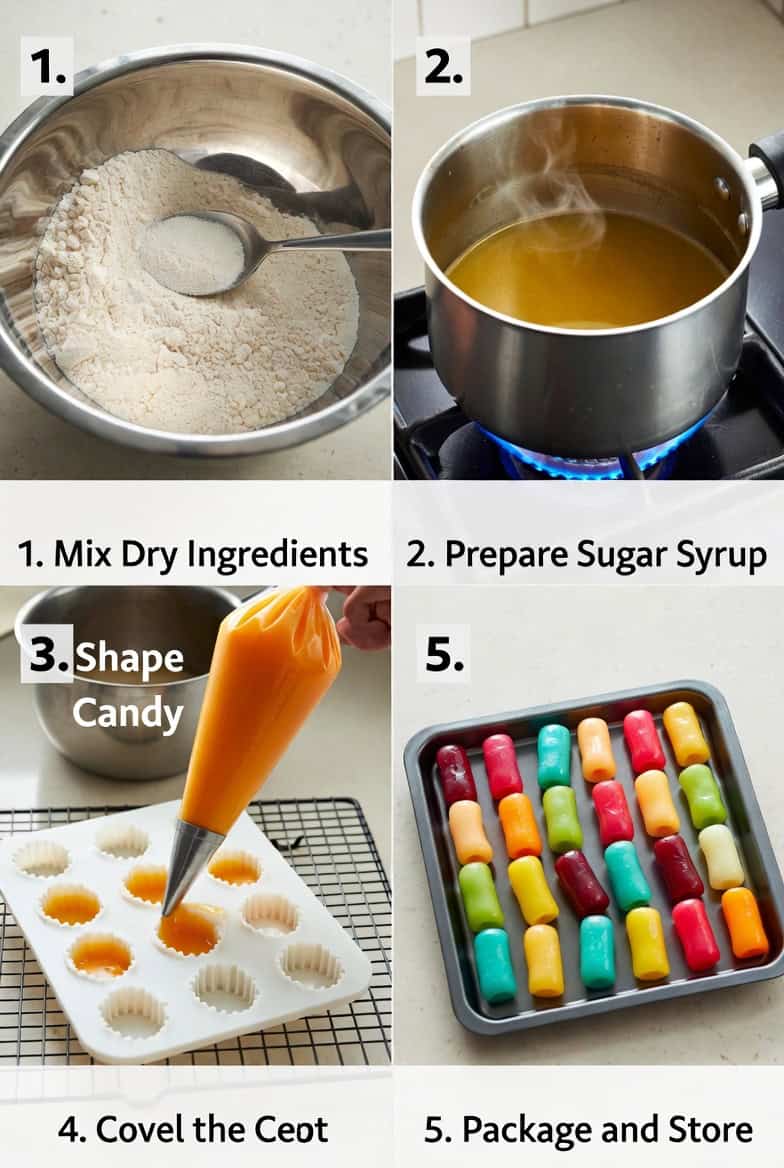 Once the sour tube candy has been fully conditioned, it must be protected. The primary goal of the packaging is to act as a barrier, isolating the candy from the ambient environment. The most critical function of this barrier is to prevent the transmission of water vapor. If moisture from the outside air can penetrate the package, the sour sanding will inevitably become sticky and dissolve, leading to the “sweating” we discussed earlier.
The choice of packaging material is therefore a technical decision of the highest order. The key property to look for is a low Water Vapor Transmission Rate (WVTR). WVTR is a measure of how much water vapor can pass through a given area of film over a specific period. For a hygroscopic product like sour tube candy, the lower the WVTR, the better.
The materials used for modern flexible packaging are typically multi-layer laminates, where each layer contributes a specific property. A common structure for a candy bag might include:
- An outer layer of Oriented Polypropylene (OPP) or Polyester (PET). This layer is chosen for its excellent printability, allowing for high-quality graphics and branding. It also provides stiffness and strength.
- A middle layer of metallized film (Metallized PET or OPP) or a foil layer. This is the primary moisture barrier. The ultra-thin layer of deposited aluminum is extremely effective at blocking the passage of water vapor, as well as oxygen and light, which can also degrade the product over time. This metallized layer is what gives the inside of many snack bags their silvery appearance.
- An inner sealant layer, typically made of Polyethylene (PE) or Cast Polypropylene (CPP). This layer’s function is to be able to melt at a lower temperature than the other layers, allowing the package to be heat-sealed to form a strong, airtight closure.
The specific combination and thickness of these layers will be chosen by a packaging engineer to meet the required shelf life and cost targets. For a product sold in a very humid region like South America, a higher-barrier, more expensive film might be necessary than for a product sold in a dry climate. Skimping on the packaging material is a false economy; any cost savings are quickly erased by product spoilage and customer complaints.
Automation in Packaging: From Counting to Sealing
In a modern, high-volume candy factory, the packaging process is almost entirely automated. The speed and efficiency of this automation are crucial for keeping production costs low and meeting market demand. The process typically begins after the candy is discharged from the curing room.
The candy pieces are transported via a conveyor belt to a multi-head weigher. This is a highly sophisticated piece of equipment that looks like a carousel of small buckets. The candy is fed into the center and distributed among the buckets. A computer then calculates the perfect combination of buckets to empty to achieve the exact target weight for one bag of candy (e.g., 150 grams). This method is incredibly fast and accurate, minimizing “giveaway” (overfilling bags) while ensuring each package meets its labeled weight.
Below the weigher is a Vertical Form Fill Seal (VFFS) machine. This machine does three things in a continuous, high-speed motion. It takes a flat roll of the packaging film we just discussed (the “film web”), forms it into a tube around a forming collar (“Form”), fills it with the precisely weighed portion of candy dropped from the weigher (“Fill”), and then uses heated jaws to create the top seal of one bag and the bottom seal of the next before a knife cuts them apart (“Seal”). This process can happen at speeds of over 100 bags per minute. The precision of the heat, pressure, and time of the sealing jaws is critical to creating a perfect, hermetic seal that will protect the product.
Quality Control Checkpoints Before Shipping
Quality control is not a single step but a continuous process woven throughout production. However, there are several critical checkpoints in the final stages before a product is approved for shipping.
After the bags are sealed, they typically pass through several automated inspection systems. A checkweigher is used to confirm that each individual bag is within the acceptable weight tolerance. Any bags that are over or under the limit are automatically rejected.
Next, the bags often pass through a metal detector. This is a vital food safety step. Despite all precautions, there is a minute risk of a small metal fragment (from a broken machine part, for example) contaminating the product. The metal detector will identify any such contamination and reject the affected bag, preventing a potential disaster and recall. Some facilities may use X-ray inspection systems, which can detect not only metal but also other foreign contaminants like glass or dense plastic.
Finally, visual inspection and laboratory testing are performed on samples from each production run. A quality control technician will visually inspect the finished packages for print quality, proper sealing, and correct date coding. They will also open packages to inspect the candy itself. Does it have the correct color and shape? Is the sour sanding dry and evenly applied? They will taste the product to ensure it meets the target flavor profile. In the lab, a sample might be tested for its water activity and moisture content to confirm it meets the specification. These final checks are the last line of defense, ensuring that only products that meet the company’s high standards are sent out to distributors and, ultimately, to consumers. This rigorous commitment to quality is what builds a brand’s reputation for excellence.
Frequently Asked Questions (FAQ)
What is the main cause of sour tube candy becoming sticky?
The primary cause of stickiness is moisture absorption by the sour coating. The food acids (like citric and malic acid) and sugar used in the sanding are hygroscopic, meaning they attract water from the atmosphere. If the candy is exposed to air with high relative humidity during production, packaging, or after the bag is opened, this coating will dissolve, creating a wet, sticky syrup on the surface. This can be prevented through formulation (using less hygroscopic acids like fumaric acid), strict environmental control (low humidity in the factory), and high-barrier packaging.
How can I create a liquid-filled sour tube candy?
Liquid-filled sour tube candy is made using a process called co-extrusion. This requires specialized equipment where two different materials are forced through a concentric die at the same time. One extruder pushes the outer jelly mass through an outer, ring-shaped opening, while a second pump or extruder pushes the liquid or paste filling through a central opening. The key is to ensure the viscosity and pressure of the outer jelly and the inner filling are perfectly matched at the point of extrusion to prevent the filling from bursting out or leaving voids.
What’s the difference between sour sanding and a sour slurry?
Sour sanding is a dry application process. Candy pieces are tumbled in a mixture of crystalline sugar and powdered food acids, creating a dry, crunchy, crystalline coating. A sour slurry, on the other hand, is a wet application process. Candy pieces are coated with a thick, low-moisture, high-acid syrup. This results in a smooth, glossy sour coating rather than a crystalline one. Sanding is more common and is often considered a more stable process, while a slurry can provide a different texture and appearance but requires very careful drying and formulation.
How do I ensure my natural colors don’t fade in a high-acid candy?
Preventing natural colors from fading in an acidic environment is a significant challenge. The strategy involves several key actions. First, select the most acid-stable natural colors available; work closely with your color supplier to choose options specifically designed for low-pH applications (e.g., certain carotenoids or specialized anthocyanin preparations). Second, use buffering agents like sodium citrate to stabilize the pH and prevent it from dropping too low. Third, add the color as late as possible in the process, such as with in-line injection, to minimize its exposure to heat. Finally, use packaging with an excellent light barrier (like metallized film), as light exposure can also cause many natural colors to fade over time.
What is the typical shelf life of sour tube candy?
When produced and packaged correctly, a sour tube candy can have a shelf life of 12 to 18 months. The limiting factor is almost always moisture migration. The low water activity of the candy itself prevents microbial growth, but the quality degrades when the sour sanding becomes sticky or the jelly’s texture changes. Achieving a long shelf life depends entirely on a correct formulation (balanced water activity), a stable sour sanding application, and packaging the product in a high-moisture-barrier film.
Can I use sugar-free sweeteners for sour tube candy?
Yes, it is possible to make sugar-free sour tube candy, but it presents significant formulation challenges. You would replace the sucrose and glucose syrup with polyols (sugar alcohols) like maltitol, sorbitol, or isomalt. These provide bulk and sweetness but have different properties from sugar. They often require different gelling agents or concentrations. The biggest challenge is controlling water activity and preventing stickiness, as many polyols are even more hygroscopic than sugar. Additionally, excessive consumption of polyols can have a laxative effect, which often requires a warning on the package.
Why is a cooling tunnel necessary after extrusion?
The cooling tunnel is essential for setting the candy’s shape and texture. When the jelly ropes exit the hot extruder, the gelling agent’s network is not yet fully formed, and the candy is soft and fragile. The cooling tunnel transports the ropes through a refrigerated environment in a controlled manner. This gradual cooling allows the gel (whether gelatin, pectin, or starch) to set completely and uniformly from the inside out. This process locks in the tube shape and develops the initial firmness needed for the candy to be cut and handled in the subsequent sanding stage.
Conclusion
The creation of a successful sour tube candy is a testament to the elegant fusion of culinary art with rigorous science. As we have journeyed through the five critical stages—from the molecular dance of hydrocolloids and sugars in the formulation, through the precise mechanics of extrusion, to the delicate chemistry of sour sanding and the final fortification in conditioning and packaging—a clear principle emerges: control is paramount. Each step presents its own set of variables that must be understood and mastered. The texture of the chew, the intensity of the sour burst, the vibrancy of the color, and the stability of the final product are not happy accidents; they are the direct results of deliberate, well-informed decisions.
For manufacturers in 2026, navigating the competitive landscapes of the Americas and Europe requires more than just a good recipe. It demands a commitment to quality that is embedded in every part of the production process. It requires an investment in equipment that offers the precision and control necessary to execute these complex processes with consistency, batch after batch. The consumer’s fleeting moment of sour-induced delight is the culmination of a long and carefully orchestrated process. Success in this market belongs to those who respect the complexity of that process and dedicate themselves to perfecting every single note in this sensory symphony.
References
Brummer, Y., & Cui, S. W. (2005). Understanding carbohydrate analysis. In S. W. Cui (Ed.), Food carbohydrates: Chemistry, physical properties, and applications (pp. 1-35). CRC Press.
Hartel, R. W., von Elbe, J. H., & Hofberger, R. (2018). Confectionery science and technology. Springer.
Hartel, R. W., & Marangoni, A. G. (2021). Food texture and viscosity: Concept and measurement. Academic Press.
Labuza, T. P., & Hyman, C. R. (1998). Water activity and food preservation. In D. R. Heldman & D. B. Lund (Eds.), Handbook of food engineering (pp. 415-449). CRC Press.
López-López, I., Cárdenas-Cárdenas, M., & Fiszman, S. M. (2017). Sensory perception of sourness: A review. Trends in Food Science & Technology, 67, 216-226.
Marsh, R. D., & Bugusu, B. A. (2007). Food packaging—roles, materials, and environmental issues. Journal of Food Science, 72(3), R39-R55. https://doi.org/10.1111/j.1750-3841.2007.00301.x
Saha, D., & Bhattacharya, S. (2010). Hydrocolloids as thickening and gelling agents in food: A critical review. Journal of Food Science and Technology, 47(6), 587–597.
Shanghai Junyu Food Machine Co., Ltd. (n.d.-a). about us. JY Machine. Retrieved January 15, 2026, from
Shanghai Junyu Food Machine Co., Ltd. (n.d.-b). Gummy candy production line. Junyu. Retrieved January 15, 2026, from
Van der Sman, R. G. M., & Meinders, M. B. J. (2011). Starch gelatinization and melting studied by DSC. Journal of Thermal Analysis and Calorimetry, 104(2), 581–589.
Related Articles
- What Makes Sour Candy Sour? The Acids, Chemistry, and Production Secrets
- Sour Tube Candy: What It Is, Flavors, How It’s Made & Why You Can’t Stop
- Peelable Gummy Candy: Types, Ingredients, and Production Guide
- Sour Spaghetti Candy: The Complete Guide to This Tangy Gummy Treat
- Gummy Candy Production Line
- Food Packaging Machine
- Skittles Manufacturing Process: Inside the Factory