Hard candies made with erythritol or stevia typically contain 0–2g net carbs per serving — the lowest of any candy category.
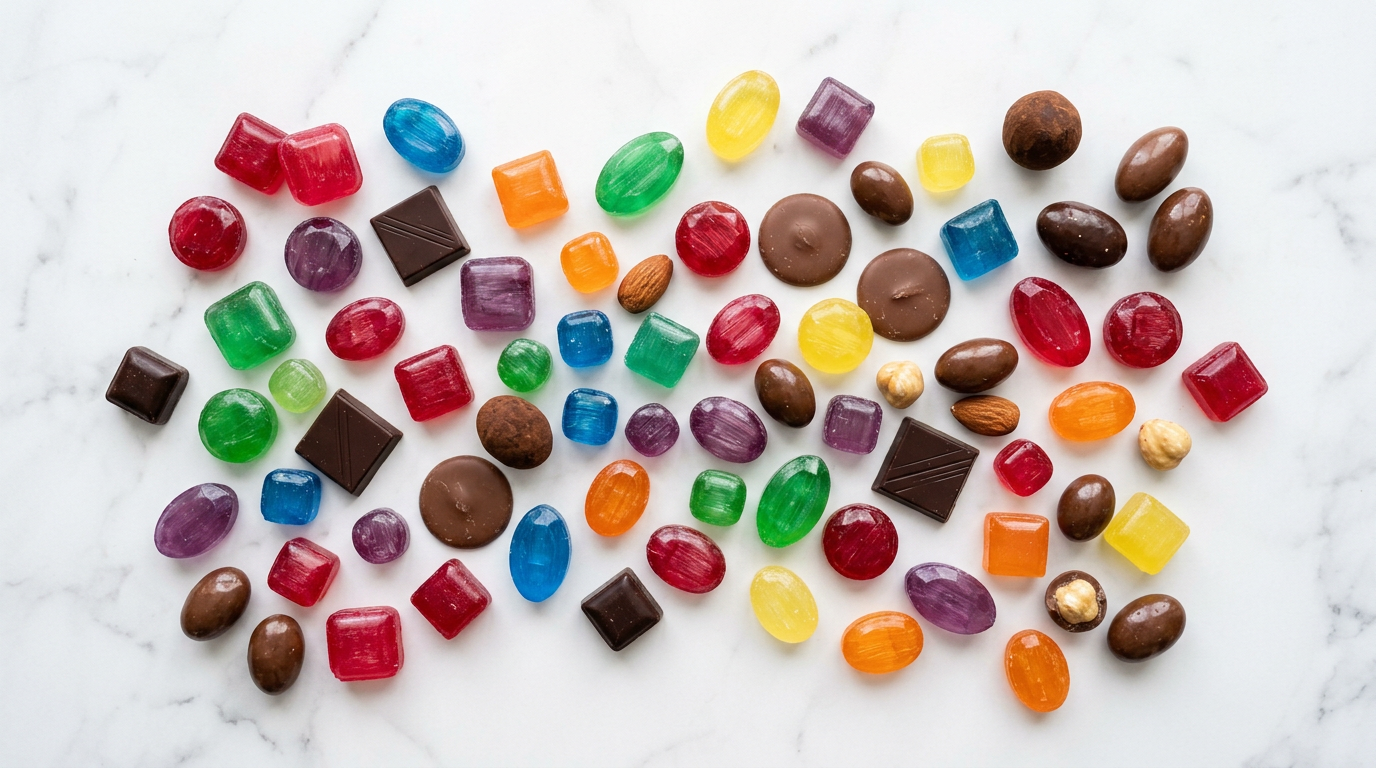
You want something sweet. You’re also watching your carbs — managing diabetes, following keto, or simply cutting sugar. The problem? Most “sugar-free” labels hide a dirty secret: maltitol, a sugar alcohol that spikes blood glucose almost as aggressively as table sugar. Finding candy with the least carbs that actually tastes good, doesn’t wreck your diet, and is made with honest ingredients is harder than it should be.
This guide cuts through the noise. We’ll show you which candy types genuinely have the fewest carbs, which sweeteners to trust (and which to avoid), how to read a nutrition label without getting fooled, and what the candy manufacturing industry is doing to meet rising demand for low-carb options. By the end, you’ll be able to pick the right low-carb candy for your lifestyle — without second-guessing every ingredient panel.
What Is Low-Carb Candy?
Low-carb candy contains 5g or fewer net carbs per serving, typically by replacing sugar with non-glycemic sweeteners.
Not all “sugar-free” candy is low-carb candy — and that distinction matters enormously. A chocolate bar can be sugar-free yet still carry 15–20g of net carbs per serving when it relies heavily on maltitol or other sugar alcohols with high glycemic impact. True candy with the least carbs strips out digestible carbohydrates at the source.
Net Carbs vs. Total Carbs
Total carbs on a nutrition label include fiber, sugar alcohols, and digestible sugars. Net carbs — the figure that actually affects blood sugar — are calculated as:
Net Carbs = Total Carbohydrates − Dietary Fiber − Erythritol (or other non-glycemic sugar alcohols)
The reason erythritol gets subtracted is that roughly 90% of it is excreted unchanged through the kidneys; it contributes almost no calories and essentially no blood glucose response. Allulose, a rare sugar found naturally in figs and raisins, is similarly non-glycemic and is now explicitly excluded from total carbohydrate counts on U.S. nutrition labels under FDA guidance — making it one of the cleanest sweeteners for low-carb candy.
Other sugar alcohols — particularly maltitol, sorbitol, and xylitol — have glycemic indexes ranging from 7 (xylitol) to 52 (maltitol). Maltitol’s GI of 52 is more than half that of pure glucose (100), which is why many “sugar-free” products still cause a measurable blood sugar spike.
How Sweeteners Affect Carb Count
The sweetener choice is the single biggest driver of a candy’s effective carb count. Here’s how the most common options compare:
| Sweetener | Glycemic Index | Calories/g | Net Carbs Counted? | Notes |
|---|---|---|---|---|
| Sucrose (table sugar) | 65 | 4 | Yes — fully | Baseline reference |
| Maltitol | 52 | 2.1 | Partially | Causes blood sugar spikes; avoid on keto |
| Xylitol | 7 | 2.4 | Partially | Safe for humans; toxic to dogs |
| Sorbitol | 9 | 2.6 | Partially | Can cause GI distress in larger amounts |
| Erythritol | 0 | 0.2 | No — subtract fully | Best all-round sugar alcohol for low-carb candy |
| Allulose | 0 | 0.4 | No — excluded by FDA | Non-glycemic; excellent baking/candy properties |
| Stevia | 0 | 0 | No | 300× sweeter than sugar; often blended |
| Monk fruit | 0 | 0 | No | Clean taste; used in premium products |
For candy with the least carbs, look for products built on erythritol, allulose, stevia, or monk fruit. Products leaning on maltitol as the primary sweetener are misleading — they may say “sugar-free” on the front but still deliver a significant carb load.
Types of Candy With Least Carbs
Hard candies sweetened with erythritol or isomalt lead the category, followed by dark chocolate (85%+) and erythritol-based gummies.
The candy market spans many formats, and each handles low-carb reformulation differently. Some categories adapt easily; others are inherently higher in carbs because their structure depends on digestible sugars.
Hard Candy and Lollipops
Hard candy is arguably the easiest category to make genuinely low-carb. Because the product is almost entirely sweetener — with very little added fat, fiber, or protein — replacing sugar with erythritol or isomalt produces a piece with 0–2g net carbs. Isomalt, a sugar alcohol derived from sucrose, has a GI of just 2 and resists humidity well, making it ideal for the hard-candy manufacturing process.
Brands like Zolli Pops use xylitol and erythritol blends. A single pop typically contains 1g or fewer net carbs. The trade-off: isomalt-based candies can cause GI discomfort in large quantities (more than 40–50g per day), so portion awareness still matters.
Dark Chocolate
Dark chocolate is not zero-carb, but it earns its place on the low-carb candy list when it’s formulated correctly. Cocoa solids are naturally low in sugar; the carbs in conventional chocolate come almost entirely from added sugar during processing. A 85%+ dark chocolate bar with erythritol or stevia as the sweetener can land at 3–5g net carbs per 30g serving.
According to Harvard T.H. Chan School of Public Health’s research on dark chocolate and heart health, higher-cocoa-content chocolate retains more flavonoids and carries fewer net carbs than milk chocolate. For low-carb candy shoppers, 85–90% cocoa content with erythritol sweetening hits the sweet spot of flavor and minimal blood glucose impact.
Gummies and Chewy Candy
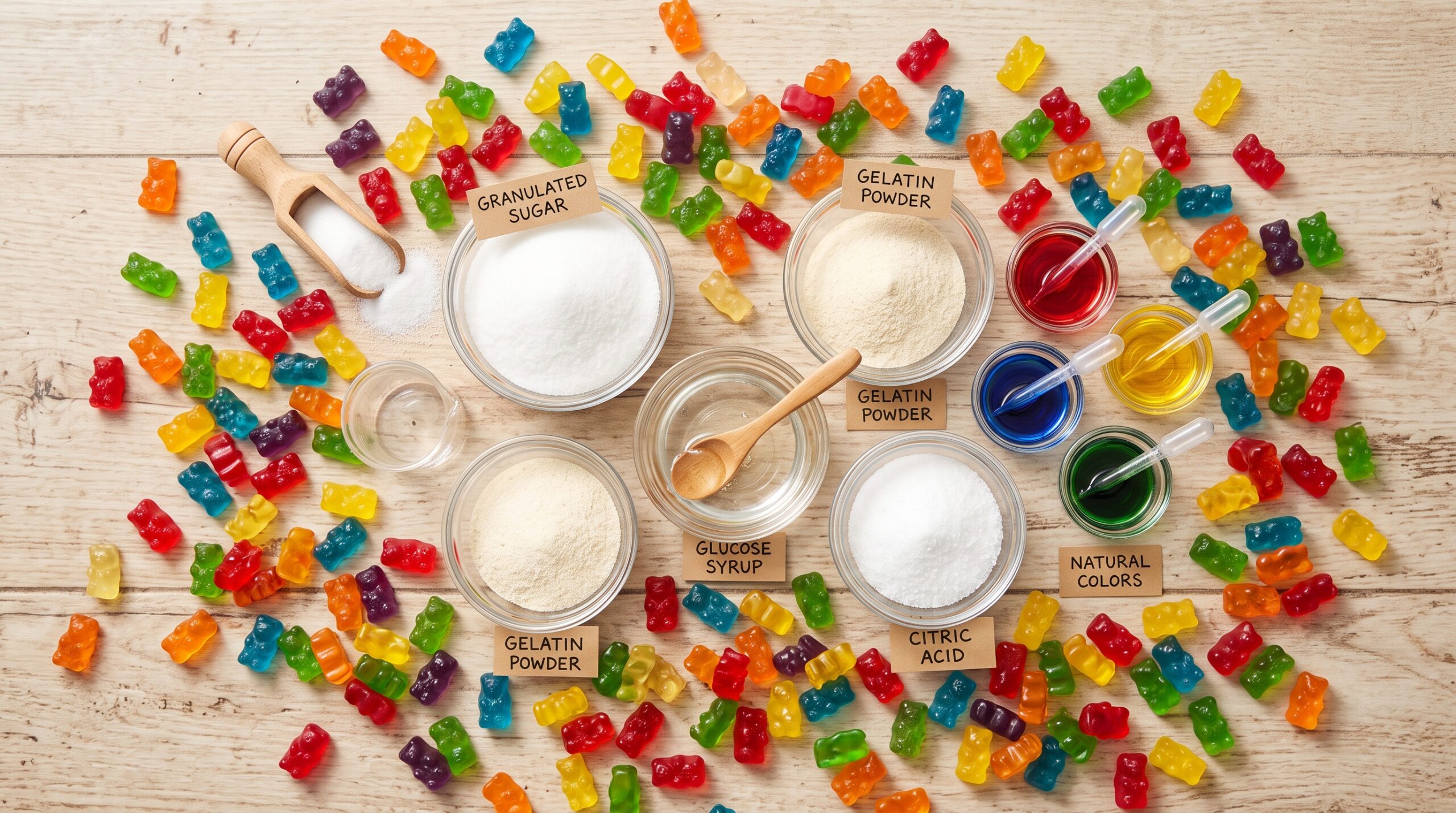
This is the hardest format to make genuinely low-carb. Traditional gummies depend on glucose syrup for their chewy texture; the gelatin structure and the chew both require sugars to perform correctly during manufacturing. Modern low-carb gummies use modified fiber blends (soluble corn fiber, chicory inulin) to replace glucose syrup, combined with erythritol or allulose for sweetness.
The result varies dramatically by brand. Some achieve 2–4g net carbs per serving. Others disguise high maltitol counts behind small serving sizes. Always check the label for total sugar alcohols and subtract only the erythritol portion — not the full sugar-alcohol line.
Specialty Keto Candy
The fastest-growing segment in candy with least carbs is specialty keto-formulated products. These are engineered from the ground up without any glycemic ingredients. They typically combine:
– Erythritol or allulose as the bulk sweetener
– Monk fruit or stevia as the intense sweetener
– Cocoa butter or MCT oil for mouthfeel (in chocolate formats)
– Modified cellulose or inulin for texture in chewy formats
Net carb counts for this category regularly hit 0–1g per serving. The downside is cost: specialty keto candy runs 3–5× the price of conventional candy, driven by premium ingredient sourcing.
Comparison by Candy Type
| Candy Type | Typical Net Carbs/Serving | Best Sweetener Base | Keto-Friendly? |
|---|---|---|---|
| Erythritol hard candy | 0–1g | Erythritol + isomalt | Yes |
| Keto specialty candy | 0–2g | Allulose or erythritol | Yes |
| Dark chocolate (85%+) | 3–6g | Erythritol or stevia | Yes (moderate) |
| Sugar-free gummies (good) | 2–4g | Erythritol + fiber | Yes (moderate) |
| Sugar-free gummies (maltitol) | 10–15g effective | Maltitol | No |
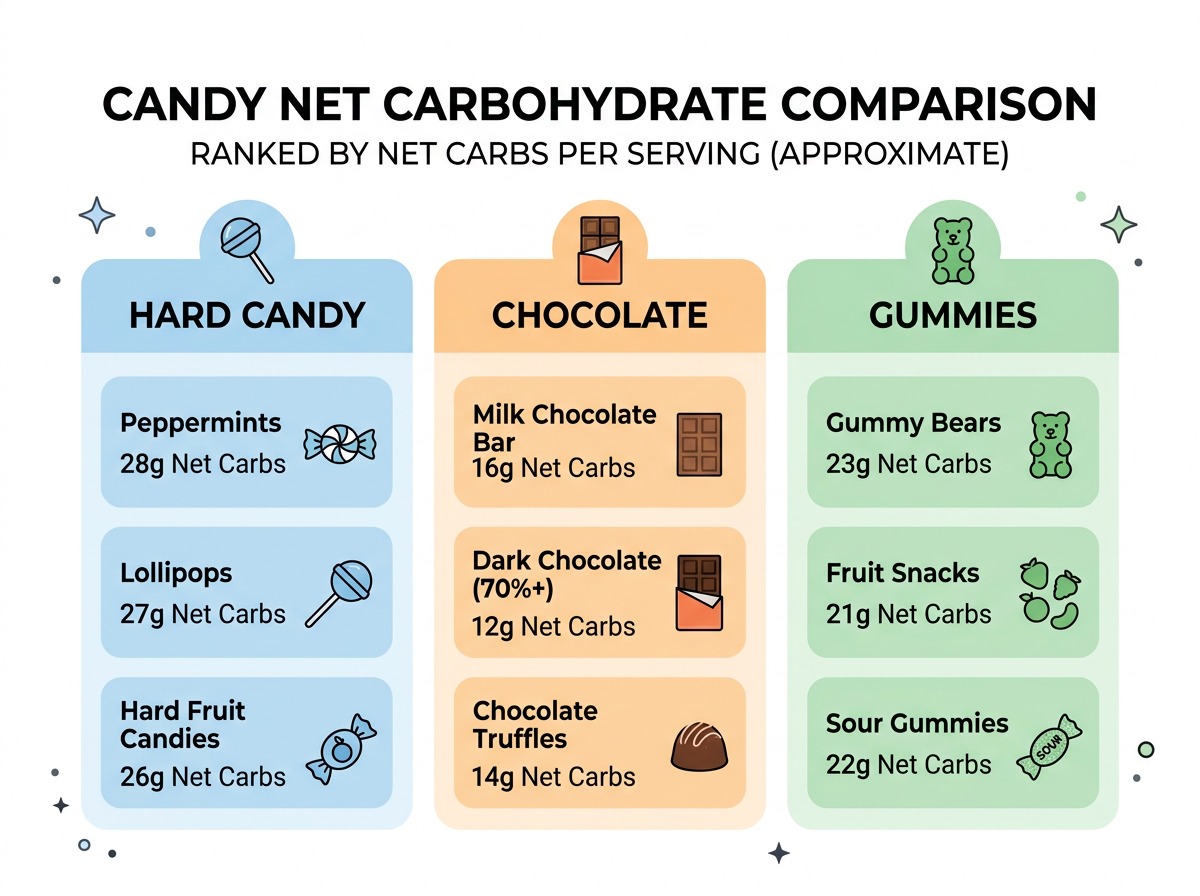
| Regular hard candy | 15–18g | Sucrose + glucose syrup | No |
| Conventional gummies | 22–28g | Glucose syrup + sucrose | No |
Industry Applications: How Low-Carb Candy Is Manufactured
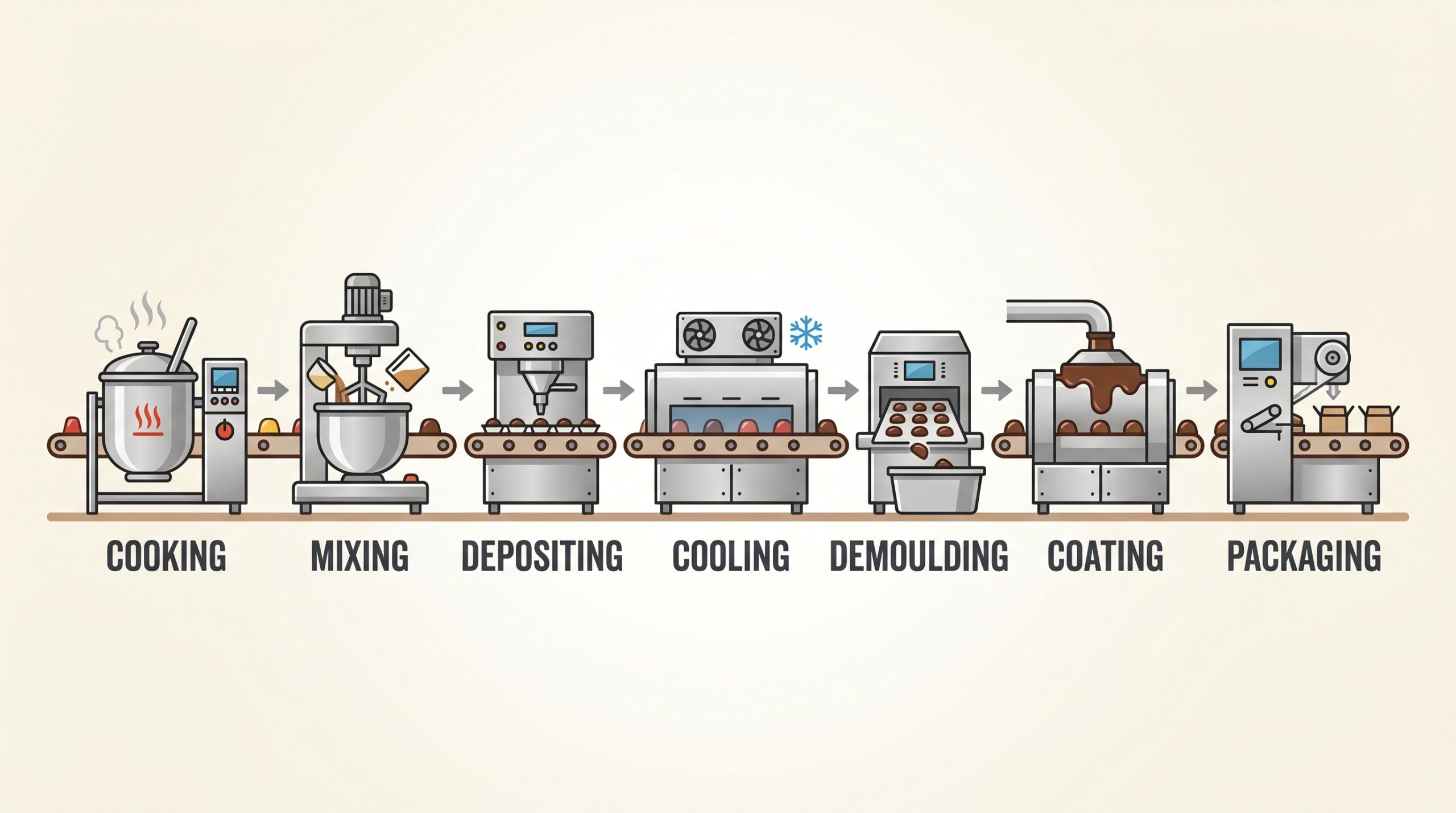
Low-carb candy requires specialized confectionery machinery that handles alternative sweeteners’ different melting points, crystallization behaviors, and viscosity profiles.
Most low-carb candy buyers never think about what happens on the factory floor, but manufacturing constraints directly explain why some categories are easy to reformulate and others are not. This matters especially if you’re a manufacturer or retailer sourcing private-label low-carb products.
Sugar Replacement and Its Manufacturing Implications
Table sugar (sucrose) has extremely predictable behavior in confectionery: it melts at 186°C, has well-characterized crystallization kinetics, and behaves consistently across humidity ranges. Erythritol melts at a lower temperature (121°C), crystallizes faster, and has about 70% of sugar’s sweetness intensity. Allulose melts at 103°C and browns faster than sucrose — useful for caramelization but requiring tighter temperature control.
These differences mean that candy manufacturing lines designed for conventional sugar often require adjustment — modified temperature profiles, different cooling rates, adapted depositor speeds — when switching to low-carb formulations. Isomalt, conversely, processes very similarly to sucrose and is widely used in premium hard candy lines with minimal equipment modification.
The Rise of Functional Candy Manufacturing
The global sugar-free and low-carb confectionery market reached approximately USD 2.1 billion in 2023, according to Mordor Intelligence’s confectionery market report, and is projected to grow at 6.8% CAGR through 2029. This growth is pushing candy machinery manufacturers to develop lines optimized for erythritol-based recipes, including:
- Depositing lines with tighter temperature tolerance windows
- Cooling tunnels with faster throughput to prevent erythritol recrystallization on the product surface
- Enrobing systems adapted for allulose-sweetened chocolate coatings that brown more quickly
- Packaging configurations designed for harder, more brittle isomalt-based hard candies
Understanding this supply chain context helps both buyers (knowing why genuinely low-carb candy is more expensive) and business operators (understanding where the technical complexity lies when sourcing contract manufacturing).
Ingredient Sourcing for Low-Carb Candy Production
| Ingredient | Role in Candy | Primary Sources | Cost vs. Sucrose |
|---|---|---|---|
| Erythritol | Bulk sweetener, 0 GI | Fermentation of glucose from corn/wheat | 3–5× higher |
| Allulose | Sweetener + browning | Enzymatic conversion from fructose | 5–8× higher |
| Isomalt | Hard candy base, low GI | Sucrose-derived, hydrogenated | 2–3× higher |
| Monk fruit extract | Intense sweetener | Luo han guo fruit extraction | 10–20× higher |
| Stevia | Intense sweetener | Stevia rebaudiana leaf extraction | 8–15× higher |
| Chicory inulin | Prebiotic fiber, texture | Chicory root extraction | 2–4× higher |
How to Choose Candy With the Least Carbs
Check the net carb count (total carbs minus erythritol and fiber), avoid maltitol as a primary sweetener, and confirm serving size isn’t artificially small.
The candy aisle is full of misleading claims. Here’s a systematic approach to choosing candy that genuinely minimizes your carb intake.
Step 1: Read the Nutrition Label Correctly
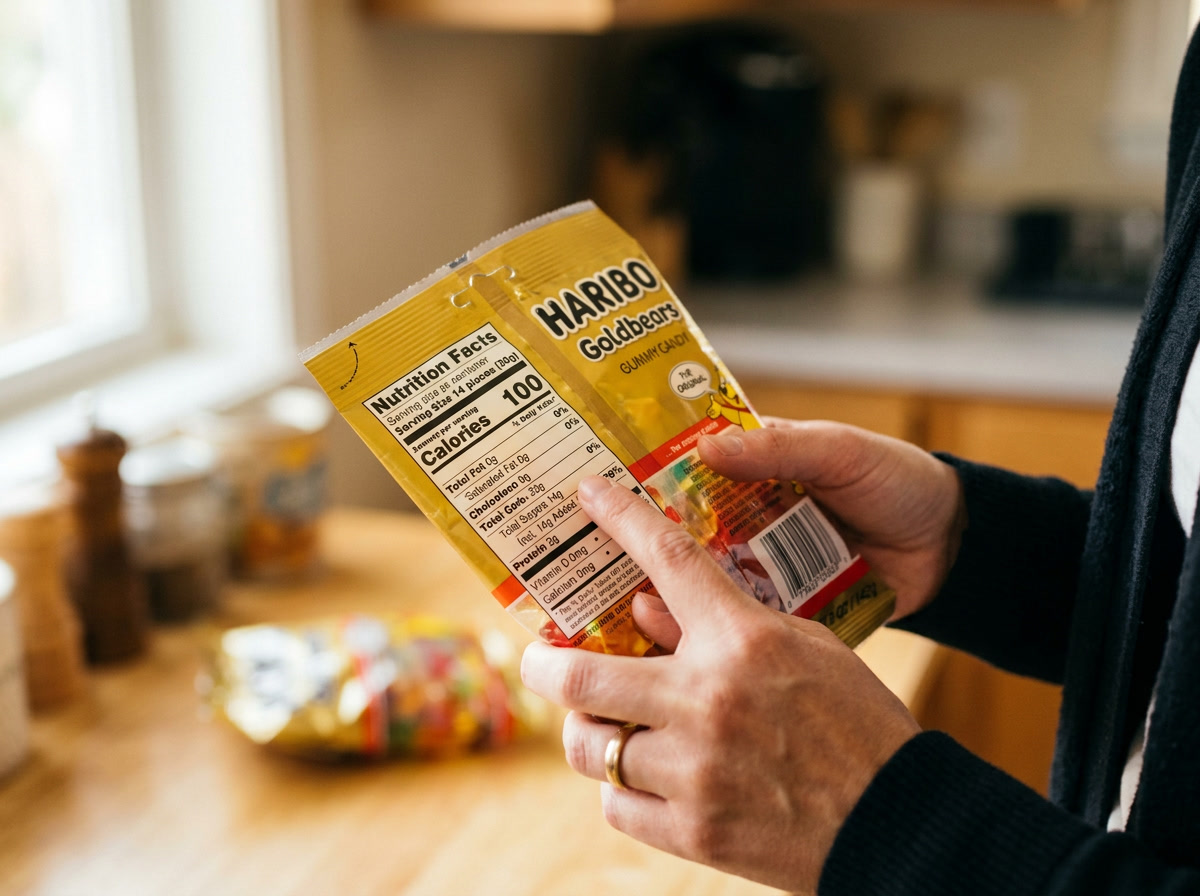
Flip the package over before you read the front. Front-of-pack claims like “sugar-free,” “no sugar added,” “keto-friendly,” and “low carb” have no consistent legal definition in most markets and can be applied to products with surprisingly high effective carb counts.
On the Nutrition Facts panel:
1. Note the serving size first — some manufacturers use 10–15g serving sizes for a product where a normal snack portion would be 30–40g.
2. Find Total Carbohydrates — this is your starting point.
3. Subtract Dietary Fiber — look under Total Carbohydrates for the fiber sub-line.
4. Identify the sugar alcohol type — if it’s erythritol, subtract it entirely. If it’s xylitol or sorbitol, subtract ~50%. If it’s maltitol, subtract only ~25% (it has meaningful glycemic impact).
5. Your result is the effective net carb count per serving.
As explained by the American Diabetes Association’s guide to carbohydrate counting, people managing blood glucose should look at total available glucose, not just the sugar line — which is exactly the net carb calculation described above.
Step 2: Verify the Sweetener Hierarchy
Ingredients are listed in descending order by weight. For candy with the least carbs, erythritol, allulose, or isomalt should appear before (or instead of) maltitol or sorbitol in the ingredients list. If maltitol is the first or second sweetener, expect a higher glycemic impact than the “sugar-free” label implies.
Step 3: Watch for Hidden Carb Sources
Even in products with good primary sweeteners, carb counts can creep up through:
– Glucose syrup (often used for texture in gummies, even in “sugar-free” versions)
– Dextrose (pure glucose — very high GI — sometimes added in trace amounts as a carrier for flavors)
– Invert sugar in coatings
– Fruit juice concentrates in “naturally sweetened” candy
Common Mistakes to Avoid
The Maltitol Trap. This is the biggest pitfall in the low-carb candy space. Reddit’s keto community frequently debates this — with one widely discussed thread noting that every “low carb” option either has maltitol or “tastes like chalk.” Maltitol does produce a better taste and texture than erythritol in many applications, which is why manufacturers prefer it. But its glycemic impact is substantial. For strict keto or diabetes management, maltitol-based candy should be treated the same as a moderate-carb conventional candy.
Small Serving Size Games. A product listing 2g net carbs per serving sounds excellent — until you notice that “one serving” is listed as 8g (about 2 small gummies). If you eat a normal portion of 30g, you’re actually consuming 7–8g net carbs. Always rescale nutrition data to a realistic portion size before comparing products.
Overconfidence in “Net Carbs.” The net carb concept is a useful heuristic, but individual responses to sugar alcohols vary. Some people experience a measurable blood glucose rise from xylitol at higher doses. If you’re managing diabetes, the most reliable approach is to test your blood glucose 1–2 hours after trying a new “low-carb” candy product, as recommended by the Joslin Diabetes Center’s clinical guidelines on carbohydrate management.
Future Trends in Low-Carb Candy (2026 and Beyond)
Novel sweeteners like allulose and fermentation-derived rare sugars will drive the next generation of genuinely zero-carb candy — with better taste and wider availability.
Novel Sweeteners Reshaping the Category
The next 3–5 years in candy with least carbs will be defined by the transition from erythritol-dominant formulations to allulose as the new industry standard. Allulose’s advantages are significant:
- Non-glycemic: Not metabolized for energy; FDA-approved for exclusion from total carbohydrate counts.
- Superior browning: Maillard reaction similar to sucrose, enabling caramel-type flavors without carbs.
- Better mouthfeel: Closer to sucrose’s body and texture than erythritol, which can feel “cooling” at high concentrations.
- No GI effects: Unlike most sugar alcohols, allulose doesn’t cause digestive discomfort even at relatively high doses.
Fermentation-based production of allulose (using engineered enzymes to convert fructose) is scaling rapidly, which will bring costs down from current 5–8× parity with sucrose toward 2–3× by 2028 — the price point at which mainstream candy brands can reformulate profitably.
Market Forecast and Demand Drivers
Several structural shifts are accelerating demand for candy with the least carbs:
Diabetes prevalence: The International Diabetes Federation estimates 537 million adults currently live with diabetes globally, with projections reaching 783 million by 2045. This represents a massive and growing consumer base with strong motivation to seek low-glycemic alternatives to conventional candy.
GLP-1 medication users: The rapid adoption of semaglutide-class medications (Ozempic, Wegovy) is creating a new consumer segment — people managing appetite and blood glucose who still want occasional sweet treats with minimal carb impact.
Keto/low-carb diet persistence: Despite media cycles, low-carbohydrate eating patterns have maintained consistent adherents. Market research from Statista’s global sugar confectionery market analysis confirms that the sugar-free and low-carb confectionery segment has outgrown the overall confectionery market for six consecutive years.
Children’s dentistry: Sugar-free candy with xylitol has documented anti-cariogenic (cavity-reducing) properties. Pediatric dental associations in several countries now actively recommend xylitol-based hard candy as a cavity-prevention tool — opening a healthcare-adjacent demand channel.
The candy manufacturing industry is responding. Specialized machinery companies are seeing increased orders for confectionery lines optimized for erythritol and allulose processing, particularly from Asian manufacturers entering Western markets with low-carb reformulations at competitive price points.
Frequently Asked Questions About Candy With Least Carbs
Hard candy sweetened with erythritol or isomalt contains the fewest net carbs — typically 0–1g per piece.
What candy is lowest in carbs?
Erythritol-based hard candy and isomalt lollipops are the lowest-carb candy options available, typically 0–1g net carbs per piece. Specialty keto chocolate bars (using erythritol and allulose) run 1–3g net carbs per serving. These compare favorably to conventional hard candy at 15–18g per serving and standard chocolate at 20–25g per bar.
Can I eat candy on a no-carb diet?
Strict zero-carb diets technically exclude all candy, as even erythritol-based products usually contain trace carbs from flavorings, colorings, or gelatin. However, for practical keto dieting (20–50g net carbs per day), 1–2 pieces of erythritol-sweetened hard candy (0–2g net carbs total) fits comfortably within daily targets. The key is accounting for every gram rather than assuming “sugar-free” means zero carbs.
Is maltitol okay for diabetics?
No — not as a free-pass sweetener. Maltitol has a glycemic index of approximately 52, which means it raises blood glucose at roughly half the rate of sucrose. For people managing type 1 or type 2 diabetes, maltitol-based candy should be treated as a moderate-carb food and counted accordingly. The American Diabetes Association advises against assuming that “sugar-free” automatically means safe for blood glucose management.
What’s the difference between sugar-free and low-carb candy?
“Sugar-free” means no sucrose or fructose — but the candy may still contain high-GI sugar alcohols (like maltitol) or digestible carbs from other sources. “Low-carb” is a net carb claim with no legal definition. The safest approach: ignore both front-of-pack labels and calculate net carbs directly from the Nutrition Facts panel as described in the How to Choose section above.
Are sugar alcohols safe to eat every day?
Most sugar alcohols are considered safe for regular consumption at moderate doses. Erythritol and allulose have the best safety profiles — even at higher intakes, they don’t cause the GI distress that sorbitol and maltitol can produce at doses above 20–30g. Xylitol is effective at lower doses and also provides dental health benefits, but is highly toxic to dogs, so keep it away from pets. One emerging consideration: a 2023 observational study from the Cleveland Clinic raised questions about high erythritol intake and cardiovascular risk markers, though causality remains contested and the study measured serum erythritol, not dietary intake directly.
Which grocery store candy has the fewest carbs?
In mainstream grocery stores (without specialty sections), your best bets are:
– Werther’s Sugar Free (isomalt-based hard candy): ~1g net carbs per piece
– Russell Stover Sugar Free (varies by product, some erythritol-based): 2–4g net carbs per serving
– Lily’s Chocolate (erythritol + stevia): 3–5g net carbs per 30g serving
– SmartSweets (soluble fiber-based gummies): 3g net carbs per 50g bag
Always verify current formulations — manufacturers change ingredient profiles without changing packaging.
How does low-carb candy manufacturing differ from conventional candy production?
Low-carb candy manufacturing requires equipment capable of handling alternative sweeteners’ different physical properties. Erythritol crystallizes faster than sucrose and has a lower melting point, requiring tighter temperature control in depositing lines. Allulose browns more quickly, demanding precise oven temperature management for coated products. These technical demands are driving investment in specialized confectionery machinery designed for sugar-free and low-carb formulations — a trend particularly visible in the hard candy, chocolate enrobing, and gummy depositing equipment segments.

Conclusion
Candy with the least carbs is no longer a niche, flavorless compromise. The combination of erythritol, allulose, monk fruit, and stevia has produced genuinely low-carb candy that tastes good — from hard candy at 0–1g net carbs per piece to dark chocolate bars at 3–5g per serving. The critical skill is reading past front-of-pack marketing to the actual Nutrition Facts panel, identifying the sweetener type, and calculating realistic net carbs at the serving size you’ll actually eat.
For those managing diabetes or following a strict low-carb diet, the practical guide is simple: choose erythritol or allulose as the primary sweetener, avoid maltitol, and verify net carbs yourself. For candy manufacturers and retailers, the market signal is equally clear — demand for genuinely low-carb confectionery is structural and growing, driven by diabetes prevalence, GLP-1 medication adoption, and sustained keto diet adherence. The investment in the right confectionery machinery and ingredient formulations now positions brands for the next decade of low-carb consumer growth.
Related Articles
- Low Calorie Candy: The Complete 2026 Guide to Guilt-Free Sweet Treats That Actually Taste Good
- What Makes Sour Candy Sour? The Acids, Chemistry, and Production Secrets
- Sour Tube Candy: What It Is, Flavors, How It’s Made & Why You Can’t Stop
- Soft Candy: Types, Textures, and How They’re Made (2026 Guide)
- Gummy Candy Production Line
- Biscuit Production Line
- Are Skittles Gluten Free? Complete Guide 2026