An American biscuit is a soft, flaky quick bread made with flour, fat, and buttermilk, leavened with baking powder, and baked golden—distinct from the British cookie-style biscuit.
Walk into any Southern diner before 9 a.m. and you’ll see the same thing: a basket of golden, steam-puffed American biscuits sitting next to a bowl of sausage gravy. This humble quick bread has fed American families for over two centuries, and today it drives a multi-billion-dollar commercial baking industry. Whether you’re a home baker curious about technique or a food manufacturer researching biscuit production lines, understanding the american biscuit from every angle—history, chemistry, types, and industrial scale—gives you a serious edge. That’s what this guide delivers.
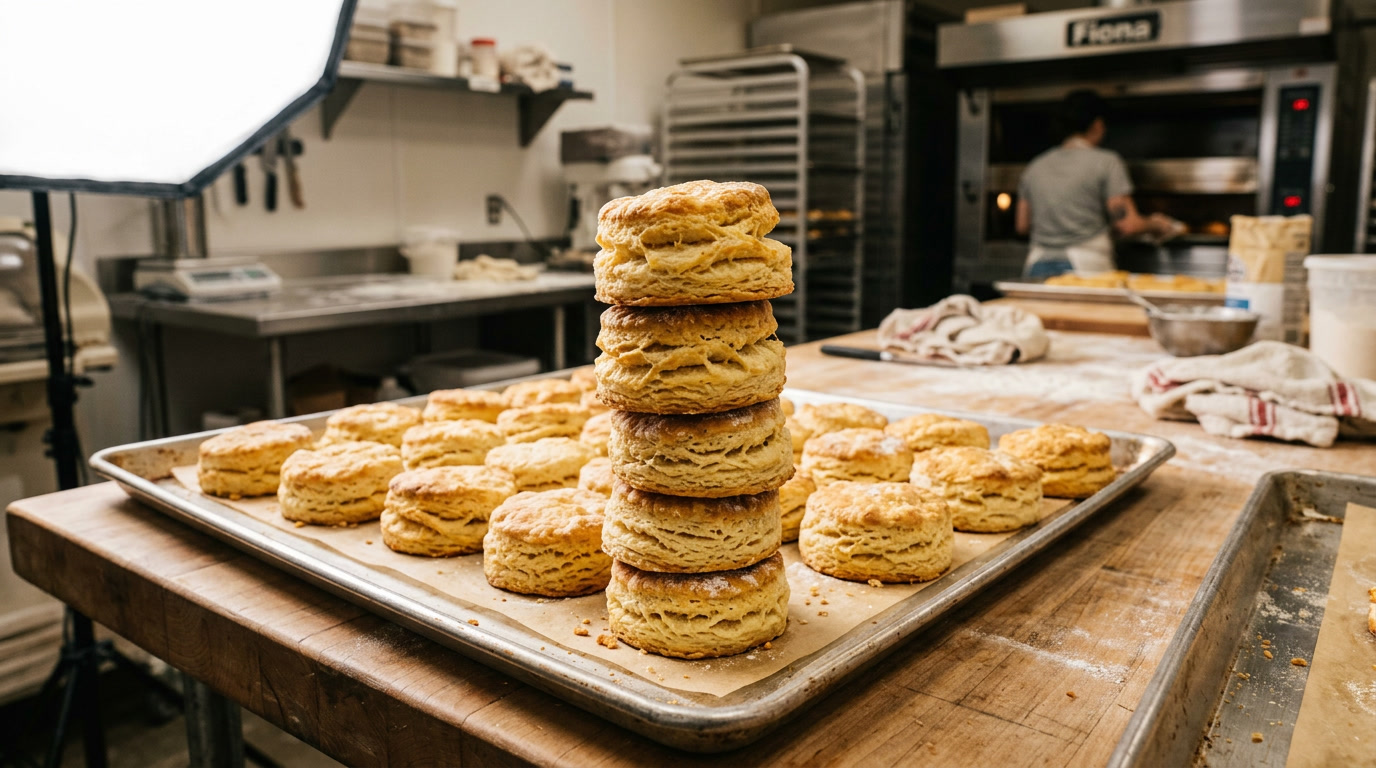
What Is an American Biscuit?
An american biscuit is a soft, leavened quick bread—tender inside, lightly crisp outside—produced by cutting fat into flour and using chemical leavening rather than yeast.
The name creates endless confusion across the Atlantic. In the United Kingdom and most of Europe, a “biscuit” means what Americans call a cookie: a flat, crisp, sweet confection. In the United States, a biscuit is something entirely different—a tall, flaky, savory (or mildly sweet) roll that resembles what the British call a “savoury scone.” The two products share a name but almost nothing else.
The Chemistry Behind the Texture
The american biscuit’s iconic layered, flaky interior comes from a specific technique: lamination through fat cutting. Cold butter or shortening is worked into flour only until pea-sized chunks remain. When the dough hits a hot oven, those fat pockets melt and release steam, forcing the layers apart. Baking powder provides additional lift through CO₂ release during both mixing (acid-base reaction with cream of tartar or sodium aluminum sulfate) and early baking (heat-triggered double-acting phase).
The key variables that separate a great american biscuit from a mediocre one:
- Fat temperature: Butter must stay below 10°C during mixing. Warm fat blends into the flour rather than creating distinct pockets, eliminating flakiness.
- Gluten development: Minimal mixing is essential. Over-worked dough develops too much gluten, producing a tough, dense crumb rather than a tender one.
- Hydration ratio: Most formulas target 60–70% hydration. Buttermilk adds acidity that tenderizes gluten strands and reacts with baking soda for extra leavening.
- Baking temperature: Commercial producers typically bake at 210–230°C for 12–16 minutes. Home bakers often go higher (230–245°C) for shorter times to maximize oven spring.
A Brief History
The american biscuit traces its roots to the early 19th century, when pearl ash (potassium carbonate, extracted from wood ash) became the first commercially available chemical leavener in the United States. Before that, quick breads relied on beaten eggs or yeast, both slower and less convenient. When commercial baking powder arrived in the 1850s—followed by mass-market brands like Calumet in the 1880s—the american biscuit became a pantry staple from Maine to Georgia.
Regionally, the biscuit cemented its identity in the American South, where soft winter wheat varieties (lower in protein, ~9–10% vs. hard wheat’s 12–14%) produced a more tender crumb. According to Nabisco’s historical brand archives, commercial biscuit manufacturing at industrial scale began in earnest in the late 19th century, with the formation of large baking consolidates that standardized production recipes and built the first dedicated biscuit production lines.
Types of American Biscuits
Not all american biscuits are created equal. There are five main categories, each with distinct formulation and texture differences that matter enormously at commercial production scale.
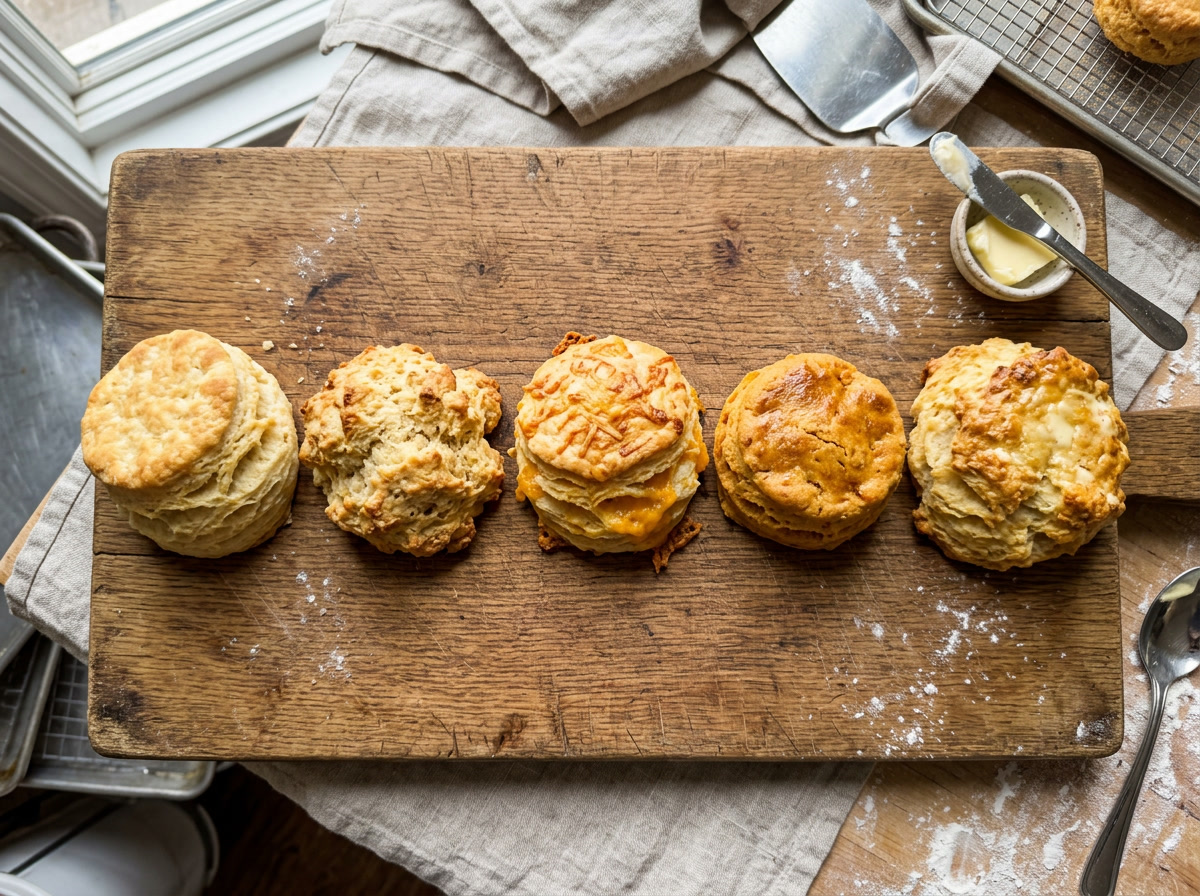
Buttermilk Biscuit
The gold standard. Buttermilk biscuits use the acid-base reaction between buttermilk and baking soda in addition to baking powder, producing a lighter, tangier result. The acidity also partially breaks down gluten, enhancing tenderness. At commercial scale, buttermilk is often replaced with acidified milk (regular milk + lactic acid or acetic acid solution) to standardize pH and extend shelf life.
Typical formulation (baker’s percentages):
| Ingredient | Baker’s % |
|---|---|
| Soft wheat flour | 100% |
| Butter or shortening | 30–35% |
| Buttermilk | 60–65% |
| Baking powder | 3–4% |
| Baking soda | 0.5–1% |
| Salt | 1.5–2% |
Drop Biscuit
Drop biscuits use a wetter dough (70–80% hydration) that cannot be rolled and cut. Instead, scoops of dough are “dropped” onto baking sheets. The result is a rougher surface with more irregular edges, a slightly denser crumb, and higher moisture retention. Drop biscuits are faster to produce—no rolling, no cutting—which makes them attractive for high-throughput foodservice operations.
Cat-Head Biscuit
A Southern tradition: oversized biscuits roughly the size of a cat’s head (about 4–5 inches diameter). These use more fat (up to 40% baker’s percentage) and a gentler fold technique to maximize height and layering. Cat-head biscuits are less standardized than buttermilk biscuits, which presents challenges for automated production lines calibrated for consistent portion sizing.
Sweet Potato Biscuit
Adding cooked, mashed sweet potato (replacing 20–30% of the liquid) changes the flavor profile, adds natural sugars, and produces a golden-orange interior. The natural pectin in sweet potato acts as a mild emulsifier, improving crumb structure without additional additives. These have grown significantly in foodservice menus in the last decade.
Cheese and Herb Biscuits
Savory add-ins (shredded cheddar, rosemary, garlic powder, chive) are incorporated at mixing. At commercial scale, cheese biscuits require modified baking parameters because the additional fat from cheese affects dough rheology and browning rates. Lines typically run 5–8°C lower to prevent over-browning.
Comparison of the five main types:
| Type | Hydration | Fat % | Special Feature | Commercial Complexity |
|---|---|---|---|---|
| Buttermilk | 60–65% | 30–35% | Tangy, tall layers | Low-medium |
| Drop | 70–80% | 25–30% | No rolling needed | Low |
| Cat-Head | 55–60% | 35–40% | Oversized, hand-formed | High |
| Sweet Potato | 50–55% | 28–32% | Natural color, sweet notes | Medium |
| Cheese/Herb | 60–65% | 35–42% | Modified browning rate | Medium-high |
Industrial Applications and Commercial Production
The american biscuit is far more than a home kitchen staple—it’s a major segment of the U.S. commercial baking industry.
The global biscuit and cookie market was valued at approximately $142 billion in 2024 and is projected to reach $185 billion by 2030, growing at a CAGR of ~4.5%. Within that, the North American segment—dominated by the american biscuit and similar quick breads—accounts for roughly 28–30% of global volume. Foodservice channels (fast food, casual dining, airline catering) drive a significant share of demand, with major chains like Popeyes, KFC, and Bojangles using proprietary biscuit recipes produced at scale.
The Commercial American Biscuit Production Line
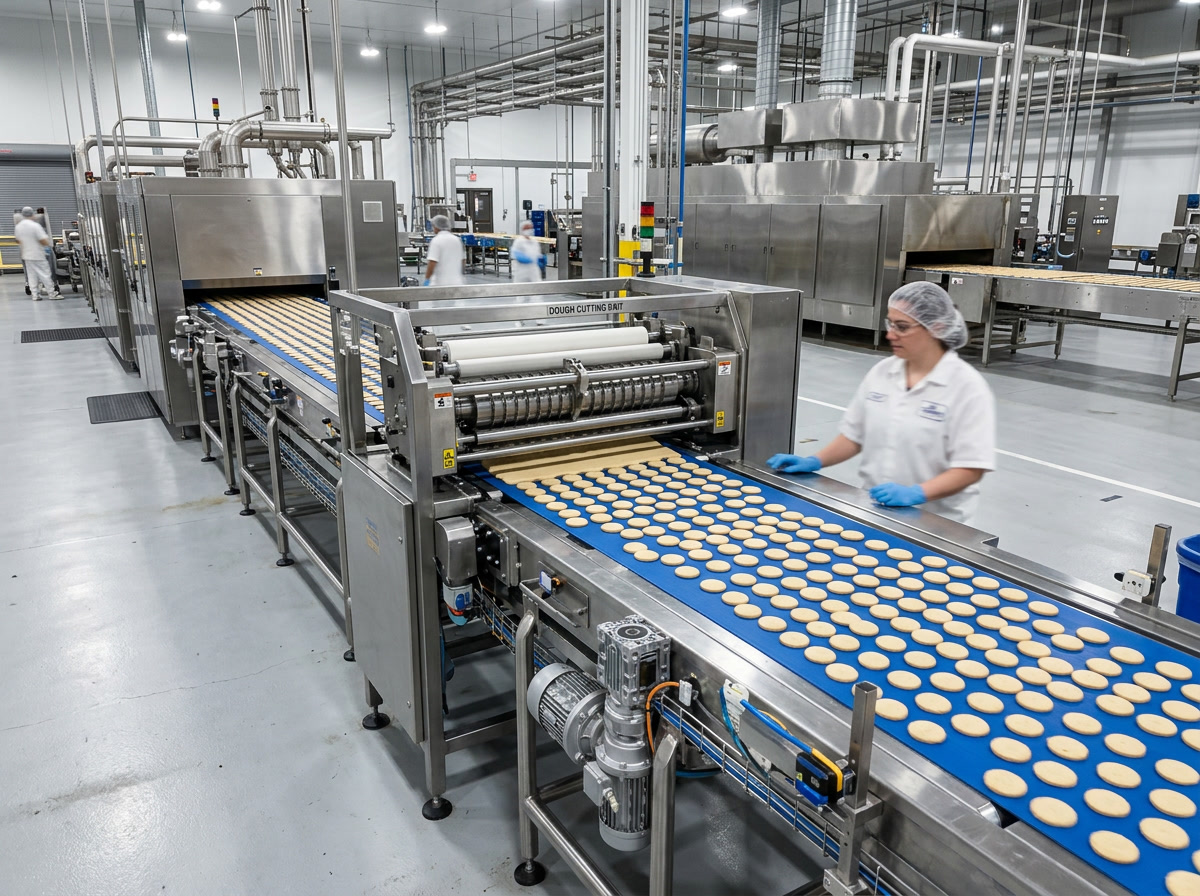
A modern commercial biscuit production line consists of five core stages:
1. Ingredient Pre-Processing
Flour is sifted and conveyed pneumatically. Fat (butter, shortening, or lard) is tempered to precise temperature—typically 4–7°C for butter, which maintains the cold-fat structure critical for lamination. Liquids (buttermilk or acidified milk) are measured volumetrically with accuracy to ±0.5%.
2. Dough Mixing
Industrial planetary mixers or twin-shaft mixers combine ingredients in controlled sequences. Mixing time is tightly controlled: typically 45–90 seconds at low speed to prevent gluten overdevelopment. Temperature sensors monitor dough temperature continuously; batch temperature should not exceed 16°C at discharge.
3. Sheeting and Cutting
The dough is transferred to a sheeting line where adjustable roller gaps reduce dough to the target thickness (typically 18–22 mm for standard biscuits). A folding unit may be incorporated for additional lamination passes. Rotary or reciprocating cutters punch out biscuit rounds (typically 5.5–7 cm diameter for standard biscuits) with minimal scrap; dough scraps are recombined automatically in continuous production lines.
4. Baking
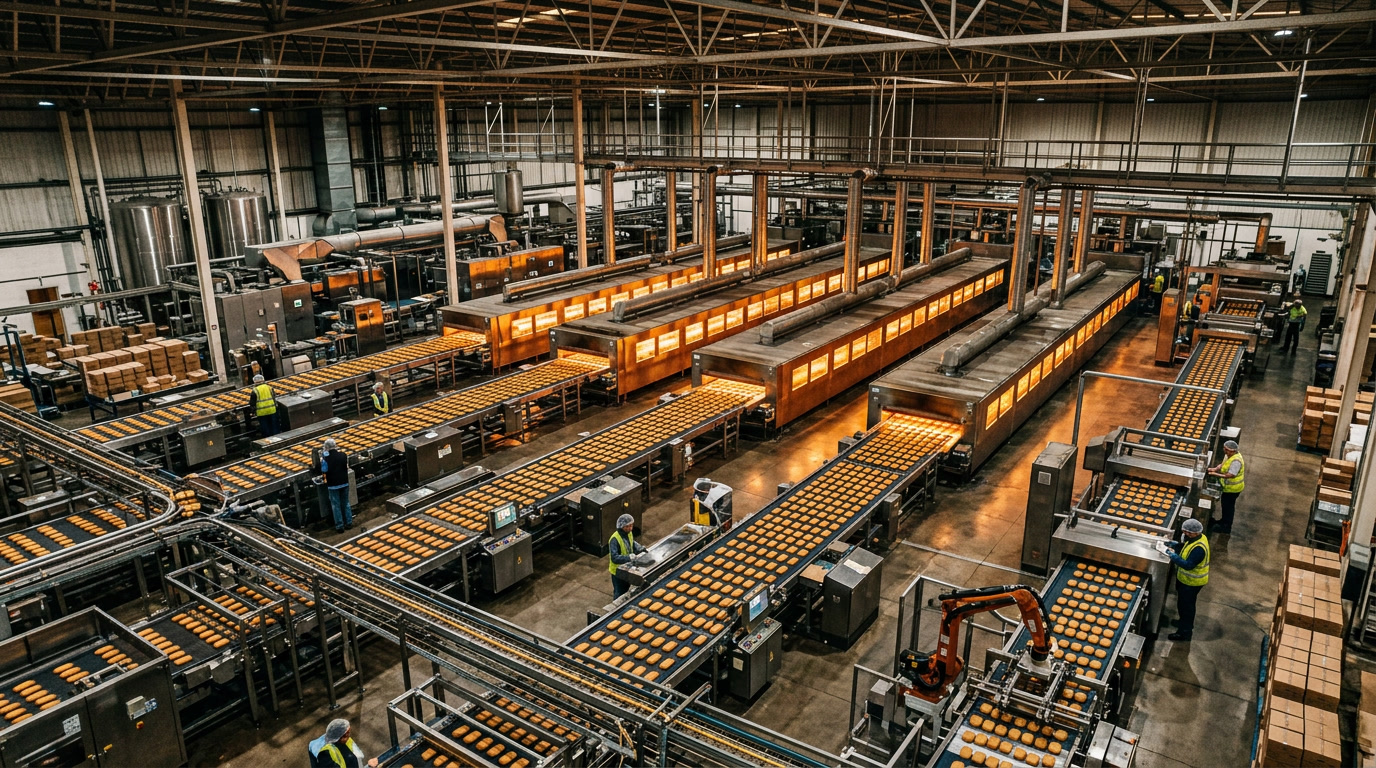
Tunnel ovens with 3–4 independently controlled heat zones bake biscuits at 210–225°C for 12–16 minutes. Convection fans in the first zone promote oven spring; radiant heat in the final zone sets the crust color. Internal product temperature must reach 93–95°C to ensure safe moisture levels (target Aw < 0.85 for shelf-stable products).
5. Cooling, Packaging, and Quality Control
Post-bake cooling conveyors bring biscuits to ambient temperature before packaging. Automated vision systems check height, diameter, color score (Lab* colorimetry), and reject out-of-spec units. Packaging lines seal biscuits in modified atmosphere (N₂ flush) for extended shelf life.
Key Machinery in American Biscuit Production
| Machine | Function | Key Specs |
|---|---|---|
| Industrial planetary mixer | Combines ingredients without overdeveloping gluten | 300–800 L capacity, variable speed 20–120 rpm |
| Dough sheeter/laminator | Rolls and folds dough to target thickness | 400–1200 mm belt width, 0.5–50 mm gap range |
| Rotary biscuit cutter | Punches out uniform biscuit rounds | 60–300 cuts/min, 40–80 mm die diameter |
| Tunnel oven | Bakes biscuits to target internal temp | 20–40 m length, 3–4 heat zones, 300°C max |
| Spiral cooling conveyor | Reduces product temp without condensation | 2–6°C ambient, 15–30 min dwell time |
How to Choose the Right Biscuit Production Equipment
Selecting the right production line for american biscuit manufacturing involves five key decision factors. Getting these right determines throughput, product quality, and total cost of ownership.
Factor 1: Production Capacity
Start with your target output in units per hour (UPH) or kilograms per hour. Small-scale operations (bakery cafés, restaurant commissaries) typically run 500–2,000 biscuits/hour on semi-automatic lines. Large-scale frozen food manufacturers targeting retail channels operate at 15,000–40,000+ biscuits/hour on fully automated continuous lines.
A useful rule of thumb: 1 ton of raw dough per hour yields approximately 8,000–10,000 standard (75g) biscuits.
Factor 2: Dough Type Compatibility
Not all sheeting equipment handles soft, high-fat biscuit dough equally. Key requirements for american biscuit dough:
- Non-stick belt and roller coatings (PTFE or food-grade silicone) to prevent dough sticking without excess flour dusting
- Chilled roller surfaces (optional but valuable) to maintain fat temperature during sheeting
- Low-pressure sheeting with multiple passes rather than single aggressive reduction, to avoid shear stress that develops gluten
Factor 3: Lamination Requirements
If your product line includes high-lamination varieties (croissant-style biscuits, cat-head biscuits), you’ll need a folding unit integrated into the sheeter. Each fold doubles the number of layers: a 3-fold process on 3 passes creates up to 27 potential layers. Most commercial buttermilk biscuit producers use 2–3 fold passes.
Factor 4: Oven Technology Selection
The two dominant oven technologies for american biscuits:
- Direct gas-fired tunnel ovens: Lower capital cost, excellent radiant heat for crust development, but less precise zone control. Suitable for standard buttermilk and drop biscuits.
- Impingement/convection tunnel ovens: Higher upfront cost, superior uniform heat distribution, programmable zone profiles. Preferred for mixed-variety lines (cheese, sweet potato) where different baking curves are needed per SKU.
Factor 5: Automation Level
Manual lines require skilled operators for dough handling and cutting but offer flexibility for artisanal or customized products. Semi-automatic lines (automated sheeting and cutting, manual loading/unloading) balance cost and throughput for mid-scale producers. Fully automatic lines with robotic loading, in-line QC vision systems, and automated packaging minimize labor costs but require higher capital investment ($1.5–5M+ for a complete line).
In practice, most mid-scale commercial biscuit producers find the sweet spot at 5,000–12,000 units/hour with semi-automatic to fully automatic sheeting and cutting, direct-fired tunnel oven baking, and automated vision inspection. This range delivers ROI payback periods of 3–5 years at typical North American biscuit pricing.
Future Trends in American Biscuit Production (2026+)
The american biscuit industry is not standing still. Several converging trends will reshape how these products are formulated and manufactured in the next five years.
Trend 1: Clean-Label Formulation
Consumer demand for shorter ingredient lists is forcing reformulation across the biscuit category. Replacing synthetic emulsifiers (DATEM, SSL) and artificial preservatives with natural alternatives (cultured wheat starch, rosemary extract, vinegar) is now a commercial priority for mid-to-large producers. According to industry data from Wikipedia’s overview of major biscuit producers, the largest North American biscuit brands have all launched clean-label sub-lines since 2020.
The challenge: clean-label formulations often behave differently on legacy production equipment. Dough rheology changes, gluten tolerance narrows, and shelf-life curves shift. Producers investing in clean-label must also plan for line modifications.
Trend 2: Frozen and Par-Baked Formats
The foodservice industry has shifted heavily toward frozen and par-baked american biscuits. Par-baked (70–80% baked) biscuits can be finished in-store in 8–12 minutes, delivering fresh-baked quality without full on-site production capability. The frozen biscuit segment grew at approximately 6.2% CAGR from 2020–2024, outpacing the overall category. This growth requires blast-freezing capability integrated into the production line and packaging formats (e.g., nitrogen-flushed retort pouches vs. standard poly bags) that maintain quality through the freeze-thaw cycle.
Trend 3: Smart Production Line Monitoring
Industry 4.0 technologies are reaching commercial biscuit lines faster than many producers expected. Inline NIR (near-infrared) moisture sensors now allow real-time dough moisture adjustment without stopping the line. Machine vision systems that once just counted defects are now feeding data back to upstream sheeting equipment to auto-correct thickness deviations. Energy consumption monitoring tools help optimize oven efficiency—tunnel ovens can account for 40–60% of a biscuit line’s total energy draw, and 10–15% efficiency gains are achievable with smart zone-temperature management.
Trend 4: Gluten-Free and Alternative Flour Biscuits
The gluten-free american biscuit segment is growing despite significant formulation challenges. Traditional biscuit structure depends on gluten to hold the laminated layers together. GF formulations using rice flour, tapioca starch, and xanthan gum can approximate the texture but require completely different mixing protocols (longer mixing is acceptable without gluten overdevelopment risk) and separate dedicated lines to avoid cross-contamination. GF biscuit SKUs command 2–3× the retail price premium of conventional varieties, making the investment viable for producers who can certify their facility.
FAQ: American Biscuit
What is the difference between an American biscuit and a British biscuit?
An american biscuit is a soft, leavened quick bread similar to a savory scone. A British biscuit is a crisp, flat, sweet confection—what Americans call a cookie. The two share only a name and bear almost no resemblance in texture, ingredients, or usage.
What makes an American biscuit flaky?
Flakiness comes from cold fat (butter or shortening) cut into the flour in small pieces. When the fat melts in the oven, it creates steam pockets that force the dough apart into distinct layers. Over-mixing or warm fat destroys this structure and produces a dense, cake-like crumb instead.
What flour is best for American biscuits?
Soft winter wheat flour with 9–10% protein content is ideal. Lower protein means less gluten formation, producing a tender crumb. Southern US brands like White Lily are famous for using soft wheat flour milled specifically for biscuits. In commercial production, proprietary low-protein bread blends are often used for consistency.
Can American biscuits be made at industrial scale?
Yes. Commercial american biscuit production lines process thousands of units per hour using industrial planetary mixers, automated sheeters and cutters, and tunnel ovens. The critical challenge is maintaining cold dough temperature throughout the line to preserve fat structure. Modern lines use chilled ingredient systems and air-conditioned production environments for this reason.
How long do American biscuits stay fresh?
Freshly baked american biscuits peak in quality within 2–4 hours of baking. Commercially packaged biscuits (modified atmosphere) have shelf lives of 10–21 days at ambient temperature. Frozen biscuits (par-baked or fully baked) maintain quality for 6–12 months at -18°C.
What is biscuits and gravy?
Biscuits and gravy is a classic American breakfast dish—split american biscuits smothered in a thick white sausage gravy (milk-based pan sauce with crumbled pork sausage). It originated as an inexpensive, calorie-dense meal for laborers in the American South and Midwest and has since become a comfort food staple nationwide.
How is the American biscuit market growing?
The U.S. commercial biscuit market continues expanding at 3–5% annually, driven by foodservice growth (fast casual, QSR), frozen retail formats, and premium/artisanal positioning. International demand for American-style biscuits is growing fastest in East Asia and Southeast Asia, where Western breakfast formats have gained significant market share since 2018.
Conclusion
The american biscuit is both a beloved cultural icon and a serious industrial product. Its deceptively simple formula—flour, fat, liquid, leavening—demands precise execution whether you’re rolling dough in a home kitchen or running a 20,000-unit-per-hour production line. The flakiness that makes a great american biscuit is a function of temperature control, fat distribution, and minimal gluten development: principles that scale directly from artisanal bakery to industrial tunnel oven.
For food manufacturers and machinery buyers evaluating american biscuit production capabilities, the key investments are in controlled-temperature mixing and sheeting equipment, reliable cutting systems calibrated for high-fat doughs, and tunnel oven technology that delivers consistent internal temperature across product formats. The market is growing, consumer trends favor both premium quality and clean-label formulation, and the production line technology to deliver on both is mature and available. If you’re building or upgrading a biscuit production operation, now is an excellent time to assess your line configuration against the capacity and quality benchmarks laid out in this guide.
Related Articles
- Honey Biscuit Production Line: Complete Guide to Industrial Manufacturing
- Garibaldi Biscuits: History, Recipe, Production & Where to Buy the Classic Currant Biscuit
- Peelable Gummy Candy: Types, Ingredients, and Production Guide
- Gumdrops Candy: The Complete Guide to History, Production & Commercial Manufacturing
- Biscuit Production Line
- Advanced Automatic Biscuit & Cracker Machine
- Original Skittles Gluten Free: Celiac Safety Guide