To make gummy sweets, dissolve gelatin or pectin in heated juice, add sugar and flavoring, pour into molds, and chill for 30 minutes — the full process takes under an hour for a home batch.
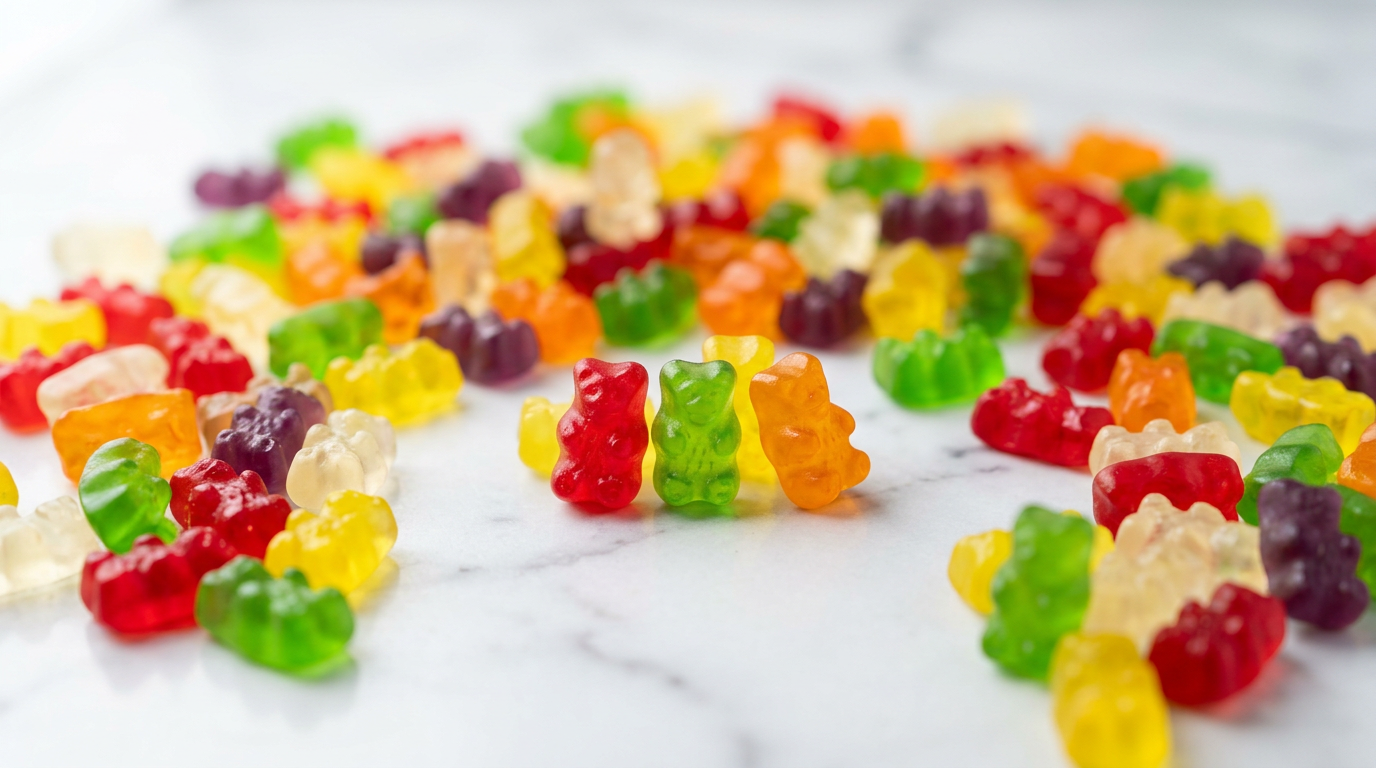
Gummy sweets are one of the most universally loved confections on the planet — chewy, fruity, and endlessly moldable into shapes that range from bears and worms to rings and sharks. And yet most people have no idea how straightforward the base formula actually is. Whether you’re making a single tray at home or trying to understand what separates artisan gummies from mass-produced ones, the science is the same.
We’ve worked through dozens of gummy formulations — gelatin-based, pectin-based, vegan options, sugar-free variants, coated and uncoated finishes. This guide covers all of it: the ingredients, the process, the texture science, and what it takes to scale production from a silicone bear mold to an industrial depositing line.
What Are Gummy Sweets Made Of?
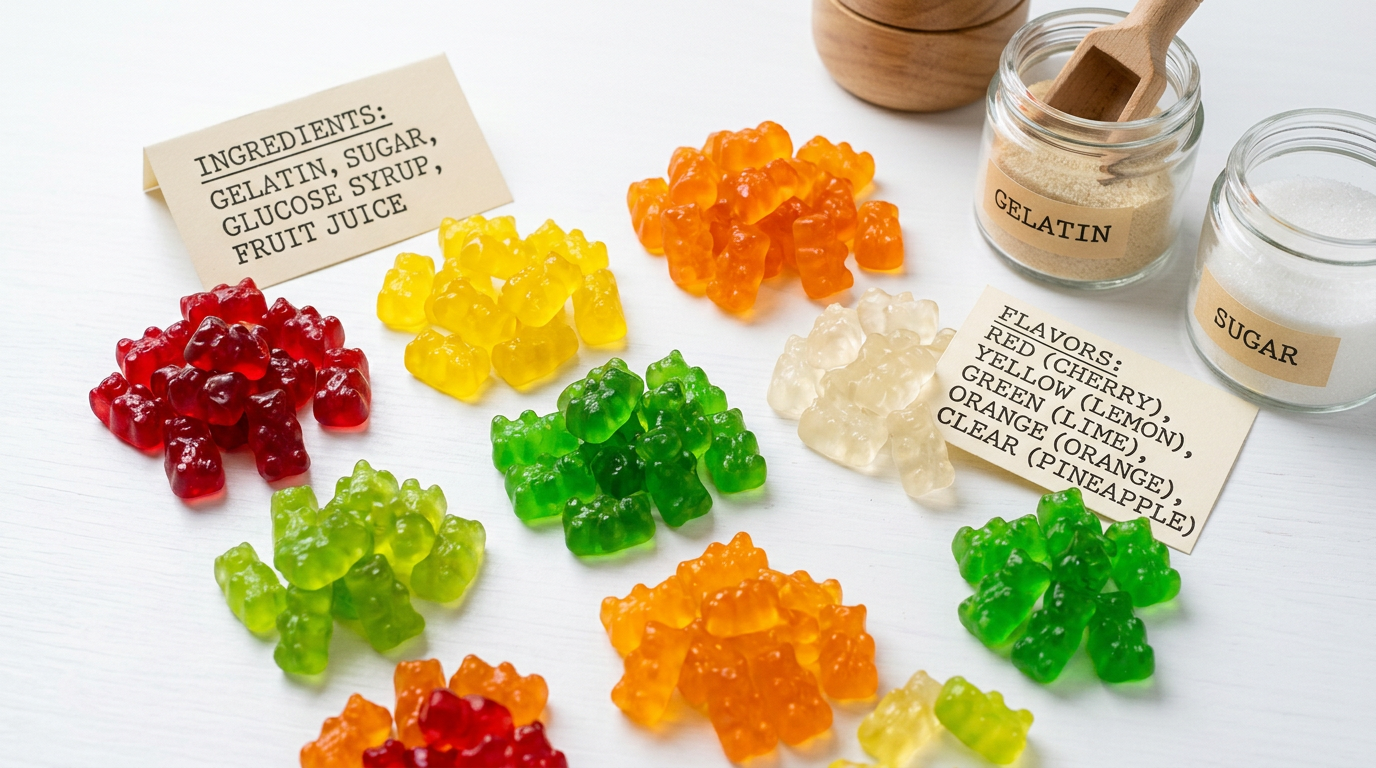
Gummy sweets are built on three structural pillars: a gelling agent, a sweetener, and a flavoring liquid. Everything else — coloring, coating, acidity, vitamin fortification — layers on top of that foundation.
The Gelling Agent
The gelling agent determines the texture of your gummies more than any other ingredient.
Gelatin is the traditional choice. Derived from animal collagen (usually porcine or bovine), it creates a firm, bouncy texture with a “snap” when you bite through it. Gelatin also gives gummies the signature “melt” sensation — it’s thermoreversible, meaning it re-melts at body temperature, which is why gummy bears literally melt in your mouth.
Pectin is the plant-based alternative, extracted from citrus peels and apple pomace. Pectin gummies are softer, slightly more opaque, and don’t have the same melt-on-tongue quality. They set via calcium ions or sugar-acid interactions rather than temperature. Most commercial “vegan gummies” use pectin, often in combination with carrageenan.
Agar-agar is another vegan option derived from seaweed. It sets firmer than pectin and has a slight chewiness, but it can become brittle if over-concentrated. It’s common in Asian confectionery styles — particularly in Japanese gummies that have a distinct gel-like texture rather than a soft-chewy one.
Carrageenan is frequently blended with other gelling agents for commercial production. On its own, it creates a brittle, easily broken gel; blended with locust bean gum or konjac, it produces a smooth, elastic texture similar to gelatin. This combination is increasingly used in vegan confectionery lines.
| Gelling Agent | Source | Texture Profile | Best For |
|---|---|---|---|
| Gelatin | Animal collagen | Firm, bouncy, mouth-melt | Classic gummies |
| Pectin | Citrus/apple | Soft, fruity, no melt | Vegan, fruit snacks |
| Agar-agar | Seaweed | Firm, slightly brittle | Asian-style sweets |
| Carrageenan blend | Seaweed + legume | Elastic, smooth | Commercial vegan lines |
The Sweetener
Sugar is the primary sweetener in most gummy sweets, but the type matters. Granulated sucrose is standard; glucose syrup (corn syrup) is added in commercial formulations to prevent crystallization and control water activity. Most professional recipes use a 2:1 ratio of sucrose to glucose syrup by weight.
Sugar-free gummies typically use maltitol, isomalt, or a blend of polyols. These behave differently in the gelling matrix — polyols absorb moisture from the environment, so sugar-free gummies tend to have shorter shelf lives and stickier surfaces if not properly coated.
The Flavoring Liquid
Fruit juice, juice concentrates, or natural/artificial flavor solutions all work as the liquid base. Fresh juice is the most common starting point for home gummy recipes; commercial production typically uses stable flavor concentrates and food-grade dyes for consistency across large batches.
Essential Ingredients: How to Make Gummy Sweets at Home
This is the base recipe that works reliably across any home kitchen setup.
Ingredients (makes approximately 50–60 standard gummy bear size pieces):
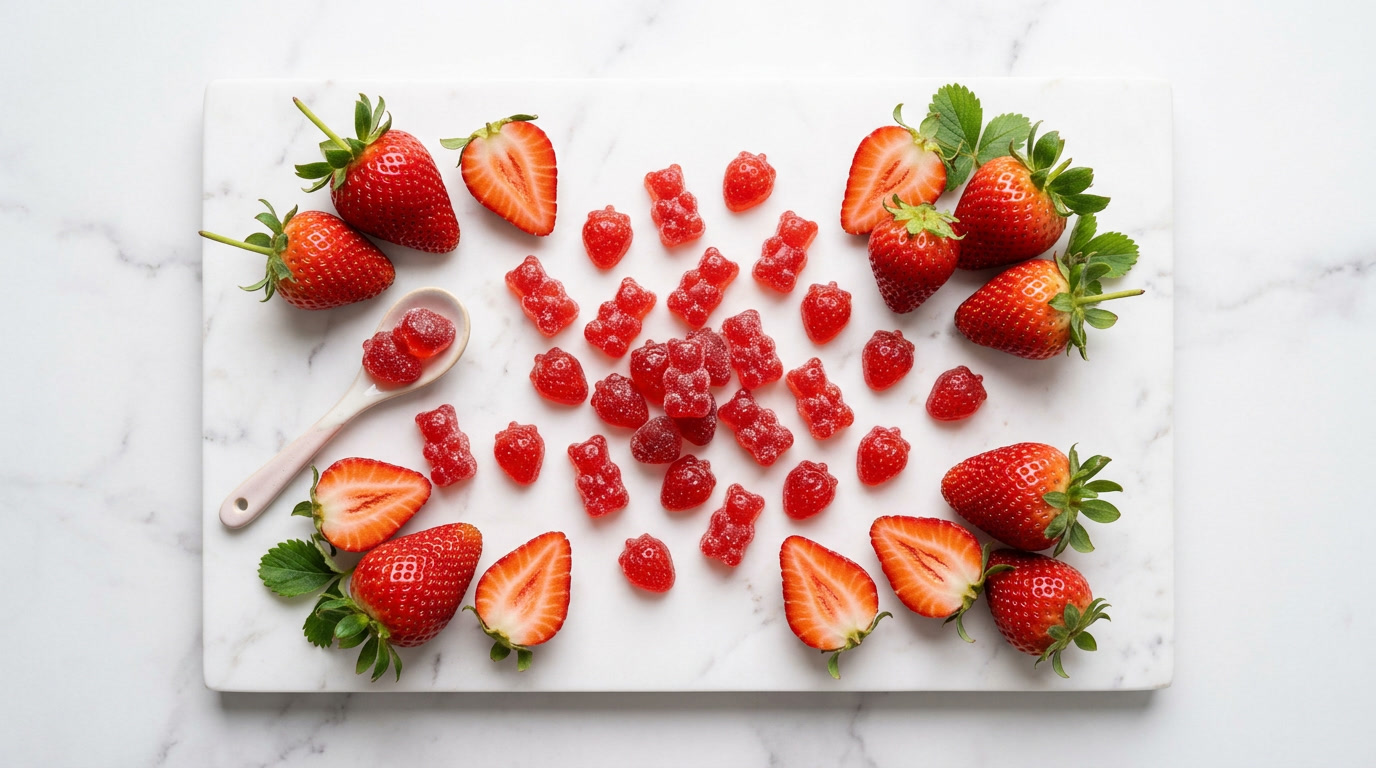
– 1 cup (240ml) fruit juice — apple, grape, orange, or strawberry all work well
– 3 tablespoons (25g) unflavored powdered gelatin
– 3 tablespoons (36g) granulated sugar
– 1 tablespoon honey or corn syrup (helps texture and prevents crystallization)
– 2–3 drops food coloring (optional)
– 1 teaspoon citric acid or lemon juice (optional — adds tartness and brightens flavor)
Equipment needed:
– Small saucepan
– Silicone gummy molds (bear, worm, or any shape)
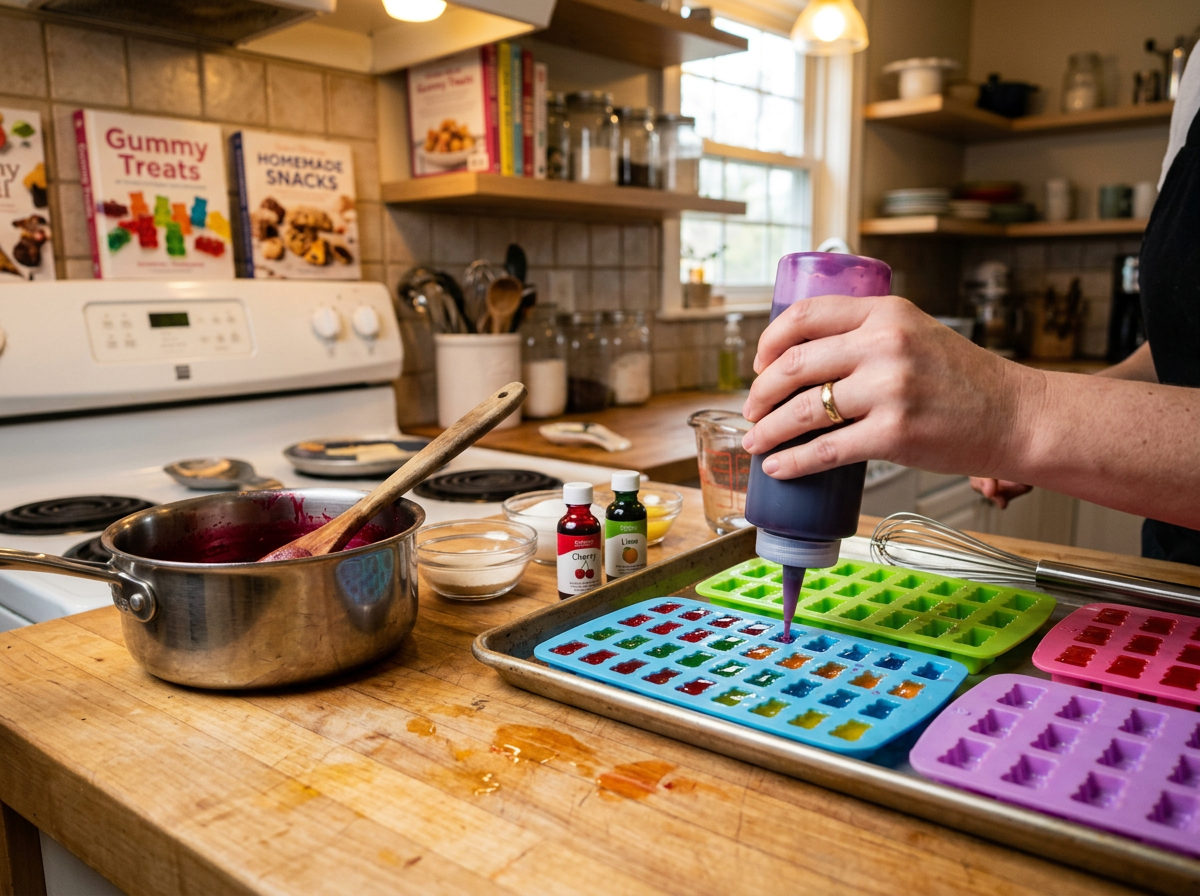
– Squeeze bottle or dropper (optional, for easier filling)
– Whisk
– Kitchen thermometer
– Refrigerator
Step-by-Step: How to Make Gummy Sweets (Classic Gelatin Method)
Step 1 — Bloom the Gelatin
Pour ¼ cup (60ml) of the cold fruit juice into a small bowl or directly into the saucepan. Sprinkle the gelatin powder evenly over the surface of the liquid and do not stir. Let it sit undisturbed for 5 minutes.
This step is called “blooming” — the gelatin granules absorb the cold liquid and swell, which ensures even distribution when heated. Skipping the bloom step or adding gelatin directly to hot liquid creates clumps that never fully dissolve, giving you gummies with uneven, lumpy texture.
Step 2 — Heat the Mixture
Add the remaining ¾ cup (180ml) of juice to the saucepan with the bloomed gelatin. Warm over medium-low heat, stirring constantly, until the gelatin is fully dissolved. This usually takes 3–4 minutes.
The liquid should be warm, not boiling. Target temperature: 60–70°C (140–158°F). Boiling destroys gelatin’s protein structure and dramatically reduces its gelling power — you’ll end up with weak, floppy gummies. A kitchen thermometer is the most reliable way to stay in range.
Step 3 — Add Sweeteners, Color, and Flavor
Once the gelatin is fully dissolved, stir in:
– Sugar and honey/corn syrup until fully dissolved
– Food coloring (2–3 drops; start light and add more to taste)
– Citric acid or lemon juice if using — stir in last, as acidity can weaken gelatin at high temperatures
Taste the warm mixture at this point. It should read noticeably sweeter than your target finished gummy — sweetness mutes during setting and chilling, so formulating slightly sweeter than you want is standard practice in confectionery.
Step 4 — Fill the Molds
Work quickly — gelatin begins setting as it cools. Pour or squeeze the mixture into molds. A squeeze bottle with a nozzle gives far better control than pouring directly from the pot, especially for small bear or worm molds.
Fill each cavity just to the top. Slightly overfilling is better than underfilling since the surface will level as the mixture sets.
Step 5 — Set in the Refrigerator
Transfer the molds to a flat surface in the refrigerator and let them set for a minimum of 30 minutes, ideally 1–2 hours. Gelatin sets faster in the cold but also becomes firmer — pull at 30 minutes for a softer gummy, 90 minutes to 2 hours for a firmer, more commercial-style texture.
Once set, flex the silicone mold from underneath to pop the gummies out. They should release cleanly without tearing.
Step 6 — Optional Finishing
Fresh homemade gummies are slightly tacky on the surface. Commercial gummies use three common finishes:
- Sugar coating — toss lightly in granulated sugar immediately after demolding. The sugar absorbs surface moisture and reduces sticking.
- Sour coating — mix citric acid and sugar in a 1:3 ratio and coat for that sour-candy effect.
- Wax gloss coating — commercial products use beeswax or carnauba wax to create a shiny, non-sticky surface. Carnauba wax suspension coatings are the industrial standard.
For home use, a very light coat of coconut oil or vegetable glycerin applied with your hands gives a non-sticky surface that extends shelf life by slowing moisture absorption.
How to Make Gummy Sweets Without Gelatin (Vegan Pectin Method)
The pectin method requires slightly more technique than gelatin but produces excellent results — particularly for fruit-forward flavors where the lighter texture of a pectin gel lets the fruit character come through cleanly.
Ingredients (same yield as above):
– 1 cup (240ml) fruit juice
– 2 tablespoons (20g) apple pectin powder or citrus pectin
– ¾ cup (150g) granulated sugar
– 1 tablespoon corn syrup
– ½ teaspoon citric acid — required, as pectin needs acid to gel
– ¼ teaspoon calcium water (calcium chloride dissolved in water, for high-methoxyl pectin)
Critical technique difference: You must combine the dry pectin with a portion of the sugar before mixing with liquid to prevent clumping. The acid goes in at the very end, just before molding, because acid-initiated setting begins fast.
Pectin gummies can set at room temperature — they don’t require refrigeration to gel, though refrigerating speeds the process. They’re also more shelf-stable than gelatin once set; pectin doesn’t degrade at room temperature as quickly as animal-derived gelatin.
Types of Gummy Sweets and Their Production Requirements
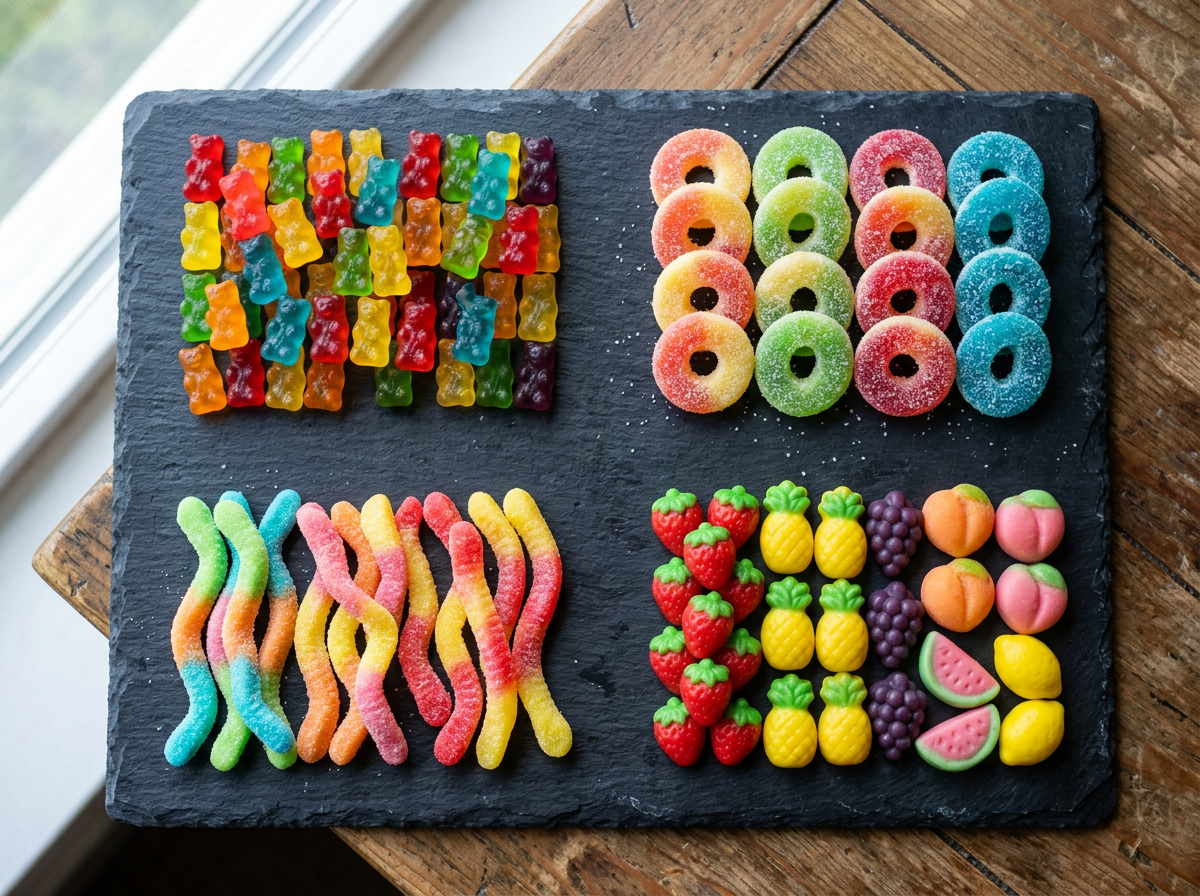
Understanding the range of gummy types is useful whether you’re choosing a home recipe or evaluating commercial production equipment for scaling.
1. Classic Gelatin Gummies (Bears, Worms, Fish)
The baseline format. Gelatin concentration in commercial formulations typically runs 6–9% by weight; home recipes are often in the 8–10% range for firmer results. Bear molds require higher precision detail; worm and fish shapes are simpler with lower mold complexity.
2. Sour Gummies
The same gelatin or pectin base, with a sour coating (citric acid + sugar, or malic acid + sugar) applied post-setting. The coating creates the signature pucker — the sour compound reacts with saliva for immediate flavor impact. Some formulations add citric acid directly to the gummy matrix for a built-in base-level tartness with surface sour coating on top.
3. Gummy Rings (Cocktail, Watermelon)
Multi-layer gummies require two-stage depositing — the outer colored ring and inner white layer (typically coconut or cream-flavored) are deposited sequentially. At home this is done with two batches and a dropper; industrially it requires dual-head depositing equipment with precise timing.
4. Gummy Vitamins and Supplements
Functional gummies use pectin as the preferred gelling agent because gelatin can chemically interact with and degrade certain vitamins. The active ingredient load shifts the gelling balance — formulating vitamin gummies requires careful adjustment of pectin and sugar concentrations to maintain texture stability under the pH stress of specific vitamins.
5. CBD and Functional Gummies
A rapidly growing category. Oil-based active ingredients (CBD, melatonin, adaptogen extracts) must be emulsified or encapsulated before incorporating into a water-based gummy matrix. Lecithin-based emulsification is the standard approach; without it, the oil separates from the gel, creating uneven dosing and surface greasiness.
| Gummy Type | Gelling Agent | Coating | Complexity |
|---|---|---|---|
| Classic bears/worms | Gelatin | None or sugar | Low |
| Sour gummies | Gelatin or pectin | Citric acid + sugar | Low-medium |
| Multi-layer rings | Gelatin | Wax gloss | Medium-high |
| Vitamin/supplement | Pectin | Wax/oil | High |
| Functional (CBD, melatonin) | Pectin + emulsifiers | Varies | High |
From Home Kitchen to Commercial Gummy Production
The chemistry of how to make gummy sweets at home and in commercial production is identical. The differences are precision, scale, and continuous throughput.
What Changes When You Scale Up
Temperature control: At home, you manage gelatin temperature by judgment and a thermometer. Industrial gummy cookers maintain a precise cooking temperature profile — typically 110–120°C during cooking, then cooled to 60–65°C for depositing — using jacketed kettles with automated temperature control. Consistent temperature means consistent bloom strength and gel consistency across every batch.
Depositing: Home production uses squeeze bottles or ladles. Commercial production uses either starch mogul systems (where gummies are deposited into pre-formed starch cavities, then demolded and the starch recycled) or direct mold depositing lines with precision volumetric pumps. The depositing accuracy determines weight consistency — a critical specification for packaged products with stated net weights.
Setting/cooling: Home gummies chill in a refrigerator for 30–120 minutes. Commercial lines use tunnel coolers running 15–25 minutes at precisely controlled temperatures, allowing continuous 24/7 operation without refrigeration delays.
Coating: Industrial coating runs in rotating drums with controlled spray application of wax, oil, sour powder, or sugar. The drum geometry ensures even coverage and prevents clumping — consistent coating quality is essentially impossible to achieve by hand at scale.
Industrial gummy production lines — including complete gelatin depositing systems, continuous tunnel cooling, and finishing equipment from manufacturers like JY Machine — are built around this exact flow, letting producers scale from startup batches to retail-ready output without compromising the texture consistency that buyers require.
As demonstrated in How to make REAL shelf stable gummy bears, achieving commercial shelf stability requires specific formulation and finishing decisions that go well beyond a standard home recipe — particularly around water activity management and surface treatment.
Common Mistakes When Making Gummy Sweets
Mistake 1: Boiling the Gelatin
Boiling destroys gelatin. The threshold is approximately 90°C (194°F) — above this, the protein structure that enables gelling denatures and your gummies won’t set. Always heat gently and keep a thermometer nearby.
Fix: Keep the mixture at 60–70°C (140–158°F) during the dissolving step.
Mistake 2: Skipping the Bloom Step
Adding dry gelatin directly to hot liquid creates an uneven, lumpy gel. The 5-minute blooming period in cold liquid is what enables uniform dissolution.
Mistake 3: Using Fresh Tropical Fruit
Pineapple, kiwi, papaya, and figs contain proteolytic enzymes (bromelain, actinidin, papain, ficin) that actively break down gelatin protein. Gummies made with fresh versions of these fruits simply won’t set. Fix: Use pasteurized or heated juice versions, which deactivate the enzymes.
Mistake 4: Under-sweetening the Mixture
The warm liquid should taste noticeably “too sweet” — approximately 20% sweeter than your target. Sweetness perception diminishes significantly in the cold, set gummy. If you formulate to taste in the warm state, the finished product will be flat.
Mistake 5: Ungreased Hard Molds
Hard plastic molds (unlike silicone) need a light coat of non-stick spray or vegetable glycerin before pouring. Uncoated hard molds make demolding difficult and damage the gummy surface.
Mistake 6: Warm Storage
Gelatin gummies begin to soften at around 35–38°C (95–100°F). In warm climates or summer months, room temperature storage can cause shape loss and sticking. Refrigerate, or apply a wax-based coating to create a temperature and moisture barrier.
Future Trends in Gummy Confectionery (2026 and Beyond)
The gummy category is one of the fastest-growing segments in confectionery, driven by health, function, and format innovation.
Functional and Fortified Gummies
The global functional gummy market — vitamins, collagen, adaptogens, sleep support — is expanding rapidly. The appeal is straightforward: gummies make supplementation enjoyable. Current and emerging formats include collagen peptide gummies, ashwagandha gummies, and electrolyte gummies targeting athletes. The technical challenge is formulating active ingredients into a gummy matrix without compromising either the active’s efficacy or the gummy’s texture.
Reduced-Sugar and Sugar-Free Variants
Consumer pressure for lower-sugar confections is pushing major gummy manufacturers to reformulate core lines. Sugar’s role goes beyond sweetness — it contributes to texture, water activity, and shelf life. High-quality sugar-free gummies require sophisticated polyol blending (maltitol, isomalt, erythritol) and often soluble fiber additions (inulin, chicory root) to maintain body and mouthfeel.
Plant-Based and Clean Label
The shift away from animal gelatin continues. Pectin and carrageenan-based vegan formulations have improved significantly — the texture gap between premium gelatin gummies and best-in-class vegan alternatives is narrowing. Clean-label pressure (shorter ingredient lists, recognizable ingredients) is driving adoption of natural colorants: black carrot for red/purple, spirulina for blue-green, turmeric for yellow.
Precision Dosing for Functional Products
As functional gummies move toward pharmaceutical-adjacent claims — verified sleep support doses, regulated CBD content — precision in depositing becomes critical. This is driving adoption of gravimetric verification systems that weigh each deposited unit in-line, a technology from pharmaceutical manufacturing now entering premium confectionery production.
| Trend | Home Baking Impact | Commercial Impact |
|---|---|---|
| Functional fortification | Specialty ingredient sourcing | New product lines, regulatory compliance |
| Reduced sugar | Polyol availability in retail | Reformulation investment |
| Plant-based gelling | Pectin now widely available | Vegan SKU opportunity |
| Precision dosing | Minimal | Major equipment upgrade path |
Shelf Life and Storage
How long homemade gummy sweets last depends on formulation and storage conditions.
Uncoated gelatin gummies:
– Room temperature (cool, dry): 2–5 days
– Refrigerator: 2–3 weeks
– Freezer: 3–6 months (texture changes slightly on thawing)
Coated gummies (sugar or wax finish):
– Room temperature: up to 2–3 weeks (dry environment)
– Commercial equivalents with sealed packaging: 12–18 months
Pectin gummies:
– Room temperature: 1–2 weeks
– Refrigerator: 3–4 weeks
– Generally more shelf-stable than gelatin at moderate temperatures
The key technical variable is water activity (Aw). Commercial confectionery is formulated to a water activity below 0.6, which inhibits microbial growth. Home gummies, made with fresh juice and no preservatives, have higher water activity and must be consumed quickly or refrigerated.
FAQ — How to Make Gummy Sweets
How do you make gummy sweets without gelatin?
Use pectin as the gelling agent. Combine 2 tablespoons apple pectin with ¾ cup sugar in dry form first to prevent clumping, then dissolve in 1 cup heated fruit juice. Add corn syrup and stir in ½ teaspoon citric acid just before pouring into molds. Pectin gummies set at room temperature and have a softer, fruitier texture than gelatin gummies.
Why won’t my homemade gummy sweets set?
The most common causes are overheated gelatin (boiling denatures its protein and kills gelling power), too-low gelatin concentration (aim for 7–9% by liquid weight), or using fresh pineapple, kiwi, or papaya juice (these contain enzymes that break down gelatin). Use pasteurized juice and verify your gelatin hasn’t been overheated.
Can you make gummy sweets with fruit juice instead of water?
Yes — and this is the standard home method. Fruit juice provides both the liquid and the flavor base. Unsweetened juice gives you full flavor control; sweetened juice works but requires reducing added sugar. Avoid fresh tropical juices containing protease enzymes (pineapple, kiwi, papaya) as these degrade gelatin and prevent setting.
How long do homemade gummy sweets last?
Uncoated homemade gelatin gummies: 2–5 days at room temperature, 2–3 weeks refrigerated. Applying a light sugar coat or thin layer of coconut oil after demolding extends room-temperature shelf life by slowing surface moisture absorption. Pectin gummies keep slightly longer — up to 2 weeks uncoated at room temperature.
What is the difference between gelatin and pectin gummy sweets?
Gelatin gummies are firmer, bouncier, and melt at body temperature — the “melt-in-mouth” quality classic to gummy bears. Pectin gummies are softer, slightly more opaque, and don’t melt — they hold their chew throughout. Gelatin is animal-derived; pectin is plant-based. Both can produce excellent gummies; the choice depends on dietary requirements and texture preference.
How do you keep homemade gummy sweets from sticking together?
Three approaches work: (1) toss lightly in granulated sugar while still slightly tacky from the mold, (2) dust with a thin layer of corn starch then shake off the excess, or (3) apply a light rub of coconut oil or vegetable glycerin with your hands. Store in an airtight container with a silica desiccant packet to control ambient humidity.
Is it possible to make commercial-quality gummy sweets at home?
For small-batch cottage production (farmers markets, local sales), yes — with proper formulation for shelf stability and consistent process control. For retail-grade products with extended shelf life, precise weight consistency, and professional surface finish, commercial depositing equipment with tunnel cooling and coating drums becomes necessary. That transition — from hand-poured to machine-deposited — is where quality consistency and production throughput align at scale.
Conclusion
Making gummy sweets reliably comes down to three principles executed well: the right gelling agent at the right concentration, dissolved at the right temperature without boiling, and poured quickly before the gel sets. Everything else layers on top of that foundation.
For home bakers, start with the gelatin method using fruit juice — it’s the most forgiving entry point. Nail the bloom step, keep the heat moderate, add your citric acid last. Once you have the base recipe working, every variation (sour coatings, different fruit flavors, vegan pectin versions) becomes straightforward. For anyone thinking about scaling gummy production beyond the home kitchen, the same chemistry that works at 50 pieces works at 50,000 — the difference is in equipment precision, temperature control, and finishing capability.
The gummy category offers more opportunity right now than at almost any point in its history. Functional ingredients, plant-based gelling, premium coatings, reduced-sugar formulations — the base formula is decades old, but what you can do with it is genuinely wide open.