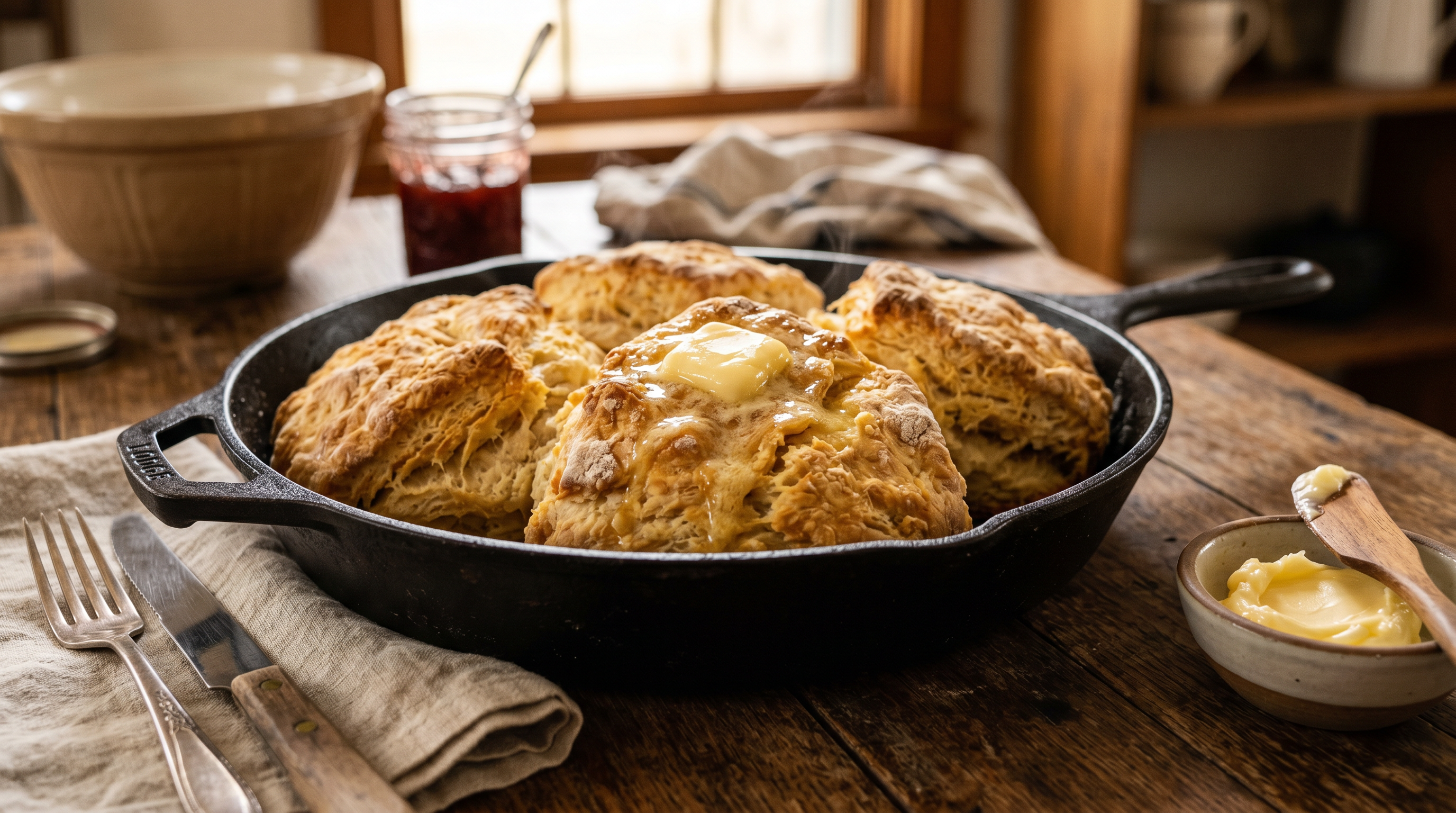
Direct Answer: Cathead biscuits are oversized, hand-shaped Southern drop biscuits roughly the size of a cat’s head — typically 3–4 inches across — made with soft flour, butter, and buttermilk for an impossibly fluffy, tender crumb.
What Are Cathead Biscuits?
Cathead biscuits are large, free-form drop biscuits that measure about the size of a cat’s head — roughly 3 to 4 inches in diameter — and they’re baked so close together that their sides touch, creating that signature pull-apart texture that has made them a beloved staple of Southern cooking for generations.
Unlike the precision-cut, uniform rounds produced by cookie cutters or commercial stamping machines, cathead biscuits embrace imperfection. The dough is dropped by hand onto a cast iron skillet or baking sheet, no rolling pin required, and the resulting biscuits are wonderfully uneven, golden-topped, and tender at the core. That rustic handmade character is precisely what makes them so appealing — both at the home breakfast table and in professional foodservice kitchens.
The defining qualities of cathead biscuits are:
- Size: Noticeably larger than standard biscuits, typically weighing 90–120 grams each
- Texture: Crispy, slightly cracked crust giving way to a soft, pillowy, layered interior
- Method: Drop or hand-shape method, not rolled and cut
- Ingredients: Soft wheat flour (low protein), cold fat, buttermilk, and leavening agents
According to the USDA’s food composition database, a single standard biscuit weighs around 38–45 grams. A cathead biscuit easily doubles or triples that weight — which explains why a plate of two can constitute a full Southern breakfast by itself.
History and Cultural Roots of Cathead Biscuits
Cathead biscuits trace their origins to Appalachian and Deep South foodways, where large, filling biscuits were a practical staple for farm families needing substantial morning calories before a day of physical labor.
The name itself is purely descriptive. Before modern kitchen measuring tools became widespread, Southern grandmothers described biscuit size by comparison: “make ’em the size of a cat’s head.” Since domestic cats have heads roughly 3–4 inches wide, this became a reliable size reference passed from cook to cook, generation to generation, entirely by oral tradition.
The Flour Factor
One historical element that sets authentic cathead biscuits apart from other biscuit traditions is the flour. Historically, Southern bakers used soft red winter wheat flour — the kind milled from wheat grown in the mid-Atlantic and upper South. This flour has a protein content of only 8–9%, compared to all-purpose flour at 10–12%. Lower protein means less gluten development, which translates directly to that melt-in-your-mouth tenderness cathead biscuits are famous for.
Brands like White Lily, which began milling in 1883 in Knoxville, Tennessee, built their reputation almost entirely on this soft wheat formula. The history of American flour milling documents how regional flour varieties shaped distinct regional baking traditions — and the cathead biscuit is one of the clearest examples.
Cultural Significance
Cathead biscuits are more than food; they’re a cultural artifact. They appear in:
- Depression-era cooking: When lard was cheap and buttermilk was a byproduct of butter churning, cathead biscuits were economical, high-calorie, and comforting
- Church potlucks: Their large size made them ideal for feeding crowds
- Foodservice and diners: Southern diners from Virginia to Texas have served cathead biscuits as their signature bread basket item for over a century
The Smithsonian’s National Museum of American History recognizes Southern biscuit-making traditions among the country’s foundational culinary heritage, noting that biscuit skills were passed from enslaved cooks to their descendants, shaping the modern American South’s food identity.
Classic Cathead Biscuit Recipe: Ingredients and Measurements
To make 8 large cathead biscuits, you need simple pantry staples — no specialty equipment required.
| Ingredient | Amount | Notes |
|---|---|---|
| Soft wheat flour (White Lily or cake flour) | 2½ cups (300g) | Low-protein for tenderness |
| Baking powder | 1 tbsp | Fresh for maximum lift |
| Baking soda | ½ tsp | Reacts with buttermilk |
| Salt | 1 tsp | Kosher salt preferred |
| Cold unsalted butter | 6 tbsp (85g) | Frozen and grated works best |
| Cold lard or shortening | 2 tbsp | Optional, adds flakiness |
| Full-fat buttermilk | 1–1¼ cups (240–300ml) | Ice-cold; amount varies by flour |
| Melted butter (for brushing) | 2 tbsp | Applied immediately after baking |
Key Ingredient Notes
- Flour choice is the single most impactful decision. If you cannot source White Lily, substitute 2 cups all-purpose flour blended with ½ cup cake flour. This mimics the lower protein content.
- Temperature is critical for the fat. Cold butter creates steam pockets during baking, generating the layered texture. Warm butter melts into the dough prematurely, producing a flat, dense biscuit.
- Buttermilk acidity activates the baking soda and contributes a subtle tang. Substitute: 1 cup whole milk + 1 tbsp white vinegar, left to curdle 5 minutes.
Step-by-Step Cathead Biscuit Preparation

From cold butter to golden biscuit in under 30 minutes — here’s the foolproof method.
Step 1: Preheat Your Oven
Set oven to 450°F (230°C). Place a 10–12 inch cast iron skillet inside to preheat with the oven. A hot skillet creates immediate bottom-crust development, one of the hallmarks of a proper cathead biscuit.
Step 2: Mix the Dry Ingredients
Whisk together flour, baking powder, baking soda, and salt in a large mixing bowl. Sifting is optional but produces a more uniform crumb.
Step 3: Cut In the Fat
Add cold, cubed butter (and lard/shortening if using) to the flour. Using your fingertips, a pastry cutter, or a box grater, work the fat into the flour until the mixture resembles coarse sand with pea-sized butter chunks still visible. Stop before the fat fully incorporates. Those visible butter chunks are your flakiness insurance.
Step 4: Add Buttermilk
Pour in cold buttermilk all at once. Use a wooden spoon or rubber spatula to fold gently until a shaggy, sticky dough forms. This should take no more than 10–15 strokes. Do not knead. Overworking activates gluten, producing tough biscuits.
Step 5: Shape the Biscuits
Lightly flour your hands. Scoop roughly ½-cup portions of dough (about the size of a cat’s head — 3 to 4 inches across) and place them in the preheated cast iron skillet with sides just touching. For added lift, you can pinch and fold the dough portion once before placing.
Step 6: Bake
Bake at 450°F for 14–18 minutes until the tops are deep golden brown. The high heat is intentional — it creates rapid steam expansion for rise.
Step 7: Brush and Serve
Immediately after removing from the oven, brush generously with melted butter. Serve within 10 minutes for peak texture.
Troubleshooting Common Failures:
| Problem | Likely Cause | Fix |
|---|---|---|
| Dense, heavy biscuits | Overmixed dough or warm fat | Work fat from frozen; limit mixing to 10-15 strokes |
| Biscuits don’t rise | Expired baking powder | Test: drop 1 tsp into hot water — it should bubble vigorously |
| Pale, doughy bottom | Oven too cool or cold skillet | Always preheat the cast iron with the oven |
| Dry, crumbly texture | Too much flour | Measure by weight (300g), not volume |
| Spread flat | Too-warm dough | Refrigerate shaped biscuits 15 min before baking |
Regional Variations of Cathead Biscuits Across the South
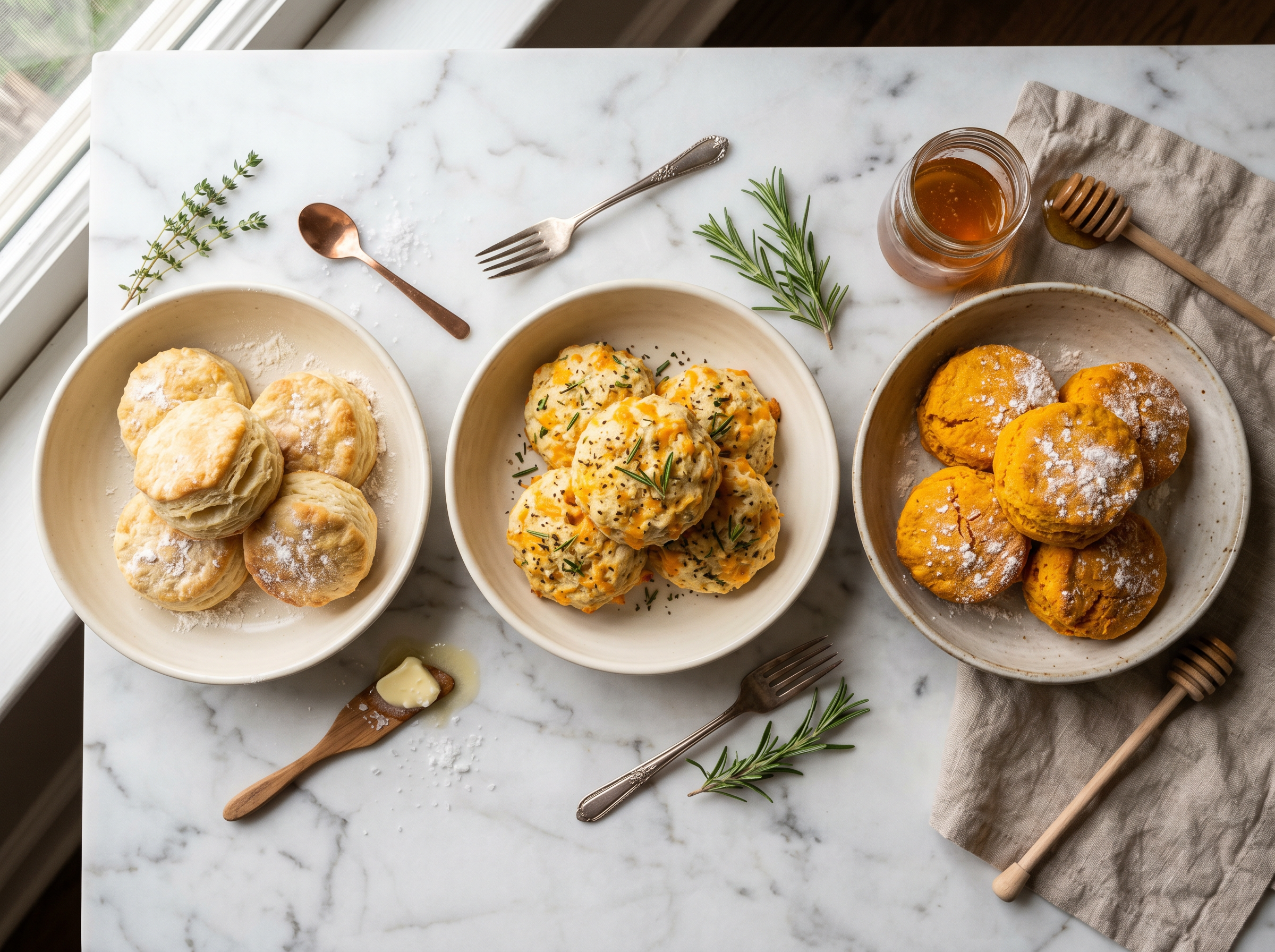
Southern cathead biscuits vary by state, influenced by local wheat, fat traditions, and cultural heritage.
Appalachian Style (Virginia, West Virginia, Tennessee)
Uses pure lard alongside butter, resulting in a slightly richer, crisper exterior. Often served with redeye gravy (pan drippings + black coffee).
Deep South / Delta Style (Mississippi, Alabama, Louisiana)
May incorporate a touch of sugar in the dough. Frequently served with cane syrup or with smothered chicken gravy as a full meal component.
Texas Style
Larger and slightly denser, often made with all-purpose flour (White Lily availability decreases west of the Mississippi). Frequently paired with chili or breakfast migas.
Modern Variations
Contemporary chefs have introduced:
- Herb cathead biscuits: Rosemary, thyme, or chive folded into the dough
- Cheddar cathead biscuits: Sharp cheddar shredded in for savory depth
- Sweet potato cathead biscuits: Mashed sweet potato replaces a portion of the liquid
- Gluten-free cathead biscuits: Made with rice flour + tapioca starch blends; rising agents need adjustment
Nutrition Facts and Dietary Modifications
A standard cathead biscuit (approximately 110g) made with the classic recipe contains:
| Nutrient | Amount per Biscuit |
|---|---|
| Calories | 320–360 kcal |
| Total Fat | 14–17g |
| Saturated Fat | 8–10g |
| Carbohydrates | 42–46g |
| Fiber | 1–1.5g |
| Protein | 5–7g |
| Sodium | 580–650mg |
Dietary Modifications
- Lower-fat version: Replace butter with cold Greek yogurt (use 3 tbsp butter + ½ cup Greek yogurt + ¾ cup buttermilk)
- Dairy-free: Use plant-based butter (at least 80% fat content) and oat milk with 1 tbsp apple cider vinegar
- Lower sodium: Reduce salt to ½ tsp and use unsalted butter; sodium comes primarily from baking powder, so switch to low-sodium baking powder
- Higher protein: Replace 25% of flour with whole wheat pastry flour and add 2 tbsp powdered milk
Storage, Freezing, and Reheating Guide
Cathead biscuits are best eaten fresh but store well for up to 5 days at room temperature.
Room Temperature Storage
Wrap individual biscuits in aluminum foil or place in an airtight container. They stay soft for 2–3 days at room temperature. Avoid refrigerating — cold temperatures dry out the crumb.
Freezing (Up to 3 Months)
Two freezing methods work well:
Method 1 — Freeze baked biscuits:
Cool completely (minimum 1 hour). Wrap individually in plastic wrap, then place in a freezer zip bag. Label with date. To reheat: wrap in foil and bake at 350°F (175°C) for 12–15 minutes from frozen.
Method 2 — Freeze unbaked dough portions:
After shaping, place portions on a parchment-lined sheet and freeze solid (1–2 hours). Transfer to a freezer bag. Bake directly from frozen at 450°F for 20–24 minutes — no thawing needed. This method produces biscuits essentially indistinguishable from fresh-baked.
Reheating Options
- Oven (best): 350°F, 8–10 minutes wrapped in foil
- Air fryer: 325°F, 4–5 minutes — excellent for restoring crunch
- Microwave (emergency only): 20–25 seconds max; results in soft but never-crispy biscuits
Commercial and Industrial Biscuit Production
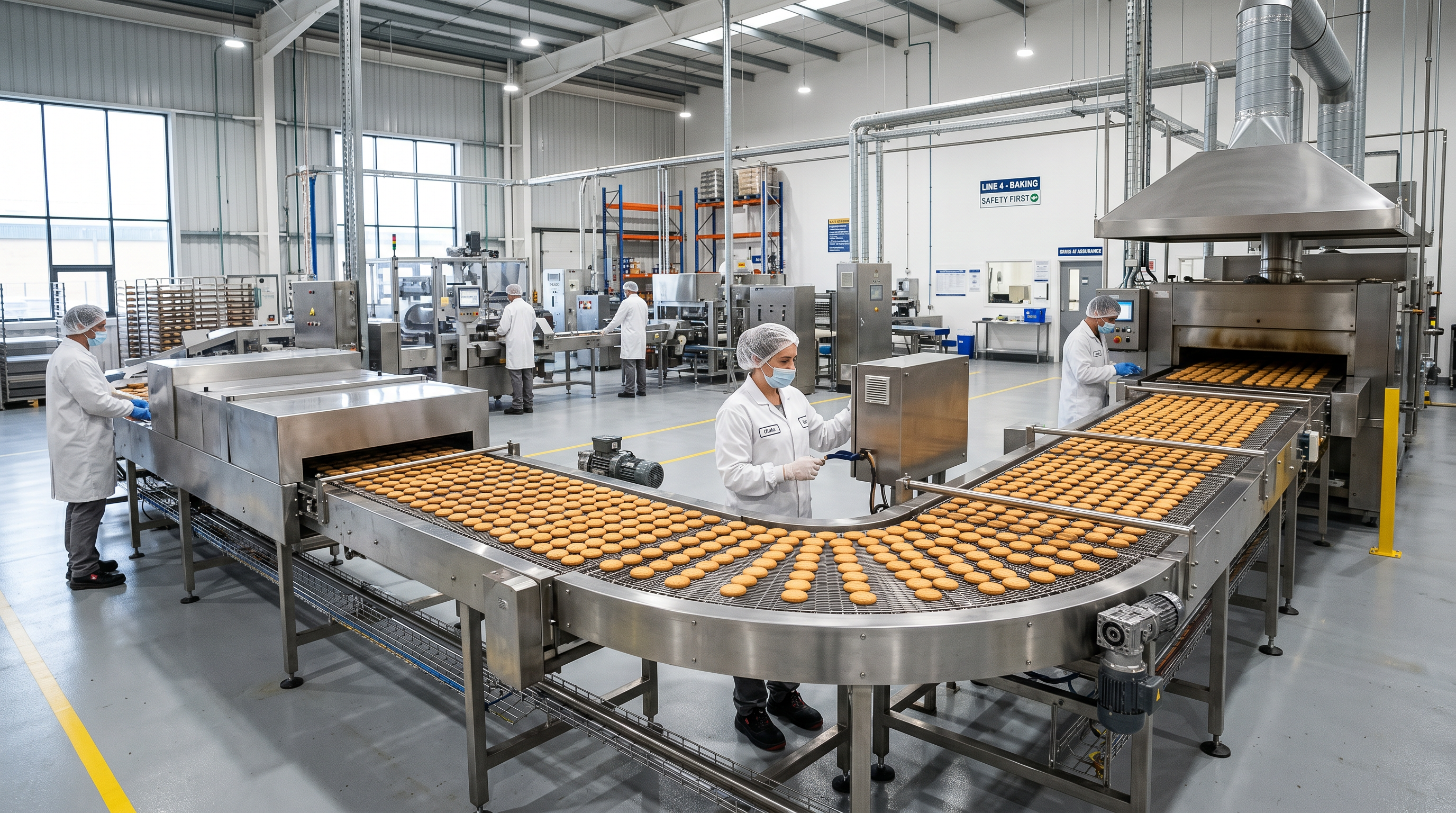
For foodservice operations, bakeries, and food manufacturers producing cathead-style biscuits at scale, the economics and process differ dramatically from home baking — and the right equipment makes all the difference.
The popularity of Southern-style biscuits has driven significant growth in commercial biscuit production. According to market research by Grand View Research, the global bakery market is projected to reach $590 billion by 2030, with breakfast bread products — including biscuits — among the fastest-growing segments.
The Commercial Biscuit Production Process
Commercial production of cathead-style drop biscuits typically involves these automated stages:
- Bulk ingredient batching and mixing via spiral or horizontal ribbon mixers (typically 200–500kg capacity batches)
- Dough temperature control to maintain 60–65°F (15–18°C) dough temperature through chilled mixing systems
- Depositor or divider systems that portion and drop dough without overworking it — critical for maintaining the airy texture
- Proofing (if enriched dough) in humidity-controlled cabinets
- Continuous tunnel baking at 450–480°F in convection or steam-injection ovens
- Cooling conveyors to bring internal temperature below 100°F before packaging
- Automated packaging in modified atmosphere packaging (MAP) to extend shelf life to 7–14 days
Equipment Considerations for Biscuit Manufacturers
For manufacturers entering the biscuit production segment, selecting the right production line is the most consequential capital decision. Key parameters include:
- Production capacity: Lines range from 200kg/hour entry-level to 2,000+ kg/hour fully automated lines
- Dough handling gentleness: Drop biscuits require low-shear depositing systems that don’t compress the dough
- Flexibility: The ability to switch between different biscuit sizes and formulations without lengthy changeovers
- Cleaning and sanitation: CIP (clean-in-place) capability is essential for FDA-compliant dairy-containing products
- Energy efficiency: Modern tunnel ovens with heat-recovery systems can reduce energy costs by 25–30% vs. older deck ovens
JY Machine Tech specializes in complete biscuit production lines engineered for manufacturers scaling from artisan to industrial volumes. Their biscuit making equipment handles dough mixing, forming, baking, and cooling in a fully integrated line — allowing operators to maintain the drop-biscuit character that makes cathead biscuits unique, while achieving the consistency and throughput that commercial operations require.
The company’s production lines can be configured for:
- Soft drop biscuits (cathead style) using low-shear depositors
- Laminated biscuits using sheeting and cutting systems
- Sandwich biscuits with cream filling stations
- Specialty biscuits with inclusions (cheese, herbs, dried fruit)
For food manufacturers evaluating entry into the Southern biscuit market — a segment growing at 6.2% annually according to industry data — the investment in purpose-built biscuit production equipment pays for itself in product consistency and reduced labor costs within 18–24 months at typical commercial volumes.
Common Mistakes and Troubleshooting
Most cathead biscuit failures trace back to three root causes: warm fat, overworked dough, or incorrect flour.
The #1 Mistake: Overworking the Dough
Once liquid touches flour, gluten begins forming immediately. Every additional fold or stir develops more gluten, which makes biscuits progressively tougher. The ideal cathead biscuit dough should look shaggy and barely combined — it will come together during baking. If it looks too smooth, you’ve gone too far.
Using Warm Fat
Cold fat in biscuit dough serves a specific structural purpose: it creates steam pockets during the rapid heat of a hot oven, which generates the layered, flaky interior. Warm or room-temperature fat melts into the flour before baking, preventing those pockets from forming. If your kitchen is warm, grate frozen butter directly into the flour mixture and work quickly.
Wrong Flour
Using high-protein bread flour or whole wheat flour without adjustment will produce dramatically different results. The gluten network in high-protein flours develops faster and stronger, overriding the gentle handling required for cathead biscuits. If you must use bread flour, reduce the protein impact by replacing 25% with cornstarch.
Not Enough Buttermilk
Because cathead biscuits are drop biscuits (not rolled), the dough should be wetter and stickier than rolled biscuit dough. If it holds a clean shape without sticking to your hands, it needs more buttermilk. Aim for a consistency closer to a sticky muffin batter than a traditional pastry dough.
Future Trends in Biscuit Manufacturing
The commercial biscuit industry is being reshaped by clean-label demands, automation advances, and the premium-ization of regional American food traditions.
Clean Label and Simple Ingredient Formulations
Consumer demand for short, recognizable ingredient lists is accelerating. According to Nielsen consumer research, 73% of consumers say they check ingredient labels before purchase, with 67% preferring shorter ingredient lists. For biscuit manufacturers, this means reformulating to replace emulsifiers, dough conditioners, and artificial preservatives with natural alternatives — a challenge that premium cathead-style biscuits are actually well positioned to meet, since traditional recipes never included those additives.
Automation and Labor Reduction
Labor costs are the single largest operating expense in most biscuit production facilities. New-generation robotic forming systems can handle even sticky drop-biscuit doughs that previously required manual portioning. AI-powered vision systems now inspect biscuits for color, size, and surface defects at line speed, replacing manual quality inspection.
Regional American Food Premium-ization
Southern food traditions — including cathead biscuits — are experiencing premium market positioning. Products marketed as “authentic Southern-style” or “craft bakery” command 40–60% price premiums in grocery retail, according to specialty food industry data. This creates a compelling manufacturing opportunity for producers who can maintain authentic texture and taste characteristics while operating at scale.
Sustainability in Baking Equipment
Next-generation biscuit production lines are incorporating heat recovery systems, closed-loop water systems for steam injection, and predictive maintenance AI that reduces downtime and waste. JY Machine Tech’s newer biscuit production line configurations include energy monitoring systems that allow operators to benchmark and reduce per-unit energy consumption over time.
Frequently Asked Questions
Q: Why are they called cathead biscuits?
They’re called cathead biscuits because of their size — roughly as large as a cat’s head, approximately 3 to 4 inches in diameter. The name is an old Southern culinary measurement shorthand, passed down through oral tradition before standardized measuring cups became widespread in home kitchens.
Q: Are cathead biscuits the same as drop biscuits?
Cathead biscuits are a type of drop biscuit, but not all drop biscuits are cathead biscuits. The defining characteristics of cathead biscuits are their oversized dimensions and their Southern heritage. Standard drop biscuits can be any size; cathead biscuits must be large enough to justify the name.
Q: Can you make cathead biscuits without buttermilk?
Yes. Substitute 1 cup whole milk mixed with 1 tablespoon white vinegar or lemon juice. Let it sit for 5 minutes until it curdles slightly. The acidity is important for activating baking soda; plain milk without acid will produce a flatter biscuit with less rise.
Q: What is the best flour for cathead biscuits?
White Lily All-Purpose Flour is the gold standard for authentic cathead biscuits. Made from soft red winter wheat, it has a protein content of around 8–9%, significantly lower than most national all-purpose brands (10–12%). The lower protein content produces less gluten, which creates the signature tender crumb. Outside the Southern US, cake flour blended with all-purpose flour approximates this result.
Q: How do you keep cathead biscuits from spreading too much?
Three things prevent spreading: (1) Keep all ingredients cold, including the dough itself — refrigerate for 15 minutes after shaping if your kitchen is warm; (2) Bake in a preheated cast iron skillet so the bottom sets immediately; (3) Place biscuits touching each other in the pan so they support each other’s sides and rise upward rather than spreading outward.
Q: Can cathead biscuits be made ahead of time?
Yes. The best make-ahead method is to shape and freeze unbaked dough portions. Bake directly from frozen at 450°F for 20–24 minutes. This produces biscuits nearly identical to fresh-made. Alternatively, baked biscuits freeze well for up to 3 months when individually wrapped.
Q: What equipment do commercial bakers use to produce cathead-style biscuits?
Commercial cathead-style biscuit production requires specialized low-shear depositing equipment to handle the sticky, wet dough without overworking it. Industrial facilities typically use drop depositors, continuous tunnel ovens with convection, and post-bake cooling conveyors. Full production lines from manufacturers like JY Machine Tech can produce hundreds of kilograms per hour while maintaining the rustic, hand-dropped appearance and texture that consumers expect from authentic cathead biscuits.
Q: Are cathead biscuits healthy?
Like most traditional baked goods, cathead biscuits are an energy-dense food — approximately 320–360 calories each — not a low-calorie option. However, made with real butter and simple ingredients, they contain no artificial preservatives or hydrogenated fats. Dietary modifications (reduced-fat, dairy-free, or lower-sodium versions) are practical and maintain good texture results when followed correctly.
Conclusion
Cathead biscuits represent one of the most honest expressions of Southern American food culture: a large, filling, tender biscuit made with simple ingredients, minimal equipment, and maximum heart. Whether you’re recreating your grandmother’s recipe at home or scaling production to feed thousands of customers every morning, the principles are the same — cold fat, gentle handling, hot oven, and good flour.
For home bakers, mastering cathead biscuits is a skill that pays dividends every weekend for the rest of your life. The recipe is forgiving once you understand the why behind each step, and the result — a golden, butter-brushed biscuit the size of a small fist, pulling apart in tender, steaming layers — is genuinely difficult to improve upon.
For commercial food producers, cathead biscuits represent a significant and growing market opportunity. As Southern food traditions continue their premium-ization in US grocery and foodservice channels, manufacturers with efficient, flexible biscuit production capabilities are well positioned to meet demand. Choosing the right biscuit making equipment — one that handles sticky drop doughs without over-processing, maintains consistent portion size, and allows for recipe flexibility — is the foundation of a profitable biscuit production operation.
For more information about industrial biscuit production lines, depositing systems, and complete biscuit manufacturing solutions, explore the commercial food equipment offerings at JY Machine Tech.
Related Articles
- How Do You Make Gummy Bears? From Home Kitchen to Commercial Production
- Strawberry Bubble Tea: Complete Guide to Ingredients, Recipes & Commercial Production
- Gumdrops Candy: The Complete Guide to History, Production & Commercial Manufacturing
- French Candy: The Complete Guide to Types, Traditions & Commercial Production
- Biscuit Production Line
- Advanced Automatic Biscuit & Cracker Machine
- Original Skittles Gluten Free: Celiac Safety Guide