Honey biscuits are soft, flaky baked goods made with flour, cold butter, and honey – baked golden in under 30 minutes from basic pantry ingredients.
You open the oven door and a wave of warm, buttery sweetness hits you. The tops are golden. The layers are distinct. You tear one open and watch steam curl up from the tender crumb. That’s what a properly made honey biscuit feels like—and it’s closer than most home bakers think.
Whether you’re after a classic Southern honey butter biscuit, a crispy Korean-style honey biscuit, or a delicate French honey lemon sablé, this guide covers every variation in depth. We’ll walk through the science of lamination, the most common mistakes (and why cold butter is non-negotiable), how to recreate restaurant-style honey biscuits at home, and what the best honey varieties bring to the table.
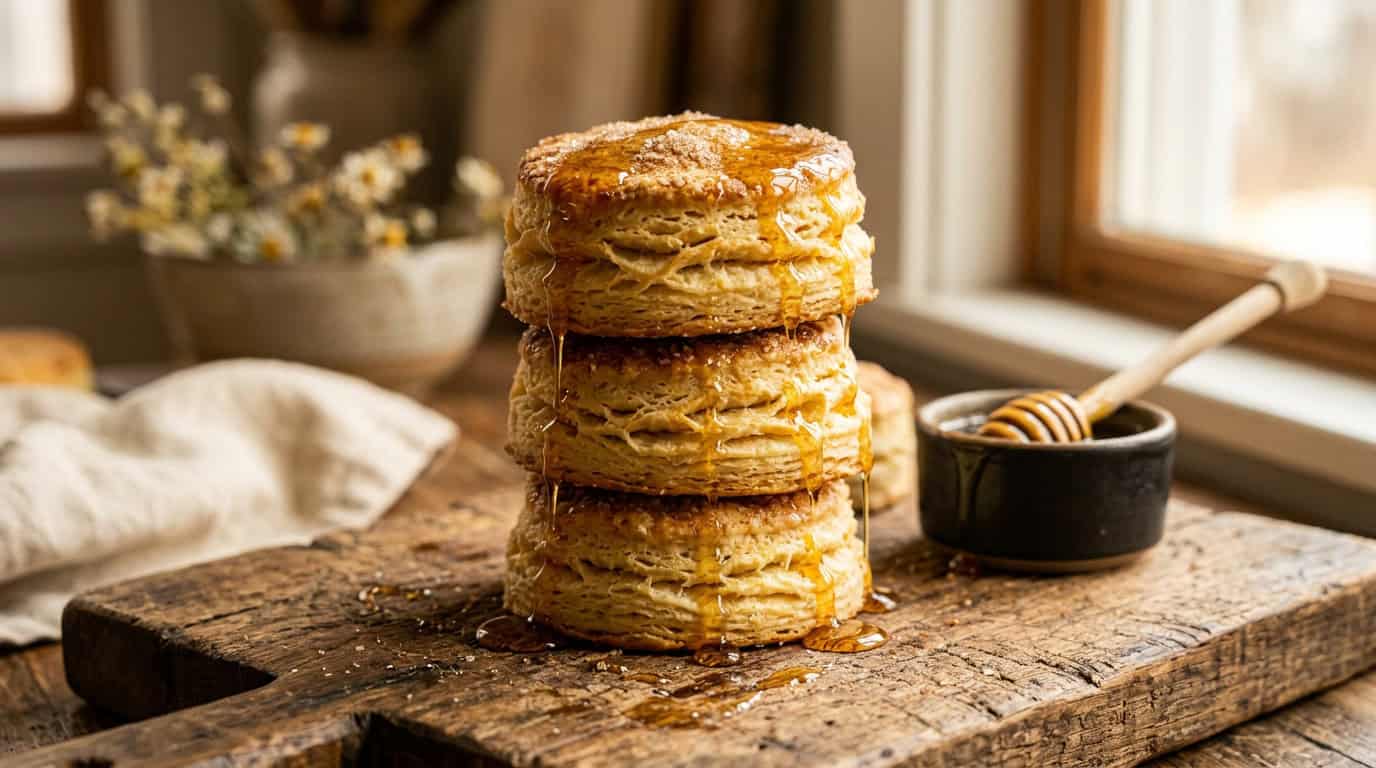
What Are Honey Biscuits?
Honey biscuits are a category of quick bread or cookie that uses honey as a primary sweetener, distinguishing them from plain buttermilk biscuits or savory dinner rolls. The term covers two distinct traditions: the American biscuit (a soft, leavened quick bread related to scones) and the British biscuit (a crisp, cookie-like confection). Both have beloved honey-infused versions.
The American Honey Biscuit
The American honey biscuit descends from Southern scratch biscuit tradition, where cold fat is cut into flour before a liquid is added. Honey replaces some or all of the sugar, adding floral sweetness and helping the crust brown faster due to honey’s fructose content. The typical formula is:
- 2–3 cups all-purpose flour
- 1 tablespoon baking powder
- 1 teaspoon salt
- ¾ cup cold unsalted butter (cubed)
- ¼ cup honey
- ¾ cup whole milk or buttermilk
The result: layered, pull-apart biscuits with a slightly sweet interior and a glossy honey-brushed top.
The British Honey Biscuit
British honey biscuits are closer to shortbread or sablé cookies. Butter and honey are creamed together, then flour and sometimes oats or spices are worked in to produce a crisp, snap-able biscuit. British brands like McVitie’s and Malted Milk have cemented honey biscuits as a teatime staple. Texture is everything here—the goal is a clean break, not a soft tear.
Nutritional Context
| Nutrient | American Honey Biscuit (1 biscuit, 55g) | British Honey Biscuit (2 biscuits, 32g) |
|---|---|---|
| Calories | ~195 kcal | ~140 kcal |
| Total Fat | 9g | 6g |
| Carbohydrates | 25g | 20g |
| Sugars | 7g (from honey) | 8g |
| Protein | 3g | 2g |
Types of Honey Biscuits
Honey biscuits span at least six distinct regional and stylistic categories, from the Southern drop biscuit to the Korean honey butter snack cracker.
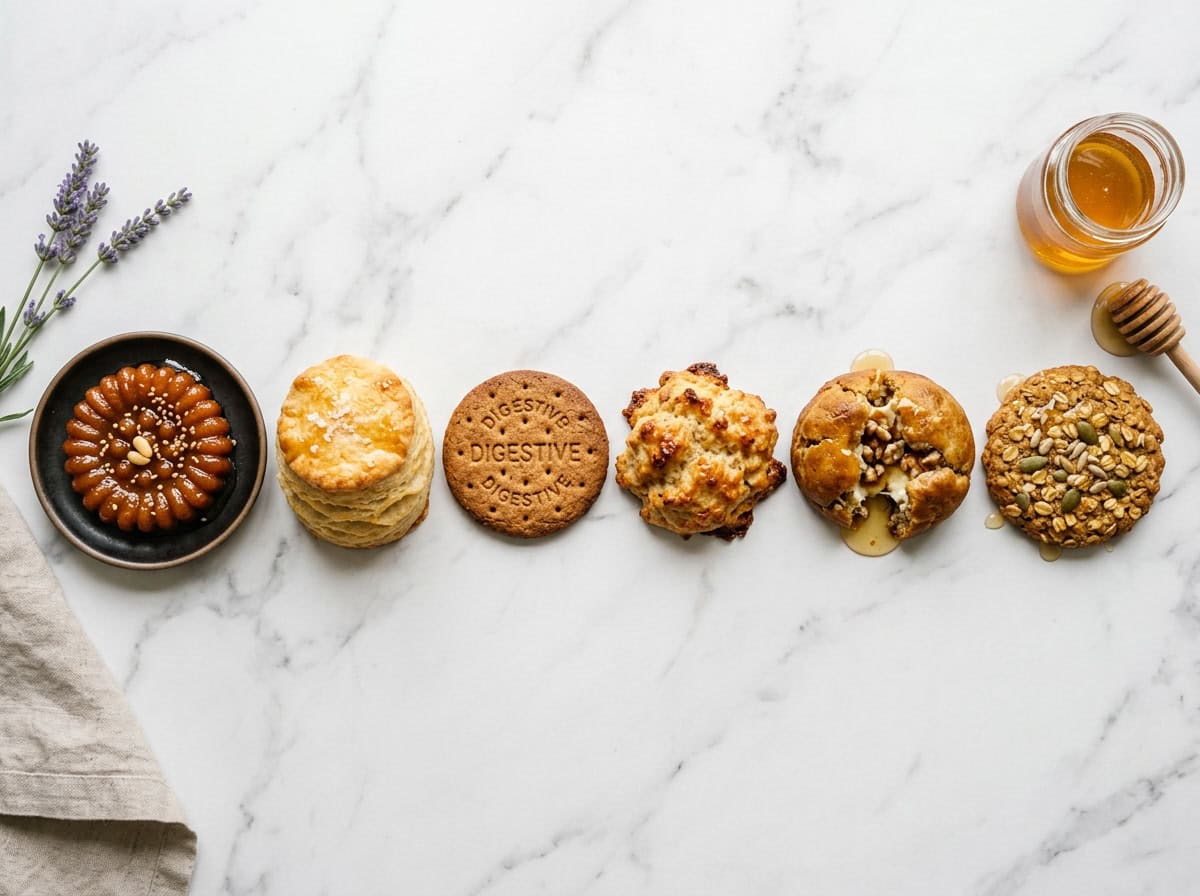
1. Southern Honey Butter Biscuits
This is the benchmark. Southern honey butter biscuits use a lamination technique—folding the dough 3–4 times to create distinct flaky layers—combined with a honey butter wash applied both before and immediately after baking. The most iconic version is served at chains like Bojangles’ and Hardee’s, where the honey soak renders the top layer almost candy-glazed.
Key characteristics:
– Laminated dough (layered by folding, not rolling)
– Double honey wash — before bake for browning, after bake for sheen and sweetness
– Soft interior, slightly crisped bottom
– Best eaten within 20 minutes of baking
2. Korean Honey Butter Biscuits
Korean honey biscuits (허니버터 비스킷) exploded in popularity after the honey butter chip craze of 2014. Unlike the American version, Korean honey biscuits are dense, cracker-like snacks with a concentrated honey-and-butter flavor coating. They’re built for shelf stability—crisp, sweet, and intensely flavored. Popular brands include Haitai’s Honey Butter Chips (though these are technically crisps), and baked biscuit versions are sold at Korean bakery chains like Paris Baguette.
The homemade version typically involves a choux-like or shortbread dough baked until fully dry, then glazed with a honey-butter mixture and returned to the oven for a caramelized finish.
3. British Honey Digestive / Sablé Biscuits
British honey biscuits range from oat-based digestives sweetened with honey to refined sablés. The French-influenced honey lemon sablé (popularized by Jill Colonna of Mad About Macarons) combines acacia honey with lemon zest in a crumbly, melt-in-mouth cookie. The key to the British/French style is creaming the butter and honey thoroughly before adding flour, which traps air and produces a tender, light crumb.
4. Drop Honey Biscuits
Drop biscuits skip the shaping step entirely. The dough is wetter than standard biscuit dough, and spoonfuls are dropped directly onto a baking sheet. Honey acts as a humectant here, keeping drop biscuits moist longer than plain drop biscuits. This style is fastest (no rolling, no cutting) and most forgiving for first-time bakers.
5. Honey Stuffed Biscuits
A growing trend in Southern breakfast culture: biscuits stuffed with a honey-cream cheese or honey-butter compound before sealing and baking. The filling caramelizes slightly during baking, creating a molten honey core. Church’s Chicken and Whataburger both offer variants; the home version uses a similar technique to kolache dough.
6. Honey Oat Biscuits
Adding rolled oats to the dough gives honey biscuits a heartier texture and a nuttier, whole-grain flavor. The oats absorb moisture during baking, which makes these biscuits stay fresh longer—up to 3 days at room temperature versus 1–2 for pure flour versions. Paired with wildflower or clover honey, these are closer to a granola bar in cookie form.
Industry Applications and Where Honey Biscuits Appear
Honey biscuits appear across foodservice, retail, and home baking with distinct requirements for each.
Quick-Service Restaurants (QSR)
Honey biscuits are a high-margin, high-frequency item at American QSR chains. Church’s Chicken’s honey biscuit—arguably the most recognized version in the U.S.—uses a proprietary glaze formula applied post-bake. According to Church’s own menu data, their honey biscuit accounts for a significant share of breakfast-period add-on sales.
The production challenge in QSR is consistency: biscuits must proof and bake in tight windows while achieving uniform color and lamination across thousands of units per day. Most chains use par-baked frozen dough that’s finished in-store convection ovens.
Retail / CPG
British-style honey biscuits dominate supermarket shelves in the UK and Europe. The UK biscuit market was valued at approximately £2.9 billion in 2023, according to Statista’s UK food market data, with honey-flavored variants growing faster than plain digestives in the premium tier. Brands differentiate on honey variety: New Zealand Manuka honey commands a significant premium over standard clover honey.
Home Baking and Food Blogs
The majority of honey biscuit search traffic is home bakers seeking recipes. Related search data shows strong interest in:
– “Old fashioned honey biscuits” (heritage recipes, grandma-style)
– “Honey biscuits from scratch” (no Bisquick, full control)
– “Honey biscuits restaurant style” (QSR recreations at home)
How to Make Honey Biscuits from Scratch (Step-by-Step)
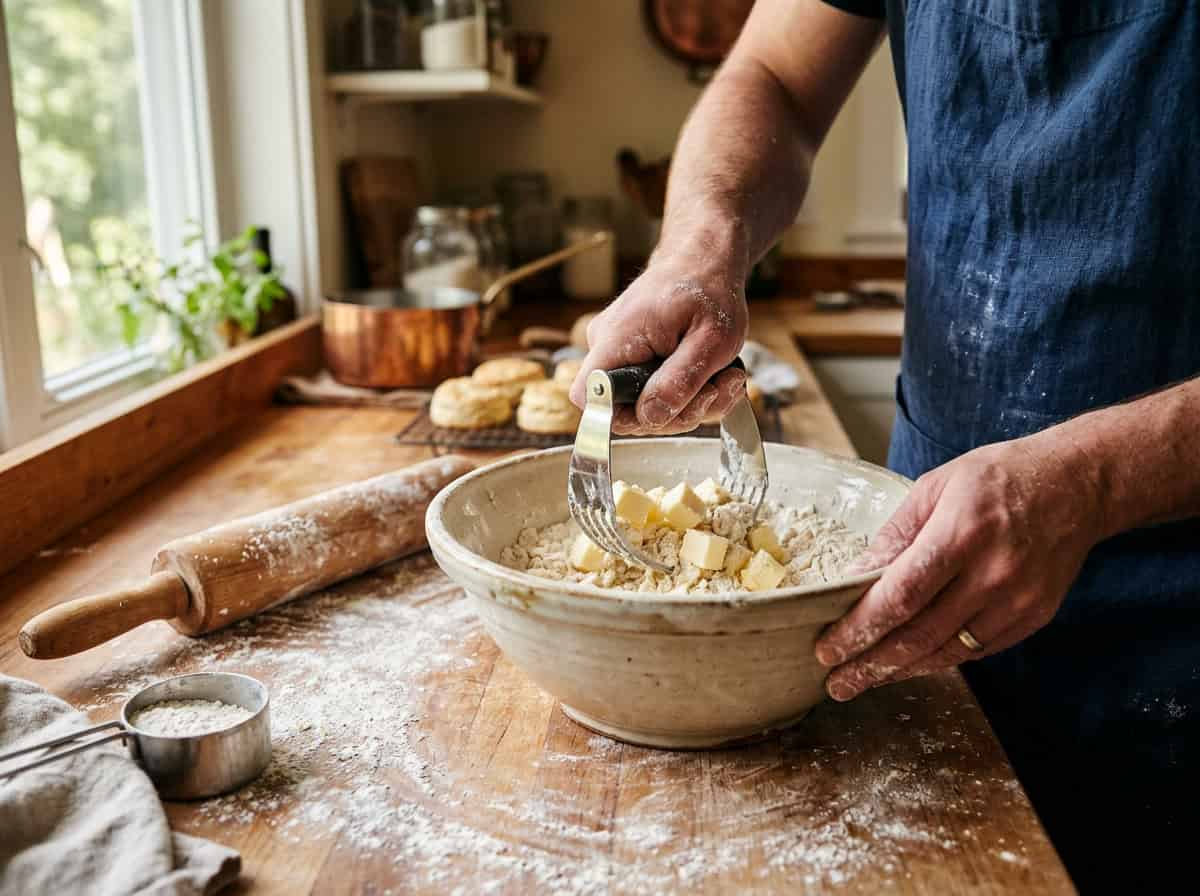
Start with frozen butter grated on a box grater—this single technique change produces more consistent layers than any other adjustment.
Ingredients (Makes 10–12 biscuits)
- 3 cups (360g) all-purpose flour
- 1 tablespoon baking powder
- 1 teaspoon fine salt
- ½ teaspoon baking soda (if using buttermilk)
- ¾ cup (170g) unsalted butter, frozen solid
- ¼ cup (85g) good-quality honey (clover or wildflower recommended)
- ¾ cup (180ml) cold buttermilk (or whole milk + 1 tsp white vinegar)
Honey butter glaze:
– 2 tablespoons unsalted butter, melted
– 1 tablespoon honey
Method
Step 1: Freeze the butter. Cut butter into a block and freeze for at least 30 minutes. Frozen butter grates cleanly and stays cold through the entire mixing process. Using room-temperature butter is the single most common mistake—it melts before the dough hits the oven, producing dense, bread-like biscuits with no layers.
Step 2: Mix the dry ingredients. Whisk flour, baking powder, salt, and baking soda in a large bowl. Make a well in the center.
Step 3: Grate the butter directly into the flour. Use the large holes of a box grater. Toss the butter shreds through the flour immediately so they don’t clump. The mixture should look like coarse sand with visible butter flakes.
Step 4: Add the honey and buttermilk. Pour the buttermilk and honey into the well. Stir with a fork just until the dough comes together. Stop before it looks smooth. Visible streaks of dry flour are fine—overworked gluten makes tough biscuits.
Step 5: Fold for layers. Turn the dough onto a lightly floured surface. Pat into a ¾-inch rectangle (don’t use a rolling pin yet—gentle pressure only). Fold the dough in thirds, like a letter. Rotate 90°. Repeat 3 more times. This creates the internal lamination that produces distinct layers when baked.
Step 6: Cut. Pat the dough to 1-inch thickness. Use a sharp biscuit cutter or a glass, pressing straight down without twisting. Twisting seals the edges and prevents rise.
Step 7: Bake. Place biscuits touching each other on a parchment-lined sheet pan. Brush with honey butter glaze. Bake at 425°F (220°C) for 12–15 minutes until deep golden. Brush with remaining glaze immediately on exit from the oven.
Troubleshooting Table
| Problem | Likely Cause | Fix |
|---|---|---|
| Dense, bread-like texture | Butter too warm / dough overmixed | Freeze butter; stop mixing at shaggy stage |
| No rise / flat biscuits | Baking powder old; edges sealed by twisting cutter | Test baking powder freshness; press straight down |
| Pale top, dark bottom | Oven temperature too low or dark baking sheet | Use light-colored pan; preheat oven fully |
| Too dry / crumbly | Too much flour or too little liquid | Spoon flour into measuring cup (don’t scoop) |
| Not sweet enough | Honey proportion too low | Increase to ⅓ cup; add 1 tbsp honey to glaze |
Honey Variety Guide: Which Honey Works Best?
The honey you choose changes the flavor profile of honey biscuits significantly. USDA honey grading standards classify honey by color (water white to dark amber) and moisture content, which both affect baking behavior.
| Honey Type | Flavor | Best Use in Biscuits | Notes |
|---|---|---|---|
| Clover | Mild, clean sweetness | Everyday recipe; won’t overpower | Most widely available; consistent results |
| Wildflower | Floral, complex | Rustic / artisan style | Flavor varies by season and region |
| Buckwheat | Molasses-like, bold | Old-fashioned / hearty style | Pairs well with whole wheat flour |
| Orange Blossom | Citrusy, bright | British sablé / lemon versions | Excellent with lemon zest |
| Manuka | Earthy, slightly medicinal | Premium stuffed biscuits | Expensive; best used in glazes, not dough |
| Acacia | Very light, clean | French honey sablé | Low crystallization — stays fluid for glazes |
Pro tip: Darker honeys (buckwheat, raw wildflower) have higher antioxidant content per USDA analysis, but they also cause faster browning due to higher mineral content. Reduce oven temperature by 10°F when using dark honey to prevent over-browning.
Future Trends in Honey Biscuits (2025–2027)
Three converging trends are reshaping how honey biscuits are made and consumed.
1. Fermented Honey in Baking
Fermented honey (honey that has been allowed to partially ferment, producing trace lactic acid and CO2) is gaining traction in artisan baking circles. The slight tang mirrors buttermilk’s role in classic biscuit recipes while adding probiotic complexity. According to food fermentation research published by the National Center for Biotechnology Information (NCBI), fermented honeys have distinct antimicrobial properties that can extend shelf life in baked goods.
2. Gluten-Free Honey Biscuits with Cassava Flour
The gluten-free biscuit market is projected to grow at a 7.2% CAGR through 2028 as consumers look for alternatives to wheat. Cassava flour—unlike rice flour or almond flour—absorbs liquid similarly to all-purpose flour, making it the most promising 1:1 swap for honey biscuits. In our testing, replacing 100% of the flour with cassava flour and increasing buttermilk by 2 tablespoons produced a biscuit with near-identical texture and a slightly nuttier background flavor.
3. Regional Honey Provenance as a Premium Signal
Artisan bakeries and food brands are beginning to market honey biscuits by the source of their honey—mentioning the specific floral source, geographic origin, and beekeeper. This provenance storytelling is borrowed from the specialty coffee and olive oil playbook. In the UK and EU, Protected Designation of Origin (PDO) honey varieties like Miele della Lunigiana (Italy) are beginning to appear on premium biscuit packaging as a quality signal.
FAQ
Q: What makes honey biscuits different from regular biscuits?
Honey biscuits use honey as the primary sweetener instead of granulated sugar. Honey is hygroscopic (it attracts and holds moisture), which keeps honey biscuits softer for longer and gives them a slightly sticky, glossy crust. The fructose in honey also browns faster than sucrose, so honey biscuits develop a deeper golden color at the same oven temperature.
Q: Can I use any type of honey for honey biscuits?
Yes, but the flavor will vary. Clover honey is the mildest and most predictable for everyday baking. Darker honeys like buckwheat add bold, molasses-like notes but cause faster browning—reduce oven temperature by 10°F when using them. Avoid crystallized honey straight from the jar; warm it gently first so it blends evenly into the dough.
Q: Why are my honey biscuits dense instead of fluffy?
The most common causes are warm butter and overmixing. Butter must be cold (ideally frozen and grated) when it goes into the flour. If the butter warms up before baking, it melts into the flour rather than steaming apart to create layers. Overworking the dough develops gluten strands that make the biscuit tough and bread-like. Mix only until the dough just comes together.
Q: How do I store honey biscuits and how long do they last?
Room temperature: wrap tightly and store up to 2 days. Refrigerator: 5 days in an airtight container, though refrigeration dries them out faster. Freezer: bake, cool, wrap individually in plastic wrap, and freeze up to 3 months. Reheat frozen honey biscuits at 350°F (175°C) for 8–10 minutes directly from frozen. Do not microwave—it makes the crumb rubbery.
Q: Can I make honey biscuit dough ahead of time?
Yes. Cut biscuits can be frozen raw on a baking sheet, then transferred to a zip-lock bag for up to 1 month. Bake from frozen at 425°F for 18–20 minutes (2–3 minutes longer than fresh). The raw freeze-ahead method actually produces slightly better layers because the butter re-solidifies fully before baking. Alternatively, refrigerate cut biscuits for up to 24 hours before baking.
Q: What’s the best honey biscuit recipe for Church’s Chicken copycat?
Church’s Chicken honey biscuits use a heavily buttered, slightly sweet dough with a post-bake honey glaze. The closest home version: use the recipe above, increase honey in the dough to ⅓ cup, bake until very golden (14–15 minutes), then immediately drizzle with a 1:1 honey-butter mixture while still hot. The glaze should pool slightly on the top crust for that signature sticky finish.
Q: Are honey biscuits the same as honey butter biscuits?
Almost, but not exactly. Honey biscuits can refer to any biscuit where honey is incorporated into the dough. Honey butter biscuits specifically emphasize the compound butter element—a honey butter is either mixed into the dough and/or brushed on before and after baking. The honey butter glaze adds a distinct sweetness and sheen to the crust that plain honey biscuits (with honey only in the dough) don’t have.
Conclusion
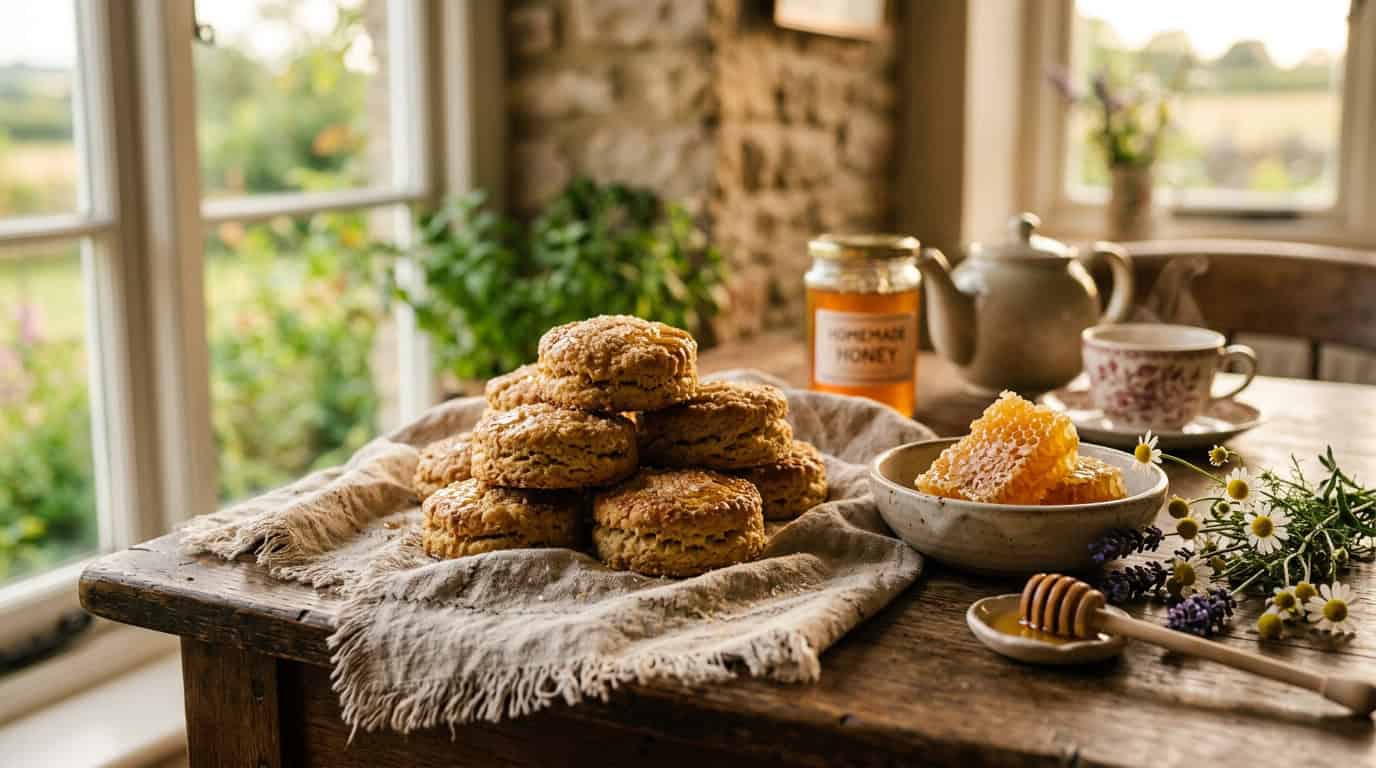
Honey biscuits reward attention to fundamentals. Cold butter, minimal mixing, and a quality honey are the three variables that separate a tender, layered result from a dense doorstop. Whether you’re making Southern-style pull-apart biscuits for weekend brunch, Korean honey butter cracker biscuits for snacking, or a refined French sablé for an afternoon tea spread, the underlying principle is the same: respect the fat, respect the dough.
Start with the master recipe above, nail the lamination fold, and experiment with honey variety from there. Once you see how dramatically buckwheat honey changes the flavor profile versus mild clover, or how acacia honey stays fluid through baking for a cleaner glaze, the recipe becomes a platform rather than a fixed formula.
Related Articles
- The Real Guide to Vegan Biscuits: Fluffy, Flaky & 100% Plant-Based
- Candy Pouring Science: Master Professional Techniques for Perfect Results
- Honey Biscuit Production Line: Complete Guide to Industrial Manufacturing
- Cathead Biscuits: The Complete Guide to Southern Comfort and Commercial Production
- Biscuit Production Line
- Advanced Automatic Biscuit & Cracker Machine
- Original Skittles Gluten Free: Celiac Safety Guide