Garibaldi biscuits are thin, crispy British biscuits made from two layers of sweet shortcrust dough sandwiching plump dried currants, baked until golden and snapped into rectangular pieces.
Picture a quiet British afternoon: a cup of strong tea, a biscuit tin cracking open, and the unmistakable sight of those flat, currant-studded rectangles that have survived over 160 years of changing tastes. Garibaldi biscuits aren’t flashy. They’re not dipped in chocolate or stuffed with cream. But their staying power tells you something — these biscuits earned their place in tins across the United Kingdom through honest flavor and a texture that rewards every bite. Whether you’re a home baker hunting for a classic recipe, a food buyer sourcing biscuits at scale, or simply curious about one of Britain’s most enduring snacks, this guide covers everything from origin story to modern commercial production.
What Are Garibaldi Biscuits?
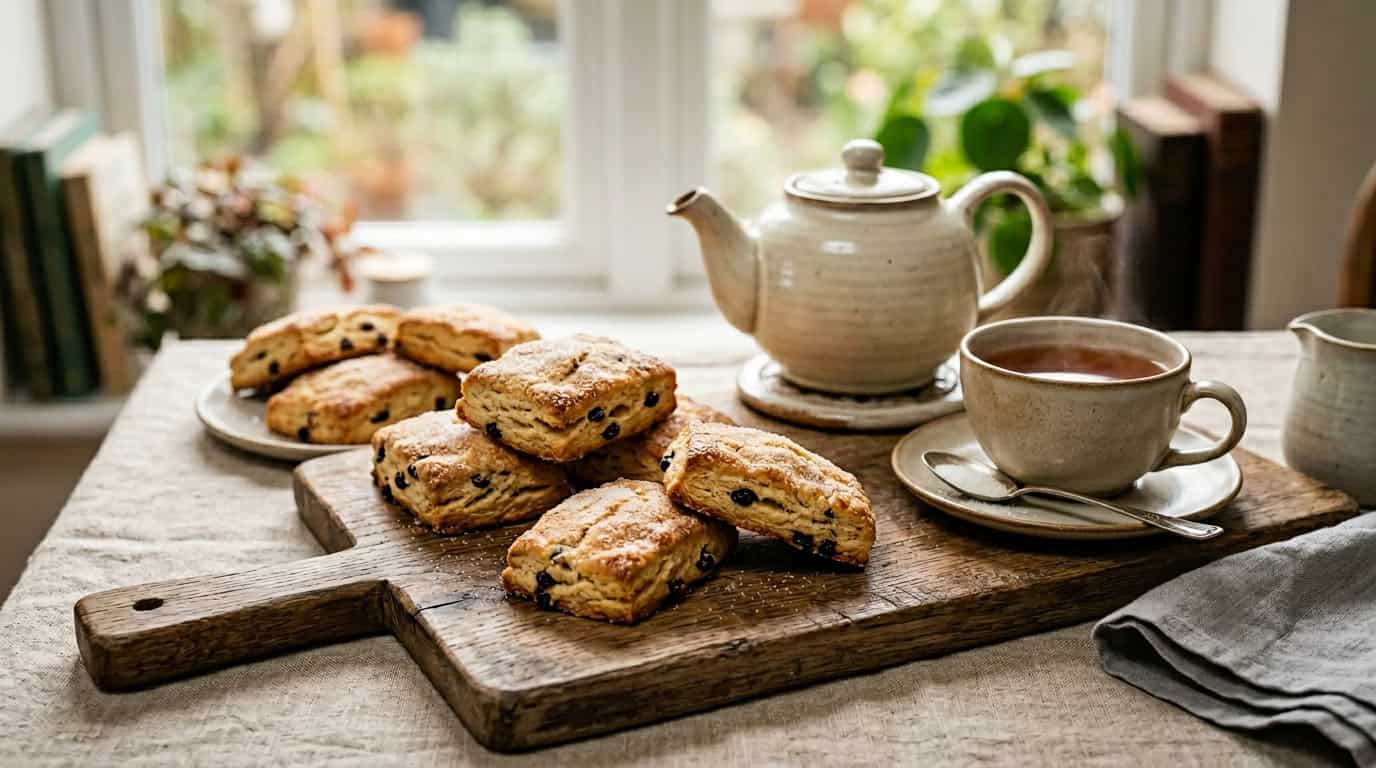
Garibaldi biscuits are thin, rectangular British biscuits consisting of dried currants pressed between two layers of biscuit dough, then baked to a crisp golden finish. The currants — typically Zante currants, the small seedless variety — are pressed flat into the dough so they partially protrude from the surface, giving the biscuit its distinctive bumpy texture.
Unlike rich tea biscuits or digestives, garibaldi biscuits are notably thin, snapping cleanly rather than crumbling. The dough is lightly sweetened, with a subtly buttery flavor that lets the tartness of the currants come forward. Each biscuit sheet is typically scored into individual rectangular pieces before baking, which snap apart cleanly after cooling.
Key Characteristics
- Shape: Flat rectangle, typically around 6 × 3 cm per piece
- Texture: Crisp and snappy, not crumbly
- Flavor profile: Lightly sweet dough with tart, chewy dried currants
- Dough type: Thin shortcrust or semi-sweet biscuit dough
- Key ingredient: Zante currants (dried, small, seedless)
How Garibaldi Biscuits Differ from Similar Products
| Feature | Garibaldi Biscuit | Fig Roll | Bourbon Biscuit | Rich Tea |
|---|---|---|---|---|
| Filling type | Currants embedded in dough | Fig paste inside pastry | Chocolate cream | None |
| Texture | Thin, crisp, snappy | Soft exterior, chewy inside | Firm, sandwich | Light, crisp |
| Sweetness level | Low-medium | Medium-high | High | Low |
| Visibility of filling | Exposed on surface | Hidden inside | Hidden | N/A |
| Typical serving | Tea accompaniment | Snack | Tea/coffee | Tea |
That said, garibaldi biscuits are frequently compared to fig rolls — both use fruit filling inside or between biscuit layers. The difference is structural: garibaldi biscuits expose the fruit, have a crispier bite, and are markedly less sweet overall.
The History of Garibaldi Biscuits
Garibaldi biscuits were created in 1861 by Peek Freans, a prominent British biscuit manufacturer based in Bermondsey, London. The timing was deliberate: 1861 was the year Giuseppe Garibaldi — the Italian general and nationalist hero — was at the height of his fame across Europe. His campaign to unify Italy had captured enormous public attention in Britain, and naming a biscuit after him was a marketing masterstroke.
Why Named After an Italian General?
Giuseppe Garibaldi visited England in 1864, receiving a hero’s welcome from crowds of hundreds of thousands. Peek Freans had already launched the biscuit three years earlier, riding the wave of Garibaldi’s popularity. The name stuck permanently — and the biscuit outlived the political moment that inspired it by well over a century.
According to the Wikipedia article on Garibaldi biscuits, the product was one of the first commercially produced biscuits to incorporate dried fruit as a structural component rather than a decoration, setting a template that influenced British biscuit manufacturing for decades.
The Peek Freans Legacy
Peek Freans went on to create other iconic British biscuits including the Bourbon and the Custard Cream. The Garibaldi, however, remains their most historically distinctive product — and arguably the most recognizable. The brand eventually transferred to Crawford’s, which still produces garibaldi biscuits commercially today. Crawford’s version remains the closest to the original: thin, dry, currant-studded, and designed for tea.
Types and Variations of Garibaldi Biscuits
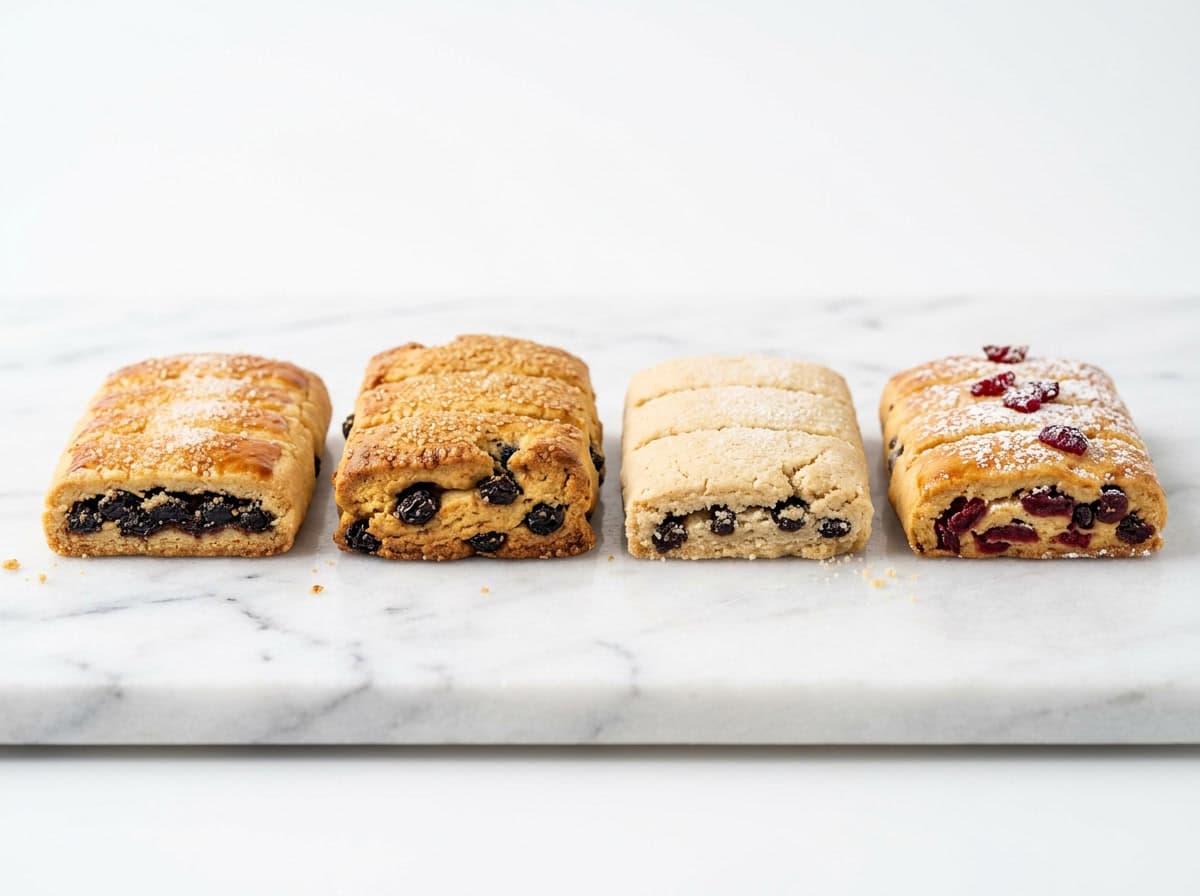
While the classic version with currants remains dominant, garibaldi biscuits have evolved into several distinct variants across different markets and baking traditions.
Classic Commercial Garibaldi
The version most familiar to British consumers. Uses Zante currants, lightly sweetened dough, thin pressed construction. Crawford’s is the most widely distributed brand. These are produced at industrial scale using rotary moulding and wire-cut biscuit machines that shape and cut the dough precisely before the currant layer is applied and the second dough sheet is laminated over the top.
Homemade / Artisan Garibaldi
Home bakers and artisan producers often use a richer dough — sometimes adding lemon zest, vanilla, or even a small amount of ground spice to the base. The currant layer can be enhanced with other dried fruits: cranberries, sultanas, or chopped dried apricots. The result is a more complex flavor profile than the commercial version, with the tradeoff of a slightly softer texture due to higher butter content.
Ottolenghi-Style Garibaldi
Chef Yotam Ottolenghi popularized a version of garibaldi biscuits that uses a combination of currants and cranberries plumped in orange juice before pressing into the dough. This variant — seen in Great British Bake Off challenges and food media — is notably more moist and complex, leaning into the tart fruit flavors. It is the furthest from the original in texture but has introduced garibaldi biscuits to a new generation of food enthusiasts.
Gluten-Free Garibaldi
A growing segment of bakery producers now offers gluten-free garibaldi biscuits, substituting standard wheat flour with rice flour or oat-based alternatives. The texture challenge is significant: standard garibaldi biscuits rely on gluten development for their characteristic snap. Successful gluten-free versions typically use a combination of rice flour and tapioca starch, with xanthan gum added to replicate the structural binding normally provided by gluten.
Garibaldi Biscuit Variants by Market
| Variant | Primary Market | Key Difference | Typical Retailer |
|---|---|---|---|
| Classic Crawford’s | UK, US import | Original recipe, Zante currants | Supermarkets, import shops |
| Artisan / homemade | UK, specialty | Richer dough, varied dried fruit | Farmers markets, online |
| Ottolenghi-inspired | Food enthusiast | Cranberry + currant, orange juice | Home baking |
| Gluten-free | Allergy market | Rice/oat flour base | Health food stores |
| Mini / snack pack | Convenience | Smaller pieces, travel format | Convenience stores |
How Garibaldi Biscuits Are Commercially Produced
Understanding the industrial production of garibaldi biscuits reveals why their texture is so consistent and why home versions often differ in bite. Commercial biscuit production is a precision process — and garibaldi biscuits are among the more mechanically complex biscuits to produce at scale due to the dual-layer construction and embedded fruit.
Stage 1: Dough Preparation
The base dough for garibaldi biscuits is a semi-sweet, low-moisture formulation. Typical commercial ingredients include refined wheat flour, sugar, vegetable fat or palm shortening, skimmed milk powder, salt, and raising agents (typically sodium bicarbonate and ammonium bicarbonate). Butter content is kept low in commercial versions — this controls cost and extends shelf life.
Mixing is done in large horizontal sigma-blade mixers. Dough temperature is controlled strictly — overheating causes fat softening which reduces snap in the final biscuit. Target dough temperature: 18–22°C. Mixing time is typically 8–12 minutes, just enough to develop partial gluten structure.
Stage 2: Sheeting and Lamination
The dough is sheeted to a thickness of approximately 1.5–2mm using a series of gauge rolls — large stainless steel cylinders that progressively reduce dough thickness. This is one area where precision machinery is critical: uneven sheeting causes inconsistent baking and texture variation across the biscuit.
After the first sheet is laid, the currant layer is distributed mechanically using a vibrating feeder system that meters dried currants evenly across the dough surface. A second dough sheet is then laminated over the top and pressed by a compression roller to embed the currants firmly.
Stage 3: Cutting and Scoring
The laminated dough sheet moves to a rotary cutter or reciprocating cutter which stamps out the individual biscuit outlines and scores the breaking lines. Garibaldi biscuits are typically cut into large rectangular sheets with multiple individual pieces scored within each sheet — consumers snap these apart after purchase.
Stage 4: Baking
Baking takes place in continuous tunnel ovens, typically gas-fired, at temperatures ranging from 200–240°C depending on zone. Total baking time: 8–12 minutes. The combination of high heat and low dough moisture drives out water rapidly, creating the characteristic crispness. Maillard browning on the exposed dough surface produces the golden color.
Stage 5: Cooling and Packaging
After exiting the oven, biscuits travel through a cooling tunnel for 5–8 minutes before packaging. Atmospheric packaging — typically flowpack film with some nitrogen flushing — extends shelf life to 9–12 months by limiting oxidation of the fats and moisture uptake.
Production note: The dual-sheet lamination step is the mechanical challenge that differentiates garibaldi production from simpler biscuit types. Modern biscuit laminating machines handle this with precision conveyor systems, ensuring even currant distribution and consistent sheet thickness. For producers scaling from artisan to commercial volumes, this is typically the investment inflection point.
How to Make Garibaldi Biscuits at Home
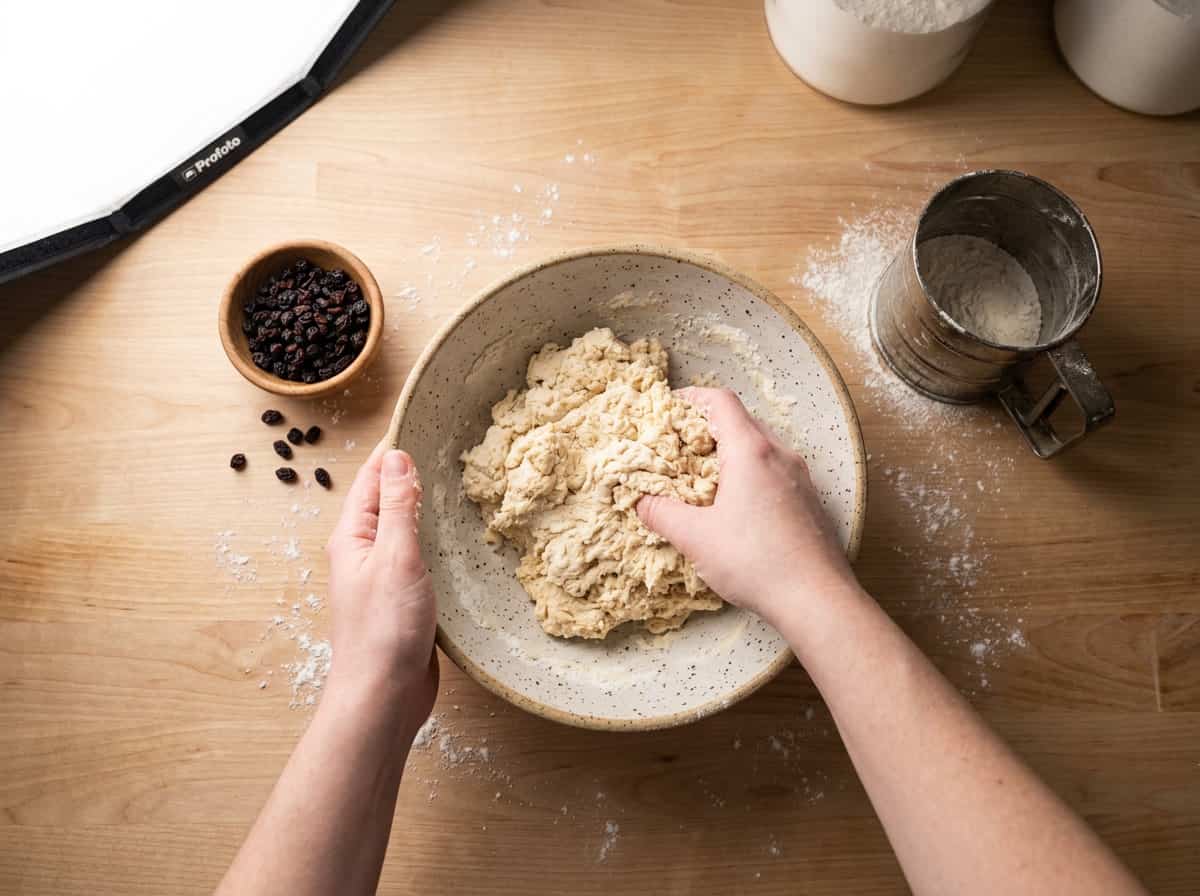
Home baking of garibaldi biscuits is straightforward with a few key technique points. The recipe below produces approximately 40–48 individual biscuit pieces and takes about 1 hour total.
Ingredients
For the dough:
- 250g plain flour (all-purpose), plus extra for dusting
- 100g unsalted butter, cold, cubed
- 60g caster sugar
- 1 egg
- 2 tablespoons cold milk
- ½ teaspoon baking powder
- ¼ teaspoon fine salt
- ½ teaspoon vanilla extract (optional)
For the filling:
- 150g Zante currants (or small seedless raisins)
- 1 tablespoon orange juice or water (to plump)
- 1 tablespoon caster sugar
- 1 egg, beaten (for sealing)
Method
- Plump the currants: Combine currants, juice, and sugar in a small bowl. Let stand 15 minutes while you prepare the dough.
- Make the dough: Rub butter into flour until it resembles breadcrumbs. Stir in sugar, salt, and baking powder. Beat egg with milk and vanilla; add to the flour mixture. Bring together into a firm dough. Divide in half. Wrap and chill 20 minutes.
- Roll first sheet: On a lightly floured surface, roll one dough half into a rectangle approximately 3mm thick and 25 × 20 cm. Transfer to a lined baking sheet.
- Add currant layer: Brush the dough lightly with beaten egg. Spread the currant mixture evenly across the surface, leaving a 1cm border.
- Add second sheet: Roll remaining dough to the same size. Lay over the currant layer. Press firmly with a rolling pin to embed the currants and seal the sheets together. Trim edges neatly.
- Score and cut: Using a sharp knife or pizza wheel, cut into individual pieces roughly 3 × 6 cm. Prick each piece twice with a fork. Brush the top with beaten egg.
- Bake: Bake at 190°C (fan 170°C) for 12–15 minutes until golden. They will firm up as they cool.
- Cool and snap: Cool on the tray for 5 minutes, then transfer to a wire rack. Snap apart at the scored lines.
Baker’s Tips
- Don’t skip chilling the dough — warm dough spreads in the oven and loses the characteristic snap.
- Press firmly when laminating — if the sheets don’t adhere, the biscuits split when baked.
- Zante currants vs. raisins — Zante currants are smaller and drier; they produce the most authentic result. Standard raisins add too much moisture.
- Thickness matters — aim for 3mm per sheet before pressing. Thicker biscuits won’t crisp fully; thinner ones burn.
Where to Buy Garibaldi Biscuits
Garibaldi biscuits are primarily a UK product, but they are available internationally through several channels.
In the United Kingdom
- Supermarkets: Most major UK supermarkets stock Crawford’s Garibaldi Biscuits in the biscuit aisle. Expect to pay £0.80–£1.20 per 100g pack.
- Convenience stores: Smaller packs appear in convenience formats.
- Online: Available via Ocado, Tesco online, Sainsbury’s online delivery.
Outside the United Kingdom
- Amazon.com — Crawford’s Garibaldi Biscuits: Packs of 12 × 100g are available for US buyers. Pricing reflects import premium.
- British import shops: Scattered across the US, Australia, Canada, and New Zealand. Search locally for “British food shop” or “English grocery.”
- Specialty food retailers: World Market (US) and similar chains carry British biscuit selections that sometimes include garibaldi biscuits.
Buying Guide: What to Look For
| Factor | What to check | Ideal spec |
|---|---|---|
| Brand | Manufacturer | Crawford’s (original) or established artisan |
| Currant density | Visual check on pack | Even distribution, no large gaps |
| Packaging | Seal integrity | Sealed flow-pack; avoid crushed packs |
| Shelf life | Best-before date | Minimum 3 months remaining |
| Ingredient quality | Ingredients list | Real butter (not just “vegetable fat”) for premium versions |
Industrial Applications: Biscuit Production Technology for Garibaldi-Style Products
For food manufacturers and bakery equipment buyers, garibaldi-style biscuits represent a specific production challenge: the sandwich/lamination format with embedded particulates requires equipment that standard wire-cut or rotary moulding lines can’t handle alone.
The core equipment requirements for commercial garibaldi biscuit production include:
Sheeting and gauge roll systems — capable of producing consistent dough sheets at 1.5–3mm thickness with minimal thickness variation (±0.1mm target). Variation at this stage propagates through baking and creates visible defects.
Particulate distribution systems — vibrating or rotating feeders that meter currants evenly across a moving dough sheet. Consistent coverage density is critical for product appearance and biting experience.
Lamination and compression units — lay the second dough sheet onto the currant-covered first sheet and apply controlled pressure to embed the fruit without rupturing the dough surface.
Rotary or reciprocating cutters with scoring capability — cut the outer biscuit shape while simultaneously scoring the individual piece break lines within each sheet.
Tunnel ovens with multiple temperature zones — the low-moisture, thin format of garibaldi biscuits requires precise heat profiling. Typically: high heat early zone for rapid moisture removal, moderate middle zone for color development, reduced exit zone to prevent over-browning the edges.
Modern biscuit production lines for sandwich-format products can operate at throughputs of 500–2000 kg/hour depending on line width and format size. Energy efficiency improvements in tunnel oven technology have reduced gas consumption by approximately 15–20% in the past decade, according to Biscuit & Cracker Manufacturers’ Association industry data.
Nutritional Profile of Garibaldi Biscuits
Garibaldi biscuits are not a health food, but they sit toward the lower end of the biscuit indulgence spectrum. Their low fat content (compared to cream-filled or chocolate-coated alternatives) and relatively modest sugar levels make them one of the lighter options in the British biscuit category.
Typical nutritional values per 100g (Crawford’s Garibaldi):
| Nutrient | Per 100g | Per biscuit (~8g) |
|---|---|---|
| Energy | 390 kcal | 31 kcal |
| Fat | 8.5g | 0.7g |
| Saturated fat | 3.5g | 0.3g |
| Carbohydrates | 72g | 5.8g |
| Sugars | 28g | 2.2g |
| Fibre | 2.1g | 0.2g |
| Protein | 7g | 0.6g |
| Salt | 0.5g | 0.04g |
The dried currants contribute iron, potassium, and small amounts of B vitamins — modest but notable in the context of biscuit nutrition. Currants also provide natural antioxidants from their dark pigmentation.
Compared to alternatives:
- Bourbon biscuit (~100g): 490 kcal, 21g fat, 37g sugar
- Chocolate digestive (~100g): 490 kcal, 24g fat, 28g sugar
- Garibaldi: 390 kcal, 8.5g fat, 28g sugar
The lower fat content in garibaldi biscuits is the primary nutritional differentiator. The sugar content is broadly comparable to other sweet biscuits.
Future Trends in Garibaldi Biscuit Production
The garibaldi biscuit market — like the broader biscuit category — is evolving under pressure from health positioning, sustainability demands, and ingredient innovation.
Reformulation for Health
UK food manufacturers face ongoing pressure from reformulation targets set by the Food Standards Agency. For garibaldi biscuits, the primary levers are sugar reduction (via polyols or natural sweetener blends) and fat reformulation (replacing palm-derived shortening with more sustainable alternatives). The technical challenge is preserving the characteristic snap without the fat that contributes to biscuit structure.
Sustainability in Currant Sourcing
Zante currants are grown predominantly in Greece. Climate change is creating growing season variability in Corinthia, the key production region. According to a 2024 report from the Food and Agriculture Organization of the United Nations (FAO), Mediterranean fruit production faces increasing heat stress risks that could affect supply chain stability for dried currant-dependent products through 2030. Forward-looking biscuit manufacturers are diversifying dried fruit inputs to reduce single-origin exposure.
Automation and Smart Manufacturing
Biscuit production lines are increasingly incorporating AI-driven vision systems for real-time defect detection — catching uneven currant distribution, scoring failures, or color variation before product exits the oven. This reduces waste and increases consistency, particularly relevant for the lamination-sensitive garibaldi format.
Premium and Artisan Positioning
Consumer interest in heritage British foods is growing, particularly in export markets. Artisan producers are positioning premium garibaldi biscuits as a nostalgia product — using higher butter content, organic dried fruit, and minimal ingredient lists. This premiumization trend is accelerating in gift and specialty food retail.
FAQ
Why are they called Garibaldi biscuits? They were named after Giuseppe Garibaldi, the Italian general famous for unifying Italy in the 1860s. Peek Freans launched the biscuit in 1861 to capitalize on Garibaldi’s enormous popularity in Britain. The name stuck for over 160 years.
What is another name for a Garibaldi biscuit? Garibaldi biscuits are sometimes informally called “squashed fly biscuits” or “dead fly biscuits” in the UK — a tongue-in-cheek reference to the appearance of the currants pressed between the dough sheets. This nickname is affectionately used rather than commercially.
Are Garibaldi biscuits similar to fig rolls? They share the concept of fruit filling inside biscuit dough, but differ significantly. Fig rolls encase a paste of figs inside a soft pastry tube; garibaldi biscuits use whole dried currants visible on the surface, sandwiched between two thin crisp sheets. The texture of garibaldi biscuits is notably crispier and drier than fig rolls.
Are Garibaldi biscuits British? Yes. Garibaldi biscuits were invented by British manufacturer Peek Freans in London in 1861, despite being named after an Italian. They remain predominantly a British product, though they are exported internationally — particularly to countries with large British diaspora communities like Australia, New Zealand, Canada, and the United States.
Can you make Garibaldi biscuits gluten-free? Yes, but with challenges. The characteristic crisp snap relies partly on gluten structure. Successful gluten-free versions typically use a blend of rice flour, tapioca starch, and a small amount of xanthan gum to replicate that structural bite. Expect a slightly more crumbly texture than the original.
How long do Garibaldi biscuits keep? Commercial packs have a shelf life of 9–12 months when sealed. Once opened, store in an airtight tin and consume within 2–3 weeks. Homemade versions keep well for 1–2 weeks in an airtight container; their higher butter content means they soften faster than commercial versions.
Where are Garibaldi biscuits made today? Crawford’s — the main commercial producer — is part of the United Biscuits / pladis Global group, with manufacturing in the UK. The biscuits are produced on industrial biscuit lines in the UK and distributed nationally and internationally.
Conclusion
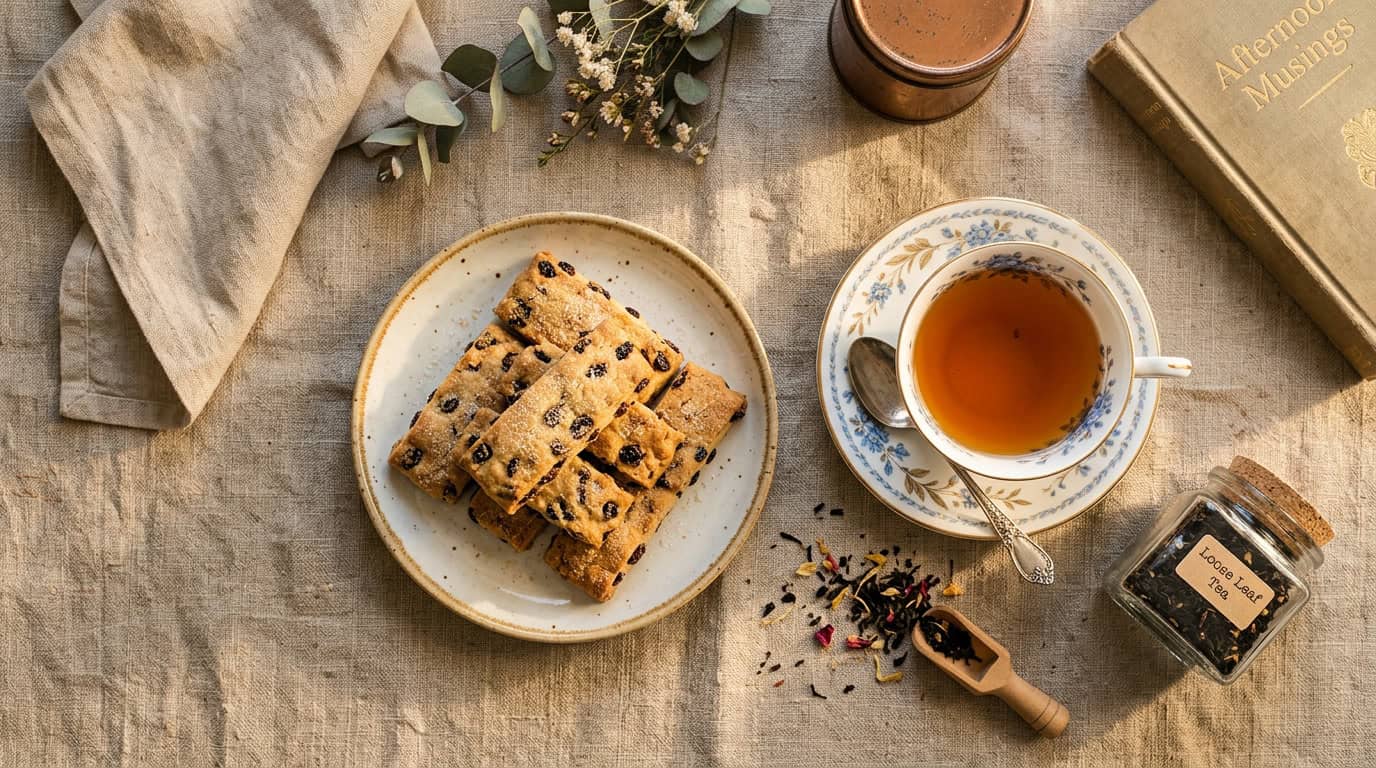
Garibaldi biscuits have done something genuinely difficult: they’ve survived 160 years of food trend cycles without fundamentally changing. The formula Peek Freans arrived at in 1861 — thin crisp dough, Zante currants, lightly sweet, designed for tea — proved durable enough to outlast virtually every British biscuit brand that competed with it in the Victorian era.
For home bakers, the recipe is accessible and deeply rewarding: a few simple ingredients, careful rolling, and the patience to let the biscuits crisp properly in the oven. For commercial producers, garibaldi biscuits represent an interesting technical challenge — the lamination process demands precision at the sheeting and distribution stage that separates casual biscuit production from professional output. For buyers and consumers, they remain one of the few genuinely low-fat biscuit options in a category dominated by cream and chocolate.
Whether you’re snapping apart a pack of Crawford’s with your afternoon tea or sourcing biscuit laminating equipment for a new production line, the garibaldi biscuit rewards the attention you give it.
Related Articles
- American Biscuit: History, Types, and Industrial Production Guide
- Cheddar Bay Biscuit Sausage Balls: The Ultimate Party Snack Recipe
- Red Lobster Cheddar Bay Biscuit Recipe: The Complete Guide from Home Kitchen to Commercial Bakery
- Honey Biscuit Production Line: Complete Guide to Industrial Manufacturing
- Biscuit Production Line
- Advanced Automatic Biscuit & Cracker Machine
- Original Skittles Gluten Free: Celiac Safety Guide