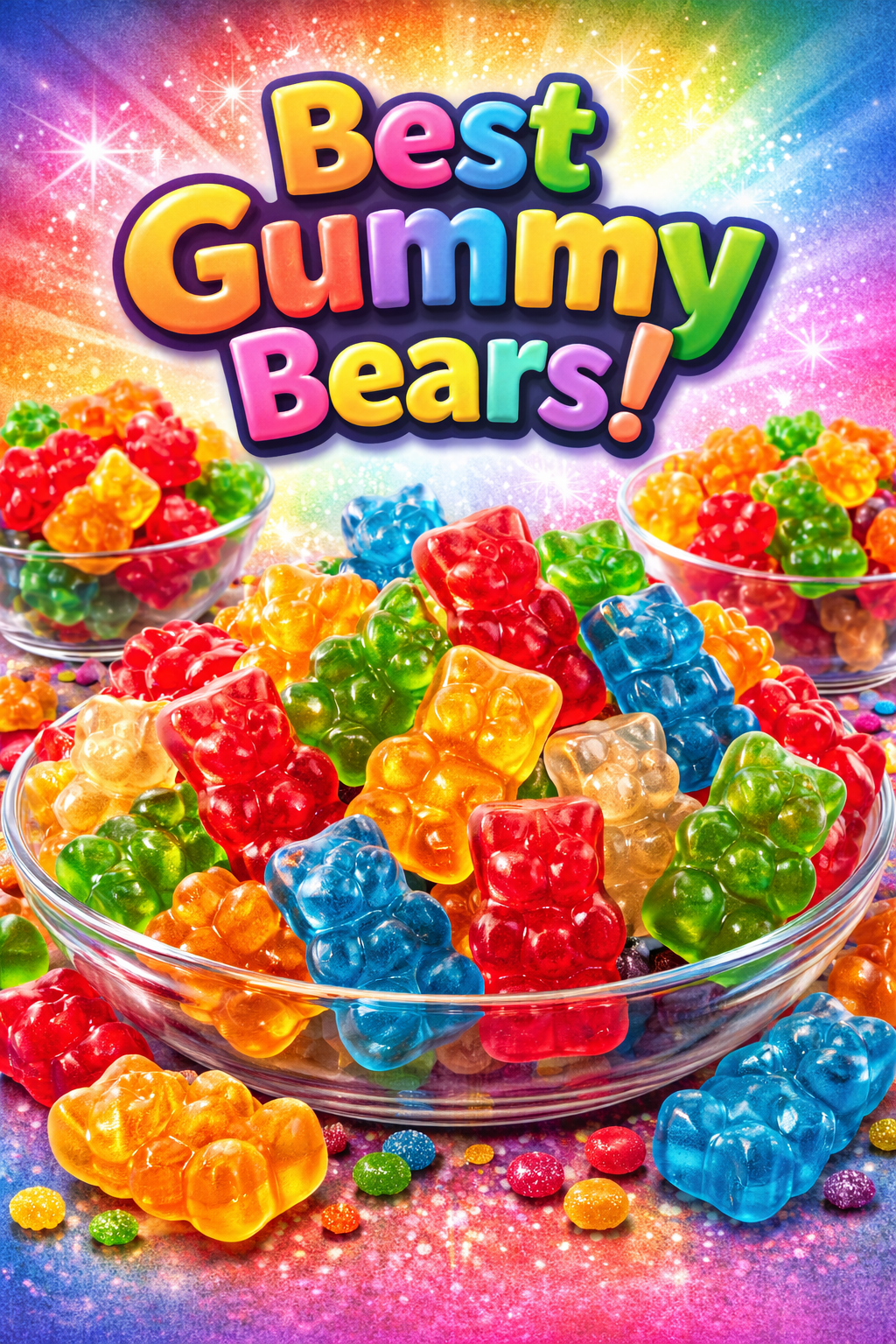
Gummy bears are one of those rare foods where the gap between a mediocre version and a genuinely good one is enormous — and most people have never eaten both side by side to realize it. A bag of the wrong brand gives you a waxy, vaguely fruit-scented chew that leaves nothing interesting behind. The right brand delivers layered flavor, a satisfying elastic bite, and a finish that actually tastes like fruit rather than just sugar-shaped-like-a-bear.
The best gummy bears come down to three things: ingredient quality, texture formulation, and flavor honesty. This guide covers all of it — the top brands with real assessments (not just brand recognition), what makes one gummy bear formula better than another, how to read an ingredient list, and where the gummy bear category is heading in 2026. If you eat gummy bears more than occasionally, most of this will change how you think about them.
A Brief History Worth Knowing
Hans Riegel, founder of Haribo, invented the gummy bear in Bonn, Germany in 1922. The original shapes were called “dancing bears” — inspired by the trained bears commonly seen at European street festivals. The formula used gum arabic as the gelling agent initially, before gelatin became the industry standard.
Haribo introduced gummy bears to the US market in 1982. The American response was significant enough that by the late 1980s, a dozen competing brands had entered the market. Today, the global gummy market — which gummy bears still anchor — was valued at $22.87 billion in 2024 and is growing at a compound annual growth rate of 12.5%, projected to exceed $52 billion by 2034.
That growth isn’t coming from people eating more of the same thing. It’s driven by the category expanding: functional gummies, vegan formulations, sugar-free variants, and premium artisan formats are all claiming shelf space that plain gelatin-bear formats once owned entirely.
What Actually Makes a Gummy Bear Good: The Honest Criteria
Before ranking anything, it’s worth being clear about what “best” means, because the answer differs by what you’re looking for. Here’s how to evaluate a gummy bear honestly:
Texture. The ideal gummy bear has elasticity — it resists your bite briefly before giving way cleanly. Not crumbly, not gummy-mouthfeel that turns pasty, not so hard it strains jaw muscles. The gelatin bloom strength and sugar-to-water ratio determine this more than anything else.
Flavor clarity. The best gummy bears taste like identifiable fruit, not like a generic “sweet and fruity” category. In a good strawberry bear, you should taste strawberry specifically — not a chemical red flavor that could be anything. Natural fruit juice concentrates and flavor isolates produce this clarity; synthetic blanket flavorings don’t.
Finish. What happens after you swallow. Low-quality gummy bears leave a waxy, slightly artificial residue. Quality bears leave a clean finish — no lingering synthetic taste, no coating sensation.
Ingredient transparency. The cleaner the ingredient list, the less the manufacturer is hiding. Artificial colors and flavors aren’t automatically bad, but their presence often indicates that the base flavor quality isn’t strong enough to stand on its own.
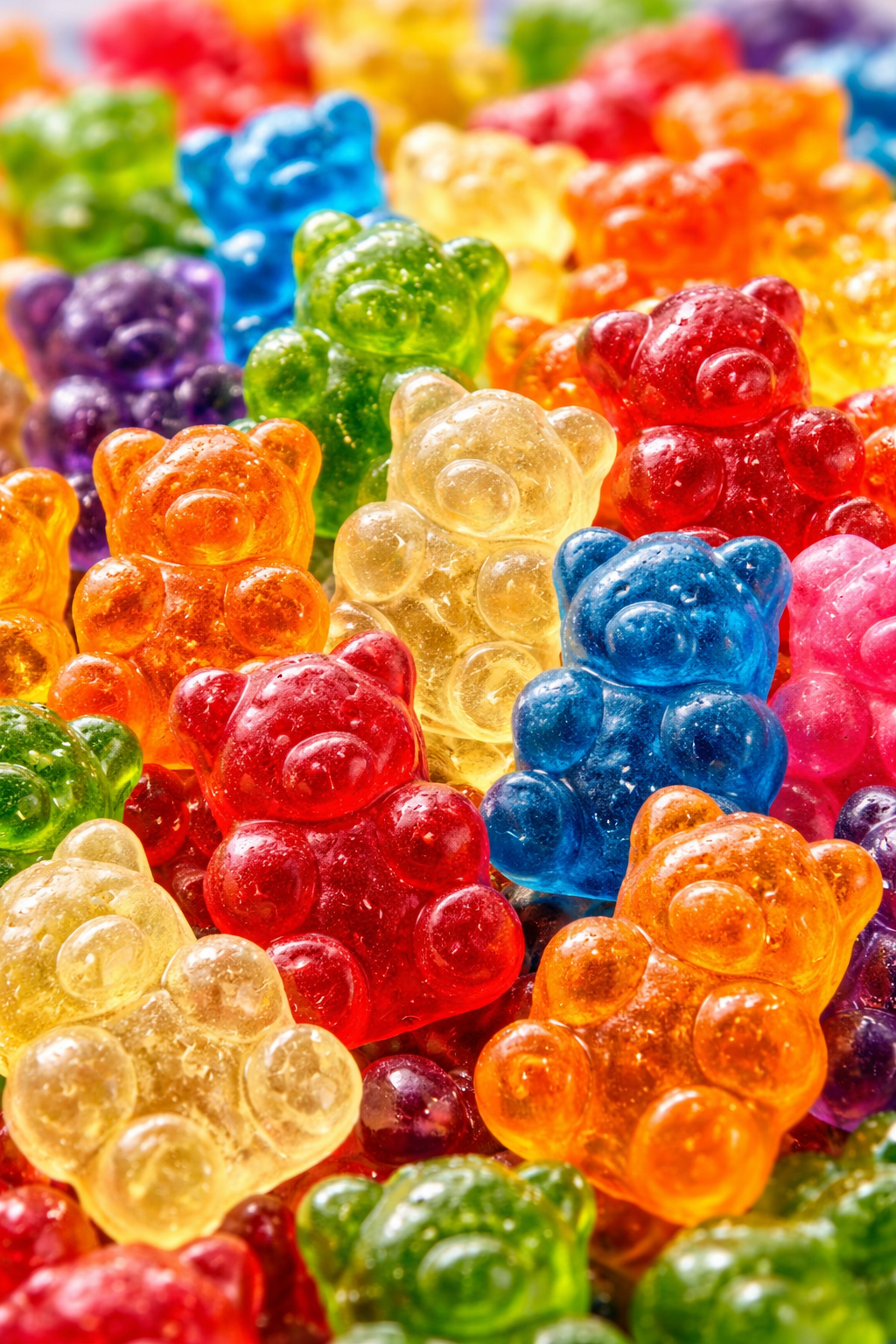
Visual appeal. Consistent color, clear shape definition, no surface stickiness or sugar crystallization. These are manufacturing quality signals, not just aesthetics.
Top Gummy Bear Brands: Real Assessments
The gummy bear market has more than 50 documented brands. Here’s where the significant players actually stand — including their genuine weaknesses, not just their marketing strengths.
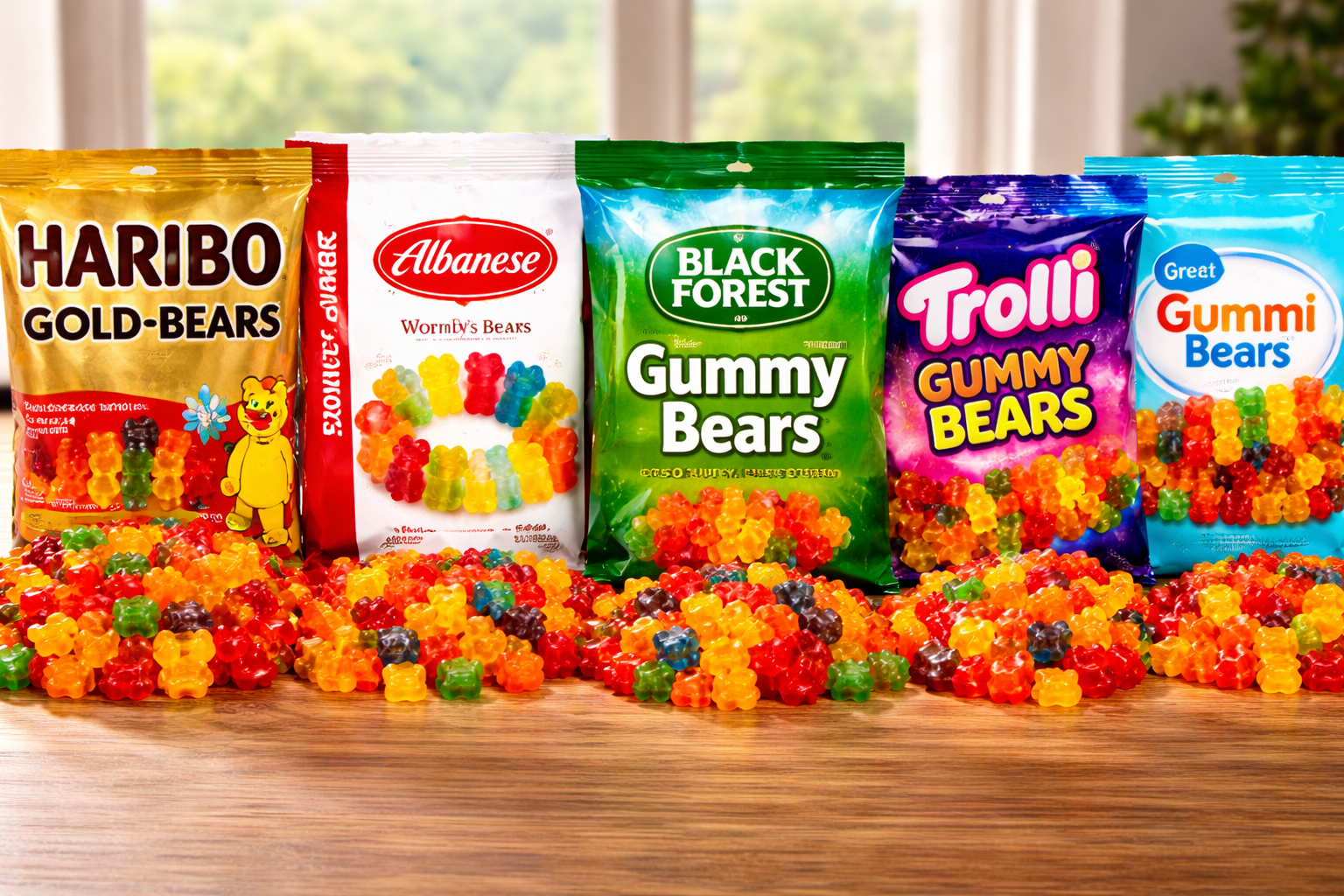
Haribo Goldbears
The benchmark. Haribo Goldbears are the most widely recognized gummy bear in the world, distributed in more than 100 countries, and they’ve maintained the same fundamental formula for decades. The texture is the most recognizable thing about them: firm, dense, and genuinely chewy in a way that requires actual jaw engagement. That texture is a deliberate formulation choice — Haribo uses a higher gelatin concentration than most American competitors, producing a bear that chews differently than the softer alternatives.
Flavor-wise, Goldbears offer five standard flavors in the classic bag: strawberry, raspberry, pineapple, lemon, and orange. Each is distinct and recognizable. The raspberry in particular is consistently praised as one of the more accurate fruit representations in the gummy category.
The honest limitation: Haribo Goldbears don’t include natural juice as a primary flavor driver — the flavor system is synthetic, which is why the bears have their specific “Haribo” taste rather than actual fruit taste. That’s not a criticism of Haribo — it’s a deliberate flavor identity they’ve maintained. But consumers seeking real-fruit flavor should understand the distinction.
Albanese 12-Flavor Gummi Bears
Albanese is the brand most likely to convert someone who thinks they already know what gummy bears can be. The Indiana-based manufacturer produces bears in 12 distinct flavors — far more variety than any other major brand — with a softer, more tender texture that’s meaningfully different from Haribo’s density. The texture has been described as similar to Jello in the best possible sense: there’s give and bounce without resistance, and the bears hold their shape without being rigid.
The flavor variety genuinely impresses: mango, cherry, grape, lime, watermelon, blue raspberry, and seven others all have distinct, identifiable character. More importantly, Albanese uses flavor formulations that taste juicy rather than dry — there’s a moisture impression in the chew that most other gummy bears don’t replicate.
The honest limitation: The softer texture means they stick together in warm environments more readily than Haribo. And for consumers who prefer the firm, dense chew of a classic bear, Albanese’s formula will feel wrong — not worse, but genuinely different.
Black Forest Organic Gummy Bears
Black Forest holds USDA Organic certification and uses real fruit juice for coloring and flavor enhancement, positioning them as the cleaner-label option among major brands. The ingredient list is noticeably shorter and more legible than most competitors. Flavor is solid but less intense than either Haribo or Albanese — the real-fruit approach yields more nuanced, subtler tastes rather than the bold hit that synthetic flavor systems deliver.
The bears are moderately firm, between Haribo’s density and Albanese’s softness. For health-conscious families or consumers trying to reduce synthetic ingredient exposure, Black Forest is the best mainstream option available at standard retail prices.
The honest limitation: The flavors are real but milder, which some consumers read as “less flavorful” rather than “more authentic.” If bold, intense fruit flavor is the priority, Black Forest underdelivers relative to Albanese.
SmartSweets Gummy Bears
SmartSweets sits in the functional/health segment — their gummy bears use stevia and allulose as primary sweeteners, with 3 grams of sugar per bag, targeting consumers reducing sugar intake without eliminating gummy candy entirely. The texture is chewy and satisfying, meaningfully closer to standard gummy bears than most sugar-free alternatives, which often produce a hollow, overly firm result.
The flavor is where compromise is visible: stevia’s characteristic aftertaste is present, particularly on the finish. It’s mild enough that habituated consumers stop noticing it, but compared to a full-sugar Haribo bear, the difference is clear.
The honest limitation: SmartSweets are not a gummy bear experience that competes with the best full-sugar options on flavor grounds — they’re the best option within the low-sugar constraint. They serve a different need than the flavor-first consumer.
YumEarth Organic Gummy Bears
YumEarth targets the allergy-conscious market specifically — their gummy bears are certified organic, free from the top 8 allergens, non-GMO, and formulated to be genuinely inclusive for school and family settings where allergen policies exist. They’re softer and lighter than most competitors, with mild fruit flavor using organic fruit juice concentrates.
The honest limitation: The allergen-free and organic formulation constraints limit texture and flavor intensity relative to conventional bears. These are excellent for the specific use case they’re designed for; they’re not the best gummy bears for pure flavor and texture evaluation.
Gummy Bear Brands Side-by-Side
What’s Inside a Gummy Bear: Reading the Ingredient List
Understanding the ingredient list lets you predict flavor and texture before tasting — and evaluate brands honestly rather than by packaging.
The core structure of a gummy bear formula:
-
Gelatin — the primary structural agent. Bloom strength (measured in grams) determines texture firmness. Higher bloom = firmer, more elastic bear. Pork gelatin is most common; beef gelatin is used for halal variants; pectin replaces gelatin in vegan formulations.
-
Corn syrup / glucose syrup — humectant and sweetener. Prevents crystallization, keeps gummies soft. High-fructose corn syrup variants taste sweeter and slightly different from plain glucose syrup.
-
Sugar (sucrose) — primary sweetener. The ratio of sugar to corn syrup affects both taste and shelf stability.
-
Citric or malic acid — provides tartness and acts as a preservative. Malic acid gives a slower, lingering sour note; citric acid gives a sharper, faster hit.
-
Natural and/or artificial flavors — the flavor system. “Natural flavors” can still include highly processed flavor isolates; “artificial flavors” aren’t inherently inferior in safety, but they often produce a less nuanced flavor than real fruit.
-
Pewarna — either synthetic (FD&C dyes: Red 40, Yellow 5, Yellow 6, Blue 1) or natural (beta-carotene for orange/yellow, carmine for red, spirulina for blue/green, fruit and vegetable concentrates). Natural colorants are visually less intense and slightly less stable.
Industry Applications: Where Gummy Bears Show Up Beyond the Candy Aisle
Gummy bears aren’t purely a consumer snack product anymore. Several sectors have built commercial relationships with the format that go well beyond the candy store shelf.
Functional and Supplement Delivery
The gummy vitamin market — which uses gummy bear formats almost exclusively for children’s products and increasingly for adults — is one of the fastest-growing segments in the supplement industry. Vitamins C, D, B12, zinc, iron, omega-3s, probiotics, and dozens of other functional ingredients are now delivered in gummy bear form because the format improves compliance dramatically. Particularly for children, gummy bears eliminate the “pill aversion” problem that causes supplement programs to fail. Adults, it turns out, also prefer gummies to tablets when both options exist — multiple consumer surveys consistently show 60–70% of adults who switched from pill supplements to gummy formats report higher consistency of daily use.
The challenge: heat-sensitive ingredients like probiotics require post-molding application or micro-encapsulation, as gummy molding temperatures (typically 80–100°C) denature live cultures. Manufacturers are actively investing in cold-process and encapsulation technologies to solve this.
Gifting and Premium Retail
Giant gummy bears — single-serving bears weighing 5 lbs or more, containing roughly 51 flavors or more in a single oversized mold — are a dedicated giftware category that major online retailers carry year-round. The format converts what is functionally a candy into a novelty gift item, with average sale prices 20–40× higher per gram than standard bear bags. Specialty candy retailers and online gift shops treat giant gummy bears as anchor products for occasion-giving, particularly for birthdays and humor-oriented gifting.
Premium artisan gummy bears from small-batch producers — made with real fruit juice, natural colorants, and higher gelatin bloom strength than commercial brands — have carved out a boutique market that charges $8–15 per small bag compared to $2–4 for mass-market equivalents. The demand for this tier is driven by consumers who have eaten enough gummy bears to care about the quality difference.
Event and Hospitality
Gummy bears appear consistently in:
-
Hotel minibar and amenity programs — premium brands selected for brand alignment with hotel quality positioning
-
Airline cabin service — snack-format gummy bears as in-flight treat for families; specifically chosen for mess-free eating and universal appeal
-
Themed event catering — nostalgia-driven events, children’s parties, and novelty candy stations where gummy bears serve both consumption and display functions
-
Subscription snack boxes — gummy bears remain among the most reliably positive items in subscriber reviews, making them high-frequency inclusions in curated snack services
Export and Cross-Cultural Markets
The global demand for gummy bears has produced interesting regional adaptations. Mexican confectionery traditions have generated chili-mango and tamarind gummy bears — spiced, sweet-sour-salty bears that share the format but almost none of the flavor DNA with European originals. Hawaiian li hing mui gummy bears are coated with dried salted plum powder — a local flavor tradition that produces a completely different eating experience from the bear’s usual flavor profile. These regional variants represent genuine cross-cultural product development, not just flavor novelty.
For wholesale gummy bears across multiple formats, flavors, and private-label requirements, Sinofude Technology’s Bulk Gummy Candy Guide covers the range of available configurations and minimum order quantities for retail and event sourcing.
Common Mistakes When Buying Gummy Bears
A few patterns consistently lead to disappointment — and they’re easy to avoid once you know what to look for.
Choosing by price point alone. The cheapest gummy bears on any shelf are usually there because they’re using the lowest-quality flavor systems and gelatin concentrations. The price difference between the cheapest bear and the best in a standard store is typically $1–2 per bag. That delta is meaningful in flavor terms.
Expecting sugar-free to taste like regular. SmartSweets and similar products are the best sugar-free gummy bears available. They’re not equivalent in flavor to full-sugar options, and buying them expecting that equivalence leads to disappointment. They’re the right answer to a specific question; the wrong answer to a different one.
Storing in warm environments. Gummy bears are moisture-sensitive and heat-sensitive. A bag of high-quality Albanese bears left in a warm car will fuse together and lose texture in ways that make them indistinguishable from cheap bears in eating experience. Store below 75°F and away from direct sunlight.
Ignoring gelatin source when it matters. Halal and kosher consumers need to check whether bears are made from beef or pork gelatin — the packaging often specifies, but not always visibly. Haribo’s standard US formulation uses pork gelatin. Some brands produce both variants for different markets. Vegan consumers should look specifically for pectin-based bears (Katjes is the most available European vegan brand; several US brands have introduced pectin-based formats).
Future Trends in Gummy Bears
The gummy bear category is evolving faster than most commodity candy formats, driven by consumer demand for health benefits, sustainability, and novelty.
Functional and Vitamin-Enhanced Formats
The convergence of the supplement market and the candy market is accelerating. Vitamin gummy bears already occupy their own section in most pharmacies and grocery stores. The next wave — adaptogens (ashwagandha, lion’s mane), collagen peptides, nootropics, and sleep-support ingredients like L-theanine and melatonin — is moving from specialty to mainstream. The global gummy market projected growth to $52+ billion by 2034 is substantially driven by functional formats.
cURL Too many subrequests.
Gelatin-free gummy bears using pectin, agar-agar, or furcellaran (a red algae-derived hydrocolloid) are growing faster than gelatin-based formats in several European markets, where consumer awareness of gelatin’s pork origin is higher. Pectin bears have a different texture — typically firmer and less elastic — but manufacturers are refining formulations. Amidated pectin blends are producing results much closer to gelatin’s elastic chew. Expect these to be mainstream rather than specialty offerings within three to five years.
Reduced and Zero-Sugar Formulations
Consumer demand for sugar reduction without sensory sacrifice is driving significant investment in alternative sweetener systems. Allulose — a rare sugar that tastes like sucrose but isn’t metabolized as sugar — is emerging as the premium sugar-replacement option for gummy bears, producing texture and flavor profiles much closer to full-sugar bears than stevia or maltitol alternatives. Regulatory approvals for allulose are expanding globally, which will accelerate its use in gummy bear formulations beyond the US market.
Tropical, Spicy, and Unexpected Flavor Profiles
The standard five-flavor gummy bear assortment is under competitive pressure from more adventurous flavor development. Tropical profiles — mango habanero, pineapple chili, lychee, guava — are growing in search interest and retail velocity. Brands that have historically offered only the classic flavor set are developing extended flavor lines to capture consumers who’ve expanded their taste references through global food culture and social media exposure to world cuisines.
Sustainable and Transparent Supply Chains
Gelatin sourcing transparency, organic certification, and sustainable packaging are becoming purchase criteria rather than nice-to-haves for a growing segment of gummy bear buyers. Brands that can credibly document their gelatin source, farmer relationships for fruit juice concentrates, and packaging recyclability have a differentiation advantage that purely flavor-focused brands don’t. This pressure is arriving from both consumer preference and retail sustainability purchasing requirements at major chains.
For sourcing quality gummy bears at scale — including bulk formats, private label production, and specialty flavor configurations — Sinofude Technology’s Gummy Bears Guide and their Bulk Gummy Candy resource provide manufacturing capability information and product specifications across standard and custom formats.
Authority References: