The Science Behind the Pop: An Introduction to Spherification
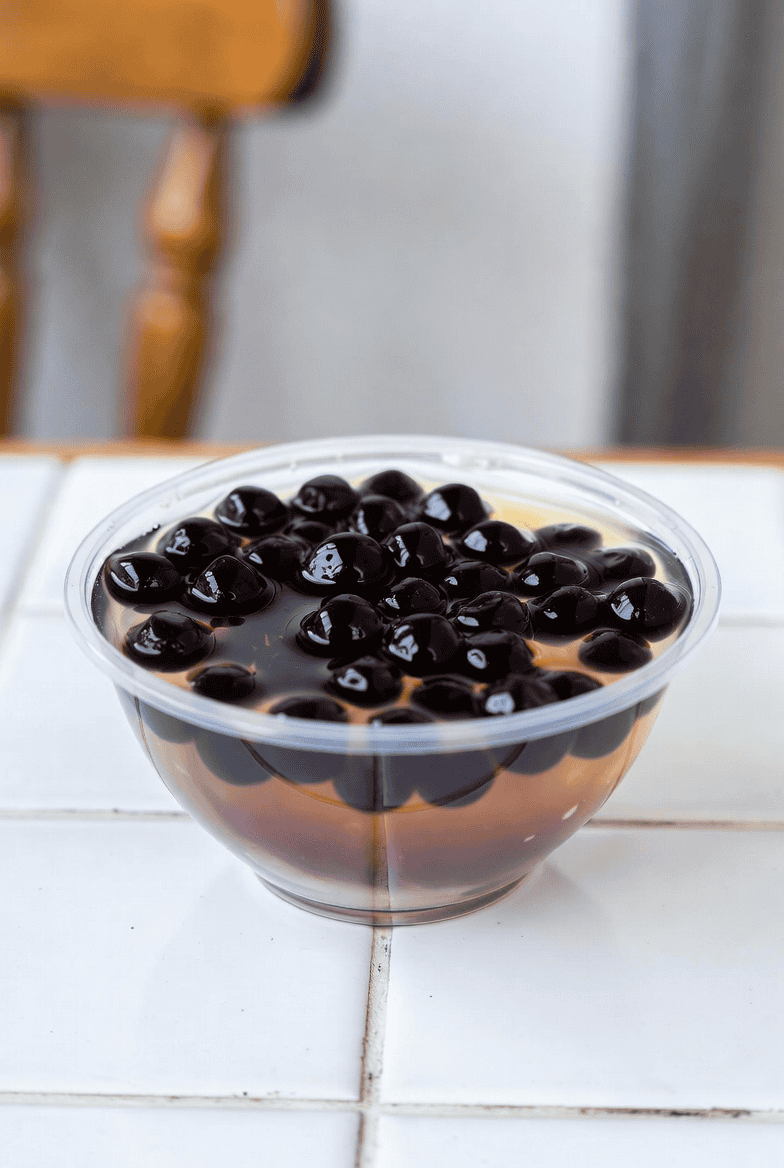
Before one can begin the practical task of creating these delightful spheres, it is helpful to pause and consider the elegant science at play. The phenomenon that creates popping boba is known as spherification, a culinary technique that shapes liquids into spheres. It was popularized in the world of modernist cuisine, but its principles are rooted in fundamental chemistry. There are two primary methods: direct spherification and reverse spherification. For the purposes of creating a durable, commercially viable product, our focus rests entirely on reverse spherification.
Imagine trying to build a tiny water balloon. In direct spherification, you would mix your flavorful liquid with sodium alginate and then drop this mixture into a bath of calcium. A gel would form from the outside in. The difficulty here is that the gelling process continues as long as the sphere is in contact with the liquid inside, eventually turning the whole sphere into a solid gel. This is not ideal for that signature “pop.”
Reverse spherification, as the name suggests, inverts this process. Here, the flavorful liquid itself contains the calcium, and it is dropped into a bath containing sodium alginate. A gel membrane forms around the droplet, but the gelling stops the moment the sphere is removed from the alginate bath and rinsed. This gives us a stable sphere with a permanently liquid core, a perfect structure for the popping boba that has become a global sensation. This stability is the very reason reverse spherification is the chosen method for any application where the product needs to sit on a shelf or be transported, maintaining its delightful texture until the moment of consumption. Understanding this foundational difference is the first true step in mastering the craft.
Step 1: Understanding Your Foundational Ingredients
The success of any culinary creation, especially one so reliant on chemical reactions, begins with a deep understanding of its constituent parts. For popping boba, we are not merely mixing flavors; we are acting as practical chemists, orchestrating a reaction between specific hydrocolloids and mineral salts. Each component has a distinct role, and its quality and concentration will profoundly influence the final product.
The Heart of the Gel: Sodium Alginate
Sodium alginate is the cornerstone of our process. It is a natural polysaccharide, a long-chain carbohydrate, extracted from the cell walls of brown seaweed. Think of it as a long, tangled string. In its natural state, dissolved in our setting bath, these strings float freely. The magic happens when they encounter divalent cations, such as calcium (Ca²+). The calcium ions act as tiny bridges, linking two different alginate strings together. As more and more bridges form, the strings are pulled into a cross-linked network, creating a solid but flexible gel. This process is known as ionic cross-linking (Rinaudo, 2008).
The viscosity and gelling properties of sodium alginate can vary depending on its source and processing. For popping boba, a medium-viscosity food-grade sodium alginate is typically preferred. It is soluble in cold water, though it requires vigorous mixing or shearing to hydrate fully without clumping. One of the most important considerations when working with sodium alginate is its sensitivity to low pH environments. In highly acidic conditions (below a pH of 3.8), the alginic acid will precipitate, preventing gel formation. This presents a challenge when working with acidic fruit juices like lemon or passion fruit, a problem we will address in the preparation stage.
The Catalyst for Creation: Calcium Salts
If sodium alginate provides the structure, calcium provides the command to build. The choice of calcium salt is not trivial, as it affects both the reaction speed and the final taste of the popping boba. The two most common choices in food science are calcium chloride and calcium lactate gluconate.
| Fonctionnalité | Calcium Chloride (CaCl₂) | Calcium Lactate / Calcium Lactate Gluconate |
|---|---|---|
| Taste Profile | Can impart a noticeable bitter or salty taste, especially at higher concentrations. | Largely imperceptible taste, making it ideal for delicate or subtle flavor bases. |
| Solubilité | Highly soluble in water, making it easy to dissolve into the flavor base. | Less soluble than calcium chloride, may require gentle warming or more mixing. |
| Calcium Content | Higher concentration of calcium ions per gram, leading to a faster, stronger reaction. | Lower concentration of calcium ions, resulting in a more controlled, slower reaction. |
| Utilisation courante | Often used in industrial applications or when a very strong gel is needed quickly. | Preferred choice for culinary applications where flavor purity is paramount. |
For most high-quality popping boba applications, calcium lactate or a blend like calcium lactate gluconate is the superior choice. While calcium chloride is effective and inexpensive, its potential to introduce off-flavors is a significant drawback. The delicate balance of a fruit-flavored pearl can be easily disrupted by a bitter aftertaste. Calcium lactate, being derived from lactic acid, is far more neutral on the palate, ensuring that the intended flavor of the juice shines through without interference.
The Soul of the Sphere: The Flavor Base
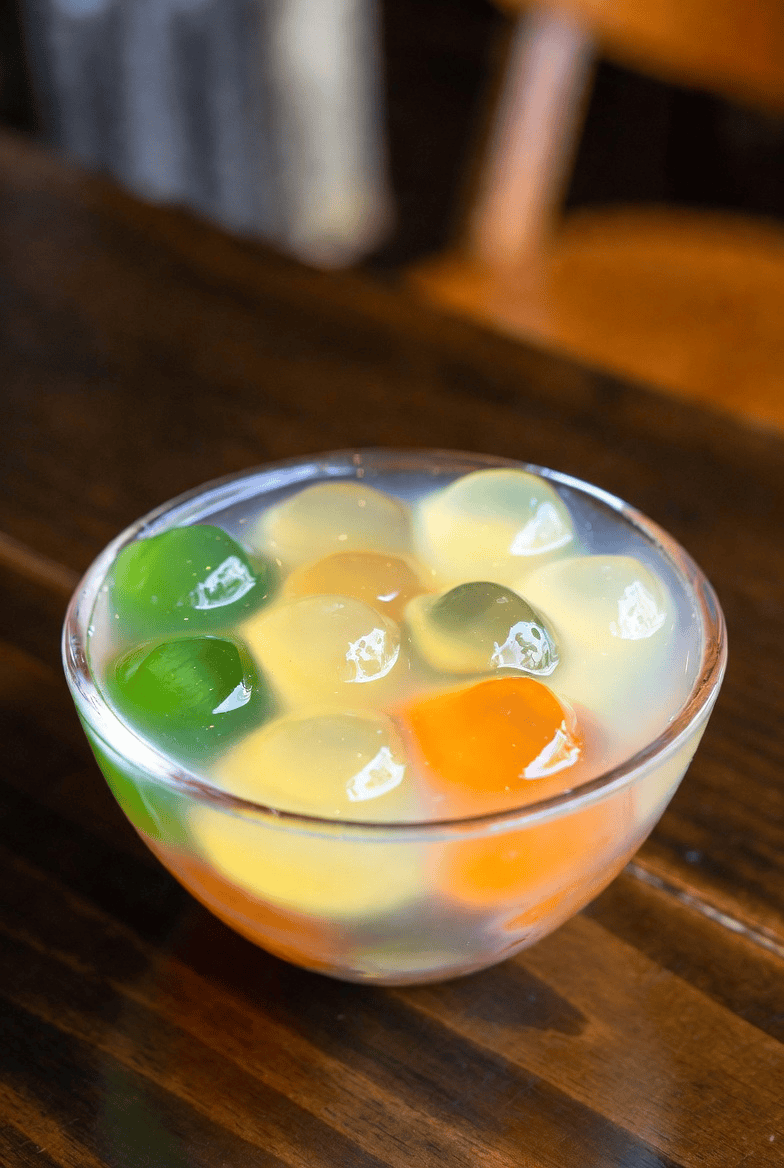
The flavor base is the entire point of the popping boba—it is the liquid core that delivers the burst of taste. This can be anything from fruit juices and purees to brewed teas or coffee concentrates. The primary consideration for the flavor base is its chemical composition, specifically its pH and its inherent calcium content.
As mentioned, highly acidic juices can interfere with the sodium alginate bath. To counteract this, a buffering agent like sodium citrate is often used. Sodium citrate raises the pH of the acidic liquid, bringing it into a range where the spherification reaction can occur successfully.
Additionally, some liquids, like dairy milk or tap water in certain regions, may already contain a significant amount of free calcium ions. If you were to mix a high-calcium liquid directly with sodium alginate for direct spherification, it would begin to gel prematurely in the mixing bowl. While we are using reverse spherification (where calcium is intentionally added to the flavor base), it is still a good practice to be aware of the baseline calcium level. Using distilled or deionized water for preparing the solutions can provide a clean, controlled environment, removing any variables introduced by tap water mineral content.
Step 2: The Art of Precision Preparation
With a theoretical understanding of our ingredients, we now move to the practical and meticulous stage of preparation. In this phase, precision is not just a virtue; it is a necessity. The ratios of our components, the techniques used for mixing, and the resting times are all critical variables that will dictate the quality of the final product. Think of this stage as a musician tuning their instruments before a performance—any imprecision here will be amplified in the final result.
Crafting the Core Liquid: The Calcium-Flavor Infusion
The first step is to prepare the liquid that will become the delicious core of our boba. Let’s assume we are making a batch of mango popping boba.
- Select Your Base: Start with a high-quality mango puree or juice. For the best clarity and flavor, a filtered juice is often preferred. If using a thicker puree, you might need to dilute it slightly with distilled water to achieve a viscosity that can be easily dropped. The target viscosity should be similar to that of a light syrup.
- Measure Your Calcium: The concentration of calcium lactate is typically between 1% and 2% of the total weight of the flavor base. For 500 grams of mango juice, you would use 5 to 10 grams of calcium lactate. It is always recommended to start at the lower end of the range and conduct a small test. Too little calcium will result in a weak membrane that fails to form properly; too much can sometimes affect the texture. Weigh the calcium lactate precisely using a digital scale that measures to at least 0.1 grams.
- Incorporate and Dissolve: Add the calcium lactate to the juice. To ensure it dissolves completely without clumping, use an immersion blender. Blending not only dissolves the powder but also helps to create a homogenous mixture. Be mindful not to introduce too much air, as this can cause bubbles to be trapped inside your boba. If your mixture appears foamy, allow it to rest in the refrigerator for an hour or so for the bubbles to dissipate.
- cURL Too many subrequests.cURL Too many subrequests.
cURL Too many subrequests.
cURL Too many subrequests.
- cURL Too many subrequests.cURL Too many subrequests.
- cURL Too many subrequests.cURL Too many subrequests.
- cURL Too many subrequests.cURL Too many subrequests.
cURL Too many subrequests.
cURL Too many subrequests.
cURL Too many subrequests.
cURL Too many subrequests.
- cURL Too many subrequests.cURL Too many subrequests.
- cURL Too many subrequests.cURL Too many subrequests.
- cURL Too many subrequests.cURL Too many subrequests.
- cURL Too many subrequests.cURL Too many subrequests.
cURL Too many subrequests.
cURL Too many subrequests. machine à boba à éclatercURL Too many subrequests.
cURL Too many subrequests.
- cURL Too many subrequests.cURL Too many subrequests.
- cURL Too many subrequests.cURL Too many subrequests.
- cURL Too many subrequests.cURL Too many subrequests.
- cURL Too many subrequests.cURL Too many subrequests.
cURL Too many subrequests.
cURL Too many subrequests.
cURL Too many subrequests.
cURL Too many subrequests.
- cURL Too many subrequests.cURL Too many subrequests.
- cURL Too many subrequests.cURL Too many subrequests.
The ideal curing time depends on the intended application. For most commercial uses, a cure time of around 2 minutes strikes a good balance between a satisfying pop and necessary durability. It is important to stir the bath gently and continuously during the curing process. This ensures that all surfaces of the spheres are evenly exposed to the alginate solution and prevents them from sticking to each other or the bottom of the pan.
The Chemistry of the Boundary
It is fascinating to consider the microscopic level of this interaction. The process is diffusion-limited. The rate of gel growth slows down over time because the newly formed gel layer acts as a barrier. For calcium ions to leave the sphere and for alginate molecules to approach it, they must now travel through this increasingly thick membrane. This is why the skin thickness is not linear with time; the first 30 seconds of curing produce a more significant change than the 30 seconds between minute two and minute three.
Understanding this principle is key to troubleshooting. If your membranes are consistently too weak, the solution is not just to increase the curing time but also to check your initial concentrations. Perhaps your calcium solution is too weak, or your alginate bath is not concentrated enough to provide enough “building blocks” for the gel wall.
Step 5: Rinsing, Preservation, and Flavor Integrity
After the desired curing time has elapsed, the boba must be promptly removed from the alginate bath. This step is not merely about collection; it is about halting the chemical reaction and preparing the pearls for storage and consumption. The procedures followed here are vital for the final taste, texture, and shelf stability of the product.
The Critical Rinse
Using a strainer or a slotted spoon, carefully remove the boba from the alginate bath. They must be immediately transferred to a bowl of clean, cold water. This rinsing step serves two purposes:
- Halting Gelation: It washes away the excess sodium alginate solution from the surface of the boba. By removing the external reactant, the gelling process is effectively stopped. This is what locks in the liquid core and makes reverse spherification so stable.
- Improving Flavor: The sodium alginate solution can have a slightly slimy texture and a neutral, sometimes faintly oceanic taste. Rinsing thoroughly removes this residue, ensuring that the only flavor the consumer experiences is that of the juice inside and the beverage it is served in. It is often recommended to rinse the boba in two separate baths of fresh water to ensure all residue is gone.
After rinsing, the boba should be strained well to remove excess water before moving to the final preservation step.
Preservation for Longevity: The Suspension Syrup
Popping boba cannot be stored dry or in plain water. Storing them in plain water would create an osmotic imbalance. Water would be drawn into the boba through the semi-permeable membrane in an attempt to equalize the sugar concentration between the inside and the outside, causing the pearls to swell and eventually burst.
To prevent this, popping boba are stored in a suspension syrup. This syrup is typically a simple mixture of sugar, water, and often includes some of the same fruit juice for flavor reinforcement. The key is to match the sugar concentration (measured in Brix) of the syrup to the sugar concentration of the liquid inside the boba.
| Preservation Method | Avantages | Inconvénients | Meilleur pour |
|---|---|---|---|
| Plain Water | Simple, no extra ingredients. | Causes boba to swell and burst due to osmosis within hours. | Not recommended for any storage. |
| Simple Syrup (Sugar + Water) | Prevents osmotic bursting, extends shelf life to several days/weeks. | Can slightly dilute the boba’s flavor over time if not flavored. | Good for general purpose storage. |
| Flavored Syrup (Sugar + Water + Juice) | Reinforces the boba’s flavor, prevents bursting, extends shelf life. | Requires more preparation and ingredients. | The ideal method for commercial packaging and quality. |
| Adding Preservatives | Can extend refrigerated shelf life to several months. | Requires knowledge of food preservatives (e.g., potassium sorbate, sodium benzoate) and regulatory compliance. | Commercial, large-scale production for retail distribution. |
By storing the boba in a syrup with a similar osmotic pressure, you create an equilibrium. There is no net movement of water across the membrane, so the boba remain stable, retaining their size, shape, and internal liquid volume. For commercial products, food-grade preservatives are often added to this syrup to inhibit microbial growth and achieve a shelf life of several months.
Step 6: Implementing Rigorous Quality Control
For a home enthusiast, a few misshapen or prematurely popped pearls are of little consequence. For a commercial producer, however, consistency is paramount. Consumers expect every spoonful of popping boba to deliver the same experience. A robust quality control program is essential to move from an artisanal craft to a reliable manufacturing process. This involves establishing standards and testing for key attributes at various stages of production.
Physical Attribute Testing
This category of tests focuses on the tangible characteristics of the boba.
- cURL Too many subrequests.cURL Too many subrequests.
- cURL Too many subrequests.cURL Too many subrequests.
- cURL Too many subrequests.cURL Too many subrequests.
cURL Too many subrequests.
cURL Too many subrequests.
- Profil de saveurcURL Too many subrequests.
- cURL Too many subrequests.cURL Too many subrequests.
- Dépannage des défauts courantscURL Too many subrequests.
cURL Too many subrequests.
cURL Too many subrequests.
cURL Too many subrequests.
cURL Too many subrequests.
- cURL Too many subrequests.cURL Too many subrequests.
- cURL Too many subrequests.cURL Too many subrequests.
- cURL Too many subrequests.cURL Too many subrequests.
- cURL Too many subrequests.cURL Too many subrequests.
cURL Too many subrequests.
cURL Too many subrequests. popping boba ligne de productioncURL Too many subrequests.
cURL Too many subrequests.
- cURL Too many subrequests.cURL Too many subrequests.
- Le déposantcURL Too many subrequests.
- cURL Too many subrequests.cURL Too many subrequests.
- cURL Too many subrequests.cURL Too many subrequests.
- cURL Too many subrequests.cURL Too many subrequests.
cURL Too many subrequests.
Questions fréquemment posées
cURL Too many subrequests.
cURL Too many subrequests. cURL Too many subrequests.cURL Too many subrequests.
Can I use any kind of fruit juice to make popping boba?
Theoretically, yes, but some juices require modification. The two main factors to consider are pH and calcium content. Juices with a very low pH (highly acidic), like lemon or cranberry juice, will need a pH buffer like sodium citrate to raise the pH above 4.0. Without this, the acidic environment can interfere with the sodium alginate’s ability to gel. Juices that are naturally high in calcium, like some fortified orange juices, can also pose a challenge, though this is less of a concern with the reverse spherification method.
What is the difference between direct and reverse spherification?
In direct spherification, the flavorful liquid is mixed with sodium alginate and dropped into a calcium bath. In reverse spherification, the flavorful liquid is mixed with a calcium salt and dropped into a sodium alginate bath. For popping boba, reverse spherification is vastly superior because the gelling process stops once the pearls are removed from the bath and rinsed, resulting in a stable liquid core. The gel in direct spherification continues to penetrate inwards, eventually turning the whole sphere solid.
Why are my popping boba clumping together in the bath?
Clumping is usually caused by overcrowding. When the pearls are first forming their delicate outer skin, they are very sticky. If they touch each other during these initial seconds, they will fuse together. Ensure you are giving them enough space in the bath. Also, gentle, constant stirring of the bath helps to keep the spheres separate as they cure.
What is the average shelf life of popping boba?
The shelf life depends entirely on the preservation method. Homemade boba stored in a simple flavored syrup in the refrigerator will typically last for up to a week. Commercially produced popping boba, which are made in a sterile environment and packaged with food-grade preservatives like potassium sorbate and sodium benzoate, can have a shelf life of 6 to 12 months at ambient temperature before opening.
Why did my mixture of juice and calcium lactate turn thick and grainy?
This can happen if your juice contains pectin, a natural substance found in many fruits. Pectin can react with the calcium salts, causing the mixture to thicken or gel prematurely. To solve this, you can treat the juice with an enzyme called pectinase (or pectic enzyme), which breaks down the pectin. This is a common step in commercial juice clarification and can be useful here as well.
Is it necessary to use distilled water?
While you can use tap water, using distilled or deionized water is highly recommended for consistency. Tap water can contain varying levels of minerals, including calcium. This “extra” calcium can affect the reactions in unpredictable ways. By starting with pure, distilled water, you create a controlled environment where the only active minerals are the ones you add intentionally, leading to more reliable and repeatable results.
A Final Thought on Culinary Innovation
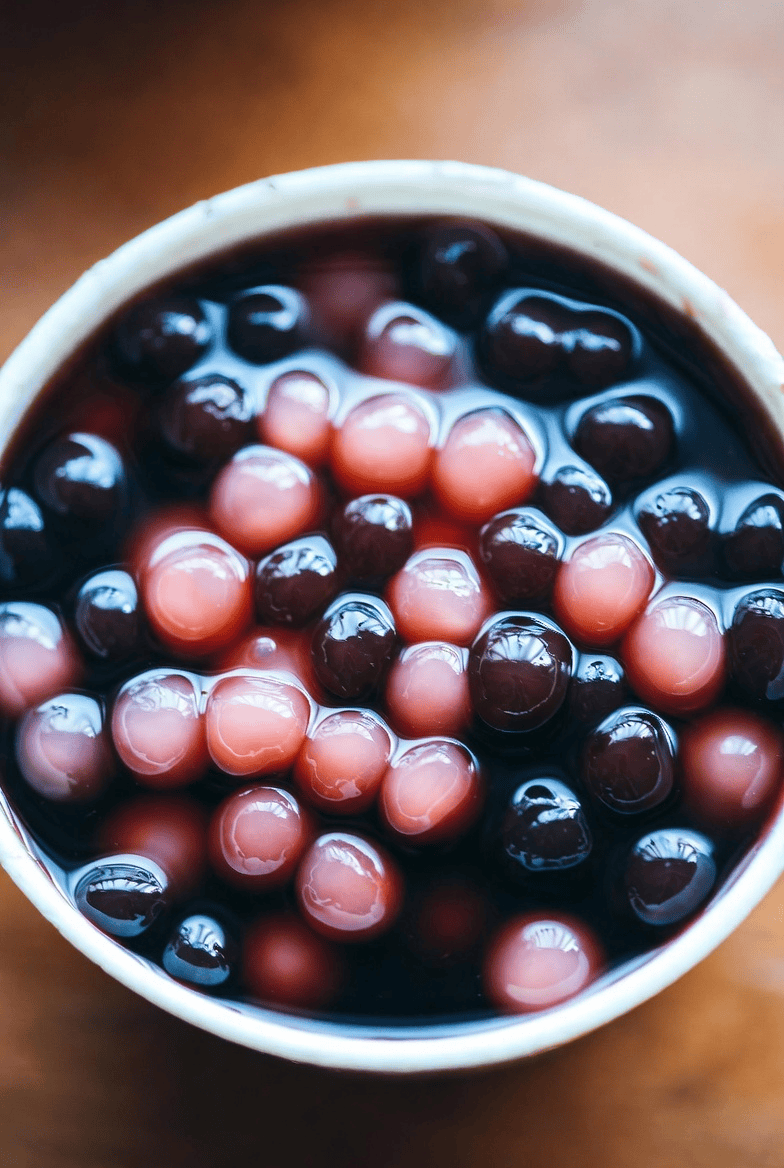
The process of learning cURL Too many subrequests. is a journey into the heart of food science. It transforms the kitchen into a laboratory and the cook into a practical chemist. What begins with powders and liquids, through a controlled and understood process, becomes a product of delightful texture and surprising flavor. It serves as a powerful reminder that the culinary arts and the physical sciences are not separate disciplines but are deeply intertwined. The ability to control the physical state of food, to encapsulate a liquid within a delicate gel, opens up endless possibilities for creativity. From a simple addition to a beverage, the principles learned here can be applied to create savory bursts of flavor for canapés or surprising liquid centers in desserts. The popping boba is more than just a trend; it is an accessible entry point into a world of culinary innovation that continues to shape how we experience food.