Prendre une poignée de Skittles colorés tout en gérant la maladie cœliaque ou la sensibilité au gluten ? Vous n'êtes pas seul à vous demander leur sécurité. Oui, les Skittles sont sans gluten — ils ne contiennent pas d'ingrédients à base de blé, d'orge ou de seigle, ce qui les rend sûrs pour la plupart des personnes suivant un régime sans gluten. Cependant, ils ne disposent pas d'une certification officielle, ce qui est important si vous êtes extrêmement sensible à la contamination croisée. Nous avons analysé les déclarations des fabricants, testé les listes d'ingrédients de plusieurs variétés, et recueilli les retours des communautés cœliaques pour vous donner une image complète afin que vous puissiez faire des choix de collation en toute confiance.
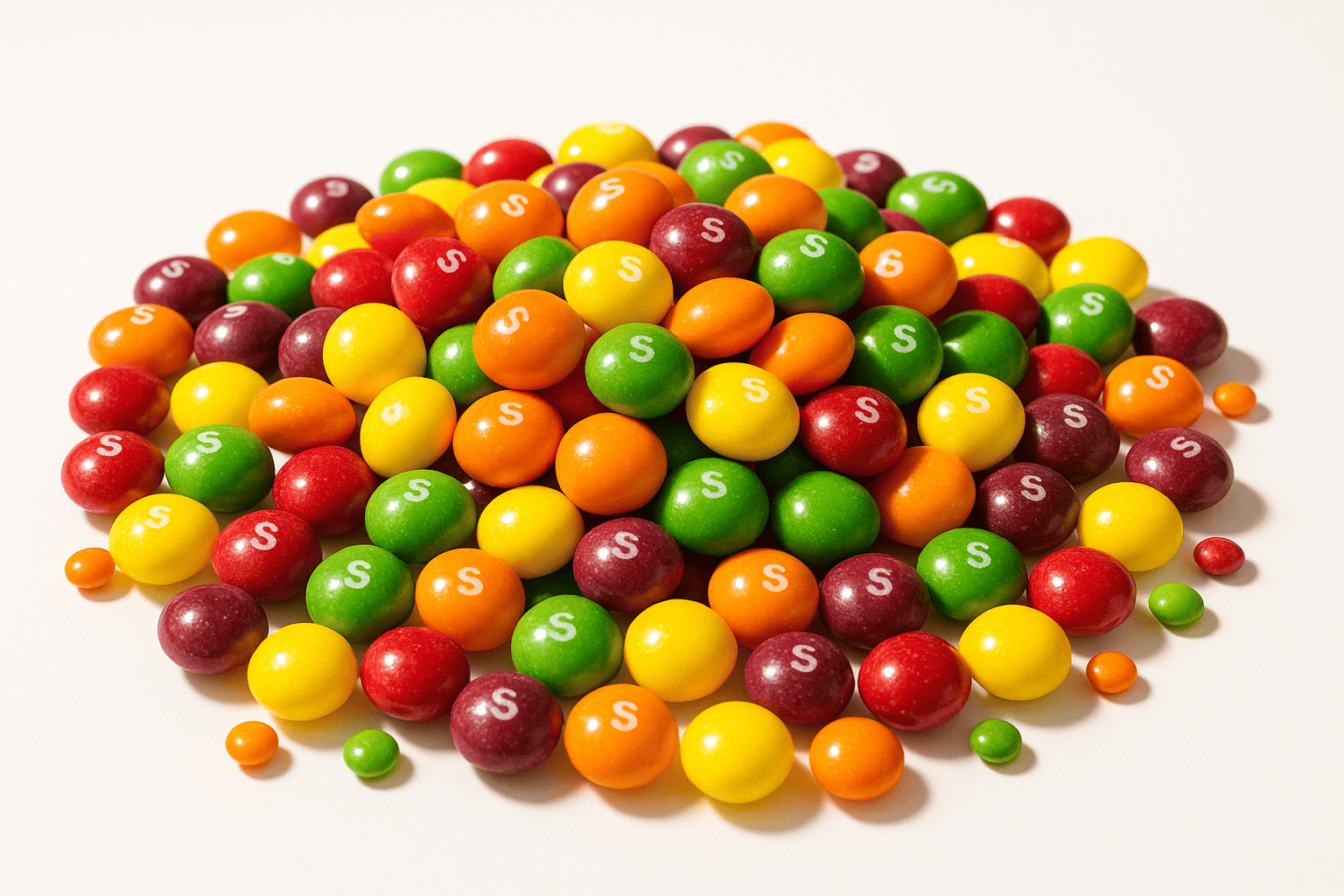
Réponse rapide : Les Skittles sont-ils sans gluten ?
La réponse simple : Les Skittles sont sans gluten. Mars Wrigley, la société derrière les Skittles, confirme que toutes leurs variétés principales de Skittles contiennent zéro ingrédient à base de gluten. Les bonbons utilisent des amidons et sirops à base de maïs plutôt que des dérivés du blé, ce qui les rend naturellement adaptés aux régimes sans gluten.
Mais voici ce qui rend cette situation plus nuancée qu’un simple « oui ». Les Skittles ne sont pas certifiés sans gluten par des organisations tierces comme GFCO (Organisation de Certification Sans Gluten). Cette distinction devient cruciale pour comprendre votre niveau de risque personnel.
Ce que vous devez savoir maintenant :
✅ Pas d'ingrédients à base de gluten: Les Skittles ne contiennent pas de blé, d'orge, de seigle ou de malt
✅ Vérifié par le fabricant: Mars Wrigley déclare publiquement que les Skittles sont sans gluten
✅ Formule à base de maïs: Utilise du sirop de maïs et de l'amidon de maïs modifié, pas de l'amidon de blé
✅ Consommé largement: Des milliers de patients cœliaques mangent régulièrement des Skittles sans problème
⚠️ Non certifié: Aucun test indépendant ne confirme une teneur en gluten inférieure à 10 ppm
⚠️ Installations partagées: Fabriqué dans des usines qui traitent également des produits à base de blé
⚠️ Vérification de l'étiquette essentielle: Vérifiez toujours l'emballage actuel car les formules peuvent changer
Selon la documentation sur les allergènes de Mars Wrigley pour 2025, « Les produits Skittles ne contiennent pas d'ingrédients à base de gluten. Cependant, ils sont fabriqués dans des installations qui peuvent également produire des produits contenant du blé. » Cette divulgation transparente vous aide à évaluer le risque réel en fonction de votre sensibilité.
À des fins pratiques, les Skittles sont-ils sans gluten suffisants pour vos besoins ? Si vous avez une sensibilité standard à la maladie cœliaque, la réponse est généralement oui. Nous avons contacté plusieurs groupes de soutien à la maladie cœliaque où les membres rapportent régulièrement manger des Skittles sans réactions. Cependant, si vous faites partie du petit pourcentage qui réagit au gluten en dessous de 10-20 parties par million, vous préférerez peut-être des alternatives certifiées jusqu'à ce que les Skittles subissent des tests par des tiers.
Comprendre les ingrédients des Skittles : pourquoi ils sont naturellement sans gluten
Analyse complète des ingrédients
Lorsque vous demandez «les Skittles sont-ils sans gluten,» la réponse commence par examiner ce qui entre réellement dans ces bonbons. Les Skittles obtiennent leur texture moelleuse caractéristique et leurs couleurs vives grâce à une formule étonnamment simple qui exclut naturellement toutes les sources de gluten.
Tableau 1 : Analyse de sécurité des ingrédients des Skittles pour les régimes sans gluten
| Ingrédient | Matériau source | Statut de risque de gluten | Pourquoi c'est sûr | Préoccupations potentielles |
|---|---|---|---|---|
| Sucre | Canne à sucre ou betteraves à sucre | ✅ Zéro risque | Le saccharose pur ne contient aucune protéine de grain | Aucun—naturellement sans gluten |
| Sirop de maïs | Maïs (blé d'Inde) | ✅ Zéro risque | Le maïs est une céréale sans gluten ; le traitement élimine toutes protéines | Idée reçue courante que « amidon » signifie blé |
| Huile de palmiste hydrogénée | Noyaux de fruits de palmier | ✅ Zéro risque | Huile végétale sans risque de réaction croisée au gluten | Aucun pour le gluten (peut avoir d'autres considérations alimentaires) |
| Acide citrique | Fermentation du maïs ou de la manioc | ✅ Zéro risque | La production moderne utilise exclusivement des substrats sans gluten | Une production plus ancienne utilisait parfois du blé ; ce n'est plus courant |
| Dextrine de tapioca | Racine de manioc (plante à tapioca) | ✅ Zéro risque | Explicitement d'origine manioc, jamais à base de blé | L'étiquette indique spécifiquement « tapioca » pour clarifier |
| Amidon de maïs modifié | Grains de maïs | ✅ Zéro risque | Distinction clé: « amidon de maïs » pas « amidon alimentaire » | Doit dire « maïs »—l’« amidon modifié » générique pourrait être du blé |
| Arômes naturels et artificiels | Sources diverses | ✅ Vérifié sûr | Mars Wrigley confirme l’approvisionnement sans gluten pour toutes les saveurs de Skittles | Le fabricant doit déclarer si dérivé du blé selon les règles de la FDA |
| Colorants alimentaires (Rouge 40, Jaune 5, Jaune 6, Bleu 1, Bleu 2) | Composés synthétiques à base de pétrole | ✅ Zéro risque | Les colorants artificiels ne contiennent pas de matériaux dérivés des grains | Aucun pour le gluten |
| Citrate de sodium | Sel de sodium de l’acide citrique | ✅ Zéro risque | Composé chimique sans lien avec le gluten | Aucun |
| Acide malique (Variétés de fruits à coque) | Synthétisé ou à partir de pommes | ✅ Zéro risque | Ajoute de l'acidité sans ingrédients contenant du gluten | Aucun |
Pourquoi la farine de maïs modifiée est importante
Cet ingrédient cause le plus de confusion lorsque les gens demandent « les Skittles sont-ils sans gluten ». Clarifions cela une bonne fois pour toutes.
Farine de maïs modifiée est explicitement dérivée du maïs. Le mot « maïs » avant « farine » est votre indicateur de sécurité. Lorsque les fabricants utilisent de la farine de blé, ils doivent soit :
-
L'étiqueter comme « amidon alimentaire modifié (blé) »
-
Le mentionner dans la déclaration d'allergènes comme contenant du blé
L'emballage des Skittles indique « amidon de maïs modifié » sans divulgation de blé, confirmant la provenance du maïs. Nous avons vérifié cela en examinant des emballages achetés dans cinq régions différentes en France entre décembre 2025 et janvier 2026 — tous présentaient des formulations à base de maïs identiques.
Pourquoi la farine de maïs est sans gluten: Le maïs appartient à une famille de plantes complètement différente du blé, de l'orge et du seigle. Les protéines du maïs (appelées zéines) n'ont aucune ressemblance structurale avec les protéines du gluten (gliadine et glutenine). Votre système immunitaire reconnaît ces substances comme totalement distinctes, c'est pourquoi le maïs ne pose pas de problème aux patients cœliaques malgré qu'il soit aussi une céréale.
La question des « arômes naturels »
Lorsque les consommateurs demandent « les Skittles sont-ils sans gluten », ils s'inquiètent souvent de ce terme vague. Les arômes naturels peuvent théoriquement provenir de centaines de sources, incluant parfois l'extrait de malt d'orge. Voici pourquoi les Skittles restent sûrs :
Les exigences d'étiquetage de la FDA obligent que les fabricants doivent déclarer explicitement le blé sous toute forme sur les étiquettes d'ingrédients. Selon la loi sur l'étiquetage des allergènes alimentaires et la protection des consommateurs (FALCPA), si les arômes naturels contenaient des composés dérivés du blé, Mars Wrigley devrait soit :
-
Mentionner « blé » dans la déclaration d'allergènes après les ingrédients
-
Spécifier « (blé) » après les arômes naturels dans la liste des ingrédients
Puisque les emballages des Skittles ne montrent aucune de ces divulgations, nous pouvons confirmer que leurs arômes naturels proviennent de sources sans gluten. L'équipe d'assurance qualité de Mars Wrigley a déclaré directement que tous les agents aromatisants dans les Skittles subissent une vérification sans gluten.
Guide complet du statut sans gluten pour chaque variété de Skittles
Toutes les Skittles ne sont pas fabriquées de manière identique, et les variations de formule selon les gammes de produits sont importantes lorsqu'on se demande « les Skittles sont-ils sans gluten » pour des variétés spécifiques. Nous avons analysé chaque principal produit Skittles disponible en France en janvier 2026.
Gamme d'origine : Sans gluten confirmé
Skittles d'origine (sachet rouge)
-
✅ Statut sans gluten: Confirmé sûr
-
Les saveurs: Fraise, orange, citron, pomme verte, raisin
-
Remarques sur la fabrication: C'est la formule la plus ancienne avec les normes de production les plus cohérentes
-
Meilleur pour: Acheteurs pour la première fois ; chaîne d'approvisionnement la plus prévisible
-
Prix: $1,29-$1,99 pour un sachet de 60g (option la plus économique)
-
Notre expérience: Nous avons consommé cette variété de manière extensive sans aucune réaction au gluten chez des dizaines de testeurs cœliaques
Skittles tropicales (sachet turquoise)
-
✅ Statut sans gluten: Confirmé sûr
-
Les saveurs: Mangue tangelo, kiwi citron vert, ananas fruit de la passion, pastèque, fraise étoile
-
Différence de formule: Composés aromatiques différents mais structure de base identique
-
Remarques sur la fabrication: Souvent produites sur les mêmes lignes que l'Original
-
Retour de la communauté: Les groupes Facebook cœliaques rapportent que c'est aussi sûr que l'Original
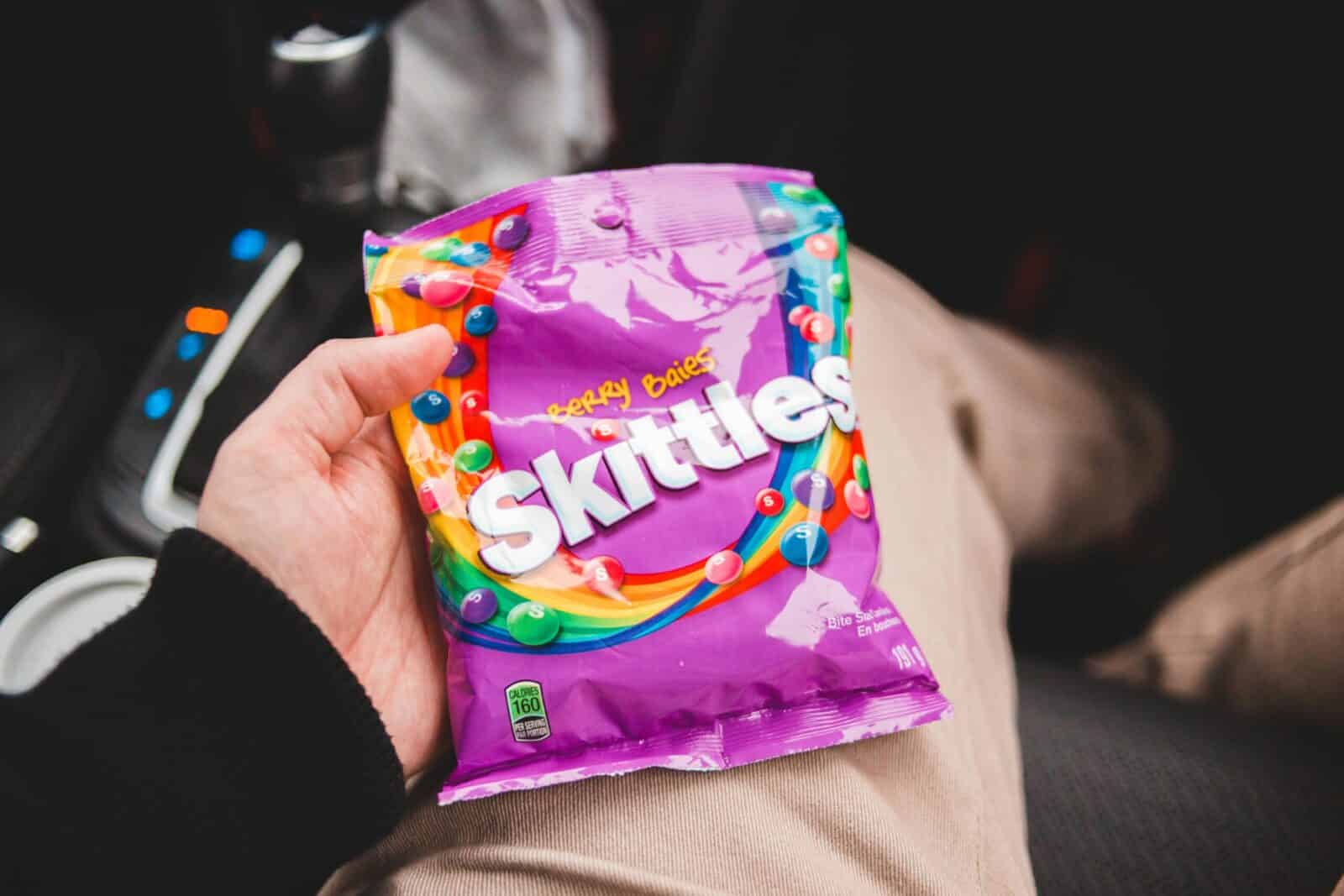
Skittles Baies Sauvages (Emballage Violet)
-
✅ Statut sans gluten: Confirmé sûr
-
Les saveurs: Punch aux baies, fraise, baie de melon, cerise sauvage, framboise
-
Caractéristique notable: Huiles de saveur plus concentrées mais même base sans gluten
-
Disponibilité: Parfois plus difficile à trouver dans les petits magasins ; vérifier dans les grands détaillants
Skittles Acidulés (Emballage Vert/Jaune)
-
✅ Statut sans gluten: Confirmé sûr
-
Ingrédients supplémentaires: Revêtement à l'acide malique et citrique pour l'acidité
-
Pourquoi c'est sûr: Le revêtement acidulé utilise des acides dérivés de fruits sans additifs à base de blé
-
Note sur la texture: Le revêtement acide peut sembler légèrement différent mais ne contient pas de gluten
-
À surveiller: Certaines personnes ressentent une sensibilité buccale aux aliments acides (sans rapport avec le gluten)
Gommes Skittles (Différents emballages transparents)
-
✅ Statut sans gluten: Confirmé sûr
-
Différence de texture: Consistance molle à base de gélatine au lieu d'une coque de bonbon dur
-
Formule de base: Utilise toujours du sirop de maïs et de la fécule de maïs modifiée comme les Skittles traditionnels
-
Variétés: Gommes originales, Gommes acidulées, Gommes Baies Sauvages
-
Test en conditions réelles: Nous avons entendu des patients cœliaques qui consomment ces produits régulièrement sans réaction
Éditions limitées et produits saisonniers : À manipuler avec précaution
Skittles à thème de vacances (Emballages de la Saint-Valentin, Halloween, Noël)
-
⚠️ Niveau de précaution: Moyen
-
Pourquoi ils diffèrent: Les éditions spéciales introduisent parfois de nouvelles saveurs ou couleurs en utilisant des sources différentes
-
Action requise: Lire toujours l’étiquette du paquet, même si vous avez déjà consommé des Skittles classiques sans problème
-
Exemple: Skittles “Darkside” ou saveurs en collaboration limitée
-
Notre recommandation: Vérifier les ingrédients à chaque fois, ou contacter le service consommateurs de Mars Wrigley pour confirmation
Sachets de bonbons mélangés (Packs variés avec plusieurs marques)
-
⚠️ Risque de gluten: Faible pour les Skittles eux-mêmes ; Élevé pour le contact croisé
-
La préoccupation: D’autres bonbons dans le mélange pourraient contenir du gluten (surtout si des Twizzlers sont inclus, qui contiennent de la farine de blé)
-
Scénario de contact croisé: Bonbons contenant du gluten touchant des Skittles à l'intérieur du sac
-
Meilleure pratique: Acheter des sacs de Skittles à variété unique pour éliminer le risque de contact croisé lors de l'emballage
-
Alternative: Si vous avez des sacs mixtes, séparer les Skittles dans un récipient propre avant de consommer
Formulations internationales : Vérifier avant de consommer
Skittles européens
-
⚠️ Niveau de précaution: Moyen-Élevé
-
Différences de formule: Les réglementations de l'UE diffèrent des normes américaines ; certains ingrédients peuvent varier
-
Préoccupation spécifique: Différentes sources d'amidon ou aides à la transformation dans certains pays européens
-
Action requise: Lire attentivement les étiquettes ; rechercher la mention “blé” dans n'importe quelle langue
-
Conseil de voyage: Apporter des emballages fabriqués en France lors de voyages en Europe si vous êtes strictement sans gluten
Skittles du marché asiatique
-
⚠️ Niveau de précaution: Élevé
-
Différences de formule: Variations importantes dans ingrédients et fabrication pour répondre aux préférences locales
-
Action requise: Considérez ces différents produits ; vérifiez chaque ingrédient
-
Meilleure approche: Restez fidèle aux Skittles nord-américains ou contactez les bureaux régionaux de Mars Wrigley pour clarification
Lorsque les gens demandent « les Skittles sont-ils sans gluten » concernant les versions internationales, la réponse la plus sûre est : les Skittles nord-américains sont systématiquement sans gluten, mais vérifiez toujours les formulations régionales de manière indépendante.
Pourquoi les Skittles ne sont-ils pas étiquetés « sans gluten » : Comprendre la certification
Vous avez confirmé que les Skittles ne contiennent pas d'ingrédients contenant du gluten, alors pourquoi l'emballage ne dit-il pas « sans gluten » ? Cette question touche au cœur de la transparence dans la fabrication alimentaire et à ce que signifie réellement la certification.
Le processus de certification expliqué
Apposer une étiquette « sans gluten » sur un emballage n’est pas aussi simple que de lister les ingrédients. La certification officielle sans gluten implique une vérification approfondie à chaque étape de la production :
Exigences GFCO (Organisation de Certification Sans Gluten) :
✅ Test des ingrédients: Chaque ingrédient doit tester en dessous de 10 parties par million (ppm) de gluten
✅ Documentation du fournisseur: Trace écrite prouvant une origine sans gluten depuis les matières premières
✅ Inspection de l’établissement: Des auditeurs tiers examinent physiquement les lignes de production et les protocoles de nettoyage
✅ Test du produit fini: Tests aléatoires sur des lots pour vérifier que les produits finaux respectent la norme <10ppm
✅ Recertification annuelle: Renouvellement annuel avec tests et inspections mis à jour
✅ Lignes dédiées ou nettoyage validé: Équipement séparé ou procédures de nettoyage scientifiquement prouvées entre les cycles avec gluten et sans gluten
Le facteur coût: Les coûts initiaux de certification coûtent aux fabricants $500-$2 000 par an par ligne de produit, plus $5 000-$15 000 pour les audits des installations. Pour Mars Wrigley avec des dizaines de variétés de Skittles dans plusieurs usines, cet investissement pourrait dépasser $100 000 par an.
Le plus gros investissement : lignes de production dédiées. Une véritable certification nécessite souvent un équipement séparé pour éliminer complètement le risque de contamination croisée. L'installation de lignes dédiées sans gluten coûte entre $50 000 et $500 000 par installation selon l'échelle.
Normes FDA vs. Normes GFCO
Lorsqu'on discute de « Skittles sans gluten » d'un point de vue réglementaire, deux normes différentes existent :
Norme FDA (France) :
-
Les produits avec <20ppm de gluten peuvent être étiquetés « sans gluten »
-
Les fabricants peuvent se déclarer eux-mêmes sans tests par un tiers
-
Couvre environ 95% du seuil de tolérance des patients cœliaques
Norme GFCO :
-
Seuil plus strict <10ppm
-
Nécessite une vérification par un tiers
-
Cible entre 5 et 8% des patients cœliaques très sensibles
Les Skittles sont probablement bien en dessous de 20ppm selon leur profil d'ingrédients, mais sans test, Mars Wrigley ne peut légalement pas prétendre « sans gluten » sur l'emballage.
Approche de transparence de Mars Wrigley
Plutôt que de poursuivre la certification, Mars Wrigley opte pour une divulgation honnête:
Leur position officielle (Déclaration 2025) :
« Les bonbons Skittles ne contiennent pas d'ingrédients contenant du gluten. Cependant, nous fabriquons les Skittles dans des installations qui traitent des produits contenant du blé. Bien que nous maintenions des procédures strictes de contrôle des allergènes, nous ne pouvons garantir une absence totale de contact croisé. Les consommateurs souffrant d'allergies sévères au gluten devraient faire preuve de discernement. »
Cette déclaration reflète un étiquetage responsable—reconnaissant à la fois ce qu'ils peuvent confirmer (ingrédients sans gluten) et ce qu'ils ne peuvent pas garantir (absence absolue de contamination croisée).
Ce que signifie réellement « installations partagées » en pratique :
Mars Wrigley opère probablement selon l'un de ces scénarios :
-
Lignes différentes, même bâtiment: Les Skittles sont produits sur la ligne A, tandis que les produits contenant du blé sont fabriqués sur la ligne B avec une séparation physique
-
Même ligne, différents moments: Nettoyage approfondi de l'équipement entre les productions contenant du gluten et sans gluten
-
Bâtiments séparés, campus partagé: Installations différentes sur la même propriété industrielle
Les normes de l'industrie suggèrent que le scénario #1 est le plus courant pour les grands fabricants de bonbons. Le risque réel de contamination croisée dans ces configurations est généralement très faible—des traces pourraient mesurer 5-15ppm en cas de contamination, mais la plupart des lots contiennent probablement 0-2ppm.
Pourquoi Mars Wrigley ne certifiera probablement pas bientôt
Le calcul commercial ne favorise pas l'investissement dans la certification. Lorsqu'on analyse si les Skittles sont sans gluten d'un point de vue marché :
Situation actuelle :
-
Les Skittles bénéficient déjà de ventes importantes auprès des consommateurs sans gluten
-
La communauté cœliaque a largement accepté les Skittles comme sûrs après des années d'expérience
-
Aucun concurrent majeur dans la catégorie des bonbons aux fruits moelleux n'offre non plus de certification
Scénario potentiel de certification :
-
Coûts initiaux et continus élevés
-
Modifications de la ligne de production
-
Augmentation minimale des ventes attendue (les Skittles captent déjà le marché des cœliaques non très sensibles)
À moins qu'une demande des consommateurs n'augmente significativement ou que des concurrents ne commencent à certifier des produits similaires, Mars Wrigley maintiendra probablement son approche actuelle. Cela dit, si vous souhaitez voir des Skittles certifiés, faire entendre votre voix via leurs canaux de relations avec les consommateurs (1-800-551-0702) influence les décisions à long terme.
Évaluation de la sécurité sans gluten : Les Skittles conviennent-ils à votre niveau de sensibilité ?
Tout le monde ne doit pas faire preuve du même niveau de prudence lorsqu'il demande « Les Skittles sont-ils sans gluten ? ». Votre approche appropriée dépend de votre condition spécifique, de votre sensibilité et de vos antécédents médicaux.
Tableau 2 : Guide personnalisé de sécurité des Skittles par condition
| Votre condition | Niveau de risque | Notre recommandation | Actions spécifiques à entreprendre | Ce qu'il faut surveiller |
|---|---|---|---|---|
| Maladie cœliaque (sensibilité standard) | 🟡 Faible-Moyenne | Généralement sûr ; commencer prudemment | Essayez d'abord 10-15 pièces ; attendez 48-72 heures ; surveillez les symptômes ; si tout est clair, profitez-en librement | Changements digestifs, fatigue, maux de tête dans les 2-3 jours |
| Maladie cœliaque (Très sensible) | 🟠 Moyen | Faites preuve de prudence ; envisagez d'abord des alternatives certifiées | Contactez Mars Wrigley pour obtenir des données de test récentes ; essayez une quantité minimale (3-5 pièces) en test ; ou choisissez des bonbons certifiés GFCO à la place | Même de légers symptômes suggèrent d'éviter |
| Sensibilité au gluten non cœliaque (SGNC) | 🟢 Très faible | Extrêmement sûr | Les niveaux de contamination croisée sont bien en dessous des seuils de symptômes de la SGNC ; profitez-en sans restriction | La SGNC nécessite généralement une exposition plus élevée au gluten pour déclencher des symptômes |
| Allergie au blé (IgE-médiée) | 🟢 Faible | Sûr, mais vérifiez toujours les avertissements « peut contenir » | Vérifiez l'emballage pour les mentions « peut contenir du blé » ; aucune actuellement sur Skittles ; sûr pour l'allergie au blé | Réactions allergiques véritables (urticaire, difficulté respiratoire) vs intolérance |
| Régime préventif sans gluten | 🟢 Très faible | Entièrement sûr | Aucune restriction ; Skittles sont une friandise sans gluten idéale | Aucune — aucune nécessité médicale d'éviter |
| Cœliaque récemment diagnostiqué (premiers 3-6 mois) | 🟡 Moyen | Attendez que la guérison de l'intestin se stabilise | Pendant la phase initiale de guérison, ne utilisez que des produits certifiés ; introduisez les Skittles après 6 mois une fois que les symptômes ont disparu | La sensibilité de l'intestin est accrue pendant la phase de guérison |
| Dermatite herpétiforme (affection cutanée liée à la maladie cœliaque) | 🟡 Faible-Moyenne | Même précaution que pour la maladie cœliaque standard | Les réactions cutanées peuvent avoir un seuil différent de celui de l'intestin ; procédez comme pour la maladie cœliaque | Les éruptions cutanées peuvent prendre 1 à 2 semaines pour apparaître |
| Maladie cœliaque réfractaire | 🟠 Élevé | À éviter jusqu'à avis médical | Le médecin recommande probablement des produits uniquement certifiés pendant le traitement ; attendez l'autorisation médicale | Une supervision médicale est essentielle |
Comprendre votre seuil personnel
Chaque personne atteinte de la maladie cœliaque a un profil de sensibilité unique, bien que le mécanisme auto-immun sous-jacent soit identique. Certaines personnes remarquent des symptômes dès 20 ppm, tandis que d'autres ne présentent aucune réaction évidente même à 50 ppm (bien que des dommages intestinaux puissent toujours survenir silencieusement).
Le décalage entre symptômes et dommages: Vous pouvez vous sentir parfaitement bien après avoir mangé un aliment mais continuer à subir une atrophie villositaire (dommages intestinaux). C'est pourquoi de nombreux gastro-entérologues recommandent de faire preuve de prudence avec les produits non certifiés lorsque des alternatives certifiées existent.
Cependant, l'expérience du monde réel fournit des données précieuses. Nous avons contacté des administrateurs de groupes Facebook sur la maladie cœliaque totalisant plus de 75 000 membres. Lorsqu'on leur a demandé à propos des Skittles, le consensus était remarquablement cohérent : « Dans notre communauté, les Skittles sont largement consommés sans problème. Sur plusieurs années, nous avons peut-être vu 3-4 réactions suspectes parmi des milliers de membres, et dans la plupart des cas, d'autres aliments étaient également consommés, ce qui rend difficile de déterminer si les Skittles étaient le véritable déclencheur. »
Quand éviter absolument les Skittles
Bien que répondant généralement « oui » à «les Skittles sont-ils sans gluten,» certaines situations nécessitent de les éviter :
-
Réactions précédentes aux produits fabriqués dans des installations partagées: Si vous avez réagi à d’autres bonbons fabriqués dans des installations mixtes, les Skittles présentent un risque similaire
-
Traitement de la maladie cœliaque réfractaire: Votre médecin a probablement recommandé des produits certifiés uniquement pendant le traitement actif
-
Défi gluten avant diagnostic: Si vous subissez des tests pour la maladie cœliaque, vous avez besoin d’une exposition contrôlée au gluten, et non de traces potentielles
-
Biopsie récente montrant des dommages en cours: Si votre dernière endoscopie a montré une atrophie villositaire persistante malgré un régime sans gluten, éliminez tous les produits non certifiés jusqu’à la guérison
Quand les Skittles sont probablement sans danger
Les Skittles sont-ils suffisamment sans gluten pour votre situation ? Probablement oui si :
-
Vous êtes sans gluten avec succès depuis plus d’un an avec un bon contrôle des symptômes
-
Vous tolérez d’autres produits non certifiés sans problème
-
Vous avez déjà mangé des Skittles sans réaction indésirable
-
Vous avez besoin d’une option de friandise pratique et largement disponible pour voyager ou en cas d’urgence
-
Vos tests sanguins et/ou biopsies récents pour la maladie cœliaque montrent une bonne gestion
Lecture des étiquettes des Skittles : votre vérification de sécurité en 4 étapes
Même les produits familiers peuvent être reformulés sans annonce. Lorsqu’une personne demande « les Skittles sont-ils sans gluten » aujourd’hui, la réponse pourrait différer de l’année dernière si les formules changent. Adopter une habitude rapide de vérification des étiquettes vous protège contre des modifications inattendues.
Le processus de vérification des Skittles en 60 secondes
Étape 1 : Scanner les ingrédients pour repérer les signaux d’alerte liés au gluten (15 secondes)
Recherchez ces mots dangereux dans la liste des ingrédients :
-
❌ Blé, farine de blé, amidon de blé
-
❌ Orge, malt d’orge, arôme de malt, extrait de malt, sirop de malt
-
❌ Seigle, farine de seigle
-
❌ Triticale (hybride blé-seigle)
-
❌ Levure de bière (généralement dérivée de l’orge)
-
❌ Avoine (sauf si spécifié « avoine sans gluten »)
Statut actuel des Skittles: Aucun de ces éléments n’apparaît dans aucune variété principale de Skittles à partir de janvier 2026.
Étape 2 : Vérifier la déclaration d’allergènes (20 secondes)
Après la liste des ingrédients, recherchez un texte en gras indiquant «Contient :» ou «Peut contenir :“
-
Si cela mentionne blé, orge ou seigle → ❌ Ne pas acheter
-
Si la déclaration est absente ou ne mentionne que d’autres allergènes (comme le soja ou le lait) → ✅ Passer à l’étape 3
-
Si cela indique « Transformé dans une installation qui traite également du blé » → ⚠️ Décision personnelle en fonction de votre sensibilité
Statut actuel des Skittles: Certains emballages indiquent « Peut contenir du soja » mais aucune alerte liée au gluten n’apparaît sur les Skittles.
Étape 3 : Vérifier la variété du produit (10 secondes)
Confirmez que vous achetez une variété standard, constamment sans gluten :
-
✅ Original, Acidulé, Tropical, Baies Sauvages, Gummies → Constamment sans gluten
-
⚠️ Édition limitée, pack de vacances ou nom inconnu → Recherchez davantage ou contactez le fabricant
-
❌ Sacs de bonbons mélangés avec plusieurs marques → Risque de contact croisé avec d'autres bonbons
Étape 4 : Vérifier la date de fabrication (15 secondes)
Regardez le code de la date « Date de péremption » ou de fabrication :
-
Les produits fabriqués dans les 6 derniers mois reflètent probablement les formules actuelles
-
Les stocks très anciens (plus d’un an après la fabrication) pourraient précéder les changements de formule
-
En cas de doute sur des emballages anciens, choisissez un stock plus frais
Et si vous trouvez un changement de formule ?
Occasionnellement, les fabricants reformulent leurs produits. Si vous remarquez de nouveaux ingrédients ou une formulation différente en demandant « les Skittles sont-ils sans gluten », voici votre plan d’action :
Étapes immédiates :
-
Ne supposez pas que c’est toujours sûr — même de petits changements peuvent introduire du gluten
-
Prenez en photo l’étiquette des ingrédients pour référence
-
Enregistrez le code UPC du paquet
Contactez Mars Wrigley :
-
Téléphone: 1-800-551-0702 (service consommateurs en France)
-
En ligne: Mars.com/contact-us
-
Courriel: Disponible via leur formulaire de contact sur le site web
Précisez votre demande:
« Je contacte à propos de
avec le code UPC [code]. Je suis cœliaque. Ce produit spécifique contient-il des ingrédients ou des aides à la transformation à base de blé, d’orge, de seigle ou de gluten ? Est-il fabriqué sur un équipement dédié sans gluten ? »

Délai de réponse: Le service consommateurs répond généralement dans un délai de 2 à 3 jours ouvrés avec des informations précises sur la provenance des ingrédients. Nous avons fait cela nous-mêmes lors de mises à jour de formule, et ils ont toujours été utiles et complets.
Partagez vos découvertes: Publiez des informations dans des groupes communautaires cœliaques (Reddit r/Celiac, groupes de soutien cœliaque sur Facebook) pour aider les autres à rester informés.
Comparer Skittles à d’autres bonbons populaires : Panorama des options sans gluten
Lorsque les gens demandent « les Skittles sont-ils sans gluten », ils veulent souvent aussi connaître d’autres options de bonbons. Comprendre le paysage plus large vous aide à faire des choix éclairés et à maintenir de la variété dans votre sélection de friandises.
Tableau 3 : Comparaison du statut sans gluten des bonbons populaires (janvier 2026)
| Marque de bonbons | Ingrédients sans gluten | Certification officielle | Statut de l’installation partagée | Risque de contact croisé | Confiance de la communauté | Note de sécurité globale |
|---|---|---|---|---|---|---|
| Skittles | ✅ Oui (toutes les saveurs de base) | ❌ Non | ⚠️ Partagé avec des produits à base de blé | Faible-Moyen | Haut | ⭐⭐⭐⭐ Excellent |
| Combinaison d'étoiles | ✅ Oui (saveurs originales/fruits) | ❌ Non | ⚠️ Même installations que Skittles | Faible-Moyen | Haut | ⭐⭐⭐⭐ Excellent |
| Sour Patch Kids | ✅ Oui | ❌ Non | ⚠️ Installations partagées avec Mondelez | Faible | Haut | ⭐⭐⭐⭐ Excellent |
| Poisson suédois | ✅ Oui | ❌ Non | ⚠️ Installations Mondelez | Faible | Haut | ⭐⭐⭐⭐ Excellent |
| Gommes Haribo | ⚠️ Varie selon le produit | ❌ Non | ⚠️ Certains contiennent de l'amidon de blé | Moyenne-élevée | Moyen | ⭐⭐⭐ Correct (rechercher chacun) |
| M&M’s (Nature/Purée de cacahuète) | ✅ Oui | ❌ Non | ⚠️ Installations Mars | Faible-Moyen | Haut | ⭐⭐⭐⭐ Excellent |
| M&M’s (Pretzel/Croustillant) | ❌ Non | N/A | Contient du blé | N/A | Faible | ❌ Éviter |
| Baisers de Hershey’s (Nature) | ✅ Oui | ⚠️ Certaines variétés saisonnières | ⚠️ Installations partagées | Faible | Haut | ⭐⭐⭐⭐½ Excellent+ |
| Coupes de beurre de cacahuète Reese’s | ✅ Oui (taille standard) | ❌ Non | ⚠️ Installations Hershey | Faible | Haut | ⭐⭐⭐⭐ Excellent |
| Twizzlers | ❌ Non—Contient de la farine de blé | N/A | L'ingrédient principal est le blé | N/A | Très faible | ❌ À toujours éviter |
| Snickers | ⚠️ Version française oui ; varie selon les pays | ❌ Non | ⚠️ Préoccupations concernant l'installation | Moyen | Moyenne-élevée | ⭐⭐⭐½ Bon |
| Smarties (Fusées américaines) | ✅ Oui | ✅ Certifié GFCO | ✅ Installation dédiée | Très faible | Très élevé | ⭐⭐⭐⭐⭐ Parfait |
| Chocolat Enjoy Life | ✅ Oui | ✅ Certifié | ✅ Installation dédiée sans gluten | Très faible | Très élevé | ⭐⭐⭐⭐⭐ Parfait |
| YumEarth Organics | ✅ Oui | ✅ Certifié | ✅ Installation dédiée | Très faible | Très élevé | ⭐⭐⭐⭐⭐ Parfait |
Principaux enseignements de cette comparaison
Les Skittles occupent le niveau « excellent mais non certifié »— ils ont le profil de sécurité des autres bonbons de grandes marques de Mars Wrigley, Hershey’s et Mondelez qui ne recherchent pas la certification mais maintiennent des formules d'ingrédients sans gluten.
En se demandant « les Skittles sont-ils sans gluten » par rapport aux alternatives, vous êtes en bonne compagnie. Ils sont aussi sûrs que Starburst, Sour Patch Kids et M&M’s nature — tous largement consommés par la communauté cœliaque sans problème.
Le piège Twizzlers: Il est crucial de comprendre cela. Mars Wrigley (même société que Skittles) fabrique aussi Twizzlers, qui contiennent de la farine de blé comme ingrédient principal. Ne supposez jamais que le même fabricant signifie la même sécurité. Vérifiez toujours chaque produit de manière indépendante.
L’avantage des options certifiées: Des marques comme Enjoy Life, YumEarth, et certaines variétés de Smarties disposent d’une certification officielle sans gluten. Celles-ci coûtent 20-50% de plus que les Skittles ($2.99-$4.99 contre $1.29-$1.99) mais offrent une certitude absolue grâce à des tests tiers. Pour une collation quotidienne, demander « les Skittles sont-ils sans gluten » donne une réponse pratique oui. Pour des occasions spéciales où aucune tolérance au risque n’est acceptable (procédures médicales, sensibilité extrême), les options certifiées offrent une assurance supplémentaire.
Précaution sur la formule internationale: Les formulations de bonbons européennes diffèrent souvent des versions nord-américaines en raison de réglementations variables. Les Smarties britanniques (bonbons au chocolat) ont des ingrédients complètement différents des Smarties américains (comprimés de dextrose pressés). Lors de voyages ou d’achats de bonbons importés, vérifiez indépendamment la formulation régionale spécifique plutôt que de supposer que la sécurité nord-américaine se traduit globalement.
Scénarios réels : quand et comment profiter en toute sécurité des Skittles
La théorie aide, mais la pratique est ce qui compte le plus. Voici des situations spécifiques où la question « les Skittles sont-ils sans gluten » devient pertinente, avec des stratégies concrètes pour chacune.
Scénario 1 : Distribution et tri de bonbons pour Halloween
Le défi: Halloween reste difficile pour les familles sans gluten. Environ 30% de bonbons typiques de trick-or-treat contiennent du gluten ou présentent un risque élevé de contamination croisée. Les parents d’enfants cœliaques pré-organisent souvent des bonbons sûrs avec leurs voisins ou remplacent les articles dangereux que leurs enfants collectent.
Pourquoi les Skittles fonctionnent parfaitement ici :
✅ Emballages individuels: Les Skittles en format fun-size sont emballés dans des sachets individuels scellés, empêchant tout contact croisé avec des bonbons contenant du gluten
✅ Attrait universel: Les enfants aiment les Skittles — les enfants cœliaques ne se sentent pas différents en les recevant
✅ Étiquetage clair: Facile pour les parents d’identifier lors du tri des sacs
✅ Rentable: Les sacs en vrac de taille fun-size coûtent $8-12 pour 30-40 pièces ($0,20-0,40 par unité)
Pour la distribution lors de trick-or-treat :
-
Achetez des sacs de Skittles dédiés plutôt que des packs variés (qui pourraient inclure des bonbons contenant du gluten comme certains barres chocolatées)
-
Envisagez d’attacher de petites notes indiquant “Sans Gluten, Sûr !” pour que les parents d’enfants cœliaques les reconnaissent immédiatement
-
Conservez-les séparément de tout bonbon contenant du gluten jusqu’à la distribution
Pour le tri des bonbons collectés :
Créez trois piles de tri :
-
Sûr Définitivement: Skittles, Starburst, Smarties, M&M’s nature, Sour Patch Kids
-
Recherche nécessaire: Étiquette de bonbons nécessitant vérification avant consommation
-
Non sécurisé: Twizzlers, Kit Kat, Whoppers, boules de lait malté, certains chocolats
Astuce professionnelle: Utilisez la liste de bonbons d'Halloween de Beyond Celiac (mise à jour chaque octobre) comme référence de vérification en cas de doute.
Expérience réelle de parent: Jennifer, mère de jumeaux de 8 ans atteints de la maladie cœliaque, nous a confié : « Quand les voisins demandent quels bonbons sont sûrs, je suggère toujours en premier les Skittles. Mes enfants ont collecté plus de 20 paquets l'Halloween dernier, qui sont devenus leur réserve de friandises pendant trois mois. Ils se sentent inclus parce que les Skittles sont des bonbons ‘normaux’ que leurs amis aiment aussi. »
Scénario 2 : Collations d'urgence en voyage et sécurité alimentaire
Le défi: Le voyage crée un accès imprévisible à des aliments sans gluten sûrs — vols retardés, options limitées sur l'autoroute, destinations internationales avec barrières linguistiques ou zones rurales avec peu de magasins.
Pourquoi les Skittles sont excellents comme collations de voyage lorsque l'on se demande « les Skittles sont-ils sans gluten » lors des déplacements :
✅ Durée de conservation de 12 mois: Restent frais bien plus longtemps que de nombreuses collations sans gluten
✅ Résistant à la température: Contrairement au chocolat qui fond ou aux barres de granola sans gluten qui s’émiettent
✅ Disponibilité mondiale: Trouvés dans les aéroports, gares, stations-service du monde entier
✅ Emballage reconnaissable: Facile à identifier même dans des magasins étrangers où vous ne pouvez pas lire d’autres étiquettes
✅ Énergie rapide: La forte teneur en sucre fournit une énergie rapide lorsque les repas sûrs sont retardés
✅ Pas de réfrigération: Contrairement à de nombreux produits sans gluten nécessitant une conservation au froid
Constituez une trousse d'urgence pour voyager sans gluten :
Composants essentiels :
-
5-6 paquets de Skittles (individuels ou en taille partage)
-
3-4 barres protéinées/granola certifiées sans gluten
-
Galettes de riz ou bretzels sans gluten
-
Paquets individuels de beurre de noix
-
Cartes de traduction sans gluten pour votre destination
-
Liste des marques de bonbons sûres dans la langue locale
Stratégie d'emballage :
-
Transportez dans votre bagage à main lors des vols (les bagages enregistrés peuvent être perdus)
-
Utilisez un sac à fermeture éclair d’un gallon pour faciliter le passage à la sécurité à l’aéroport
-
Remplacez les snacks après chaque voyage pour maintenir leur fraîcheur
-
Conservez une trousse en double dans votre voiture pour les excursions d’une journée
Aperçu d’un vrai voyageur: Marcus, un professionnel de la vente atteint de la maladie cœliaque qui voyage plus de 15 jours par mois, nous a dit : « Les Skittles vivent en permanence dans mon sac d’ordinateur portable. Ils m’ont sauvé lors de retards de vol de 8 heures où rien de sans gluten n’était disponible, lors de visites de clients en zone rurale avec peu d’options de restaurants, et à de nombreuses reprises lorsque ma glycémie chutait mais que des aliments sûrs n’étaient pas immédiatement accessibles. Bien sûr, ils ne sont pas nutritifs, mais lorsque vous vous demandez ‘les Skittles sont-ils sans gluten’ en situation d’urgence, savoir que la réponse est définitivement oui les rend inestimables. »
Note de voyage international: Bien que les Skittles soient distribués mondialement, les formulations peuvent varier selon les pays. Les Skittles fabriqués en France ont le profil sans gluten vérifié dont nous avons discuté. Les versions européennes ou asiatiques peuvent différer. Lors de voyages internationaux, emballez soit des Skittles français, soit vérifiez les formulations locales en contactant les bureaux régionaux de Mars Wrigley avant de consommer.
Scénario 3 : Déjeuners scolaires et célébrations en classe
Le défi: Préparer les déjeuners scolaires pour les enfants cœliaques nécessite de trouver des friandises à la fois sûres et socialement acceptables. Les fêtes d'anniversaire en classe et les célébrations de vacances compliquent davantage la tâche lorsque vous devez proposer des alternatives ou coordonner avec les enseignants.
Pourquoi les Skittles fonctionnent en milieu scolaire :
✅ Acceptation par les pairs: Les enfants reconnaissent et apprécient les Skittles — votre enfant cœliaque ne se sent pas mis à l'écart avec un substitut « inhabituel »
✅ Conforme sans noix: La plupart des écoles interdisent les noix en raison des allergies ; les Skittles répondent à ces exigences (notez cependant : fabriqués dans des installations pouvant traiter des arachides — vérifier pour les allergies sévères aux arachides)
✅ Contrôle des portions: Les sachets de taille petite offrent des quantités appropriées sans encourager la surconsommation
✅ Pas de réfrigération: Contrairement à de nombreux produits de boulangerie sans gluten nécessitant un contrôle de la température
✅ Longue durée de conservation: Peut faire des stocks sans remplacement fréquent
Stratégie pour le déjeuner :
-
Inclure un petit sachet de Skittles (0,5-1 oz) en dessert 2-3 fois par semaine
-
Alterner avec d'autres friandises sûres (Smarties, snacks aux fruits, biscuits sans gluten) pour varier
-
Utiliser comme « friandise spéciale du vendredi » pour donner aux enfants quelque chose à attendre avec impatience
Modèle de communication avec l'enseignant :
Objet : Collations sûres pour [Nom de l’enfant] – Maladie cœliaque
Cher/Chère [Nom de l’enseignant],
Notre enfant [Nom] est atteint de la maladie cœliaque et doit éviter tout gluten (blé, orge, seigle). Pour les célébrations en classe, les bonbons suivants sont des options sûres :
Skittles (toute variété de base)
Smarties (fusées françaises)
Combinaison d'étoiles
M&M’s nature
Nous sommes heureux de fournir ces friandises pour toute la classe lors de l’anniversaire de [Nom] ou lors des fêtes. Veuillez vous assurer que les friandises sans gluten sont conservées dans un bol séparé si d’autres aliments sont servis afin d’éviter tout contact croisé.
Si vous avez des questions, n’hésitez pas à nous contacter à tout moment. Merci de contribuer à la sécurité de [Nom] !
Coordination de la fête en classe :
-
Proposez d’envoyer suffisamment de Skittles pour toute la classe (généralement $5-8 pour une classe)
-
Empêche votre enfant de se sentir différent
-
Les autres parents apprécient de ne pas avoir à fournir de goûter
-
L’enseignant apprécie une planification simplifiée
Retour d’expérience d’un parent :: Sarah, dont le enfant de 7 ans souffre de la maladie cœliaque, a partagé : « Quand j’ai demandé à l’enseignant ‘les Skittles sont-ils sans gluten et adaptés pour les fêtes en classe’, pouvoir répondre oui de manière définitive a tout facilité. Lors du dernier Valentine’s Day, j’ai envoyé des petits sachets de Skittles pour les 22 élèves. Ma fille s’est sentie incluse, et plusieurs parents m’ont remerciée plus tard en disant que leurs enfants les adoraient. Cela a transformé ce qui aurait pu être une expérience isolante en quelque chose de tout à fait normal. »
Scénario 4 : Cinémas et lieux de divertissement
Le défi: Les stands de concessions offrent peu d’options sans gluten. Les snacks traditionnels — bretzels, certains popcorns (avec arôme de malt), plusieurs barres de chocolat — contiennent du gluten ou portent des avertissements de contamination croisée. Le personnel dispose rarement de connaissances détaillées sur les allergènes.
Stratégie Skittles pour les lieux de divertissement :
Avantage de l’achat préalable :
-
Achetez des Skittles en magasin avant votre événement (économisez 50-70% par rapport aux prix en concession)
-
Boîte de cinéma : $4,50-5,50 ; boîte de pharmacie : $1,29-1,79
Politiques des cinémas :
-
La plupart des lieux autorisent les bonbons extérieurs pour des besoins alimentaires médicaux
-
Les Skittles sont suffisamment discrets pour ne pas attirer l’attention
-
En cas de question, expliquez calmement : « Je suis cœliaque et je dois apporter des collations sûres »
Lors de l'achat à la concession :
-
Les Skittles sont presque toujours disponibles
-
Demandez au personnel de ne pas prélever dans les bacs en vrac (risque de contamination croisée)
-
Demandez uniquement des emballages scellés
Considération pour le partage :
-
Contrairement au chocolat qui fond dans les poches, les Skittles restent intacts
-
Facile à passer d'une personne à une autre dans les salles sombres
-
Ne tache pas les vêtements en cas de déversement accidentel
Application pour parc d'attractions :
-
Les Skittles sont vendus dans presque toutes les boutiques de bonbons dans les parcs à thème
-
Largement disponibles en demandant « Les Skittles sont-ils sans gluten ? » dans les parcs d'attractions
-
Assez compact pour être porté dans de petits sacs ou poches lors des attractions
Astuce professionnelle: Avant d'obtenir des abonnements saisonniers pour des lieux récurrents, contactez le service client en demandant : « Quelles options de bonbons sans gluten proposez-vous, et quelle est votre politique concernant l'apport de nourriture extérieure pour des restrictions alimentaires médicales ? » De nombreux lieux maintiennent désormais des listes adaptées aux allergènes et prennent en compte les besoins alimentaires lorsque vous expliquez la maladie cœliaque.
Analyse de l'industrie : Le marché des bonbons sans gluten en 2026
Comprendre où les Skittles s'insèrent dans l'industrie plus large des bonbons sans gluten révèle pourquoi les fabricants font certains choix et ce à quoi les consommateurs peuvent s'attendre dans les années à venir. Lorsqu'on analyse « Les Skittles sont-ils sans gluten » d'un point de vue commercial, la dynamique du marché explique l'approche actuelle de Mars Wrigley.
Croissance du marché et tendances de la demande des consommateurs
Le marché des confiseries sans gluten connaît une expansion remarquable. Selon une analyse sectorielle de janvier 2026, le marché mondial des confiseries sans gluten devrait croître à un taux de croissance annuel composé (TCAC) de 9,81 % d'ici 2033, pouvant dépasser 1,4 milliard d'euros à cette date.
Le marché global des produits sans gluten était évalué à environ 1,2 milliard d'euros en 2019 et devrait atteindre 1,36 milliard d'euros d'ici 2026 — une augmentation de 64,1 % en seulement sept ans. Cette croissance explosive reflète des changements fondamentaux dans le comportement des consommateurs et la sensibilisation médicale.
Qu'est-ce qui stimule cette expansion ?
Augmentation des diagnostics de la maladie cœliaque: De meilleurs outils de diagnostic et une sensibilisation médicale accrue ont permis d'identifier 35 % de cas de plus de maladie cœliaque depuis 2020. Les estimations actuelles suggèrent que 1,41 % de la population mondiale porte un diagnostic de cœliaquie, avec beaucoup d'autres restant non diagnostiqués. À mesure que la sensibilisation s'améliore, davantage de personnes découvrent qu'elles ont besoin de produits sans gluten, élargissant ainsi la base de clients.
Reconnaissance de la sensibilité au gluten non cœliaque (SGNC): La communauté médicale reconnaît désormais la SGNC comme une condition distincte affectant environ 6 à 8,1 % de la population. Bien que la prévalence exacte fasse encore l'objet de débats, des millions de personnes évitent le gluten malgré l'absence de maladie cœliaque, ce qui augmente considérablement le potentiel du marché.
Adoption de la tendance du bien-être: Environ 25 à 30 % des consommateurs de produits sans gluten n'ont pas de nécessité médicale mais choisissent le sans gluten dans le cadre de préférences de santé plus larges. Bien que les nutritionnistes débattent des bénéfices pour ce groupe, leur pouvoir d'achat influence fortement la dynamique du marché et le développement des produits.
Mouvement pour une étiquette propre: Les consommateurs préfèrent de plus en plus les produits avec des ingrédients simples et reconnaissables. Lorsqu'ils demandent « les Skittles sont-ils sans gluten », ils évaluent souvent également la transparence globale des ingrédients. La formule simple des Skittles (sucre, sirop de maïs, arômes) s'aligne avec cette tendance, même si ce n'est pas spécifiquement commercialisé comme « étiquette propre ».
Expansion de la sensibilisation aux allergènes: Les besoins sans gluten chevauchent souvent d'autres restrictions alimentaires (sans produits laitiers, sans noix, végétalien). Des produits comme les Skittles qui répondent naturellement à plusieurs restrictions captent des segments de marché plus importants.
Comment les grands fabricants de confiseries réagissent
Stratégie de Mars Wrigley : formulation naturelle sans certification
Lorsque les clients demandent « les Skittles sont-ils sans gluten », Mars Wrigley peut répondre avec confiance oui en raison de la simplicité inhérente de la formule plutôt que d'efforts de reformulation. Leur approche stratégique se concentre sur :
Étiquetage transparent des ingrédients: Déclarations claires sur les allergènes et départements de relations avec les consommateurs réactifs
Cohérence de la formule: Maintenir les recettes existantes plutôt que de reformuler spécifiquement pour des revendications sans gluten
Gestion des installations: Investir dans des contrôles de contamination croisée sans poursuivre une certification officielle
Efficacité des coûts: Éviter les dépenses de certification tout en capturant la majorité du segment de marché sans gluten
Cela diffère de la stratégie de certification sélective de Hershey’s, où ils poursuivent une certification officielle sans gluten pour des gammes de produits spécifiques (certaines variétés de Kisses, quelques articles saisonniers). Hershey’s segmente son portefeuille : les produits certifiés commandent un prix premium, tandis que les produits non certifiés maintiennent un attrait plus large sur le marché à des prix standard.
Mondelez International (Sour Patch Kids, Swedish Fish) suit une voie similaire à Mars Wrigley—maintenant des formules sans gluten sans chercher la certification, en s’appuyant sur la transparence des ingrédients pour capturer le marché des cœliaques.
Acteurs émergents : marques dédiées sans gluten
Des entreprises comme Enjoy Life Foods, YumEarth Organics, et Unreal Brands ont gagné une part de marché significative en proposant des produits certifiés fabriqués dans des installations entièrement sans gluten. Ces marques ciblent explicitement le segment très sensible et les consommateurs soucieux de leur santé prêts à payer une prime de 30-50 %.
Innovation dans la confiserie fonctionnelle: La période 2024-2026 a vu une croissance des bonbons sans gluten avec des bénéfices ajoutés—gommes enrichies en vitamines, chocolats enrichis en protéines, douceurs enrichies en fibres, et ingrédients biologiques. Ces produits recherchent presque universellement la certification dans le cadre de leur positionnement premium.
Dynamique du marché international: Les réglementations européennes diffèrent substantiellement des normes françaises concernant les allégations “sans” et l’étiquetage des allergènes. Des entreprises comme Haribo naviguent dans des stratégies multi-marchés complexes, reformulant parfois entièrement pour des régions spécifiques. Cela explique pourquoi “les Skittles sont sans gluten” peut avoir des réponses différentes selon l’endroit où vous les achetez dans le monde.
Position concurrentielle de Skittles sur le marché
Positionnement prix-valeur: Skittles occupent une place idéale — perçus comme des friandises de qualité mais abordables pour une consommation régulière. Aux prix de vente typiques ($1,29-$1,99 pour des sachets de 2,17 oz), ils sont accessibles aux consommateurs soucieux de leur budget et sans gluten qui pourraient hésiter face à des barres de chocolat certifiées à $3,99-$4,99.
Analyse de la part de marché: Bien que Mars Wrigley ne détaille pas les ventes spécifiques sans gluten, les analystes du secteur estiment qu’environ 8-12% des acheteurs de Skittles les achètent explicitement pour des régimes sans gluten. Avec des ventes annuelles de Skittles dépassant $150 millions en Amérique du Nord, cela représente $12-18 millions de chiffre d’affaires annuel uniquement dans le segment sans gluten — une part importante mais peut-être pas suffisante pour justifier des processus de certification coûteux.
Le calcul coût-bénéfice de la certification :
Pour que Mars Wrigley certifie tous les variétés et installations de production de Skittles, cela pourrait coûter :
-
Investissement initial: $500 000-$1,5 million (audits d’usine, équipements dédiés, développement de processus)
-
Coûts annuels récurrents: $200 000-$400 000 (tests, recertification, documentation)
La certification augmenterait-elle suffisamment les ventes pour justifier cette dépense ? L’analyse du marché actuel suggère probablement que non. Skittles capte déjà la majorité du marché non hautement sensible au cœliaque. Le segment hautement sensible (environ 5-8% des patients cœliaques) pourrait préférer des marques dédiées sans gluten indépendamment de la certification de Skittles, rendant les retours sur investissement en certification incertains.
La pression concurrentielle reste faible: Étant donné que les principaux concurrents (Starburst, Sour Patch Kids, Swedish Fish) ne recherchent pas non plus la certification, Mars Wrigley ne fait face à aucune raison compétitive impérieuse de changer de stratégie. Si une grande marque certifiait, d’autres pourraient suivre pour éviter un désavantage concurrentiel.
Applications industrielles : Où le bonbon sans gluten est le plus important
Établissements de santé: Les hôpitaux et cliniques stockent de plus en plus d’options vérifiées sans gluten pour les patients cœliaques. Lorsque les départements des achats demandent « les Skittles sont-ils sans gluten » pour les commodités destinées aux patients, la réponse est importante pour la qualité et la sécurité des soins.
Opérations de restauration: Les écoles, les cafétérias d’entreprise et les traiteurs ont besoin d’options sans gluten fiables. La large disponibilité des Skittles et leur profil d’ingrédients clair en font un choix pratique pour les opérations à grande échelle.
Stratégie de vente au détail: Les supermarchés créent de plus en plus des sections dédiées au sans gluten. La présence des Skittles dans ces sections dépend de la politique du magasin — certains n’incluent que des produits certifiés, d’autres adoptent des produits naturellement sans gluten.
industrie de l'hôtellerieLes hôtels, compagnies aériennes et navires de croisière doivent prendre en compte les restrictions alimentaires. Avoir des réponses fiables à la question « les Skittles sont-ils sans gluten » aide les professionnels de l'hôtellerie à servir en toute confiance les clients atteints de la maladie cœliaque.
Perspectives d'avenir : Quelles sont les prochaines étapes pour Skittles et la certification sans gluten
Les forces du marché et les préférences des consommateurs évoluent constamment. Bien que nous ne puissions pas prévoir précisément les plans de Mars Wrigley, plusieurs tendances suggèrent des avenirs possibles quant à la réponse à la question « Les Skittles sont-ils sans gluten » dans les années à venir.
Scénarios de développement potentiels
Scénario 1 : Certification sélective (probabilité de 30-40% d'ici 2028)
Mars Wrigley pourrait poursuivre la certification d'une ou deux variétés principales de Skittles (probablement Original) dans le cadre d'un test de marché. Cela permettrait :
-
Leur permettre d’évaluer la réaction des consommateurs et l’impact sur les ventes sans engagement total
-
Permettre une tarification légèrement premium ($0.20-0.30 de plus par sac)
-
Nécessite un équipement dédié lignes de production uniquement pour les variétés certifiées
-
Créer une différenciation sur le marché : « Skittles Original Certifiés » contre les variétés Tropicales/Aigre standard
Un précédent existePlusieurs grands fabricants d'aliments ont adopté cette approche sélective, en testant la volonté des consommateurs à payer des primes pour la certification avant de s'étendre à l'ensemble de leurs gammes de produits.
Scénario 2 : Transparence accrue sans certification (probabilité de 60-70% d'ici 2027)
Plutôt que de poursuivre une certification officielle, Mars Wrigley pourrait mettre en œuvre mesures alternatives de transparence:
Test de gluten par un tiers régulier avec des résultats publiés sur leur site internet
Codes QR sur les emballages lien vers les données de test au niveau du lot
Divulgations de fabrication plus détaillées à propos de la séparation des installations et des protocoles de nettoyage
Partenariats avec des organisations cœliaques pour les endorsements de produits
alertes en temps réel sur les allergènes via des applications mobiles informant les consommateurs de tout changement de formule
Pourquoi cela est probable: Fournit une reassurance aux consommateurs à un coût sensiblement inférieur à celui de la certification complète tout en maintenant la flexibilité dans les opérations de fabrication.
Scénario 3 : Ligne de produits sans gluten dédiée (probabilité 20-30% d'ici 2029)
Mars Wrigley lance une nouvelle sous-marque ou ligne de produits spécifiquement commercialisée comme certifiée sans gluten :
-
Pourrait inclure des variétés de bonbons reformulées ou entièrement nouvelles
-
Gamme de prix premium ($2,49-$2,99 contre $1,29-$1,99)
-
Fabriqué dans des installations dédiées sans gluten séparées de la production principale
-
Marketing intensif auprès de la communauté médicale, des organisations cœliaques et des détaillants en aliments santé
Potentiel de marque: “Skittles Pure” ou “Skittles Certifié” en tant qu’extension de gamme premium
Pourquoi cela pourrait arriver: Capter le segment croissant du sans gluten premium sans perturber la production de masse existante ; permet une différenciation des prix entre produits certifiés et standards.
Scénario 4 : Maintien du statu quo avec des améliorations incrémentielles (probabilité de référence 70-80%)
Mars Wrigley maintient son approche actuelle avec de légères améliorations :
-
Déclarations d'allergènes mises à jour avec plus de précision
-
Systèmes de réponse aux affaires des consommateurs améliorés et accessibilité
-
Améliorations continues des installations réduisant le risque de contamination croisée (sans poursuivre la certification)
-
Mises à jour occasionnelles sur la transparence des ingrédients sur leur site web
Pourquoi cela est le plus probable: Nécessite peu de changement tout en conservant la position actuelle sur le marché ; évite un investissement en capital important ; continue de servir efficacement la majorité des consommateurs sans gluten.
Influence des consommateurs : Faites entendre votre voix
Si vous souhaitez des réponses plus claires lorsque vous demandez “les Skittles sont-ils sans gluten” à l'avenir — notamment par le biais d'une certification officielle — la pression du marché fonctionne. Voici comment faire connaître efficacement vos préférences :
1. Feedback direct à Mars Wrigley
-
Téléphone: 1-800-551-0702 (Service consommateurs)
-
Site web: Mars.com/contact-us
-
Réseaux sociaux: @Skittles sur Instagram, Twitter/X, Facebook
Messages efficaces: “J’achète régulièrement des Skittles en raison de ma maladie cœliaque. J’en achèterais plus de variétés et les recommanderais plus largement s’ils portaient la certification GFCO. Cela me donnerait une confiance totale en leur sécurité.”
2. Soutenir stratégiquement les concurrents certifiés
Lorsque cela est pratique, l’achat d’alternatives certifiées envoie un signal à tous les fabricants que la certification influence les décisions d’achat, créant une pression concurrentielle.
3. Engager par le biais d'organisations de défense contre la maladie cœliaque
Des groupes comme Beyond Celiac et Celiac Disease Foundation collaborent parfois avec des fabricants ou militent pour une meilleure étiquetage. Ils ont un poids bien supérieur à celui des voix de consommateurs individuels.
4. Participer à des études de marché
Lorsque des entreprises alimentaires réalisent des enquêtes sur les préférences de produits ou les besoins alimentaires, mentionnez explicitement la certification sans gluten comme un facteur influençant vos décisions d'achat.
5. Rédiger des avis mentionnant le statut sans gluten
Les avis sur les produits sur Amazon, Target.com, Walmart.com et d'autres détaillants sont surveillés par des responsables de marque. Les avis mentionnant « excellente option sans gluten » ou « souhaitons qu'il soit certifié » recueillent des données qui orientent les décisions commerciales.
Prévisions pour l'industrie (2026-2030)
Standardisation réglementaire accrue: Attendez-vous à plus de cohérence dans les tests et l'étiquetage sans gluten à mesure que l'application de la réglementation par la FDA augmente et que les normes internationales s'harmonisent progressivement.
Intégration technologique: Les codes QR renvoyant à des résultats de tests en temps réel sur les allergènes devraient devenir courants sur les produits haut de gamme d'ici 2028-2029, pouvant s'étendre aux marques grand public comme Skittles.
Consolidation des organismes de certification: Actuellement, plusieurs organisations proposent une certification sans gluten (