Le Guide Complet : De quoi sont faits les marshmallows et comment sont-ils fabriqués ?
Avez-vous déjà pensé à comment quelques ingrédients simples se transforment en cette douceur moelleuse et sucrée qu’est le marshmallow ? Cette friandise favorite évoque de grands souvenirs, des s’mores fondants cuits au coin du feu aux morceaux moelleux flottant dans le chocolat chaud. Sa texture particulière — légère, chewy et fondante en bouche — semble presque magique. Mais derrière cette magie se cache un mélange intéressant de science alimentaire et de compétences culinaires.
Recette de biscuits Cheddar Bay Nous sommes ici pour vous révéler les secrets et expliquer cette friandise célèbre. Dans ce guide complet, nous examinerons chaque partie du marshmallow, de ses ingrédients de base à l’avenir de sa fabrication. À la fin, vous comprendrez vraiment le parcours du sucre à la douceur.
Voici ce que nous découvrirons ensemble :
- Les ingrédients principaux et ce que chacun fait.
- Le processus étape par étape pour les marshmallows fabriqués en usine et faits maison.
- La science qui crée leur texture particulière.
- Les différences clés entre les versions véganes, achetées en magasin et faites maison.
- Usages industriels et tendances futures.
Les parties d’un marshmallow
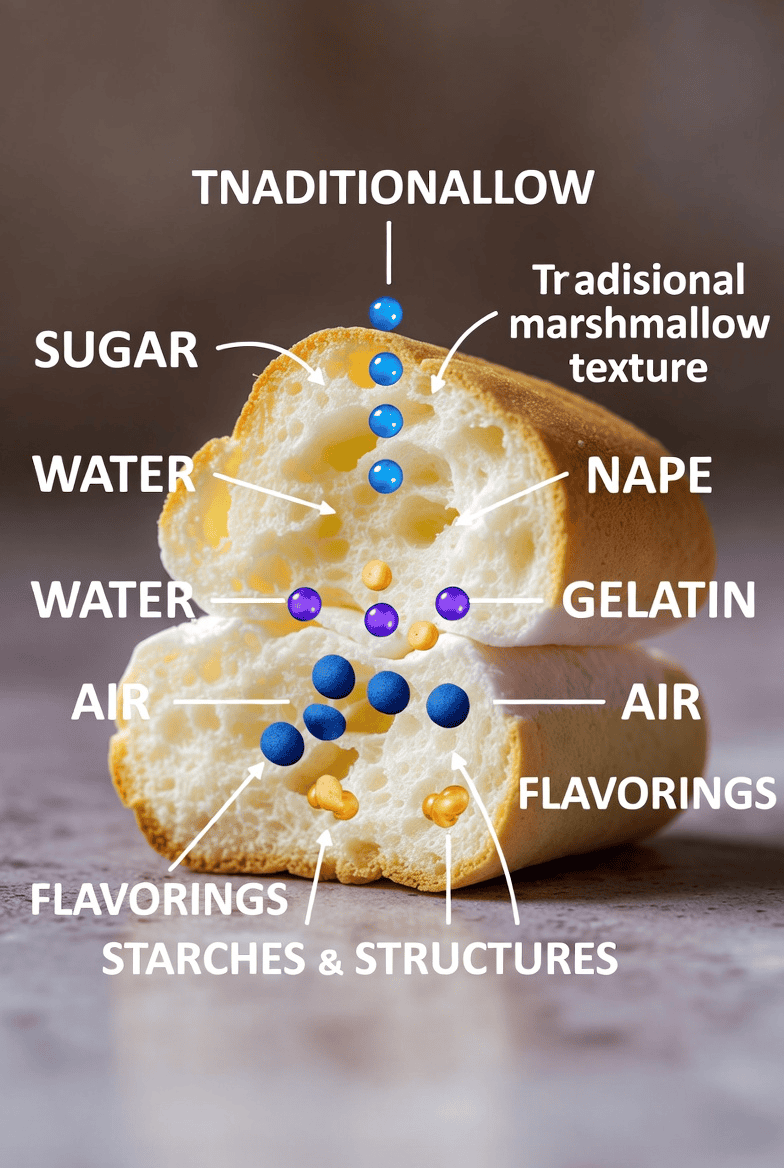
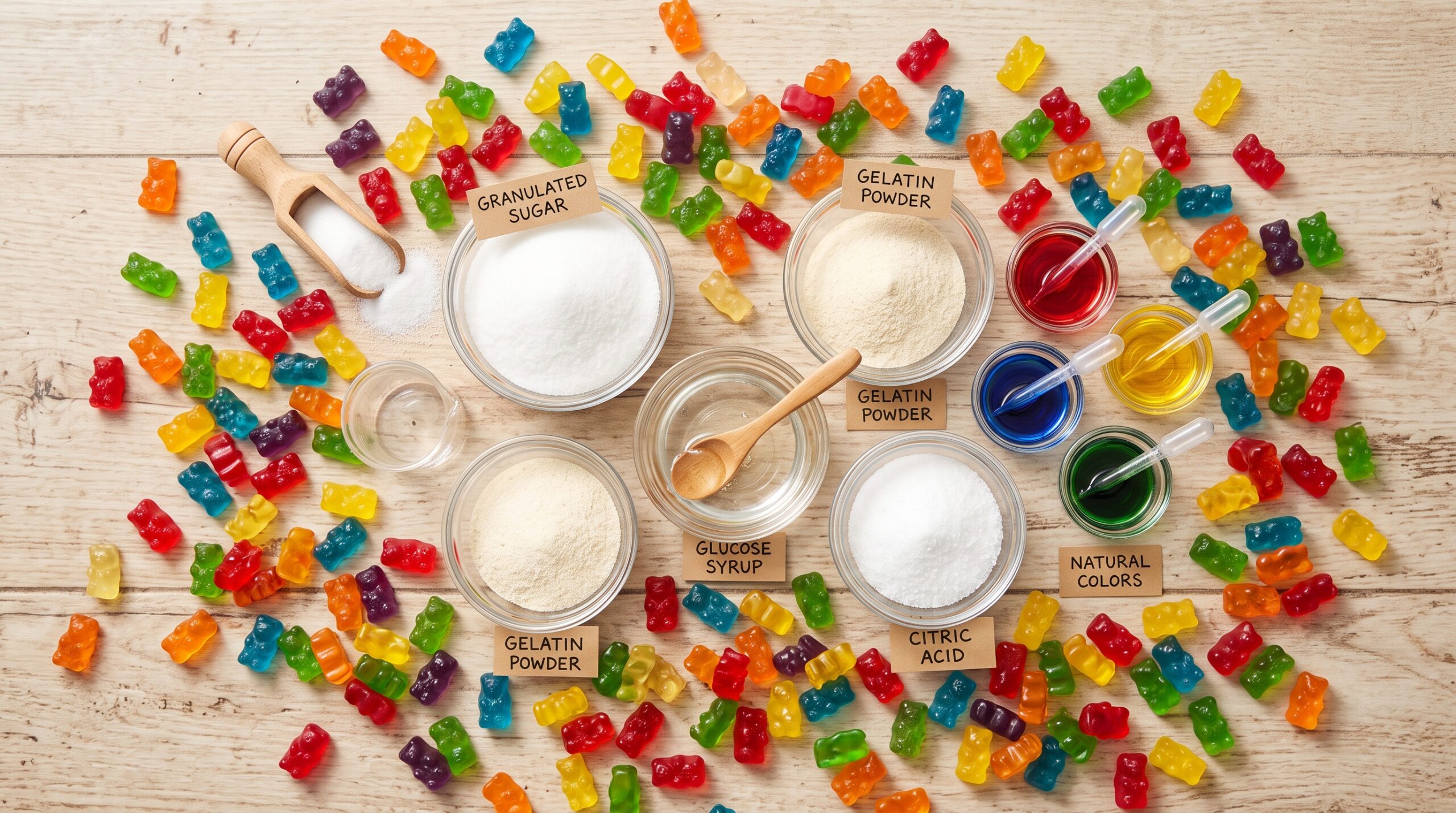
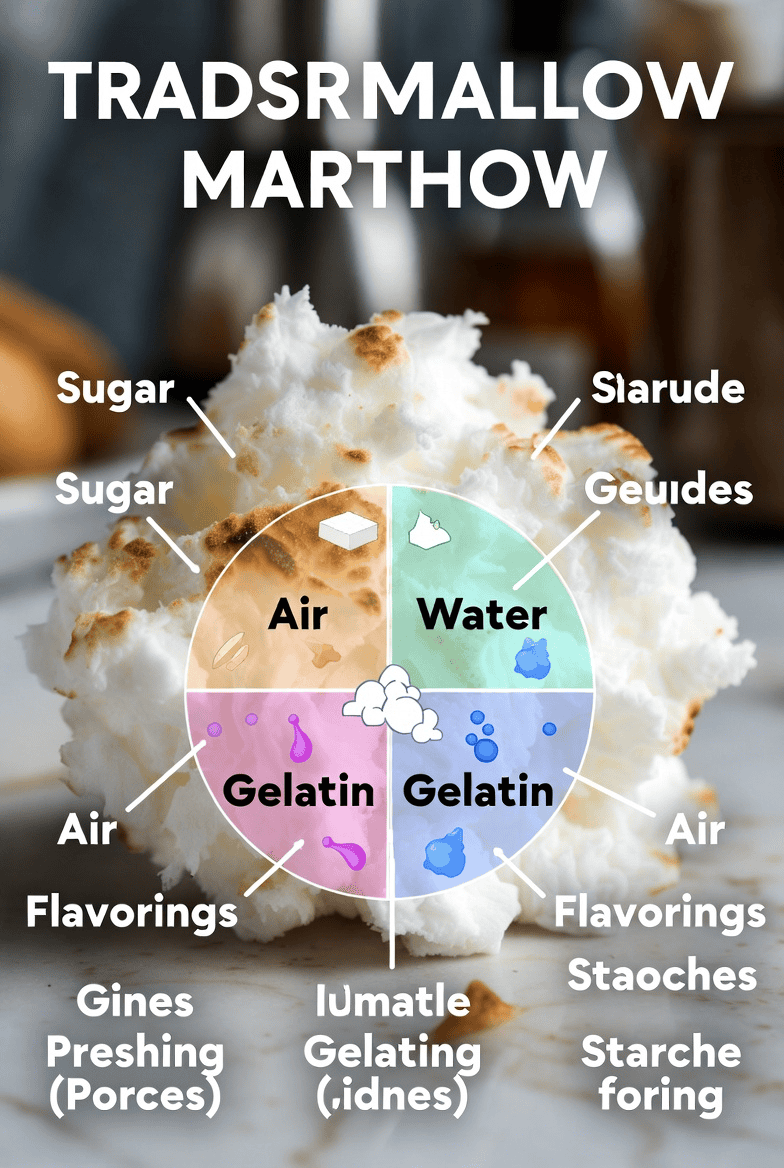
Au cœur, un marshmallow traditionnel est une confiserie simple composée de quatre ingrédients principaux : sucre, eau, gélatine et air. Bien que les arômes et les amidons apportent leur contribution, ces quatre éléments sont la base sur laquelle toute la structure est construite. Comprendre ce que fait chaque ingrédient est la première étape pour comprendre le marshmallow lui-même. Détaillons-les.
Les parties sucrées : sucre et sirop de maïs
La douceur est la caractéristique la plus évidente d’un marshmallow, et elle provient d’un mélange soigneusement équilibré de sucres. Il ne s’agit pas seulement de goût ; c’est aussi une question de texture.
La plupart des recettes utilisent à la fois du saccharose (sucre de table classique) et du sirop de maïs. Le saccharose donne la douceur principale. Cependant, s’il est utilisé seul, il a tendance à reformer des cristaux en refroidissant, ce qui le rendrait granuleux et désagréable. C’est là qu’intervient le sirop de maïs. Le sirop de maïs est un sucre inverti, c’est-à-dire composé de différentes molécules de sucre comme le glucose et le fructose. Ces molécules empêchent physiquement les molécules de saccharose de s’organiser en gros cristaux. Cette action, appelée contrôle de la cristallisation, est le secret d’un marshmallow parfaitement lisse.
La structure : la gélatine
Si le sucre est la substance, la gélatine en est l’âme. Cet ingrédient incroyable est responsable de la texture signature du marshmallow, à la fois chewy, élastique et rebondissante. La gélatine est une protéine issue du collagène animal, généralement provenant de porc ou de bœuf. Lorsqu’elle est sèche, ses brins de protéines sont fortement enroulés.
Lorsqu’elle est mélangée à de l’eau et chauffée, ces protéines se déroulent et se dispersent. En refroidissant, elles se lient pour former une toile complexe en trois dimensions, ou matrice. Cette structure moléculaire agit comme une petite éponge, emprisonnant à la fois l’eau et les bulles d’air incorporées dans le sirop. Cette action de gélification donne au marshmallow sa forme solide mais flexible. Sans gélatine, un marshmallow serait simplement une mousse collante et sucrée qui se désagrégerait rapidement.
Le liquide universel : l’eau
L’eau joue un rôle simple mais important. Sa principale fonction est d’agir comme le liquide pour les sucres, dissolvant le sucre granulé et le sirop de maïs pour créer un sirop liquide uniforme. Ce sirop est le milieu dans lequel toutes les réactions chimiques se produisent.
Deuxièmement, l’eau est nécessaire pour hydrater, ou « faire gonfler », la gélatine. Avant qu’elle ne puisse agir, la gélatine en poudre doit absorber de l’eau froide, ce qui permet à ses brins de protéines de gonfler et de se préparer à se dérouler lorsqu’elle est chauffée. La quantité d’eau est soigneusement contrôlée ; trop d’eau donne un marshmallow faible et collant, tandis que trop peu peut faire brûler le sucre ou empêcher la gélatine de s’activer complètement.
L'ingrédient invisible : l'air
Recette de biscuit au cheddar et à la baie L'ingrédient principal final est celui que nous ne pouvons pas voir : l'air. L'air est ce qui transforme un sirop de sucre épais et lourd en une confiserie légère et aérée. Il est ajouté par un fouettage intensif. L'action mécanique du fouet force l'air dans le sirop épais, créant des milliers de petites bulles.
La gélatine et l'épaisseur du sirop de sucre travaillent ensemble pour stabiliser cette mousse. La matrice de gélatine se forme autour de ces poches d'air, les verrouillant en place pendant que la guimauve prend. C'est le volume de cet air emprisonné qui donne à la guimauve sa légèreté et son faible poids. Une guimauve standard peut contenir plus de 50% d'air en volume, c'est pourquoi elles sont si légères.
Ingrédients de base de la guimauve et leurs fonctions
| Ingrédient | Forme typique | Fonction principale |
| Sucre | Sucrose (sucre granulé) & Sirop de maïs | Apporte la douceur ; le sirop de maïs contrôle la cristallisation pour une texture lisse. |
| Gélatine | Porcin ou Bovin ; en poudre ou en feuille | Crée le réseau de gélification, donnant à la guimauve sa structure moelleuse et élastique. |
| Eau | Eau purifiée | Dissout les sucres et hydrate la gélatine, formant le sirop de base. |
| Air | Fouetté dans le mélange | Apporte du volume, de la légèreté et la texture classique « moelleuse » ou « fluffy ». |
| Aromatisation | Extrait de vanille (courant) | Ajoute la saveur sucrée et aromatique caractéristique. Peut être substitué. |
| Amidon | Fécule de maïs & Sucre en poudre | Utilisé comme coating pour éviter que ça ne colle et absorber l'excès d'humidité. |
Le processus de fabrication commerciale
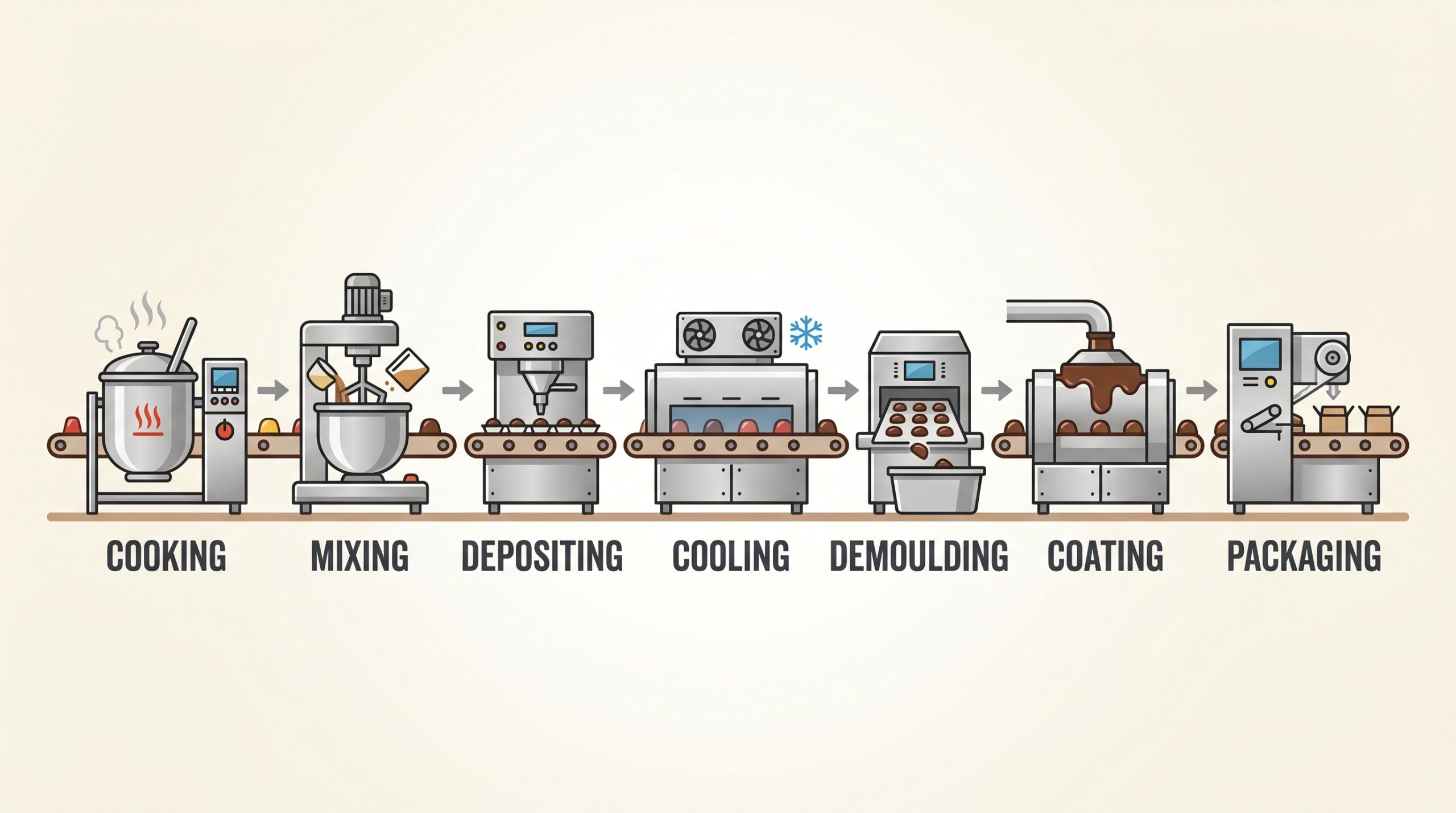
La production commerciale de marshmallows est une ingénierie alimentaire étonnante, conçue pour la cohérence, la rapidité et le volume. Le processus est fortement automatisé.
- Cuisson : Le processus commence dans d'immenses chaudières chauffées à la vapeur. Ici, le sucre, le sirop de maïs et l'eau sont cuits à une température et une concentration précises. Ce mélange chaud de sucre est souvent appelé une « bouillie ».
- Hydratation et mélange : Dans un réservoir séparé, la gélatine est hydratée avec de l'eau. Cette gélatine hydratée est ensuite mesurée avec précision et mélangée avec la bouillie de sucre chaud. Des arômes sont également ajoutés à cette étape.
- Fouettage et aération : Le mélange chaud est pompé dans un aérateur continu, ou une machine à fouetter à haute vitesse. De l'air sous pression est injecté dans le mélange pendant qu'il est fouetté, créant une mousse avec une densité cible spécifique. Cette étape est cruciale pour obtenir une texture cohérente d'un lot à l'autre.
- Extrusion et façonnage : La mousse de marshmallow aérée, encore chaude et malléable, est ensuite poussée, ou « extrudée », à travers des matrices qui la façonnent en longues cordes. Pour former la forme cylindrique classique, ces cordes sont introduites dans une machine appelée « stärke mogul ». Ce système se compose de grands plateaux peu profonds remplis de fécule de maïs modifiée. La machine imprime des empreintes dans la fécule, et les cordes de marshmallow sont placées dans ces empreintes. La fécule empêche le collage et aide à extraire l'humidité de la surface.
- Maturation et finition : Les plateaux de marshmallows sont laissés à reposer dans une pièce contrôlée en température et en humidité pendant plusieurs heures. Pendant cette phase de « maturation », la gélatine se solidifie complètement, et les marshmallows durcissent. Ensuite, les marshmallows passent dans un tumbling ou sur des écrans vibrants pour éliminer toute la fécule excédentaire. Ils sont ensuite prêts pour l'emballage.
La méthode maison
Recette de biscuit au cheddar et à la baie Faire des marshmallows à la maison est une aventure culinaire gratifiante qui nécessite de la précision mais pas d'équipement industriel spécial. La clé est un batteur électrique et un thermomètre à bonbons.
- Gélatinisation : La première étape consiste à hydrater la gélatine. Vous saupoudrez la gélatine en poudre sur une petite quantité d'eau froide dans le bol de votre batteur électrique et laissez reposer pendant environ 10 minutes. La gélatine absorbe l'eau et devient une masse épaisse et caoutchouteuse. Cela s'appelle « blooming ».
- Préparer le sirop de sucre : Pendant que la gélatine gonfle, vous combinez du sucre granulé, du sirop de maïs, un peu de sel et de l'eau dans une casserole. Ce mélange est cuit à feu moyen-élevé, sans remuer, jusqu'à atteindre le « stade de la boule ferme ». Cela se produit à une température très précise, généralement entre 115-118°C (240-245°F). Un thermomètre à bonbons est essentiel pour la précision ici.
- Fouettage pour la perfection : Une fois que le sirop atteint la température cible, vous le retirez immédiatement du feu. Avec le batteur électrique en marche à basse vitesse, vous versez soigneusement et lentement le sirop très chaud le long du bord du bol dans la gélatine gonflée. Une fois tout le sirop ajouté, vous augmentez la vitesse à haute. Le mélange est ensuite fouetté pendant 10-15 minutes. Pendant ce temps, il se transforme d'un liquide clair et fin en une crème blanche épaisse, brillante et volumineuse, triplant de volume. La vanille ou d'autres arômes sont ajoutés dans la dernière minute de fouettage.
- Mise en place et découpe : La pâte de marshmallow est versée dans un moule graissé et généreusement saupoudré d'un mélange de fécule de maïs et de sucre en poudre. Vous utilisez une spatule graissée pour l'étaler uniformément. Le moule est laissé à découvert à température ambiante pendant au moins 4 heures, ou de préférence toute la nuit, pour qu'il prenne. Une fois ferme, la plaque est démoulée sur une planche à découper saupoudrée de plus de mélange de fécule, et un couteau graissé ou un coupe-pizza est utilisé pour la couper en carrés individuels. Les côtés coupés de chaque carré sont ensuite tossés dans le mélange de fécule pour éviter qu'ils ne collent.
La science derrière la texture moelleuse
La transformation du sirop en un solide spongieux est purement chimique. Comprendre la science en jeu nous donne une appréciation plus profonde de cette confiserie et de la précision nécessaire pour la fabriquer.
Le réseau de gélatine
La magie de la structure d'un marshmallow réside dans le comportement des protéines de gélatine. Lorsque vous faites gonfler la gélatine dans de l'eau froide puis introduisez le sirop de sucre chaud, les chaînes de protéines enroulées se déroulent et se répandent dans le liquide. En fouettant le mélange et en le refroidissant, ces longues chaînes de protéines commencent à se lier entre elles, formant une matrice complexe tridimensionnelle. Ce processus s'appelle la gélification. Cette matrice est incroyablement efficace pour piéger à la fois les molécules d'eau du sirop et les innombrables bulles d'air ajoutées lors du fouettage, créant une mousse solide stable. Considérez-la comme une petite cage comestible qui donne au marshmallow sa forme et sa mâche.
Le rôle des sucres invertis
Comme mentionné précédemment, contrôler la cristallisation du sucre est très important pour une texture lisse. La science derrière cela implique les sucres invertis, comme ceux présents dans le sirop de maïs. Les molécules de sucre granulé (sucrose) sont uniformes et aiment se regrouper en cristaux de grande taille très ordonnés — ce que nous ressentons comme de la granularité. Les molécules dans le sirop de maïs (glucose, fructose et autres polysaccharides) ont des formes et des tailles différentes. Lorsqu'ils sont mélangés avec du sucrose, ils agissent comme des barrières physiques, empêchant les molécules de sucrose de s'aligner. Cela force le sucre à se solidifier dans un état désordonné, non cristallin, appelé « verre », ce qui donne la texture parfaitement lisse et non granuleuse d'un marshmallow de haute qualité.
Aération et stabilité de la mousse
Créer une mousse est une chose ; la rendre stable en est une autre. Le processus de fouettage utilise de l'énergie mécanique pour incorporer de l'air dans le sirop épais. Au début, la gélatine facilite ce processus en abaissant la tension de surface du liquide, ce qui facilite la formation de bulles. À mesure que le fouettage se poursuit et que le mélange refroidit, deux choses se produisent simultanément. L'épaisseur du sirop augmente de façon spectaculaire, rendant plus difficile pour les bulles d'air de se déplacer et de fusionner. En même temps, le réseau de gélatine commence à se former, créant une structure semi-rigide autour de chaque bulle d'air individuelle. Cette combinaison d'une grande viscosité et de la formation d'une matrice protéique fige efficacement la mousse en place, garantissant que le marshmallow reste léger et aérien longtemps après sa prise.
Explorer les variations de marshmallows
Le marshmallow à la vanille classique n'est que le début. La recette de base est une toile pour les adaptations diététiques et la créativité culinaire, menant à un large éventail de variations de marshmallows.
Marshmallows végétaliens & végétariens
Une question très courante est de savoir si les marshmallows sont végétariens ou végétaliens. Les marshmallows traditionnels ne le sont pas, car leur ingrédient clé, la gélatine, provient du collagène animal. Cela a posé un défi important pour les scientifiques alimentaires et les chefs : comment reproduire les propriétés uniques de gélification et de fouettage de la gélatine en utilisant uniquement des ingrédients végétaux.
La solution implique généralement une combinaison d'ingrédients.
- Agents de gélification à base de plantes : Pour remplacer la capacité de gélification de la gélatine, les recettes végétaliennes utilisent souvent des hydrocolloïdes comme l'agar-agar (provenant des algues) ou la carraghénane (également issue des algues). Ceux-ci peuvent créer une consistance ferme, bien que la texture finale soit souvent légèrement différente — l'agar-agar peut produire une bouchée plus courte et plus cassante comparée à l'étirement long et mâche de la gélatine.
- Aides à la fouettée à base de plantes : Ces agents de gélification ne fournissent pas la même puissance de fouettage et de stabilisation de la mousse que la gélatine. Pour résoudre cela, les marshmallows végétaliens incluent des protéines végétales comme l'isolat de protéines de soja ou, plus couramment dans les versions faites maison, l'aquafaba (l'eau épaisse d'une boîte de pois chiches). Ces protéines aident à créer et stabiliser la mousse pendant le processus de fouettage.
Ingrédients traditionnels vs. ingrédients végétaliens pour marshmallows
| Fonction | Ingrédient traditionnel | (s) alternative(s) végétalienne(s) |
| Agent gélifiant | Gélatine (issue du collagène animal) | Agar-agar, Carraghénane |
| Aide au fouettage/à l'aération | Gélatine | Protéines de soja isolées, Aquafaba |
| Édulcorant | Sucre, sirop de maïs | Sucre, Sirop de maïs (assurez-vous que le sucre est exempt de charbon d'os pour les végétaliens stricts) |
| Aromatisation | Extrait de vanille | Extrait de vanille |
Marshmallows aromatisés et gourmets
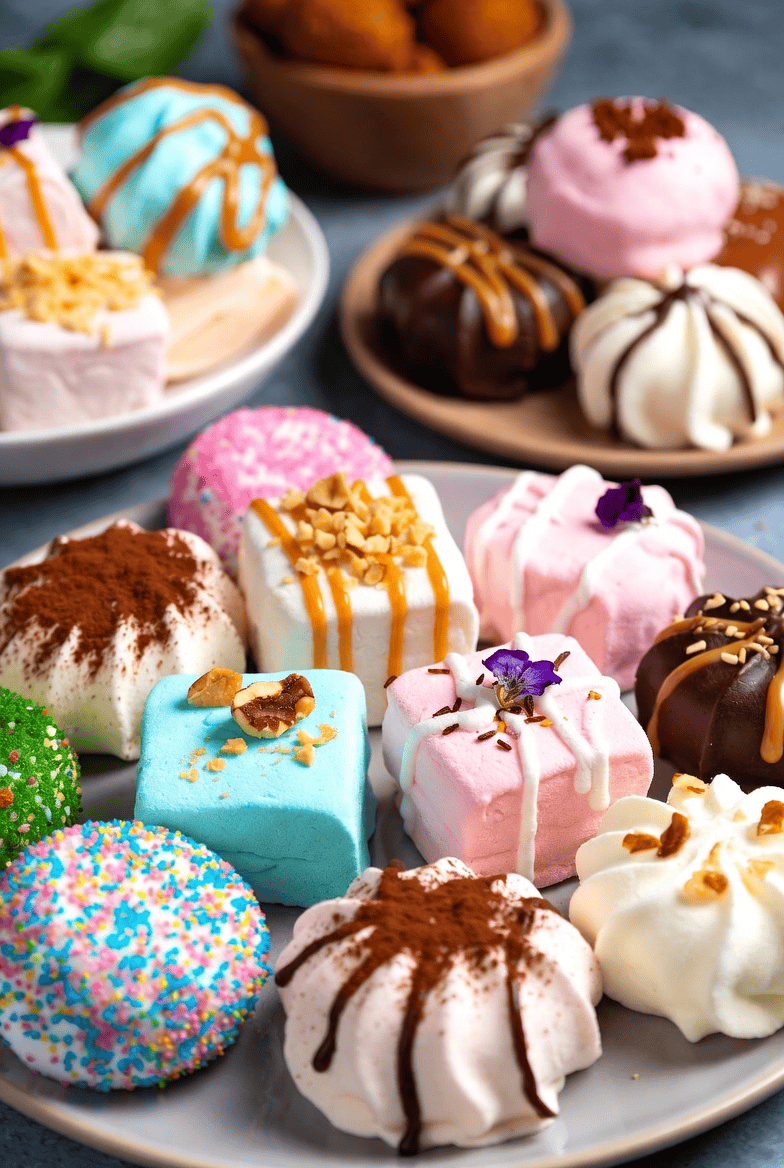
Au-delà des besoins alimentaires, le monde des marshmallows gourmets explose en saveurs. La recette de base est incroyablement polyvalente. Au lieu d'une simple note de vanille, un marshmallow à la framboise éclate avec une saveur fruitée acidulée, sa couleur étant d'une teinte rose naturelle provenant de purée de fruits réelle. La texture est souvent plus douce, résultat direct de l'humidité ajoutée et d'un équilibre différent des sucres.
Les artisans infusent leurs marshmallows avec une large gamme d'ingrédients :
- Fruit : Les purées de fraise, mangue ou fruit de la passion peuvent être fouettées dans la base.
- Boissons : Café fort, poudre de thé vert matcha, ou même des spiritueux comme le bourbon peuvent être utilisés.
- Épices : Cannelle, cardamome ou poudre de chili apportent une touche chaleureuse ou épicée.
- Chocolat : La poudre de cacao de haute qualité ou le chocolat fondu créent une version riche et décadente.
Ces créations gastronomiques élèvent la guimauve d'une simple confiserie à un composant de dessert sophistiqué.
Plus qu'une gourmandise au feu de camp
Alors que nous considérons souvent les guimauves comme une friandise à part entière, leurs propriétés uniques — aération, liaison et texture — en font un ingrédient étonnamment polyvalent et précieux dans l'industrie alimentaire en général.
Applications industrielles clés
La science qui perfectionne la guimauve permet également de l'adapter à d'autres produits.
- En tant que composant dans les céréales : Ces petites guimauves colorées et croustillantes dans les céréales du petit-déjeuner en sont un exemple parfait. Il ne s'agit pas simplement de mini versions des moelleuses. Elles sont spécialement fabriquées avec une très faible activité d'eau (une mesure de l'eau libre) et sont déshydratées pour rester croquantes dans la boîte et ne pas se dissoudre immédiatement dans le lait.
- Dans les produits de boulangerie et confiseries : Les guimauves sont un composant clé dans de nombreuses autres douceurs. Elles servent d'agent liant moelleux dans les friandises croustillantes au riz, de garniture classique pour les MoonPies enrobés de chocolat, et de topping populaire pour les brownies et cupcakes, où elles grillent magnifiquement sous un gril.
- Dans les desserts glacés : L'une des meilleures qualités de la guimauve est sa capacité à rester molle et chewy même lorsqu'elle est congelée. Cela en fait un ajout parfait pour des parfums de crème glacée comme Rocky Road, apportant un contraste de texture avec les noix et le chocolat.
- En tant que garniture ou topping : La crème de guimauve ou la crème est une variante non gélifiante et stable à la conservation. C'est essentiellement une mousse de guimauve non prise, parfaite comme tartinade pour les sandwiches (comme le classique Fluffernutter), comme garniture pour les whoopie pies, ou une cuillerée sur des boissons chaudes.
L'avenir de la fioriture
La humble guimauve continue d'évoluer. À mesure que les préférences des consommateurs évoluent vers la santé, la durabilité et des saveurs plus audacieuses, l'industrie répond avec des innovations passionnantes.

Progrès dans la technologie végétalienne
La quête de la guimauve végétalienne parfaite se poursuit. Bien que les alternatives actuelles soient bonnes, elles ne reproduisent souvent pas parfaitement la capacité de fusion et la longue mastication élastique de la gélatine. Les scientifiques en alimentation recherchent activement de nouvelles combinaisons d'hydrocolloïdes et de protéines végétales. Les innovations dans la protéine de pois, la protéine de pomme de terre et d'autres extraits végétaux promettent de créer des mousses qui imitent plus fidèlement la texture et la sensation en bouche de la gélatine traditionnelle, rendant les guimauves végétaliennes indiscernables de l'originale.
Saveurs sophistiquées et mondiales
Le palais du consommateur devient plus aventureux, et le marché des guimauves gastronomiques le reflète. Nous dépassons le chocolat et la fraise pour explorer un monde de saveurs complexes et mondiales. Attendez-vous à voir davantage de guimauves infusées de botanicals comme la lavande et la rose, de saveurs d'inspiration asiatique comme le matcha, l'ube et le yuzu, ainsi que des combinaisons salées-épicées mettant en avant des ingrédients comme la cardamome, le safran et le chili. Cette tendance considère la guimauve comme une toile pour l'art culinaire.
Un aperçu nutritionnel rapide
Bien que les guimauves soient indéniablement une confiserie, il est utile de connaître leur profil nutritionnel. Elles sont principalement composées de glucides sous forme de sucres et contiennent très peu de matières grasses ou de protéines.
Aperçu nutritionnel d'une guimauve standard
Les données suivantes sont une approximation pour une portion standard de 100 g de guimauves, basée sur les informations de la FoodData Central de l'INSA.
| Nutriments | Quantité pour 100 g (Approx.) | Valeur quotidienne pour % (Approx.) |
| Calories | 318 kcal | 16% |
| Glucides | 81 g | 30% |
| *Sucres* | *58 g* | *N/A* |
| Protéines | 1,8 g | 4% |
| Graisse | 0,2 g | 0% |
| Sodium | 80 mg | 3% |
Questions fréquemment posées
Abordons quelques-unes des questions les plus courantes que nous recevons sur les guimauves.
Les guimauves sont-elles sans gluten ?
Dans la plupart des cas, oui. Les ingrédients de base — sucre, eau, gélatine et sirop de maïs — sont tous naturellement sans gluten. La fécule de maïs utilisée pour saupoudrer l’enrobage est également sans gluten. Cependant, la contamination croisée peut être un risque dans les installations qui traitent également des produits à base de blé. Vérifiez toujours l’emballage pour un label « sans gluten certifié » si vous avez la maladie cœliaque ou une sensibilité sévère.
Pourquoi mes guimauves deviennent-elles dures et rances ?
Les guimauves deviennent rances non pas en se desséchant, mais en perdant leur humidité dans l'air. Le réseau de gélatine retient l'eau, ce qui les maintient molles. Lorsqu'elles sont exposées à l'air libre, cette eau s'évapore, rendant la structure de sucre rigide et dure. Pour les garder fraîches, conservez-les dans un contenant hermétique bien fermé ou un sac étanche.
Peut-on faire griller des guimauves végétaliennes ?
Oui, mais l'expérience peut être différente. Parce qu'elles manquent de gélatine, les guimauves végétaliennes, notamment celles faites avec de l'agar-agar, ont tendance à fondre plus rapidement et peuvent avoir une consistance plus liquide lorsqu'elles sont chauffées. Elles caramélisent toujours et développent une saveur toastée, mais elles peuvent ne pas tenir leur forme sur un bâton au-dessus du feu aussi bien que leurs homologues traditionnels.
Combien de temps se conservent les guimauves faites maison ?
Lorsqu'elles sont stockées correctement dans un contenant hermétique à température ambiante, les guimauves faites maison resteront fraîches jusqu'à deux semaines. La couche de sucre glace et de fécule de maïs est essentielle car elle absorbe l'humidité de surface et empêche qu'elles ne deviennent un seul bloc collant. Il n'est pas recommandé de les réfrigérer, car l'environnement frais et humide peut les rendre trop collantes.
L'Attrait Durable
D'une simple mixture de sucre, d'eau, de gélatine et d'air, naît une confiserie vraiment unique. Nous avons vu comment un équilibre précis de ces ingrédients, que ce soit dans une cuve industrielle ou un mixeur de cuisine, donne naissance à la forme moelleuse et appréciée de la guimauve. C'est un produit de la science alimentaire pure, où matrices protéiques, cristallisation du sucre et aération travaillent en parfaite harmonie.
Le parcours de la guimauve est loin d'être terminé. Alors qu'elle continue de s'adapter, en intégrant des alternatives végétaliennes, des saveurs gastronomiques, et même des bénéfices fonctionnels, sa place dans notre culture alimentaire est assurée. La prochaine fois que vous toastez une s'more ou que vous en déposez quelques-unes dans votre chocolat chaud, nous espérons que vous aurez une nouvelle appréciation pour la science sucrée et l'art qui ont créé ce nuage moelleux et délicieux dans vos mains.
Articles Connexes
- Recette des biscuits Cheddar Bay de Red Lobster : Le guide complet de la cuisine maison à la boulangerie commerciale
- Saucisses Balls avec un mélange de biscuits Red Lobster : La recette ultime pour une fête Cheddar Bay
- Recette de Boulettes de Saucisse façon Red Lobster : Le Guide Ultime des Cheddar Bay
- Boulettes de saucisse au cheddar et aux biscuits façon Cheddar Bay : la recette ultime pour l’apéritif
- Ligne de production de biscuits
- Machine automatique avancée pour biscuits et crackers
- Skittles Original Sans Gluten : Guide de sécurité pour la maladie cœliaque